The short version
A solar geyser captures heat from sunlight in a collector, moves that heat into a storage tank, and keeps an electric element on standby for cloudy stretches. A small controller manages the whole process. Water heating is one of the biggest electricity costs in most South African homes, so shifting more of that load onto the sun gives you real control over your own running costs as Eskom tariffs keep climbing. Understanding the parts here helps you compare quotes intelligently, ask installers the right questions, and keep the system working well once it’s on your roof.
The collector: where the heat is made
Flat-plate collectors
A flat-plate collector is a shallow, glazed box containing a dark absorber plate bonded to water channels. Sunlight heats the absorber, and the absorber heats the water. Flat plates are mechanically simple and durable, and they suit most residential installations.
Evacuated tubes
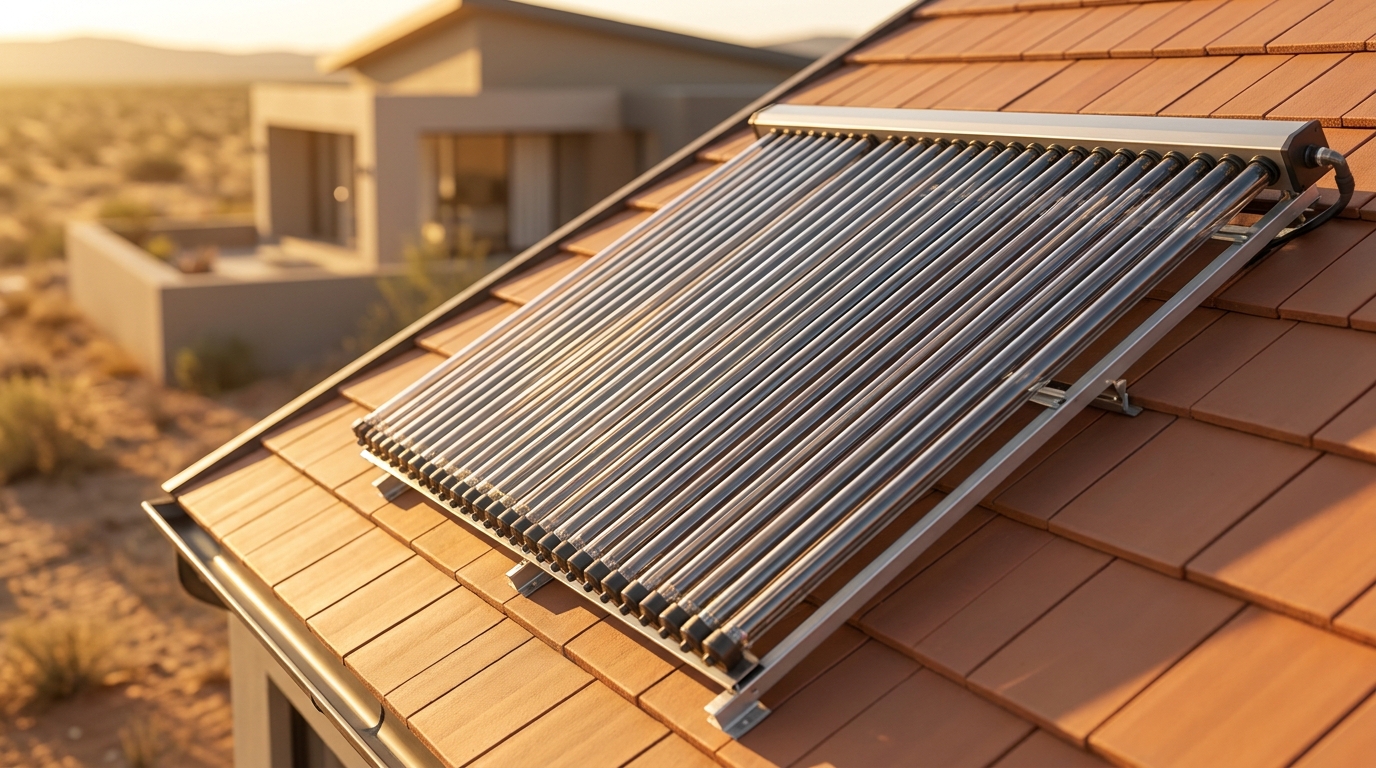
An evacuated-tube collector is a bank of double-walled glass tubes with a vacuum between the walls. The vacuum is the key part: it lets sunlight in but stops heat escaping, the same principle as a vacuum flask. This makes evacuated tubes particularly effective on cold, clear winter mornings, which is precisely when a household wants hot water most. Individual tubes can usually be replaced one at a time if damaged.
The tank: where the heat is stored
Solar storage tanks are heavily insulated so that water heated at midday is still hot for the evening bath and the morning shower. In direct systems the collector heats the tank water itself. In indirect systems a heat-transfer fluid does the collecting and passes its heat to your water through an exchanger, the preferred design where frost is a factor, as it is across much of Gauteng in winter.
The backup element: insurance, not the engine
Nearly every solar geyser keeps an electric element in the tank. Its job is backup only, covering a run of overcast days, an unusually heavy hot-water day, or a winter week where the sun cannot quite carry the full load. On a well-sized system the element should be the exception, not the rule. If your element is running daily, the system is undersized, mis-set, or due for a service.
The controller: the quiet decision-maker
The controller is a small unit that reads temperature sensors in the collector and tank and decides what happens next:
- Circulation. In pumped systems, it runs the circulation pump only when the collector is meaningfully hotter than the tank.
- Backup management. It enables the element on a schedule or temperature trigger you can adjust, which is where much of your saving is won or lost.
- Frost protection. On cold nights it can circulate a small amount of warm water through the collector to prevent freeze damage.
- Overheat protection. On hot, low-usage days it manages excess heat safely.
Common system types explained
Once you understand the collector, tank, element and controller, the next step is seeing how installers actually combine them. Two distinctions come up in almost every quote.
Active (pumped) vs passive (thermosiphon) systems
In an active system, the controller runs a small electric pump to move water or heat-transfer fluid between the collector and the tank. That gives installers more freedom over where the tank sits, since it no longer has to be mounted above the collector.
A passive, or thermosiphon, system skips the pump. The tank sits directly above the collector on the roof, and hot water rises into it naturally as cooler water sinks back down to be reheated. It’s a simpler design with fewer parts that can fail, though the tank-on-roof arrangement adds weight and changes how the installation looks from the street.
Close-coupled vs split systems
A close-coupled system has the tank mounted right next to, or on top of, the collector, usually as one roof-mounted unit. It’s the classic thermosiphon layout.
A split system separates the two. The collector stays on the roof catching sun, while the tank moves down into the roof space or a cupboard indoors. This is more common with active, pumped systems, and it’s often the better fit for double-storey homes or roofs where a bulky tank would look out of place.
A modern alternative: solar PV water heating
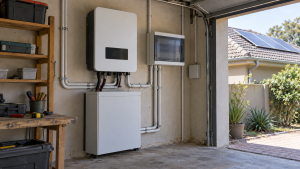
Everything above describes solar thermal, where sunlight heats water directly through a collector. There’s a different approach worth knowing about too: using solar PV panels to generate electricity, then feeding that electricity into the geyser’s existing backup element instead of drawing it from the grid.
A PV-based setup trades the collector, tank plumbing and antifreeze loop for panels, a small controller or diversion device, and standard electrical wiring. That makes it easier to retrofit onto a geyser you already own, since you’re changing where the power comes from rather than replacing the tank. It can also mean the same panels do double duty, covering other household loads once your hot water needs are met.
Solar thermal collectors are generally the more efficient way to turn sunlight into hot water specifically. PV water heating is more flexible and fits naturally if you’re already planning a wider solar PV system for the house. Which one suits you depends on your roof space, your existing geyser, and whether you’re solving for hot water alone or your household’s electricity use as a whole. Our team can walk you through both.
Valves and safety hardware
South African plumbing standards require specific safety fittings on a geyser installation: a pressure-control valve, a temperature and pressure safety valve, a vacuum breaker and a drip tray with overflow. These parts are not optional extras. They are what keeps a sealed hot-water vessel safe. A compliant installation ends with a plumbing certificate of compliance.
How to choose the right system for your home
With the parts and system types covered, the practical question is which combination suits your specific house. Three factors do most of the work.
Your climate
If your area sees regular winter frost, an indirect system is usually worth the extra cost. The heat-transfer fluid in the collector loop doesn’t freeze and crack pipework the way plain water can. In frost-free coastal and lowveld regions, a simpler direct system is often perfectly adequate and cheaper to install.
Your roof
Thermosiphon systems need a tank mounted above the collector, which means enough structural roof space plus the right pitch and orientation to face the sun for most of the day. If your roof is oddly shaped, shaded for part of the day, or you’d rather not add visible tank weight to the roofline, a split active system with an indoor tank gives you more flexibility.
Your household’s hot water use
A bigger household drawing hot water at the same times each morning needs a system sized to keep up, both in collector area and tank capacity. A smaller household, or one with staggered routines, can often get away with a more modest setup. This is exactly the kind of sizing question that’s hard to answer from a blog post and easy to answer with a proper site assessment.
| Your situation | Generally suits |
|---|---|
| Frost-prone winters | Indirect system (heat-transfer fluid loop) |
| Frost-free climate | Direct system (simpler, often cheaper) |
| Open, well-oriented roof space | Close-coupled thermosiphon |
| Shaded, awkward or double-storey roof | Split active system |
| Larger household, consistent demand | Bigger collector area and tank, sized to usage |
None of this needs to be guesswork. Our System Sizer and manufacturer-approved installers can assess your specific roof, water use and budget, and recommend a system instead of a rule of thumb.
What usually needs maintenance
- The sacrificial anode is a replaceable rod inside the tank that corrodes on purpose so the tank itself doesn’t. It’s worth having checked every few years.
- Safety valves should be tested periodically and replaced once they start weeping or sticking.
- An occasional clean of the collector surface keeps efficiency up, especially after a dusty Highveld winter.
- The element and thermostat are standard replaceable parts, same as on a conventional geyser.
Frequently asked questions
What size solar geyser do I need?
It depends on your household size, hot water habits and roof. Rather than guess, use our System Sizer or get a proper quote, so the collector area and tank actually match how your household uses hot water.
How much can I save on my electricity bill?
Water heating is typically one of the largest electricity costs in a home, so shifting most of that load onto the sun has a meaningful effect on your monthly bill. The exact saving depends on your household size, your current geyser, and how much backup element use you still need in winter. Ask for a personalised estimate as part of your quote.
Can I convert my existing electric geyser to solar?
Often, yes. A solar PV setup that powers your existing element, described above, can sometimes retrofit onto a geyser you already own. A full solar thermal conversion usually means fitting a new tank, so it’s worth discussing both routes with an installer before deciding.
How long does the water stay hot?
Solar storage tanks are well insulated, so water heated during the day typically stays usable well into the evening and often overnight. How long depends on the tank, the weather, and how much hot water your household draws off in between.
What maintenance does a solar geyser need?
Not much. The main jobs are periodic anode and valve checks, an occasional collector clean, and normal element and thermostat servicing, the same basic care any geyser needs.
Do I need a professional to install it?
Yes. A solar geyser installation involves plumbing, roof work and electrical connections that need to be done to the applicable safety standards and finished with a compliance certificate. Our manufacturer-approved installers handles the assessment and installation for you.
Want a system explained against your own home?
Our manufacturer-approved installer will assess your roof, pressure class and usage, then walk you through exactly which components your installation needs and why. Book your free solar consultation.
Not sure which system is right for you?