If you have ever waited for a solar geyser to catch up after a cloudy day and wondered whether yours is slow or normal, the answer comes down to a handful of numbers any homeowner can learn to read. Most South African households see a full tank ready by mid-afternoon on a sunny day. The rest of this guide explains why, and how to read your own system.
What “heating up” actually means on a solar geyser
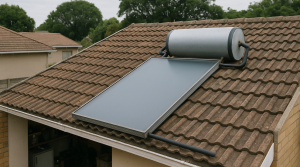
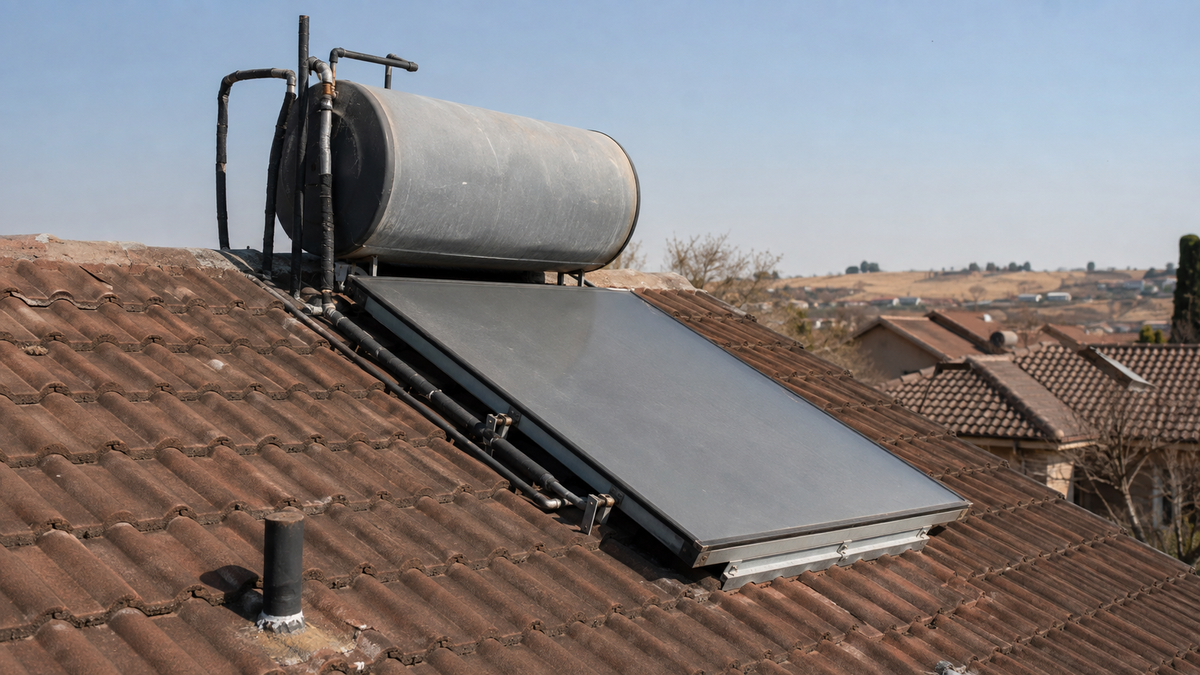
A solar geyser is a water heating system with a roof-mounted collector and an insulated storage tank. Sun hits the collector, a fluid inside carries the heat down to the tank, and the water inside warms up until it reaches a usable temperature. This is different from a standard electric geyser, which only heats when current flows through an element, and different from solar PV, which makes electricity from sunlight.
“Heating up” means the time from a cold tank in the morning to water hot enough for a shower. That window depends on tank size, sun, and a few smaller factors.
The short answer by tank size
Here are typical daytime heating times on a clear summer day in most South African regions. Times run longer in winter or under heavy cloud.
100 L solar geyser
A 100 L tank usually reaches a usable hot temperature by late morning on a sunny day. Expect roughly three to five hours of good sun from a cold start. Two to three people can shower in a row before the tank runs cool.
150 L solar geyser
A 150 L tank, the most common size for a three to four person home, generally takes four to six hours of direct sun from a cold start. By mid-afternoon on a clear day it is normally at full temperature. This is the size most installers default to for a family household.
200 L solar geyser
A 200 L tank needs six to eight hours of direct sun to heat from cold to full. On a short winter day that may slip into the next morning. It suits larger families or homes with a bath.
What changes the time on the same tank
The same 150 L tank can finish in four hours one day and never quite reach full temperature the next. A few real-world variables drive that gap.
Sun hours and season
South African summers give long, high sun days. Winter days are shorter, and the sun sits lower in the sky. The same tank takes noticeably longer in June than in January, even on a clear day.
Cloud cover and winter cold fronts
A cloudy day can stretch heating time to double or more. A cold front rolling across the country in winter can drop performance sharply for a day or two. The tank will still gain some heat, just slowly.
Inlet water temperature where you live
Cold inlet water in the Highveld winter starts near freezing in some mornings. Warm inlet water along the KwaZulu-Natal coast starts much closer to tepid. The colder the starting water, the longer the climb to a usable hot temperature.
Collector size and tilt on a north-facing roof
A larger collector gathers more heat per hour. A roof that faces close to north, with a tilt roughly equal to your latitude, captures the most energy. A flat or poorly oriented collector works, but takes longer. GreenCape reports rooftop solar PV has grown to 3.2 GW of total installed capacity in South Africa by 2023, a sign of how much usable roof space the country has (GreenCape).
How a backup element fits in
Most solar geysers sold today include a small electric backup element. The element is there for cloudy days and high-demand evenings. Many installers wire the element through a timer so it only runs in the morning or evening peak, which trims running cost.
The element shortens recovery time on cold days from many hours to roughly one to two hours for a 150 L tank. It is a useful safety net rather than the main heater.
Night-time and overcast days
The sun does not heat water at night. What your tank does overnight is keep the day’s heat in. How well it does that depends on insulation and how much hot water the household used.
How long a full tank stays hot without sun
A well-insulated 150 L tank can hold usable hot water from one evening to the next morning. Expect roughly a 5 to 8 degree drop across 12 hours on a cool night. Morning showers are normally fine, with a slight cool-down after the second or third person.
When the element should kick in
If the tank drops below the set point before morning, the backup element should switch on. Most timers are set for an early morning boost, which lines up with peak hot-water demand and the cheapest Eskom rates outside the evening peak.
System type and where the tank sits
Two design choices change how the system behaves in everyday use. Both matter more than most buyers realise.
Thermosiphon versus pumped systems
A thermosiphon system relies on natural convection. Hot fluid rises into the tank, cool fluid sinks to the collector. It needs no pump and no electricity, but the tank must sit above the collector. A pumped system uses a small electric pump to push the fluid through, which lets the tank sit at floor level and gives finer control. Heating time is similar on a sunny day. On a partly cloudy day, a pumped system with a controller can squeeze out a bit more heat by cycling the pump only when the collector is hot enough to be useful.
Low-pressure versus high-pressure systems
Low-pressure systems are vented and cannot feed a mixers tap directly. They suit simple cold-water feeds. High-pressure systems feed any tap, including mixers, and work well in homes with mixer showers. Recovery time is the same, but high-pressure systems are far more common in modern South African homes.
Sizing your tank so heating time matches your household
A simple rule of thumb: 50 L per person in the home, then round up. A family of four wants at least 200 L. A couple can manage on 100 L. A household that runs a bath or has many teenagers needs to step up.
If the tank is too small, you run out of hot water before the day ends. If it is too large, you wait longer for cold water to reach a usable temperature. Match tank to household and let the sun do the rest.
Common reasons a solar geyser heats slowly
A few issues come up again and again. Walk through this list before assuming the system is undersized.
- Shade on the collector from a tree or a new build next door.
- Collector glazing covered in dust, droppings, or leaf matter.
- A worn sacrificial anode that lets the tank corrode and lose efficiency.
- Exposed pipe runs that lose heat between the collector and the tank.
- Long pipe runs from the roof tank to the bathroom, which delay hot water reaching the tap.
- A pump that has failed or a controller stuck in the wrong mode.
Most of these are quick fixes once spotted.
Quick checks before you call an installer
Try these steps first. They take a few minutes and may save a call-out fee.
- Look at the collector at midday. It should feel hot to the touch in full sun.
- Check the controller or indicator light. A blinking light often means a pump fault.
- Run a tap for 30 seconds. If the water turns hot quickly, the tank is fine and the issue is the pipe run.
- Look at the roof. New shade from a grown tree is a common reason heating time has crept up over the years.
If those checks all pass and the tank still heats slowly, an installer should look at the pump, the element, and the anode.
Care and maintenance that protects heating time
A solar geyser wants a small amount of attention each year. Three tasks cover most of it.
First, wipe the collector glass clean each season. Dust cuts output more than most people expect. Second, have the sacrificial anode checked every three to five years, more often in hard-water areas. A spent anode lets the tank corrode from the inside. Third, insulate any exposed pipe run between the roof and the tank. The first metre of uninsulated pipe loses more heat than people think.
These three steps, done on a calm schedule, keep a solar geyser heating at its design speed for many years.
FAQ
Do solar geysers work at night? No, they only heat when the sun is on the collector, but a well-insulated tank holds usable hot water until morning.
How long does a 150 L solar geyser take to heat up? On a clear summer day, four to six hours from a cold start; longer in winter or under heavy cloud.
Can a solar geyser heat water on a cloudy day? Yes, but slowly. Expect two to three times the usual time, which is where a backup element helps.
How long does hot water last in a solar geyser? A well-insulated 150 L tank holds usable hot water for about 12 hours, with a 5 to 8 degree drop overnight.
Is a solar geyser worth it in South Africa today? Eskom tariffs have climbed at well above inflation for years. CSIR data shows the national average electricity tariff rose about 10% a year from 2014 to 2024, against roughly 5.2% inflation (CSIR), and NERSA approved an 8.76% average increase for direct Eskom customers for the 2027 financial year (Eskom), so cutting hot-water cost from your bill pays back faster than it did a few years ago. SARS also lets individuals claim 25% of the cost of new PV panels, up to R15 000, against their tax liability when they file (SARS).
Want a number for your own roof and your own household? Book a site visit and we will size the system to your hot-water use, not a generic estimate.