Key Takeaways
Transitioning to solar water heating is a strategic move for long-term household energy independence. Follow these five practical principles to ensure your system performs effectively for years to come:
- Prioritise south-facing roof installations for consistent solar yield.
- Match your cylinder capacity precisely to the daily hot water consumption of your household.
- Choose between direct or indirect circulation based on your local water quality and frost risk.
- Ensure your installation complies with national safety and building standards.
- Schedule annual maintenance checks to maintain optimal efficiency and system longevity.
Understanding solar geyser technology
How solar thermal collectors work
Solar thermal collectors function by capturing incident solar radiation to heat a transfer medium. When you harness the sun’s energy through these collectors, you reduce reliance on resistive electrical heating elements. This process relies on basic heat transfer principles where dark surfaces absorb light and convert it into thermal energy, which is then moved into the water supply.
Difference between flat plate and evacuated tube designs
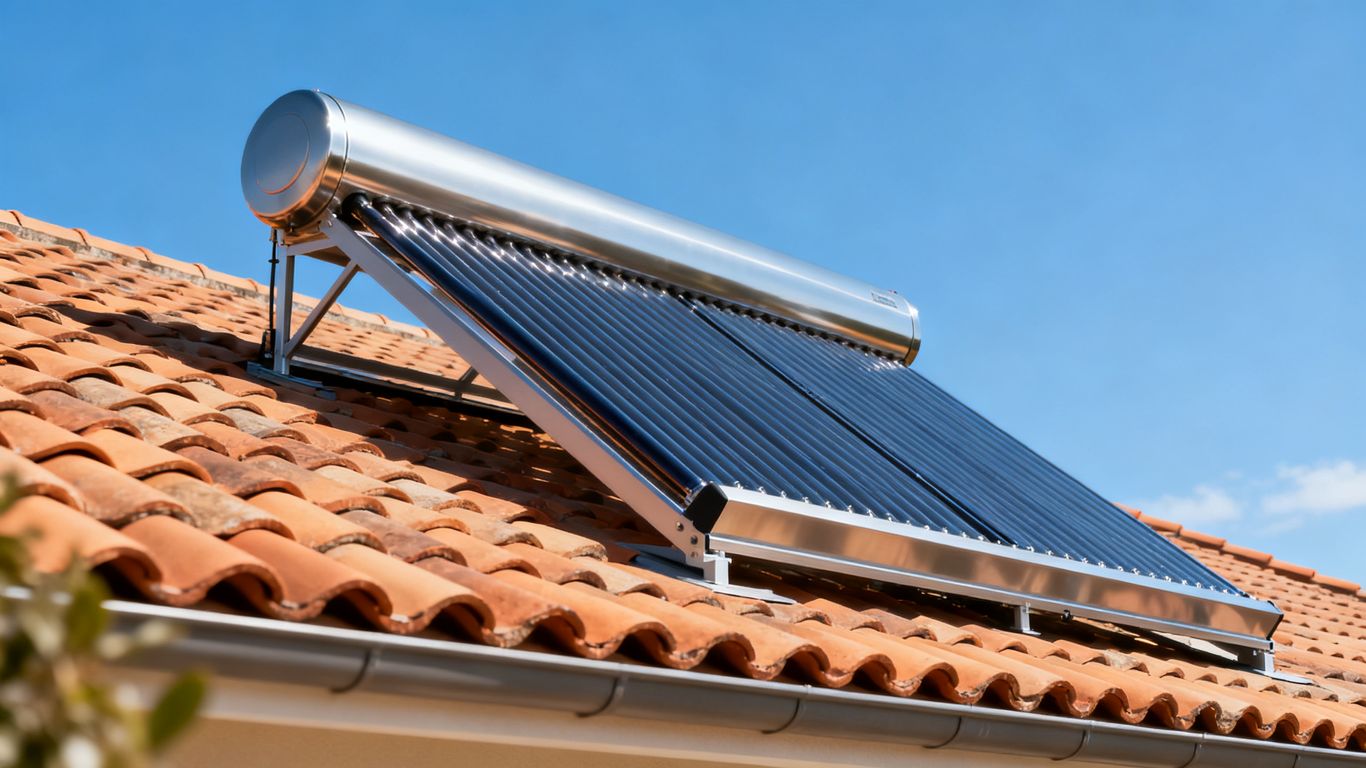
Flat plate collectors are common workhorses that feature copper pipes arrayed against a dark absorber plate within an insulated glass-covered frame. In contrast, evacuated tube collectors use parallel glass tubes with a vacuum between the layers for superior thermal insulation. While flat plates perform reliably in standard sunny conditions, evacuated tubes maintain efficiency far better during colder or overcast weather.
Thermal fluid circulation systems
Circulation can either happen naturally using thermosyphon principles or through active pump-assisted cycles. A thermosyphon system relies on cold water being denser than hot water, creating a natural flow towards the cylinder. Pump-assisted systems use electrical controllers to optimise fluid movement when the collector temperatures are sufficiently high.
The role of the storage cylinder
Your geyser acts as the thermal battery for your home, crucial for storing heated water for later use throughout the day. It is highly insulated to minimise heat loss, keeping the water temperature stable for many hours. Selecting a properly sized unit ensures you avoid the excessive need for electric top-up heating, protecting your bottom line through sustainable energy solutions.
Assessing your property for solar heating
Roof orientation and its impact on efficiency
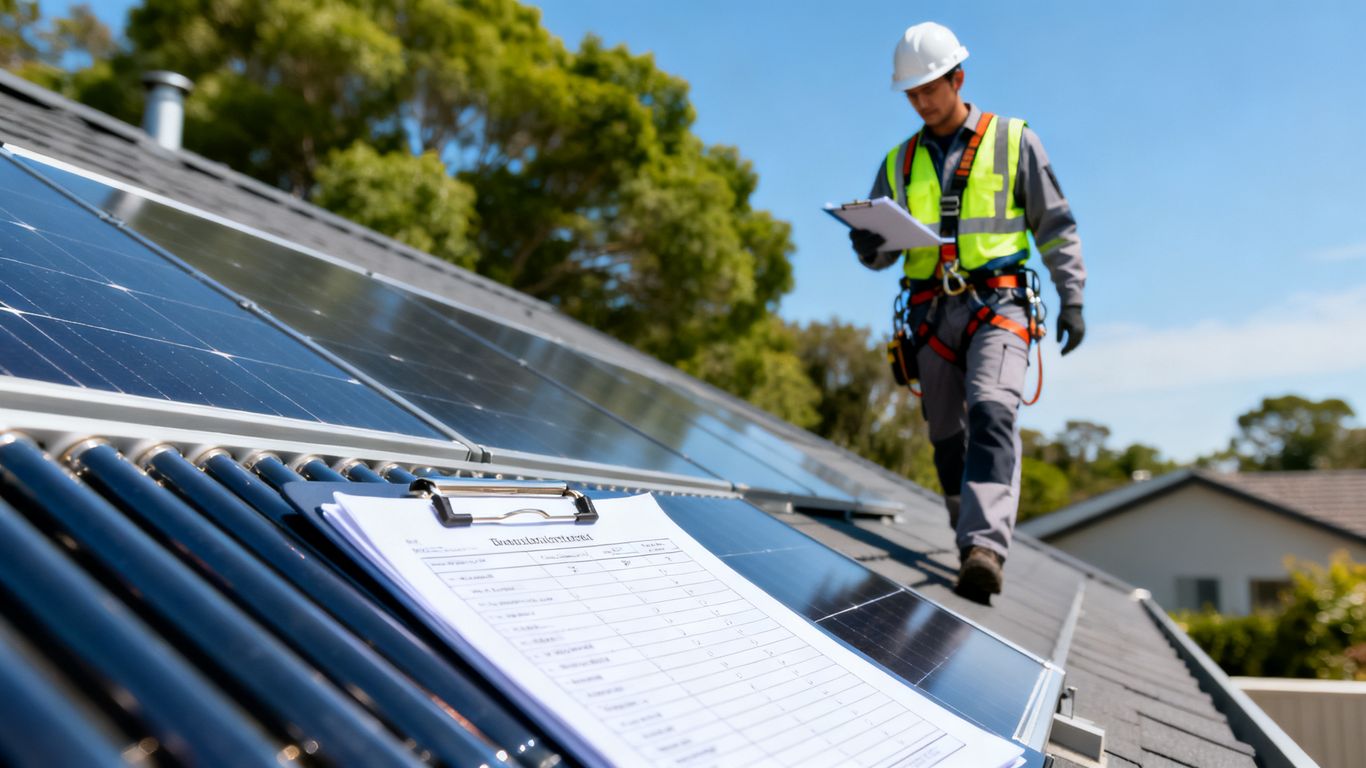
In the Southern Hemisphere, a north-facing orientation is the gold standard for maximising solar exposure. Panels mounted at an angle between 20 and 40 degrees capture the most consistent irradiance across all seasons. Slight deviations towards the east or west are manageable, but your energy output drops as the orientation moves further away from magnetic north.
Calculating daily hot water consumption
Accurate sizing requires understanding your family’s actual behaviour rather than guessing. An efficient 150-litre system might suffice for two people, while larger households often require 300 litres or more to maintain supply. You can use our system sizer to perform the necessary math to avoid expensive oversizing or frustrating shortages.
Evaluating existing plumbing infrastructure
Existing pipe runs between your roof space and the hot water cylinder influence the heat loss in your system. Before finalizing your design, you need to verify that your plumbing is configured for an indirect or direct setup. Here is a typical comparison of component lifespan and requirements:
| Feature | Flat Plate Collector | Evacuated Tube Collector | Storage Cylinder |
|---|---|---|---|
| Expected Lifespan | 15–20 Years | 10–15 Years | 10–12 Years |
| Weather Tolerance | High | Very High | Medium |
| Maintenance Needs | Periodic | Routine Tube Checks | Valve Servicing |
The table above illustrates why choosing the right collector type impacts your long-term maintenance costs and operational success.
Shadowing and structural integrity concerns
Trees, chimneys, or neighbouring structures can cast shadows that significantly cripple solar output during winter months. Even partial shading on a few tubes or a segment of a flat plate reduces the thermal gain dramatically. Additionally, ensure your roof structure can support the substantial weight of a full water tank if you choose a roof-mount installation.
Comparing system types and configurations
Direct versus indirect circuit setups
Direct systems circulate potable water through the collectors, which is efficient but risky in areas prone to sub-zero temperatures. Indirect systems use a glycol-based heat transfer fluid to move energy to the water via a heat exchanger. This adds a layer of protection against freezing, which is essential for preserving the performance of solar systems in colder regions.
Pressurised versus pump-assisted systems
Pressurised systems are common in modern homes and provide excellent flow rates at your taps. Pump-assisted systems offer more flexibility in placing the cylinder away from the panels, such as inside a garage or utility room. The primary advantage of active pumping is the ability to monitor the delta-T between the collector and the tank to optimise heat collection.
Selecting the right cylinder capacity
Capacities range widely to accommodate different dwelling sizes and usage patterns. If you under-size your tank, you will be forced to use expensive electrical backup more often. Always opt for a slightly larger capacity if your budget allows to provide a buffer for peak usage hours in the early morning and evening.
Integrating with existing gas or electric backups
Integrating solar and heat pump technologies or electrical backups ensures a seamless supply even during consecutive rainy days. These backups act as a secondary heat source, using thermostats to trigger only when the solar-heated water temperature drops below your set preference. Proper integration turns the whole installation into a consistent solution.
Financial considerations and system lifespan
Breakdown of installation and equipment costs
Initial costs cover the collectors, the insulated cylinder, piping, and professional installation labour. While the upfront investment is significant, the decreasing cost of components makes this an economically sound decision. You are investing in long-term operational resilience that shields you from the rising costs of utility-provided electricity.
Estimating long-term energy savings in the UK climate
Energy savings correlate directly with your current hot water usage and local solar irradiance. In the UK, while the sun is less intense than in equatorial zones, well-designed systems still contribute heavily to utility bill reductions. The following list details the key areas where you will see long-term financial benefits:
- Substantial decrease in monthly grid electricity consumption.
- Reduced wear and tear on your existing electric geyser element.
- Enhanced property value for prospective home buyers.
- Mitigation of volatility in national energy pricing.
When you harness the power of the sun, you gain greater control over your domestic operating budget.
Maintenance schedules and component replacement cycles
While collectors are durable, pumps and valves require regular checkups. Expect to replace the sacrificial anode in your cylinder every few years to prevent internal corrosion. Regular checks on the pipe insulation are also vital to maintain the system’s thermal efficiency over its decade-long lifespan.
Available government incentives and green grants
Look for local energy efficiency grants or tax incentives that may apply to residential renewable installations. These financial instruments can bring your payback period down significantly. Always ensure your installer provides the necessary certification to qualify for any available rebates or tax deductions.
Installation process and regulatory standards
Professional installer certification requirements
Only use installers who are properly qualified to handle both the hydraulic and electrical aspects of your solar upgrade. Improper connections can lead to leaks, pressure issues, or voided factory warranties on your expensive new hardware. An experienced engineer will know the difference between a compliant installation and a botched setup.
Planning permission and building regulations
Before mounting hardware on your roof, check if your local council has specific restrictions regarding aesthetic impacts or height requirements. Most small-scale residential installations are permitted, provided they meet standard safety and structural building regulations. Failure to consult these guidelines can lead to costly corrective work later.
Safety standards for hot water temperature control
Installing a tempering valve is non-negotiable for safety, especially when solar systems can produce water temperatures that reach scalding levels. This valve automatically mixes in cold water to ensure that the fluid delivered to your bathroom taps is at a safe, usable temperature. It is a fundamental safety mechanism that must be commissioned during the final setup phase.
Commissioning and testing your final setup
Commissioning involves verifying the pressure integrity of the loop for any leaks under operating load. The technician will test the temperature sensor response and ensure the pump (if fitted) activates only under the correct thermal conditions. A final inspection of all pipe insulation completes the job, ensuring you get the maximum possible output from your new installation.
Troubleshooting and maintenance
Identifying signs of air locks or fluid leaks
If you hear a gurgling noise near your pump or notice the temperature drop despite bright sun, an air lock could be blocking the circulation loop. Visible moisture, white scaling, or drips near joints indicate a slow leak that needs immediate attention. Prompt repairs prevent chemical loss in indirect systems or pressure loss in direct ones.
Dealing with seasonal efficiency drops
Efficiency naturally dips in the winter months due to lower irradiance and shorter, colder days. Increase your solar controller’s temperature threshold or adjust your backup settings if you notice higher reliance on electricity. This is normal performance behaviour; do not assume your system is broken simply because the backup kicks in during winter.
Routine checks for valves and pump operation
Check your non-return valves and pressure relief valves every few months to ensure they are not seized. A stuck valve can lead to overheating or burst pipes, making quick visual checks invaluable. Listen for smooth pump operation; any grinding noises are a sign that a bearing or seal is nearing the end of its life.
Professional servicing frequency
An annual professional inspection helps you identify small issues before they become expensive failures. A technician can flush your collectors, test your antifreeze mix (if applicable), and ensure that your sacrificial anode is still doing its job. By investing in annual care, you protect the core of your solar geyser technology.
Conclusion
Investing in a solar geyser is a practical path to energy independence, turning your roof into a reliable source of hot water while protecting your budget from rising utility costs. By choosing quality components, ensuring expert installation, and adhering to simple maintenance routines, you secure years of dependable performance that benefits both the environment and your monthly margins.
Frequently Asked Questions
How many years does a typical solar geyser last?
Most modern solar collectors remain functional for fifteen to twenty years, while the storage cylinders usually require replacement or major service within ten to fifteen years depending on water quality and maintenance.
Can a solar geyser provide hot water at night?
Yes, the heat is stored in the highly insulated cylinder during the day, keeping the water hot enough for use through the night and into the following morning without needing extra heating.
Is sunlight enough during winter in the UK?
While energy yield is lower in winter, a well-sized system will still provide a large portion of your water heating needs, with integrated electrical or gas backup covering the remainder whenever necessary.
What happens to the system during a power cut?
Many solar geysers that rely on thermosyphon circulation will continue to work without any electricity, while active pump-assisted systems might require a small battery backup to maintain circulation during an outage.
Should I install flat plate or evacuated tubes?
The choice depends on your specific climate; evacuated tubes are superior in colder or cloudier regions, while flat plates are robust, cost-effective, and highly efficient in consistently sunny locations.
Do I need planning permission to install a solar geyser?
Most residential installations do not require specific planning permission, though it is always advisable to check local building regulations or heritage site constraints before starting your project.
How does hard water affect my solar geyser?
Hard water causes mineral scaling inside pipes and collectors, which reduces heat transfer efficiency over time; using a water softener or selecting corrosion-resistant collectors can help mitigate these impacts in your local area.
Ready to take the next step with solar?
Speak to the ZenSolar team about the right system for your home or business — every system we sell is installed and supported through our manufacturer-approved installers.