
Solar Power Inverters
What are Inverters? An inverter is one of the most important pieces of equipment in a solar energy system. It’s a device that converts direct current (DC) electricity, which is what a solar panel generates, to alternating current (AC) electricity, which the electrical grid uses.
A solar inverter works by taking in the variable direct current, or ‘DC’ output, from your solar panels and transforming it into alternating 120V/240V current, or ‘AC’ output. The appliances in your home run on AC, not DC, which is why the solar inverter must change the DC output that is collected by your solar panels.
Solar energy decreases the greenhouse effect as well as abnormal weather change. The solar inverter is used to change DC to AC and this is a reliable source of energy. These inverters empower small businesses by reducing their energy needs & requirements.
Getting an “Intelligent” Inverter Makes Monitoring that much Easier
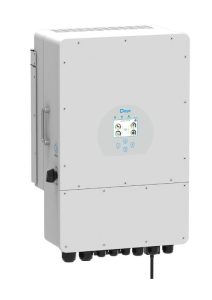
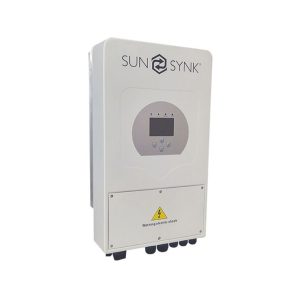
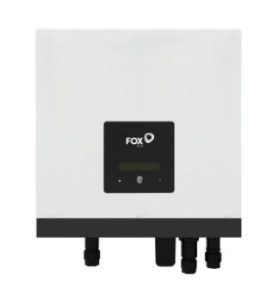
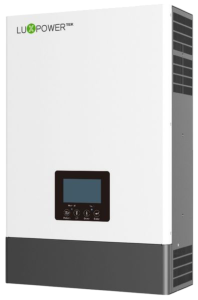
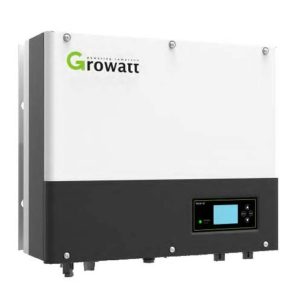
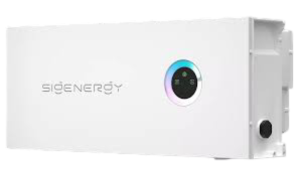
The Hybrid Inverter is a unique management system designed to save you money. It gives you complete control over your energy use, with intelligence to maximise consumption between essential and non-essential loads, as well as a “Time of Use” function for peak shaving. Excess energy generation can be backed up to batteries or exported back to the local grid should your area facilitate this.
Why use an Off-Grid Inverter?
The inverter is a high-performance, fully automated solar inverter with Off-Grid capability. A compact single-phase energy management solution.
Energy independence for peace of mind
An Inverter’s function is to convert DC (Direct Current) generated from PV (Photo Voltaic) into usable AC (Alternating Current). The inverter uses solar generation to produce pure sign wave AC, and by making use of battery backup, the automated system will supply, store and distribute electricity efficiently according to your needs.
The best place for the installation of a solar inverter is a place away from direct sunlight with proper air ventilation. The place should be easily accessible for maintenance purposes, preferably moisture resistant and facing north.
The solar inverters on panels usually last between 10-12 years and typically need replacing at least once over the panel’s lifetime. The power inverters are crucial for safe and efficient operation of solar panels. Extending the lifetime can have significant advantages to the cost and function of a solar system.
An inverter will convert electricity into a usable form to be used in your home or stored in a battery. A battery allows you to store any power generated from your solar system to use when it best suits you, even when your solar system isn’t generating electricity.
A hybrid solar inverter can work without batteries. This type of system is attached to solar panels and to the power grid which supplies power from both.
The size you choose depends on the watts (or amps) of what you want to run (find the power consumption by referring to the specification plate on the appliance or tool). We recommend you buy a larger model than you think you’ll need (at least 10% to 20% more than your largest load).
As a general rule of thumb, you’ll want to match your solar panel wattage. So if you have a 3000 watt solar panel system, you’ll need at least a 3000 watt inverter.
A solar inverter or PV inverter, is a type of electrical converter which converts the variable direct current (DC) output of a photovoltaic (PV) solar panel into a utility frequency alternating current (AC) that can be fed into a commercial electrical grid or used by a local, off-grid electrical network. It is a critical balance of system (BOS)–component in a photovoltaic system, allowing the use of ordinary AC-powered equipment. Solar power inverters have special functions adapted for use with photovoltaic arrays, including maximum power point tracking and anti-islanding protection.
Solar can lower your bills, protect you from power cuts, and show customers you care about the planet while locking in your bill from price hikes for years to come.
It starts with a consultation to assess your business’s energy needs, followed by a custom system design, installation, and integration with your existing electrical infrastructure. Ongoing monitoring and maintenance are typically included.
Costs vary based on system size and specific requirements, but a tailored quote is provided after an assessment. Larger systems generally have a lower cost per watt.
Yes, various financing options (loans, leases, PPAs) are available to make commercial solar more affordable. Speak to a tax practitioner about any business tax allowances that may currently apply to your business.
Savings depend on system size, energy usage, and local rates. Many businesses offset a large portion of their electricity costs, sometimes up to 100%.
Commercial solar systems require minimal maintenance, but periodic inspections and occasional cleaning are recommended to maintain efficiency.
Yes, you’ll continue to receive a bill for any grid electricity used and fixed charges, but solar can greatly reduce your overall costs. Net metering can further offset charges.
Installation timelines vary based on system size, site complexity, permitting, and utility requirements. A solar consultant can provide a more precise estimate.
No. Over time, solar energy is typically more affordable than utility power, as it is not subject to market volatility and rising electricity rates.
Ready to Get Started?
Zensolar
Commercial and residential solar specialists
We help South African families and businesses break free from rising electricity costs with custom solar solutions that can cut your bills by up to 92% from day one. From consultation to installation, we make going solar simple so you can enjoy energy independence and predictable monthly savings In Gauteng, NW, Cape town and KZN
Address
51 Gustav Preller St, Vorna Valley, Midrand.
Phone
+27 11 045 9062