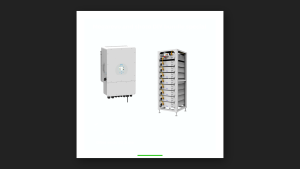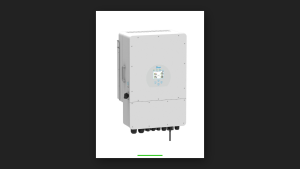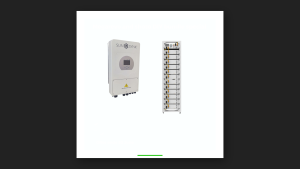
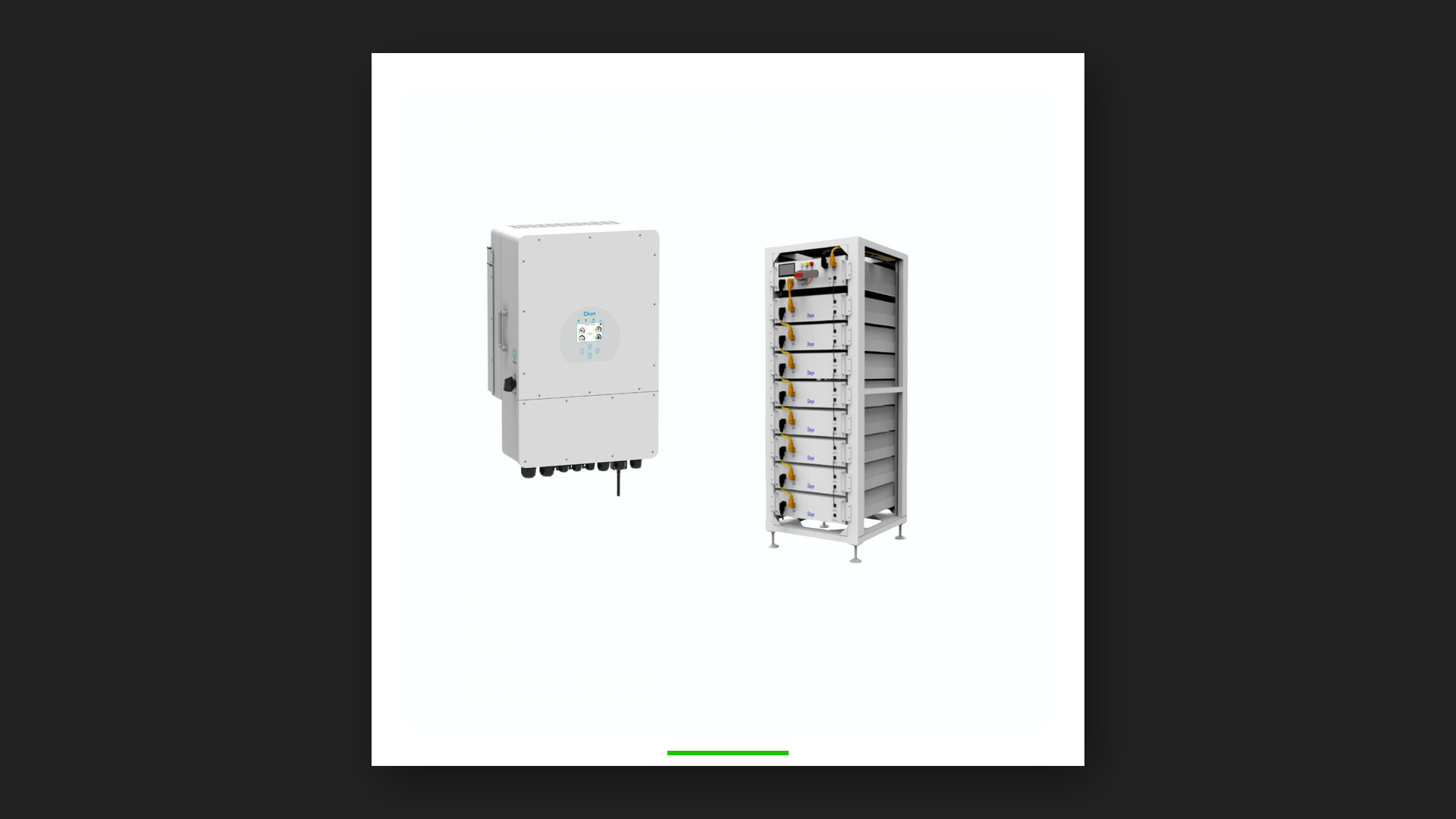
The most interesting sizing decisions in solar happen right around the 10kW mark. Below it, the choices are fairly standard. Above it, you’re already in commercial territory. The Deye 10kW hybrid sits in that gap, and it gets bought by two quite different kinds of customer for two quite different reasons. This guide covers both, unpacks what the 10kW class actually does, and gives you a practical way to work out whether it’s the right Deye for your property, or whether you should really be looking at the 6kW or 12kW class instead. One thing to flag upfront: ZenSolar doesn’t sell Deye — we fit Fox ESS and Sigenergy instead, for reasons set out later in this guide, though the sizing logic below holds regardless of which brand you land on.
The two buyers who choose 10kW
The first buyer is the large household: a property where the loads have crept up over the years, extra air conditioning, a pool, a borehole, a home office, until the popular residential inverter classes started feeling tight. The second is the small business owner: a shop, practice, studio or workshop whose trading hours line up neatly with the solar day and whose electricity bill has become impossible to ignore. Both land on the same unit from different directions, and both need the same three questions answered. Is the capacity right? What battery should sit behind it? Can the array actually feed it?
Output, surge capacity and expansion room
Deye’s hybrid units combine solar conversion, battery management and grid interaction in a single wall-mounted device. In the 10kW class, that gives you continuous output built to carry a heavy simultaneous mix (kitchen, cooling, pumps and office equipment running together) without juggling appliances, plus surge capacity for motor start-ups, which is what separates an inverter that runs a borehole pump gracefully from one that trips. Everything else that matters, PV input headroom, MPPT flexibility, parallel expansion and remote monitoring, comes down to model-specific detail, which the table further down covers.
Sizing past 10kW: when 6kW or 12kW fits better
10kW is a specific rung on the ladder, not the default answer. If your measured peaks sit comfortably inside the 6kW or 8kW range and nothing bigger is coming, buying 10kW just ties up capital that a battery or extra panels would use better. Conversely, if you’re already brushing against 10kW’s ceiling, or you can see a genuinely commercial load profile on the horizon, the 12kW class is worth pricing before you commit. The right way to decide is with your own consumption data, not a gut feel about which number sounds safest.
What to confirm on the datasheet before you order
Every Deye 10kW quote should let you verify these against the current datasheet for the specific model you’re being offered. Numbers vary between revisions, so treat the table below as what to ask about, not a substitute for the manufacturer’s own spec sheet.
| Specification | Why it matters |
|---|---|
| PV input allowance | Deye hybrids typically allow the array to be oversized relative to the AC rating, which lifts winter and overcast-day generation. How much oversizing is allowed is model-specific. |
| MPPT tracker count | Determines how flexibly panels can be split across roof faces with different orientations. |
| Surge and continuous output | Decides whether the inverter carries motor start-ups (boreholes, pool pumps) gracefully or trips under load. |
| Parallel capability | Lets you stack additional units later, subject to model-specific limits, so 10kW doesn’t have to be a hard ceiling. |
| Battery compatibility | Confirm the model works with the battery brand and voltage architecture you plan to run before anything is ordered. |
| Remote monitoring | Production, consumption and battery state visible from your phone. It’s how small faults get caught early. |
How to tell if 10kW is your number
Resist the urge to buy capacity “to be safe”. Oversizing wastes capital that a battery or more panels would use better. Instead, work through a simple sequence.
- Gather twelve months of consumption data from municipal bills or prepaid purchase records.
- Identify your peak simultaneous demand: the loads that genuinely run together, plus start-up surges.
- Map when you actually consume power. Heavy daytime use favours a bigger array, heavy evening use favours more storage.
- List known future loads, an electric vehicle, a cottage, new equipment, because they belong in today’s design, not next year’s.
If that exercise puts you consistently above the 8kW class’s comfortable range but short of true commercial demand, the 10kW class is your rung. Our detailed guide on how to size a solar system walks through the full method.
Single-phase or three-phase?
Around the 10kW mark, supply type becomes a live question. Many larger properties and most business premises run three-phase supply, and the inverter configuration has to match it. This isn’t a preference decision. Check your distribution board or ask your electrician, and make sure any quote names a model that matches your connection type. Getting this wrong at the ordering stage is one of the more expensive mistakes in solar buying, and it’s entirely avoidable.
Designing the battery bank
At the 10kW level, most buyers pair the inverter with lithium storage from day one. The logic is straightforward: the battery moves your midday surplus into the evening peak, carries the property overnight, and turns tariff escalation into someone else’s problem. Deye hybrids pair with established battery brands in the local market, including Freedom Won, Hubble and Pylontech, all of which offer modular banks that grow in steps. Size the bank around the circuits you want carried and the hours you want covered, not around a generic multiplier. If you plan to expand storage later, say so during design. It affects the inverter settings, cabling and array size chosen today.
The array that feeds it
The inverter is the engine, but panels are the fuel. A 10kW hybrid only delivers on its promise with enough well-placed solar behind it, which in South Africa means prioritising unshaded, north-facing roof area, with east and west planes used to stretch generation across the day. Roof complexity, shading from trees or neighbouring buildings, and available area all shape what’s achievable, and this is where a site-specific design earns its fee. For the fundamentals of panel selection (efficiency, warranty and degradation, rather than brand hype) see our buyer’s guide to solar panels in South Africa.
Why this purchase makes sense now
The financial backdrop to every inverter decision in 2026 is the same. Eskom tariffs have climbed above inflation for years running, while solar hardware costs less than it did two or three years ago. For a 10kW-class buyer, precisely the kind of property or business carrying a painful bill, that combination produces the strongest payback mathematics in a decade. Whether you fund it from capital or finance it against the bill you’re already paying, the sooner the system is on the roof, the sooner the meter slows down. Our overview of solar financing options covers the practical routes.
Buying and installing it properly
Three things protect a purchase at this level. First, authorised stock: a warranty is only real if it can be claimed through a South African channel. Second, compliant installation: grid registration as small-scale embedded generation, equipment approved under the applicable grid-connection standards, and an Electrical Certificate of Compliance on completion. Third, system-level design, with inverter, battery and array specified together rather than assembled from bargains. That standard applies whichever brand ends up on your wall, and it’s how we run every installation we do.
How Deye compares to Fox ESS and Sigenergy at this size
We fit two brands and no others: Fox ESS and Sigenergy. At 10kW, the reasoning is worth setting out rather than leaving as a footnote, because this is exactly the size where a household or small business starts thinking several years ahead rather than just about day one.
Give Deye its due first. It’s a large-scale manufacturer, the installed base in South Africa is genuinely deep, and battery compatibility across Freedom Won, Hubble and Pylontech gives a buyer real choice. None of that is marketing spin, and a well-specified Deye 10kW, properly installed, works.
Our reasoning starts after the 10kW mark, not before it. A 10kW buyer is, almost by definition, a household or business already growing into more capacity than the standard range covers. Fox ESS and Sigenergy both run one continuous product line from single-phase residential through to three-phase commercial, so the next step up, 12kW, 16kW, or paralleled units, stays inside the same ecosystem rather than starting a fresh brand relationship.
Sigenergy’s SigenStor combines inversion, battery storage, system control and DC EV charging in a single modular unit, so one manufacturer stands behind the whole stack instead of an inverter brand and a battery brand each pointing at the other. Its published warranty carries a 10-year term on the Sigen Battery and the Sigen Energy Controller, with the battery guaranteed to retain at least 60% of its usable capacity at 10 years, or a stated energy-throughput limit, whichever comes first, extendable to 15 years if registered within 12 months of commissioning, and we’ll hand you that document before you commit. Fox ESS, backed by Tsingshan Group, is the more budget-conscious of the pair, built as modular, stackable hardware designed to be added to rather than replaced as the property’s needs grow.
Our recommendation at this size is a Fox ESS or Sigenergy system, and the reason is specific: one manufacturer accountable for the whole stack, a warranty we can show you in writing, and a platform that scales with the property instead of forcing a rebuild. That’s the promise behind narrowing our own range to two brands.
Frequently asked questions
6kW, 8kW, 10kW or 12kW, how do I choose between neighbours?
Let peak simultaneous demand decide. If your measured peaks sit comfortably inside the 6kW or 8kW range, save the capital. If they brush against the 10kW ceiling regularly, or a known load is coming, step up. The 12kW class is the answer when the data says so, not as insurance.
Can I run it without a battery initially?
Yes. A daytime-offset configuration is a legitimate first phase, with storage added when budget allows, provided the system is designed for that growth from the start.
How does Deye compare with other brands at this size?
Deye competes closely with Sunsynk and Fox ESS in this class. Our comparison of Fox ESS and Deye covers the trade-offs in more depth.
Where does ZenSolar fit in if you want this specific unit?
Nowhere directly. We fit Fox ESS and Sigenergy only, so any quote you get from us will be one of those two. If you specifically want a Deye unit, that purchase and its warranty need to go through a retailer that actually carries the brand.
Start with your own data
Every good 10kW decision starts the same way, with real consumption numbers. Run yours through our free system sizer, check the payback picture with the solar ROI assessment, and then request a personalised quote for a Fox ESS or Sigenergy system. We’ll connect you with our manufacturer-approved installers for a design built around your property, not a template.
Not sure which system is right for you?