Somewhere between the family home that a 5kW inverter serves comfortably and the commercial site that needs 16kW or more sits a fast-growing group of South African buyers: large households and small businesses whose consumption has quietly outgrown the standard residential answer. The Sunsynk 10kW hybrid class exists for exactly this group. This guide explains what the 10kW class delivers, how to tell whether you genuinely need it, and how to design around it so the system serves you for the next two decades.
The Case for Stepping Up to 10kW
Most South African solar conversations start at 5kW and 8kW, because that is where most suburban consumption sits. But a property with three or more air-conditioners, a borehole or pool pump, an electric geyser or two, a workshop, or a home office running all day has a different profile. The telltale signs you have outgrown the standard classes are familiar: an electricity bill that looks more like a small business’s than a household’s, appliances you avoid running simultaneously, and a peak evening period where everything seems to be on at once. A 10kW continuous output gives that household — or a small commercial operation with similar demand — the headroom to run life normally while solar and storage do the heavy lifting.
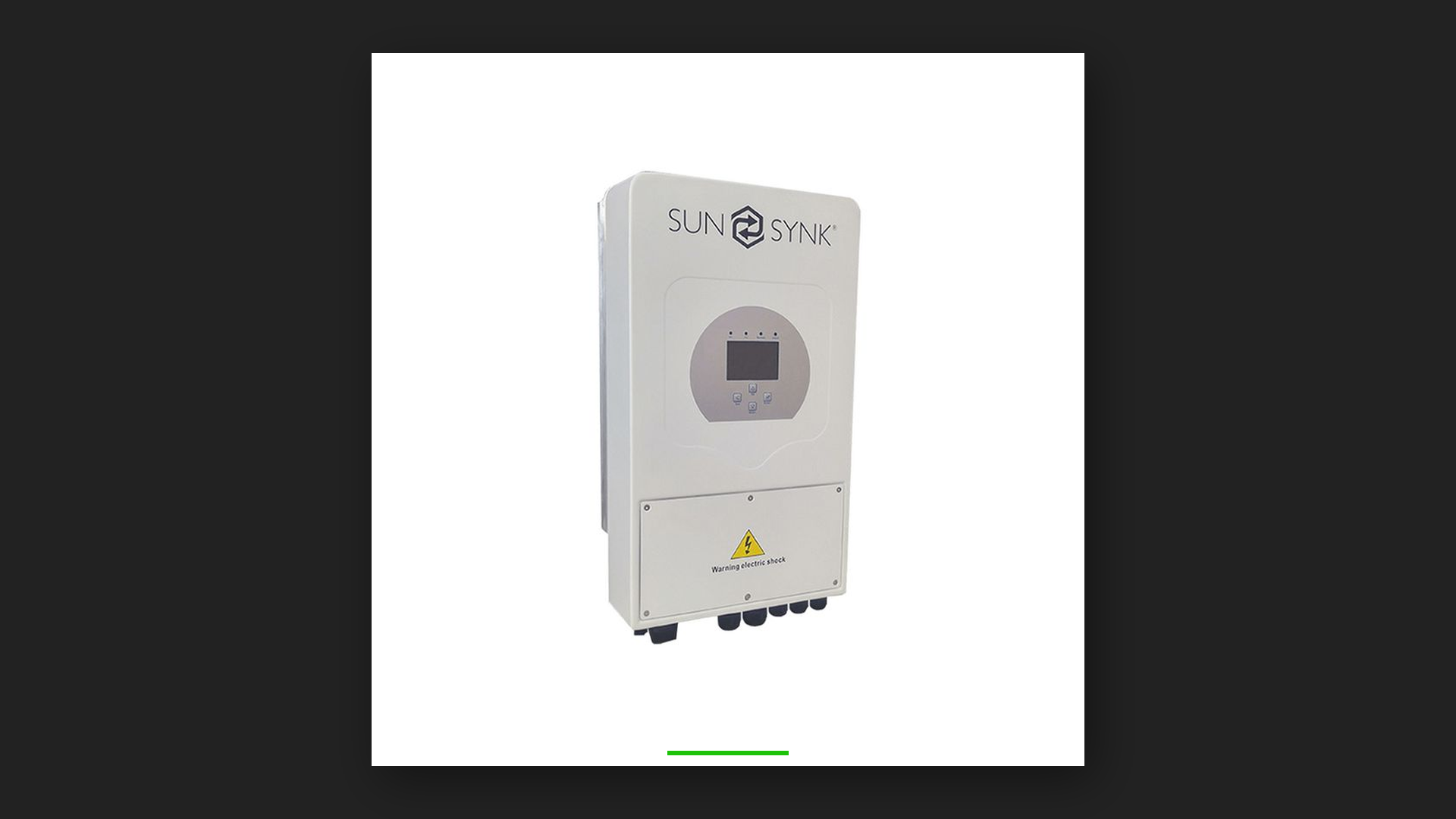
What the Sunsynk 10kW Class Offers
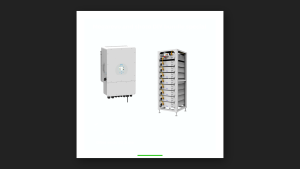
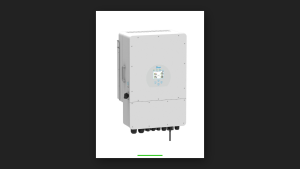
Sunsynk’s hybrid architecture handles three roles in a single unit: converting solar DC to household AC, charging and managing a lithium battery bank, and blending solar, battery and grid so your loads always draw from the cheapest available source. The practical benefits at the 10kW level:
- Genuine simultaneous-load capability — the difference between managing your appliances around the inverter and simply living normally.
- Surge headroom for motors — pool pumps, borehole pumps and compressors start with a current spike well above their running draw; a larger inverter absorbs this without tripping.
- Bigger solar input — a larger AC rating comes with capacity for a larger array, which is what actually generates the savings. Confirm the exact PV input limits and MPPT configuration on the current datasheet for the model quoted.
- Room to grow — Sunsynk hybrids support paralleling, so a 10kW unit can later become part of a larger bank rather than a replacement project. Confirm model-specific parallel limits with your supplier.
Sizing Honestly: Do You Need It?
Capacity you do not use is capital that never pays back, so test the case before you buy. Pull a year of municipal bills or prepaid purchase history and find your monthly consumption pattern. Then think in terms of peak simultaneous demand: which loads genuinely run at the same time in your household or business? A consumption logger for a week or two turns guesswork into data. As a rough orientation, if your peaks are consistently pushing past what the 8kW class handles comfortably — or you know a major new load such as an electric vehicle charger is coming — the 10kW class is the rational next rung. Our guide on how to size a solar system works through this logic in detail, and it is worth reading before any quote conversation.
Battery Pairing for the 10kW Class
At this capacity, storage is where the system earns its keep. A battery bank shifts your midday solar surplus into the evening peak, powers the household overnight, and delivers the energy independence that makes the investment feel real from the first week. Sunsynk units pair with a range of lithium battery brands common in the South African market, but pairing compatibility is a separate question from who is fitting the system for you — ZenSolar’s own installs run on Fox ESS and Sigenergy, which we explain further down this page. Whichever brand ends up in your design, the bank should be sized against two questions: which circuits do you want carried, and for how many hours? Modular batteries mean you can start sensibly and expand later, but the inverter and array must be specified with that growth in mind from day one — which is exactly the kind of planning a proper system design covers.
Array Design: Where the Savings Are Actually Made
An inverter converts energy; panels create it. The 10kW class only makes financial sense with an array big enough to feed it, which raises practical questions: how much unshaded roof do you have, and facing which direction? In South Africa, north-facing roof planes deliver the best year-round harvest, with east and west faces useful for stretching production into mornings and evenings. Multiple MPPT trackers let a designer split the array across differently oriented faces without one weak string dragging down the rest. If your roof is complex or partially shaded, this design stage matters more than any spec-sheet comparison.
For Small Businesses Specifically
A shop, practice or small office with daytime trading hours is arguably the perfect solar customer: consumption peaks exactly when the sun produces. A 10kW hybrid lets a small business offset the bulk of its daytime usage, keep tills, connectivity and refrigeration running with clean continuity, and turn a rising operating cost into a predictable one. The decision is financial: with Eskom tariffs climbing above inflation year after year and component prices lower than they were two or three years ago, payback periods are the strongest they have been in a decade. Our article on whether a solar system is worth it unpacks the return logic, and solar financing options covers the funding routes if you would rather preserve working capital.
Installation and Compliance
A 10kW hybrid installation is a serious electrical project: grid registration as small-scale embedded generation with your municipality or Eskom, equipment approved for grid connection under the applicable standards, and an Electrical Certificate of Compliance signed by a registered electrician on completion. ZenSolar does not carry Sunsynk. We install Fox ESS and Sigenergy, and every installation — on either brand — runs through a manufacturer-approved installer, so design, installation and paperwork arrive as one accountable package rather than a set of loose ends.
Frequently Asked Questions
Is 10kW too much for a normal house?
For a typical three-bedroom suburban home, usually yes — the 5kW and 8kW classes exist for a reason. The 10kW class earns its place when the consumption data says so, not before.
Can it run three-phase equipment?
Single-phase and three-phase are different configurations. If your property has a three-phase supply, tell your designer at the start — it changes the model selection and the electrical design.
What happens when my needs grow further?
Paralleling is the standard route: additional units stack alongside the first rather than replacing it, subject to model-specific limits. It is one of the strongest arguments for buying a brand with a deep local footprint.
What Actually Changes Once It’s Installed
Owners stepping up to the 10kW class report the same practical shift: electricity stops being something you ration and goes back to being something you simply use. The midday hours become effectively free running time for pool pumps, laundry and geysers timed to solar production; the evening peak draws down the battery instead of the grid; and the monitoring app quietly changes household behaviour, because seeing consumption in real time makes waste visible. The bill does not disappear — grid electricity remains the fallback — but its relationship to your lifestyle changes fundamentally, and each year of tariff increases widens the gap between what you pay and what you would have paid.
At 10kW, the brand decision starts to matter more, not less
The bigger the system, the more expensive a wrong ecosystem call becomes, so it is worth being straight about where ZenSolar stands before you commit to a 10kW build.
Sunsynk’s case at this size is genuinely strong. The parallel capability that lets a 10kW unit grow into a larger bank is real and well proven in the local market, the installer base that knows the platform is deep, and a large-household or small-business buyer benefits from that maturity. We would rather say so plainly than pretend the class has some hidden weakness it does not have.
Where the two platforms we fit take a different route. Fox ESS and Sigenergy do not grow by stacking separate units of one component; they run a single product family from a small home through to a full commercial site, so a jump from 10kW household demand to something larger later is a sizing exercise rather than an ecosystem change. Sigenergy goes a step further by folding inversion, battery, system control and DC EV charging into one modular SigenStor unit, so a fault at this scale means one phone call to one manufacturer instead of a hunt across separate suppliers of the inverter and the battery. Its published warranty runs 10 years on the Sigen Battery and Sigen Energy Controller, guaranteeing at least 60% of usable battery capacity at that point, or a stated energy-throughput limit, whichever is reached first, and it extends to 15 years when registered within 12 months of commissioning — a document we will put in front of you, not just a claim.
Fox ESS, manufactured under Tsingshan Group, is the more budget-conscious of the two, built as modular, stackable storage rather than a fixed unit you outgrow, across single-phase and three-phase ranges alike — a sensible fit for a business watching capital outlay as closely as uptime.
At this scale especially, insist on a manufacturer-approved installer regardless of brand. It is the detail that keeps a large-system warranty enforceable rather than theoretical.
Sizing your business or large household correctly
Before anyone quotes you, find out what your consumption actually demands. Run our free system sizer to see whether the 10kW class fits your profile, then use the solar ROI assessment to see what it does to your bill over time. Our recommendation, once the numbers confirm this class, will be a Fox ESS or Sigenergy build — sized to your site, with the warranty terms attached in writing.
Not sure which system is right for you?
Not sure which system is right for you?