South African solar conversations tend to jump straight from the 5kW class to the 8kW class, as if nothing lived in between. For a meaningful slice of homes, the family house that finds 5kW slightly tight but can’t justify the step up to 8kW, the Deye 6kW hybrid is the right sized answer. This buying guide covers where the 6kW class fits, what it can realistically run, and how to decide whether it’s your best value option. Worth saying upfront: ZenSolar doesn’t sell Deye — we fit Fox ESS and Sigenergy, and we explain why later in this guide, though everything below about sizing and specification applies no matter which brand you end up buying.
Why the 6kW class exists
Inverter sizing comes down to matching capacity to your household’s peak simultaneous demand: the moment the oven, the kettle, a couple of appliances and the lights are all drawing power at once. For many three-to-four-bedroom South African homes, that peak sits just beyond what a 5kW unit carries comfortably, but well short of needing 8kW. Buy the 8kW class in that situation and you pay for headroom you’ll never use. Squeeze into 5kW and you’ll occasionally trip under load, or find yourself managing appliances around the inverter. The 6kW class sits between the two: enough capacity to live normally, without capital tied up in output you don’t need.
What a Deye 6kW hybrid delivers
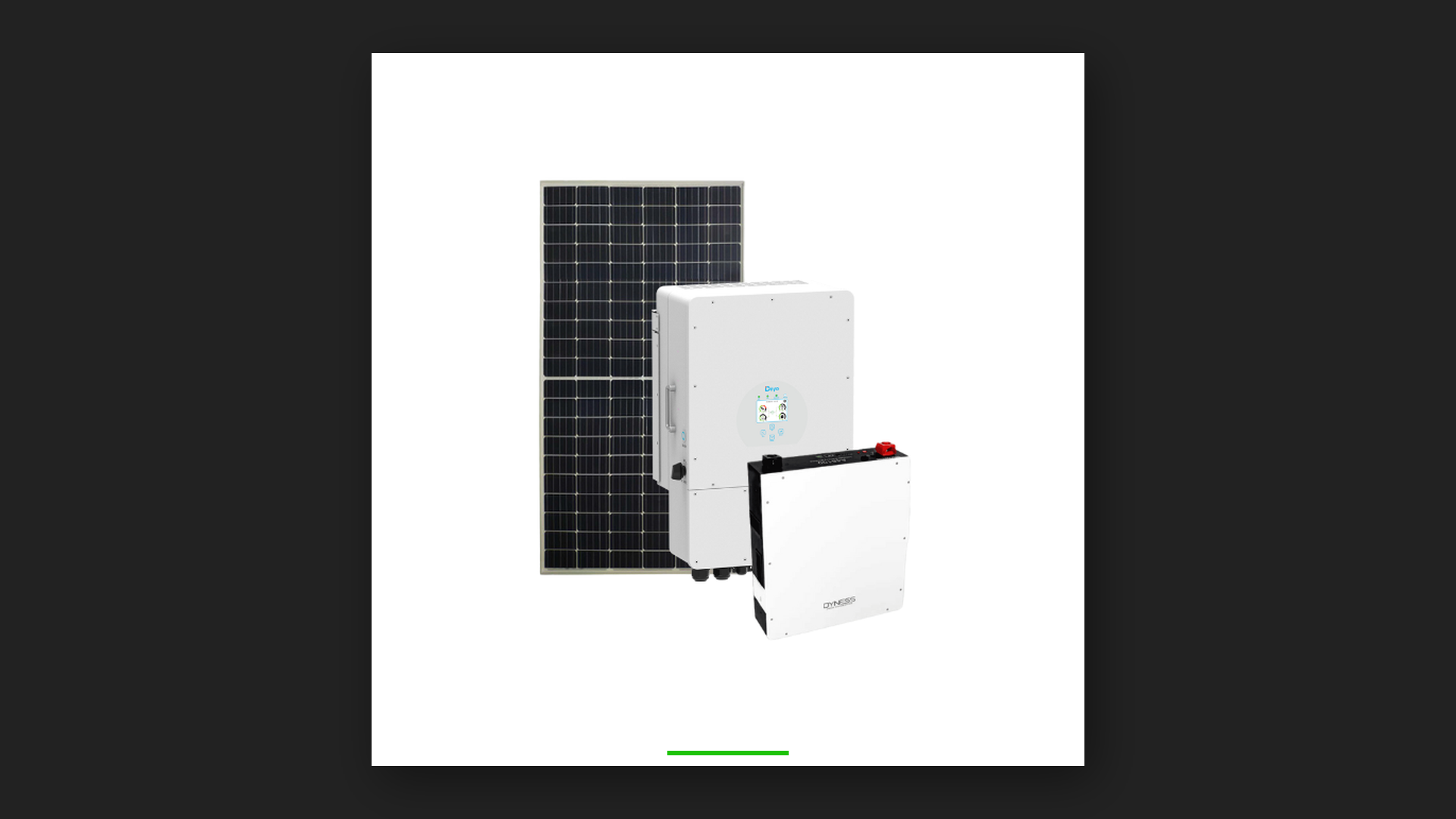
Like all Deye hybrids, the 6kW unit combines three functions in one device: converting DC power from your panels into household AC, charging and managing a lithium battery, and blending solar, battery and grid so your home always draws from the cheapest available source. In day-to-day terms:
- Normal family life on solar. Kitchen appliances, entertainment, lighting, a pool pump and general plugs running together during the day.
- Evening cover from storage. With a suitably sized battery, the expensive evening peak runs on energy you generated at midday.
- Surge handling. Motor driven loads such as pool pumps start with a current spike, and the surge rating on the datasheet tells you how gracefully the unit absorbs it.
- Room for a healthy array. Deye hybrids typically accept a solar array larger than their AC rating, which lifts winter and cloudy day production. Confirm the model specific input limits on the current datasheet.
- App based monitoring. Production, consumption and battery state on your phone, so you can watch the system pay for itself.
What about the geyser?
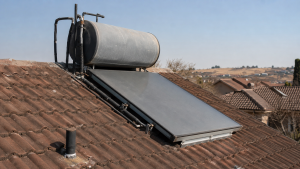
No honest 6kW discussion can dodge the geyser question. An electric geyser is typically the single largest electricity consumer in a South African home, and it’s also a large instantaneous load. Common strategies include timing the geyser to heat during peak solar production hours, fitting the element load around the rest of the household’s daytime profile, or taking water heating off the electrical system’s shoulders altogether. Whichever route you choose, tell your system designer how you heat water. It changes the sizing conversation for both the inverter and the array.
6kW vs 5kW vs 8kW: making the call
The decision between neighbouring classes should be driven by data, not budget instinct.
| Class | Typical use case | Good for |
|---|---|---|
| 5kW | Smaller homes with modest peaks and light evening consumption | The workhorse of South African suburbia |
| 6kW | Homes whose peaks consistently brush against the 5kW ceiling, or will once a new appliance, a cottage or a home office arrives | Normal family life on solar, without capital tied up in capacity you won’t use |
| 8kW | Households running multiple air-conditioners, heavy pumps or an unusually large evening load | Larger homes where the consumption records prove the higher draw |
Homes that keep outgrowing even the 8kW class, an extra dwelling on the property, a home business that keeps adding equipment, tend to look further up the range, at classes like 10kW, rather than stretching an 8kW unit past what it’s comfortable carrying. For the standard three-to-four-bedroom household this guide is written for, 6kW is usually as far as you need to go.
A week or two with a consumption logger, or a careful read of a year’s municipal bills, settles this question. Our guide on how to size a solar system shows exactly how to translate bills into an inverter size, and our article on whether a solar system is worth it puts the whole investment into perspective.
Pairing a battery with the 6kW class
Storage is what turns a solar system from a daytime discount into genuine energy independence. For 6kW-class homes, the battery conversation usually starts with the evening routine: which circuits do you want carried from sunset until bedtime, and what can wait until morning? Lights, connectivity, refrigeration and entertainment are the standard core, while heavy thermal loads are usually left to daytime solar. Deye hybrids pair with established lithium battery brands in the local market, including Freedom Won, Hubble and Pylontech, and because these banks are modular, you can start with sensible capacity and expand later, provided the system is designed for growth from the outset.
Installation, compliance and warranty
A few practical things protect your purchase. Buy authorised stock: a Deye warranty is only as good as the South African channel behind it, and grey imports can leave you stranded. Install compliantly: grid-connected systems must be registered as small-scale embedded generation with your municipality or Eskom, use equipment approved under the applicable grid-connection standards, and close out with an Electrical Certificate of Compliance from a registered electrician. And insist on system-level design, where the inverter, battery and array are specified together. That standard applies to every brand, and it’s how we run every installation we do.
How the 6kW Deye compares to what we actually fit
We install two brands: Fox ESS and Sigenergy. For a mid-sized family home, that’s a narrower shortlist than the market offers, so it’s worth explaining why rather than leaving you to assume.
Deye earns its reputation at this size honestly. It’s an easy, well-understood entry point: installers know it well, batteries from several brands are compatible, and it’s often competitively priced against equivalent hybrids. For a straightforward first solar purchase, that combination is genuinely appealing, and we’re not going to argue otherwise.
Our case is about the next ten years, not the first. A 6kW home today often becomes an 8kW or 10kW home once a pool, a home office or an EV arrives. Fox ESS and Sigenergy both run continuous product families from small residential right through to commercial-scale hardware, so upgrading later is a capacity decision on the same platform rather than a full replacement.
Sigenergy’s SigenStor unit combines inversion, battery storage, system control and DC EV charging into one modular block, so a single manufacturer is accountable for the whole system rather than an inverter brand and a battery brand each pointing elsewhere when something goes wrong. Its published warranty covers a 10-year term on the Sigen Battery and the Sigen Energy Controller, with the battery guaranteed to retain at least 60% of its usable capacity at 10 years, or a stated energy-throughput limit, whichever comes first, extendable to 15 years if registered within 12 months of commissioning — a document we’ll show you before you sign anything. Fox ESS, backed by Tsingshan Group, is the more affordable of the two: modular, stackable hardware built to be added to rather than swapped for a bigger unit later, without moving into the price tier where support quietly disappears.
For a 6kW-class home, our recommendation is a Fox ESS or Sigenergy system, for a specific reason: a warranty we can put in front of you before you sign, one manufacturer accountable for inverter and battery together, and room to grow without starting over. That’s the promise behind fitting only two brands instead of whatever the distributor has in stock.
The 2026 timing argument
The backdrop to every residential solar decision right now is simple: Eskom tariffs keep climbing above inflation, while solar components cost less than they did two or three years ago. For the mid-sized family home, the 6kW class’s natural customer, that means payback periods are about as attractive as they’ve been in a decade. Every year of delay is another year of paying escalating rates for electricity your own roof could have produced. If upfront capital is the sticking point, our overview of solar financing for homeowners answers the common questions about funding routes and monthly repayments.
Frequently asked questions
Can a 6kW inverter run my whole house?
It can run a typical mid-sized home’s normal simultaneous load. Whether it runs everything at once, including heavy thermal appliances, depends on your specific peaks. That’s why measuring beats assuming.
How many panels can I connect?
Deye hybrids generally allow the array to be oversized relative to the AC rating, within model-specific limits on the datasheet. Your roof’s unshaded, north-facing area is usually the real constraint.
Can I expand later if my needs grow?
Yes. Deye’s parallel capability means additional units can be stacked, subject to model-specific limits. Mention future plans during design so the electrical work anticipates them.
Where does ZenSolar fit in if you specifically want a Deye 6kW?
Nowhere directly. Fox ESS and Sigenergy are the only inverter and battery brands we fit, so a Deye purchase and its warranty need to go through a retailer that actually carries the brand.
Common mistakes 6kW buyers make
- Sizing by budget instead of by data. The class gets chosen because it’s mid-priced, not because anyone measured the household’s actual peaks. Measure first. The answer is sometimes cheaper than you feared.
- Skimping on the array. Pairing a capable inverter with too few panels to protect the budget means the inverter spends its life waiting for energy that never arrives.
- Ignoring the geyser strategy. Leaving the home’s largest consumer out of the design conversation undermines the savings the system was bought for.
- Buying grey stock. The unsupported discount unit becomes the most expensive component in the system the day it faults.
Check your numbers before you buy
The 6kW class rewards buyers who do twenty minutes of homework. Run your consumption through our free system sizer to confirm the class fits your profile, use the solar ROI assessment to see the payback on your actual bill, and then request a personalised quote for a Fox ESS or Sigenergy system. We will connect you with our manufacturer-approved installer for a design matched to your home.
Not sure which system is right for you?