Key Takeaways
Transitioning to solar power requires a reliable inverter capable of handling variable loads while maintaining system stability. This guide provides an engineering perspective on deployment and lifecycle management.
- Proper sizing ensures the inverter operates within its optimal efficiency window.
- Wall-mounted installation necessitates specific clearance to maintain thermal performance.
- Routine firmware updates prevent communication drifts between the battery and the inverter.
- Grid-interaction settings allow you to align energy usage with time-of-use tariffs.
- Regular physical inspections protect your long-term equipment investment.
Understanding the technical specifications
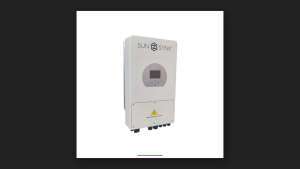
The Deye 8kW hybrid inverter is designed for residential and light-commercial utility. It manages energy flows through a sophisticated software interface that prioritises local load requirements before directing excess power to battery storage or the grid.
Power output and efficiency ratings
Efficiency is the hallmark of modern conversion hardware, and this unit achieves a peak efficiency of 97.6%. To manage your expectations regarding real-world output, consider the primary data points that dictate how effectively your system handles varied energy demands.
| Specification | Value |
|---|---|
| Nominal Power | 8kW |
| Max Efficiency | 97.6% |
| MPPT Voltage Range | 150V – 425V |
By ensuring your array voltage sits comfortably within the MPPT window, you keep energy conversion loss minimal during the heat of the day. This operational buffer prevents the hardware from throttling during peak generation periods.
Compatibility with battery storage systems
Integrating the Deye 8kW hybrid inverter with advanced lithium-ion storage requires precise communication over CAN or RS485 interfaces. The inverter uses a self-adaptation protocol to negotiate charge and discharge commands based on the battery parameters, which protects cell longevity while maintaining the capacity needed for energy independence.
Grid-tied versus off-grid functionality
This inverter supports seamless energy management whether you are connected to the grid or operating in an islanded state. You should consult high-quality solar hybrid inverter manufacturers to ensure your grounding architecture supports the automatic transfer between these electrical states without damaging sensitive loads.
Monitoring and software control interfaces
The internal monitoring system logs daily yield and battery health metrics accessible via a mobile or web interface. Reviewing these data points regularly allows you to identify anomalies before they impact your energy independence strategy.
Installation and safety standards
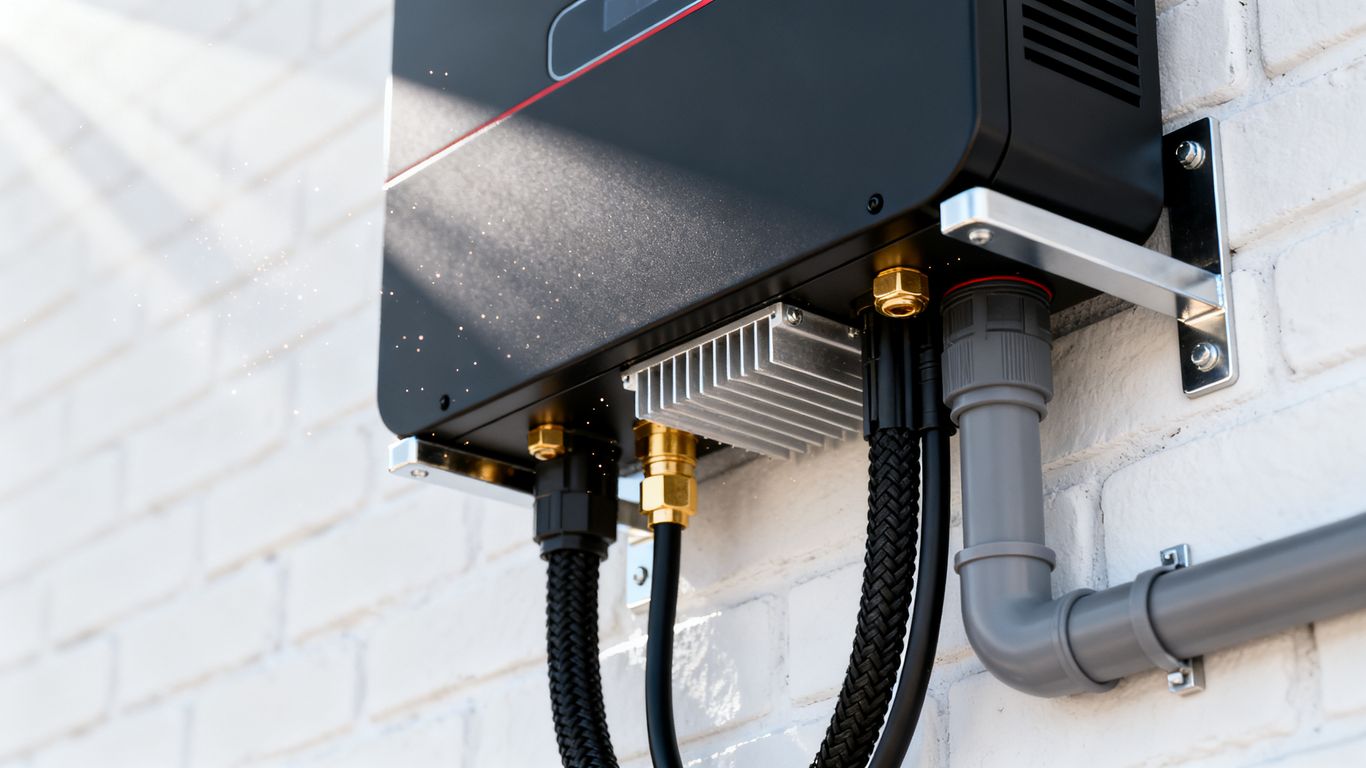
An installation site must offer sufficient airflow and structural integrity to support the heavy chassis. Placing the unit away from direct sunlight or enclosed cabinets helps maintain internal cooling and prevents derating of power components.
Preparing for wall-mounted installation
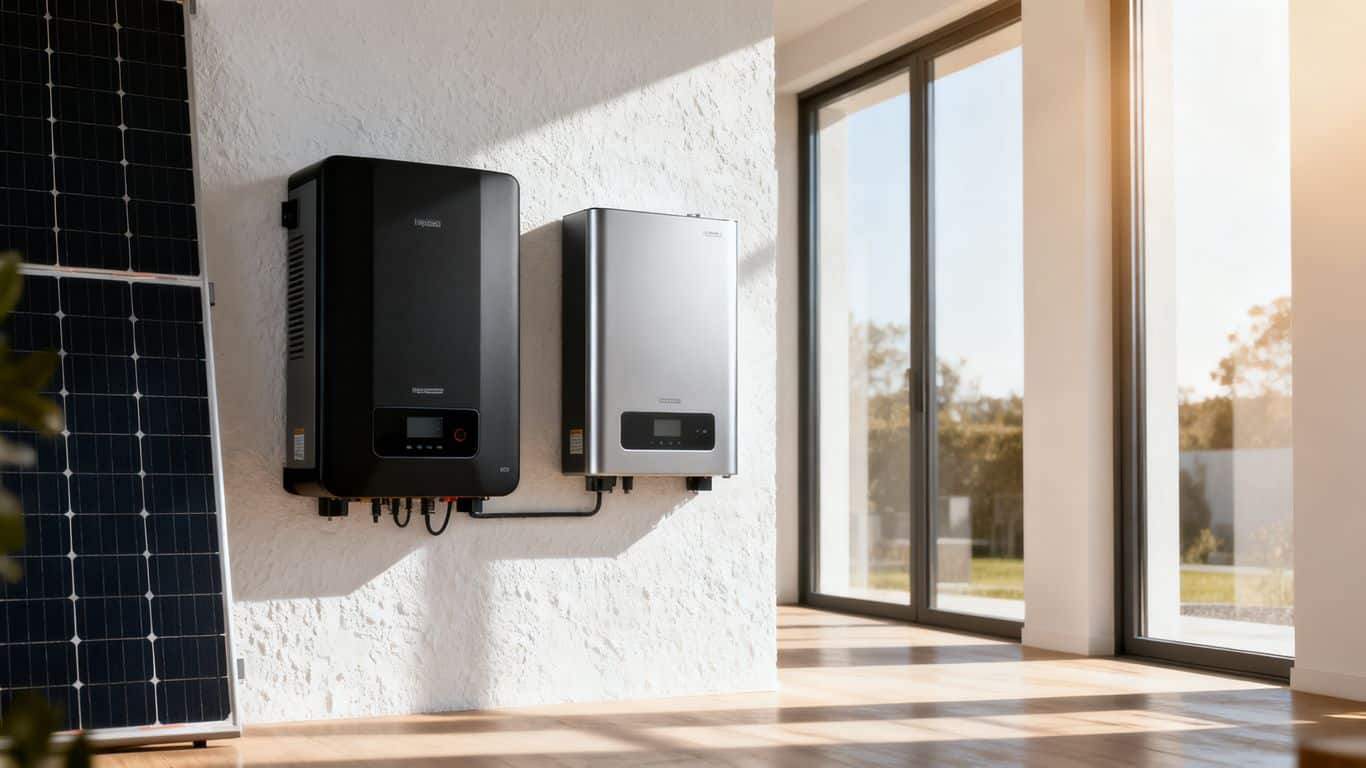
Mounting the unit requires a level surface with a clearance of at least 50cm on all sides for passive cooling. Engineers often suggest using a spirit level during installation to avoid stressing the internal electronic housings.
Essential cabling and wiring configurations
Wiring must follow local regulatory standards to ensure physical site safety and the reliability of your solar power inverters. Following the terminal markings exactly prevents short-circuiting during the commissioning phase.
Earthing and surge protection requirements
Proper earthing is mandatory to discharge transient overvoltages effectively. You should inspect the earth cable integrity and surge arrestor health during every annual maintenance check to ensure your equipment remains protected.
Commissioning procedures and initial startup
- Confirm all DC and AC connections are mechanically firm.
- Enable the battery communication loop before supplying main power.
- Verify voltage polarity to avoid internal component damage.
- Run the initial configuration wizard to set regional grid profiles.
Following these precise steps ensures a clean boot sequence and allows the software to identify the connected array string architecture without errors.
Configuring the management settings
Management settings determine how your stored energy behaves during the day. By organising your priorities, you reduce grid dependency while keeping your battery levels at an optimal state for the evening peak.
Setting charge and discharge priorities
Prioritising specific circuits during the configuration phase allows you to reserve a portion of your battery capacity for critical nighttime loads. This logical grouping is essential for maintaining business continuity.
Grid export and zero-export limitations
When local regulations restrict solar export, the zero-export setting forces the inverter to throttle power injection. Understanding this functionality is critical if you seek maximum regulatory compliance in regions with strict power control policies.
Managing time-of-use energy tariffs
By scheduling charge times during off-peak windows, you can leverage lower tariff rates if grid supply is part of your strategy. This is a common practice for households needing to balance costs against the daily solar yield.
Firmware updates and remote maintenance
Deploying the latest Deye SUN-(5-8K)K-SG01LP1-US firmware ensures the inverter is running updated communication algorithms. These updates often address minor compatibility issues with modern lithium-ion BMS hardware.
Optimising system performance
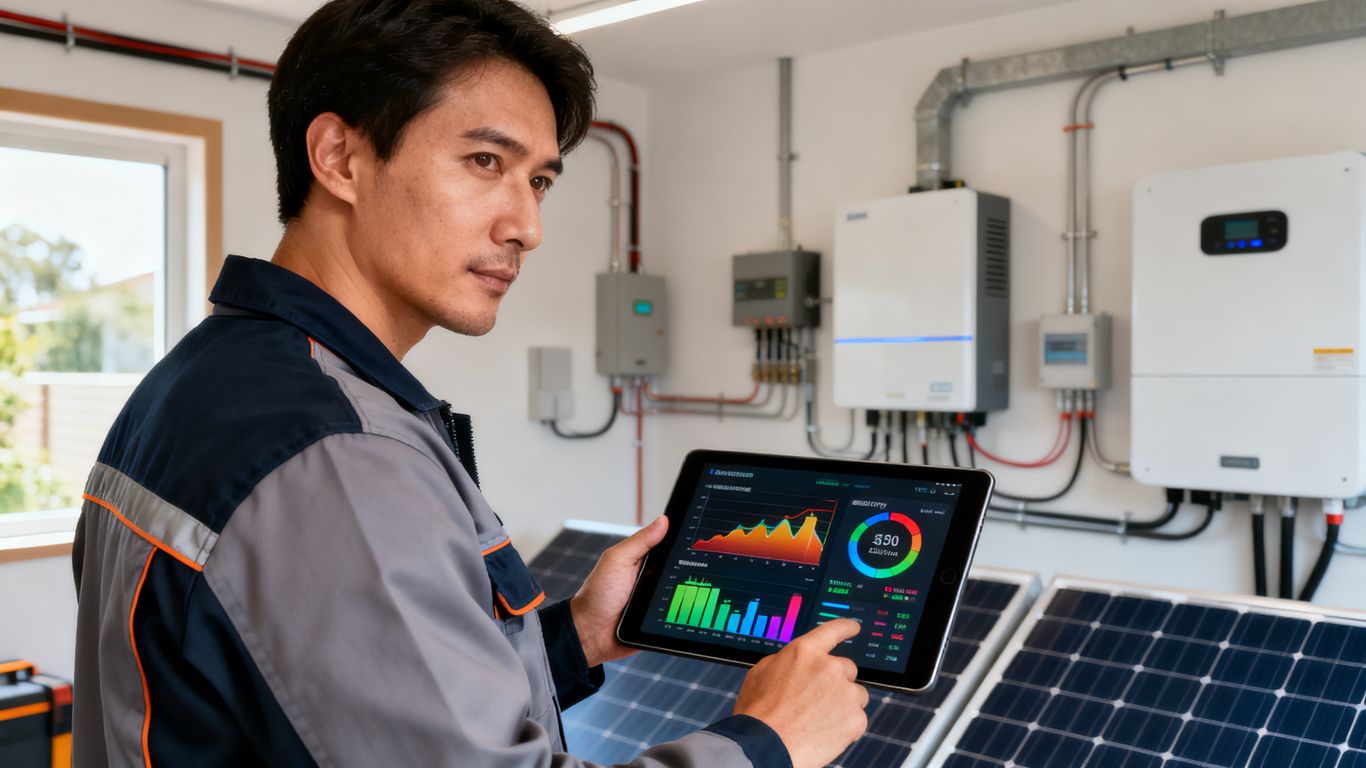
System performance relies heavily on how well you balance your solar array to the input capacity of the unit. Keeping the PV-to-inverter ratio within manufacturer recommendations prevents overheating and protects internal semiconductors.
Balancing solar array sizing
An oversized array puts extra strain on conversion hardware. When you look at the SUN-7.6K-SG01LP1-EU and SUN-8K-SG01LP1-EU documentation, you will find specific limits for input power that should not be exceeded even under ideal conditions.
Analysing battery performance data
Battery telemetry reveals how much energy is being cycled daily. Watch for sudden drops in capacity or increasing internal resistance readings, as these indicate that the lithium cells may need deeper maintenance or potential replacement.
Fine-tuning load management
Automating load reduction is unnecessary if you can manage demand effectively via the inverter’s relay logic. By mapping your largest consumers to specific relays, you retain manual or automated control over which devices consume your stored energy.
Interpreting status codes and messaging
The internal display provides alphanumeric status codes when service is required. Familiarising yourself with these codes allows for faster diagnosis without needing an onsite technician every time a minor alert appears.
Troubleshooting common operational issues
Most operational issues stem from poor cable terminations or incorrect battery communication settings. Addressing these early prevents downtime for your critical energy systems.
Diagnosing communication errors
Check for loose RJ45 or CAN plugs between the battery and the inverter. Communication errors typically appear as a fault code indicating a loss of BMS handshake, which should be the first item you investigate.
Addressing voltage fluctuations
If the grid voltage fluctuates outside of the allowed parameters, the inverter may disconnect for safety. This is a common response designed to protect your home appliances from power spikes.
Maintaining cooling and ventilation
Dust and debris build-up in the heatsink fins reduce cooling efficiency. Use a soft brush or compressed air to clean these areas, ensuring the internal fans perform optimally when the unit is under load.
Identifying battery communication faults
When experiencing Deye SUN-8K faults, check the battery ID settings. If these do not align with the inverter software requirements, the two components will fail to synchronise their charge states.
Regulatory compliance and system maintenance
Compliance with local safety standards is non-negotiable for system longevity. Adhering to these protocols protects your equipment and validates the manufacturer support you receive.
UK grid compliance standards
Meeting grid compliance involves verifying that the inverter handles faults by disconnecting safely. Regular integrity tests satisfy these regulatory frameworks, confirming your system does not negatively affect the local network.
Preventative maintenance schedules
We recommend a bi-annual audit covering electrical terminal tightness, wiring insulation, and cooling fan operation. This proactive behavior is the best tool for protecting your asset.
Ensuring long-term warranty coverage
Warranty validity depends strictly on installation records and proper usage. Keep copies of your commissioning certificates and maintenance logs ready, as these are often requested during the claim process.
How the Deye 8kW compares to Fox ESS and Sigenergy
ZenSolar fits two brands and no others: Fox ESS and Sigenergy. Since that narrows what we can offer you, it deserves explaining rather than asserting.
First, what Deye genuinely does well. At 8kW the Deye is a workhorse: flexible across battery chemistries, fitted with a generator port, parallel-capable for properties that grow, and familiar to a very large number of South African installers. That is a real package and the reason so many local systems run on it.
Where our two brands make a different argument. The case is not that the hardware above is bad. It is about what happens in years three to ten, which is where energy systems actually disappoint people.
One platform from a small house to a commercial site. The expensive mistake in home energy is outgrowing your ecosystem. Add a heat pump, a pool, an EV charger or a home office two years after commissioning and scaling often means changing brand — which means changing inverter, app and support channel at the same time. Fox ESS and Sigenergy both run continuous product families from single-phase residential through to three-phase commercial and industrial, so growth stays a capacity decision rather than a replacement decision.
Sigenergy is integrated rather than assembled. The SigenStor stack combines PV inversion, battery storage, system control and DC EV charging in one modular unit instead of four separately sourced boxes with four warranty conversations behind them. When something needs attention there is one manufacturer accountable for it. Most storage complaints turn out to be support complaints rather than hardware complaints, and this is the part that addresses them.
The warranty is written down, and we will show you the document. Sigenergy’s published warranty terms carry a 10-year period on the Sigen Battery and the Sigen Energy Controller, with the battery guaranteed to retain at least 60% of its usable capacity at 10 years, or a stated energy-throughput limit, whichever is reached first — extendable to 15 years if the system is purchased and registered within 12 months of commissioning. We quote those figures because we can point at the document they come from. Ask whoever else is quoting you to do the same; what happens next is informative.
Fox ESS is the volume-sensible half of the pair. Fox ESS sits behind Tsingshan Group and builds modular, stackable storage designed to be added to rather than replaced, across both single-phase and three-phase inverters. Where Sigenergy is the integrated premium answer, Fox ESS puts a well-specified system on a normal budget without dropping into the price tier where support quietly vanishes.
Whichever you choose, one thing decides more than the badge: every system we fit goes in through a manufacturer-approved installer, because that is what keeps the warranty valid on the day you need to use it. A warranty voided by an unapproved installation is worth exactly nothing, and that is true of every brand on this page.
Conclusion
Getting genuine energy independence out of an 8kW hybrid inverter takes more than installing it. Balancing the array against the inverter, managing loads sensibly and keeping the equipment healthy is what protects the return on the investment — on a Deye or on anything else.
Where we differ is on what happens in years three to ten. We fit Fox ESS and Sigenergy for one stated reason: the warranty terms are documented and we will show you the document, one manufacturer remains accountable for the whole stack, and the platform grows with the property without a brand change. That is the specific promise we narrowed our range in order to be able to make.
Frequently Asked Questions
Can this inverter be used with lead-acid batteries?
Yes, the unit supports both lead-acid and lithium-ion battery chemistries, though lithium-ion is generally preferred for deeper cycling performance.
How often should the inverter firmware be updated?
Check for official firmware updates once every six months to benefit from optimized communication protocols and improved system behavior.
What happens to the inverter during a grid outage?
It performs a seamless transfer to your stored battery energy, provided that the batteries have sufficient state-of-charge to maintain the required household loads.
Is wall-mounted installation required for this unit?
Yes, the design requires wall-mounting to ensure optimal airflow through the internal heatsink, which is essential for cooling the power electronics located inside.
How can I identify why my inverter displays a warning light?
The status text on the LCD or the mobile monitoring app provides specific error codes that correspond to a fault table in the technical manual.
Does the system need annual site visits from a professional?
A bi-annual preventative maintenance check is recommended to verify electrical connections and component health for long-term reliability.
Can I export power to the grid if I choose to?
Yes, the inverter is capable of exporting power to the grid, but this is subject to your local utility’s regulations and the zero-export limits configured during setup.
Ready to take the next step with solar?
Speak to the ZenSolar team about the right system for your home or business — every system we sell is installed and supported through our manufacturer-approved installers.