
Most price pages online hand you a table and call it a quote, so trust is thin. The honest answer starts with your roof, your bill and how often the lights go out, and a system size falls out of that. That is what a proper proposal looks like.
Why a solar system price in South Africa is hard to quote in one line
A single price for a ‘solar system’ is as vague as a single price for a car. Two homes with the same roof area can land on completely different quotes, because the size of the system, the equipment inside it, the roof shape and the way it is mounted all shift the number. South Africa also has a wide spread of electricity tariffs between Eskom direct customers and municipal supply, which changes how much you save each month.
The right move is to start with your own situation, then let a sized system produce a real number. Generic ranges online miss this point, which is why they feel unhelpful.
The three system types and what each one costs you
Before you price anything, decide what you want the system to do during an outage. That single choice drives the price more than any other.
Grid-tied systems
A grid-tied system feeds power into your home and pushes any extra back to the grid through your inverters. It does not run during outages, because the inverter shuts off for safety when the grid drops. This is the cheapest way to cut your monthly bill, but it offers no backup when Eskom or the municipality goes dark.
It suits households that want daytime savings and are comfortable using their existing routines during outages.
Hybrid systems
A hybrid system does everything a grid-tied system does, and adds batteries that keep the lights on when the grid drops. Outages have become a routine part of life for many South African households, so a hybrid setup is what most families end up choosing. It costs more than a grid-tied system because the batteries and the hybrid inverter add to the bill.
It suits households that want daytime savings plus evening backup for the fridge, lights, Wi-Fi and a few plug points.
Off-grid systems
An off-grid system runs the home without any grid connection at all. It needs a larger battery bank and a generator is often included for extended cloudy spells. It is the most expensive option per kilowatt of generation, and is usually only worth it for remote properties.
It suits farms and small holdings where the cost of a grid connection would be larger than the cost of an independent system.
What size system does a South African home really need
System size falls out of two numbers: how much you use, and how much of that you want covered by solar. A small home running under 500 kWh a month needs a different answer to a larger family home running closer to 1 000 kWh a month.
Reading your own Eskom bill
Open your last three months of bills and write down the kWh figure on the front. Add the three numbers together and divide by three. That average is the size of the problem your system has to solve. A monthly figure around 600 kWh points to a mid-sized setup in the 5 kW range, while figures closer to 1 000 kWh push you into the 8 to 10 kW bracket.
Do this on a municipal bill the same way — the format differs but the kWh number is in the same place.
Matching system size to roof and shading
A north-facing roof is the default for the best sun in South Africa, and shading from a neighbour’s tree or a tall wall will quietly shrink what your panels actually produce. A roof that faces east or west will still work, but it will produce less in the middle of the day when the sun is strongest. Roof shape matters too — a steep tile roof costs more to mount on than a flat zinc roof, which adds to the install line.
A shaded east-west roof will do considerably less work than a clear north-facing one. Get the number for your own roof before you plan around it.
What sits inside a complete quote
Two quotes for the same system size can look very different on price. The gap is usually in what each one includes.
Panels, inverter and batteries
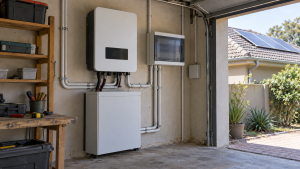
ZenSolar fits Fox ESS and Sigenergy equipment, with a 10-year swap-out warranty on equipment installed by an approved installer. Inverter size, panel tier and battery capacity are the three numbers that move the equipment line the most. A quote that names the inverter and battery brand, the panel wattage and the battery kilowatt-hour figure is a quote you can compare. A quote that lists ‘solar system’ with no model numbers is not.
Always ask for the brand, model and kWh figure in writing.
Mounting, labour and the Certificate of Compliance
The physical install includes the mounting structure, the DC and AC wiring, the distribution board changes, and a Certificate of Compliance from a registered electrician once the work is done. The CoC is what your insurer and municipality ask for, and a quote that omits it is not finished.
A quote should also spell out what happens if the roof structure needs reinforcement, since that is the most common add-on at install time.
Paying for the system: cash, financed or third-party
The price of the system is one number. How you pay for it is a separate decision, and the right answer depends on your cash flow, your appetite for debt and how long you plan to stay in the home.
Rent-to-own and power purchase agreements
ZenSolar offers rent-to-own and power purchase agreements for both residential and commercial customers. With rent-to-own, you pay a monthly fee over a set term and take ownership of the system at the end. With a power purchase agreement, you buy the power the system produces at an agreed rate, and the provider keeps ownership of the hardware. Both paths need little or no upfront capital, which suits households that want the savings without the lump sum.
Both options are also available for commercial customers, including wheeling agreements for sites that want to export or buy from independent producers.
Loans and cash purchases
A cash purchase is the simplest: you own the system from day one and the savings drop straight onto your bill. A solar loan spreads the same cost over a few years at an interest rate that depends on your credit profile. Cash suits households with the savings on hand; a loan suits households that want the savings now without dipping into those savings.
Either way, the equipment warranty on Fox ESS and Sigenergy gear installed by an approved installer travels with the system for 10 years.
Payback and what changes the math
Payback is how long the savings take to clear the cost of the system. NERSA has approved an average electricity price increase of 8.76% for customers supplied directly by Eskom, with municipal bulk purchasers implementing tariff increases averaging 9.01% from 1 July 2026 (Eskom). The CSIR records that the national average electricity tariff increased by an average of 10% per year from 2014 to 2024, compared to an average inflation rate of 5.2% over the same period (CSIR). Rising tariffs shorten payback, because every percentage point of increase makes the savings bigger.
Three things shift payback the most: the tariff increase in your municipality, how much of your daytime use the system actually covers, and whether batteries are sized sensibly. A household that oversizes on batteries it never drains pays for capacity it does not use.
South Africans who pay Personal Income Tax can also claim 25% of the cost of new and unused PV panels back through SARS, up to a maximum rebate of R15 000 (SARS). That shortens payback further for qualifying households.
How a partner network install actually works
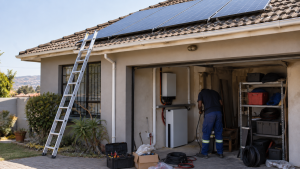
ZenSolar is a partner network of approved installers, not a single branch with its own vans. The crew that arrives at your gate is a local approved installer who has been trained on the equipment and the standards. The national standards cover the design, the install quality and the after-install support, while the local crew brings the roof experience and the regional knowledge.
What this means for you is one accountable point of contact at ZenSolar, with the actual work done by a vetted local team. The 10-year swap-out warranty on Fox ESS and Sigenergy equipment installed by an approved installer is backed by ZenSolar, not a stranger.
How to get a real number for your roof
A site visit is the only way to turn a generic price range into a number you can plan around. The visit covers the roof orientation and shading, the distribution board, the meter, the available roof area and the cable run from roof to DB. From that, a properly sized system falls out, with a quote that names the panels, the inverter, the battery and the labour line by line.
Book a site visit at zensolar.co.za/schedule and bring your last three months of bills. The number you walk away with will be yours, not a table copied off the web.
FAQ
How much does a solar system cost in South Africa?
The price depends on system size, battery capacity and roof complexity. Get a tailored quote from an installer who visits your roof rather than trusting a generic online table.
Is 5kW enough to run a house in South Africa?
A 5kW system suits a small to mid-sized household using around 600 kWh a month. Larger family homes running closer to 1 000 kWh a month usually need 8 to 10 kW.
How many solar panels do I need for a four-bedroom house in South Africa?
For a four-bedroom home using roughly 800 to 1 000 kWh a month, plan on around 15 to 20 panels. The exact number depends on the panel wattage and the roof orientation.
Is solar cheaper than Eskom in South Africa?
With annual tariff increases averaging around 10% over the last decade against inflation near 5%, the savings on a sized system outrun the monthly cost on most financed paths within the warranty period.
What is included in a complete solar quote?
Panels, inverter, batteries, mounting, labour, wiring, distribution board changes and a Certificate of Compliance from a registered electrician. A quote without a CoC is not finished.