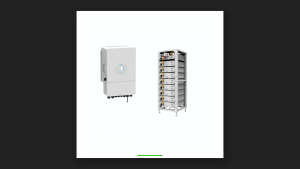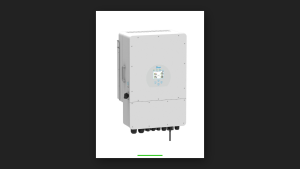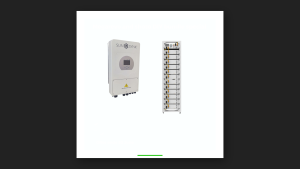
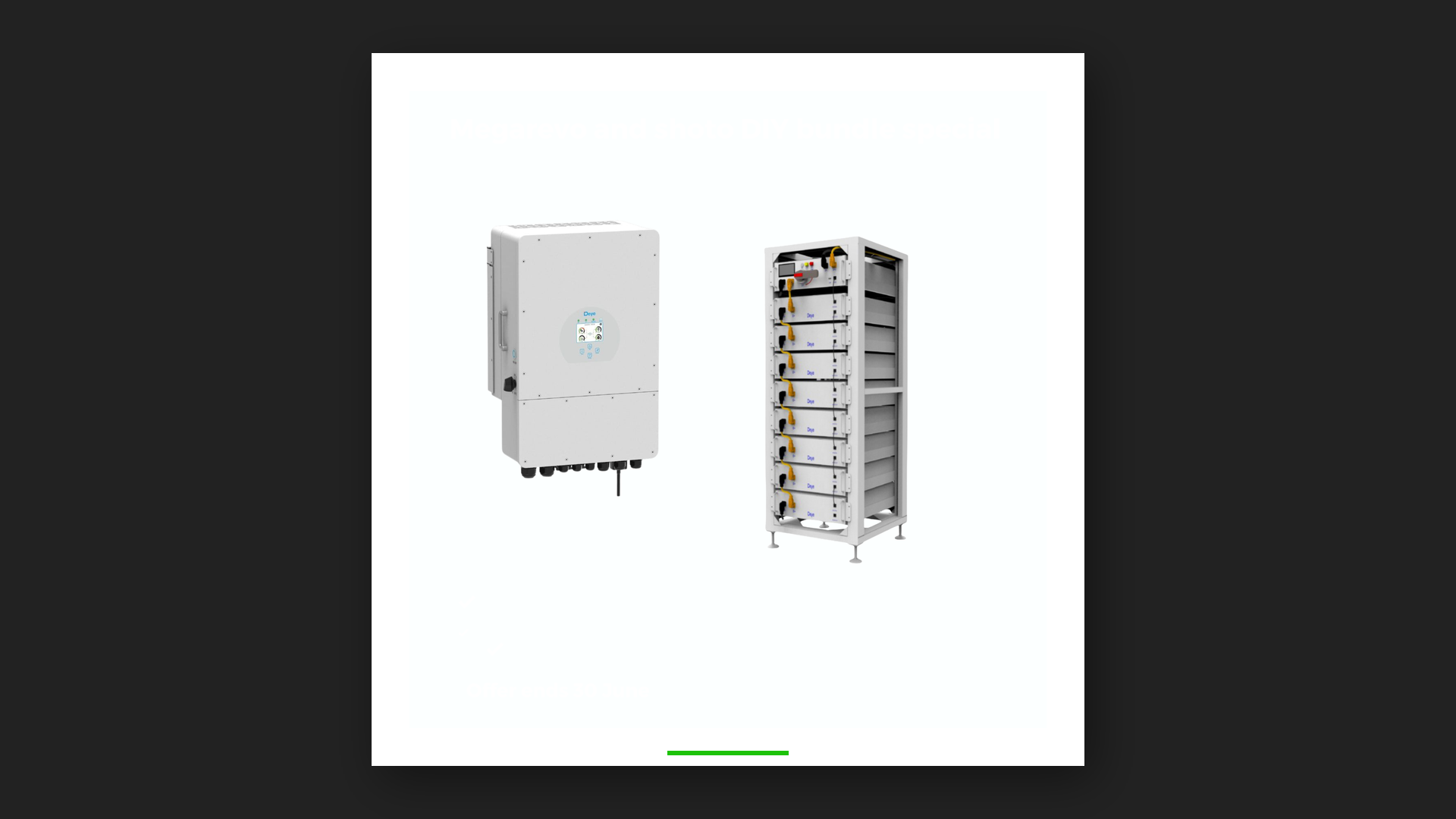
The 16kW class sits at the top end of Deye’s hybrid inverter range for South African installations. This is where a solar project stops being a household purchase and turns into a commercial-scale energy decision. Whether you run a small factory, a restaurant, a farm workshop or a very large home with heavy daytime consumption, a 16kW Deye inverter is one of the most capable single units you can put on the wall. Worth flagging early: ZenSolar doesn’t sell Deye — at this capacity we fit Fox ESS and Sigenergy, and the case for that is set out later in this guide. The technical picture below still applies whichever brand ends up on your wall, so here’s what the 16kW class delivers, who it suits, and what to check before you buy.
What a 16kW hybrid inverter does
A hybrid inverter combines three jobs in one enclosure. It converts DC power from your solar array into usable AC power, manages charging and discharging of a battery bank, and blends solar, battery and grid supply so your loads draw from the cheapest available source first. The 16kW rating refers to the continuous AC output the inverter can sustain. At this class, that’s enough to run a serious mix of three-phase machinery, refrigeration, air-conditioning, pumps and office loads at the same time.
Deye’s larger hybrid units have become a common sight on South African commercial roofs, and its scale as a manufacturer is a real part of that story. At this capacity you’re typically looking at a three-phase configuration, since most businesses with this level of demand run a three-phase supply. Confirm your supply type with your electrician before you shortlist a model.
Who actually needs 16kW?
Sizing an inverter is about matching your real consumption profile, not buying the biggest number available. A 16kW unit generally makes sense when:
- Your business runs significant daytime loads (refrigeration, compressors, ovens, machinery) that an 8kW or 12kW unit would struggle to carry at the same time.
- You’re on a three-phase supply and want solar to offset consumption across all three phases.
- Your monthly electricity bill has become a meaningful line item, and rising Eskom tariffs keep eating into margins year after year.
- You want headroom to grow, adding loads later without replacing the inverter.
If your consumption is mostly evenings and weekends, or your peak simultaneous demand is modest, a smaller unit paired with a well-sized battery may serve you better. Our guide on how to size a solar system walks through the sizing logic step by step.
Key specifications to check on the datasheet
Exact figures vary between model revisions, so always work from the current datasheet for the specific unit you’re quoted. At this scale, here’s what to check and why it matters:
| Specification | What to confirm before you buy |
|---|---|
| Continuous AC output and surge capacity | Motors and compressors draw far more at start-up than when running. Surge rating determines whether they start cleanly. |
| Maximum PV input | Larger Deye hybrids typically accept a solar array bigger than their AC rating, which lets you oversize the array to harvest more energy in winter and on overcast days. |
| Number of MPPT trackers | More trackers mean more flexibility to split panels across differently oriented roof faces. |
| Battery voltage compatibility | Confirm the unit matches the battery family you plan to use, whether low-voltage or high-voltage. |
| Parallel capability | Deye’s larger hybrids are designed to be stacked in parallel, so one 16kW unit today can become part of a much larger bank later. Confirm model-specific parallel limits with your supplier. |
For confirmed specifications and current pricing on any specific Deye model, work from the manufacturer’s own datasheet or a supplier that actually stocks the brand, rather than a figure quoted in an article.
Battery pairing at commercial scale
A 16kW inverter without storage still cuts your daytime bill, but the strongest business case usually includes a battery bank. Storage lets you shift solar energy generated at midday into the expensive late-afternoon period, smooth demand peaks, and keep critical processes running with genuine energy independence from the grid. Deye hybrids pair with lithium batteries from a number of established manufacturers, including brands such as Freedom Won, Hubble and Pylontech, and the right bank size depends on which loads you want covered and for how long. Battery sizing at this scale deserves a proper consumption analysis, not a rule of thumb.
Three-phase considerations
Three-phase hybrid installations raise design questions that single-phase homeowners never face. Loads need to stay reasonably balanced across phases, and your installer has to decide which circuits run through the inverter and which stay grid-only. Three-phase motors, in particular, need clean power across all phases. This is the kind of design work that separates a commercial-grade installer from a residential one. Ask to see three-phase hybrid projects they’ve completed before you commit.
Compliance and grid registration in South Africa
Any grid-connected system in South Africa has to follow the rules of your supply authority. That means using an inverter approved for grid connection under the applicable national standards, registering the system as small-scale embedded generation with your municipality or Eskom, and getting an Electrical Certificate of Compliance signed off by a registered electrician after installation. At commercial scale, your supply authority may have additional requirements. A competent installer-partner handles this paperwork as part of the project. Treat any quote that skips over compliance as a red flag.
The commercial case in 2026
For a business, solar is a purely financial decision, and the numbers have never lined up better. Eskom tariffs have climbed above inflation year after year, while solar component costs have fallen compared with two or three years ago. A correctly sized commercial system offsets expensive daytime consumption with self-generated power, turns a volatile operating cost into a predictable asset, and keeps paying back over a 20-plus-year equipment life. Speak to your accountant about the depreciation treatment of renewable-energy assets and about any tax incentives that currently apply to your business. For many businesses, that conversation strengthens the case further. If you’re weighing up how to fund the project, our overview of solar power financing options and our guide to business loans for solar energy projects cover the main routes.
What ZenSolar fits at this scale, and why
At 16kW you’re squarely in commercial territory, and this is exactly where the choice between suppliers stops being a preference and starts being a business decision. We fit two brands at this end of the market: Fox ESS and Sigenergy. It’s a deliberate narrowing, and on a commercial-scale project it deserves a proper explanation rather than a footnote.
Deye earns its position here. A manufacturer shipping at Deye’s global volume accumulates field data fast, iterates firmware, and sustains a genuine spare-parts pipeline — and its larger hybrids are proven on commercial South African sites. We’re not writing that off. If your installer has deep experience with Deye’s commercial range and the design fits, it is a credible route.
What changes the calculation at commercial scale. A 16kW site rarely stays a 16kW site. Add a second production line, a cold room, an EV fleet charger, and the question becomes whether your existing platform scales or whether you’re starting over with a new inverter, app and support relationship. Both Fox ESS and Sigenergy run one continuous product family from single-phase residential through to three-phase commercial and industrial, so expanding a system is a capacity order, not a re-specification.
Sigenergy’s SigenStor unit folds PV inversion, battery storage, system control and DC EV charging into a single modular block, which matters more on a commercial site than a residential one, since it’s the difference between one contractor being accountable for the whole installation and four separate suppliers each pointing at the others when something needs attention. Its published warranty terms carry a 10-year period on the Sigen Battery and the Sigen Energy Controller, with the battery guaranteed to retain at least 60% of its usable capacity at 10 years, or a stated energy-throughput limit, whichever comes first, extendable to 15 years if the system is registered within 12 months of commissioning. On a commercial asset that’s meant to run for two decades, that’s a document worth having in the file, and we’ll hand it to you before you sign.
Fox ESS, backed by Tsingshan Group, covers the same span with modular, stackable three-phase hardware built to be added to as the site grows rather than replaced with a bigger box. It’s the more budget-conscious of the two without dropping into the tier where support and spares become someone else’s problem. Every installation runs through a manufacturer-approved installer, non-negotiable at this scale, since it’s what keeps a commercial warranty enforceable when a claim actually matters.
Frequently asked questions
Can I run my whole business on a 16kW Deye inverter?
It depends on your peak simultaneous demand, not your monthly total. An energy audit, or even a week of consumption logging, will show whether 16kW covers your real peaks. If it doesn’t, paralleling additional units is the standard route.
Is 16kW overkill for a house?
For most homes, yes. But very large properties with borehole pumps, multiple air conditioners, a heated pool and a workshop can genuinely use this class. Run your numbers before assuming either way.
Do I need a battery from day one?
No. A grid-tied hybrid can start as a daytime-offset system and have storage added later. If battery cover matters to your operations, budget for it upfront so the array is sized to charge it properly.
What’s the warranty on the Deye 16kW inverter?
Warranty terms are set by Deye and confirmed on the product page for the specific unit you buy, since they can change between model revisions. Check the current terms before you order, or ask your account manager for the latest documentation.
What South African grid codes does this inverter need to comply with?
As with any grid-connected system in South Africa, compliance runs through your supply authority’s rules: an inverter approved for grid connection under the applicable national standards, registration as small-scale embedded generation, and an Electrical Certificate of Compliance from a registered electrician. Your installer-partner handles the specifics for your site and supply authority.
Where does ZenSolar fit into a Deye 16kW purchase?
Nowhere directly. At commercial scale we fit Fox ESS and Sigenergy, both of which run three-phase product lines built for exactly this size of site. If a Deye system is what you’re after, that purchase and its warranty need to go through a supplier that actually carries the brand.
Get the numbers for your site
The honest answer to “is 16kW right for me?” always comes from your own consumption data. Use our free system sizer to model your load profile, or run a solar ROI assessment to see what a commercial-scale system would do to your bottom line. Then request a personalised quote for a Fox ESS or Sigenergy design, and we will connect you with our manufacturer-approved installer for a site-specific build.
Not sure which system is right for you?