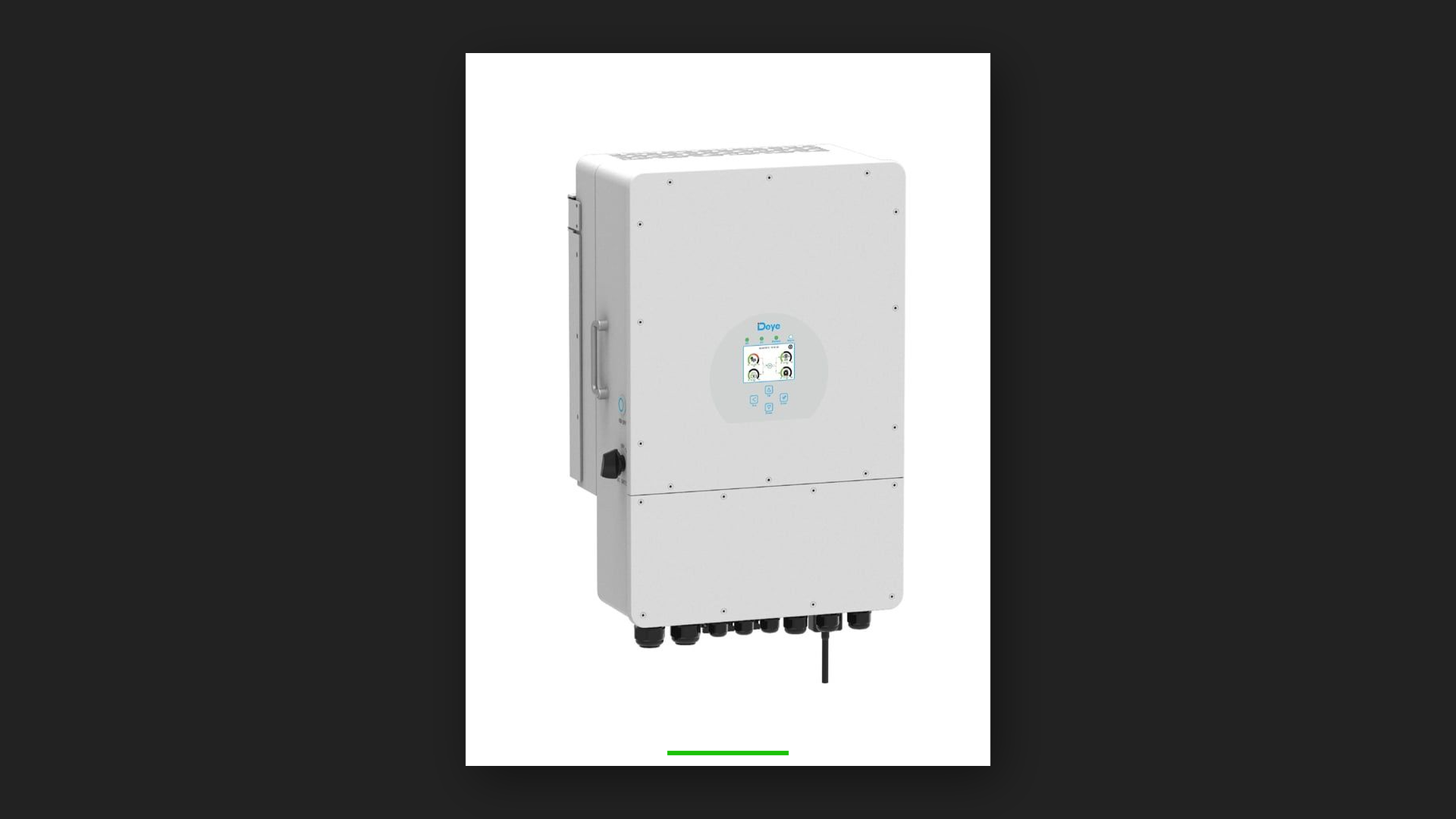
If your Deye inverter has stopped behaving the way it should, you probably don’t have time for background reading. Maybe the geyser has gone cold. Maybe half the house has no power. Maybe the display is showing a code you’ve never seen before. This guide is for that moment. It covers how Deye support and repairs work in South Africa, what you can safely check yourself, and what to have ready when you call someone who can fix it.
Where ZenSolar fits: we don’t sell, install or repair Deye equipment — we install Fox ESS and Sigenergy. If your Deye system is out of warranty and giving repeat trouble, the replacement option is covered near the end of this guide.
First Things First: The Warranty Chain
Deye inverters sold in South Africa carry a manufacturer’s warranty, but the practical route to using it runs through the supply chain that sold you the unit. In the normal case, your first call is the installer or retailer who supplied the system. They escalate to the distributor that imported the unit, and the distributor handles the warranty process with the manufacturer.
This is why the single most important repair decision gets made on the day you buy. Authorised stock, purchased through a reputable South African channel, has a functioning warranty path. Grey imports (units brought in outside official channels) can leave you with a warranty that exists on paper but can’t be claimed locally. If you’re still shopping, weigh this heavily. If you already own a unit, dig out your proof of purchase and confirm who supplied it, since that’s the first thing you’ll need.
What You Can Safely Check Yourself
Never open an inverter, and never work inside your distribution board. Inverters carry lethal voltages even when switched off, and DC from a solar array can’t simply be switched away by unplugging things.
Before you contact anyone, it helps to know exactly what you’re dealing with. Common signs include:
- The inverter is completely off and the display won’t turn on.
- A persistent beeping or alarm sound.
- Visible damage to the unit, or a burning smell.
- Part or all of the house has no power even though the inverter looks like it’s running.
If you notice damage, a burning smell, or anything that looks or smells wrong, stop there. Switch off at the breaker if you can do so safely, and call your supplier or a qualified technician straight away rather than investigating further yourself.
For everything else, a few checks are safe and solve a surprising share of “failures”:
- Read the error code. Deye units display fault codes on screen and in the monitoring app. Note the exact code and when it appears. This is the first thing any technician will ask for.
- Check the monitoring app. A unit showing offline may have a WiFi problem rather than a hardware one. Routers get replaced, passwords change, signal fades.
- Look for the obvious. Has a breaker tripped at the DB board? Is a switch off after building work? Did the fault start after an electrical storm?
- Note the pattern. Does the fault appear at a particular time of day, in hot weather, or when a specific appliance switches on? Patterns shorten diagnosis considerably.
With the error code and pattern noted, contact your supplier. Much of Deye diagnosis happens remotely, through the monitoring platform and your description, before anyone needs to travel to site.
Common Fault Patterns You Might Recognise
Every fault is different, but most calls to a Deye technician fall into a handful of recognisable patterns. None of this replaces reading your actual error code to a professional. Knowing roughly where your problem sits just helps you describe it clearly when you call.
- Inverter won’t power on at all. Check the breaker at your DB board first. If it has tripped and won’t reset, or resets and trips again, stop there and call your supplier. Don’t keep resetting it.
- Inverter restarts repeatedly. Note how often it happens and whether it lines up with heat, a particular appliance, or a time of day, then pass that detail on when you call.
- No power reaching part or all of the house, even though the inverter display looks normal. This can point to something downstream of the inverter rather than the unit itself. A qualified electrician needs to check this, not you.
- An error code referencing battery communication. Confirm the battery is switched on and visible in the monitoring app, but don’t touch any cabling. Record the exact code shown.
- Persistent beeping or an alarm that won’t clear. Note the code if one is showing and contact your supplier. Treat this as something to report rather than something to fix yourself.
In every case, the useful thing you can hand over is the same: the exact code on the screen, when it started, and what changed beforehand, if anything. That’s what turns a callout into a five-minute remote diagnosis instead of a wasted site visit.
What’s Usually Behind These Faults
Without pretending to be a service manual, most real-world inverter callouts fall into a few families.
- Communication issues. The inverter works but stops reporting. Usually a dongle, network, or configuration problem rather than a hardware one.
- Settings and firmware issues. Behaviour that looks like a fault but is really a configuration mismatch, often fixable remotely or with a short technician visit.
- Installation-related faults. Loose terminations, undersized cabling, or poor ventilation. These tend to surface months after a substandard installation, not on day one.
- Component wear. Fans and electronics that have been running in hot, dusty conditions for years.
- Genuine hardware failure. The minority case, and the one the warranty chain exists for.
Telling these apart quickly is exactly what experience buys, which is the reason to use a repairer who works with Deye equipment regularly rather than whoever answers first.
Choosing a Repair Provider: The Questions That Matter
Searches for a “Deye inverter repair centre” turn up a mixed bag, from solid accredited technicians to people who’ll happily open a unit they don’t fully understand. Before you hand your system over, ask:
- Do you work with Deye equipment regularly, and can you reach the distributor’s technical support and parts channel?
- Will you diagnose remotely first, using the error code and monitoring data, before charging a callout?
- If the unit is under warranty, will you handle the claim through the proper channel rather than opening it and voiding cover?
- Are you a registered electrician, and will any electrical work be certified?
- What’s your realistic turnaround, and can you keep essential circuits safely configured in the meantime?
The warranty point is worth repeating: an unauthorised repair attempt on an in-warranty unit can void the manufacturer’s cover. If there’s any chance your inverter is still within its warranty period, route the problem through your supplier before anyone opens it.
For an out-of-warranty unit, a qualified independent technician who works with Deye equipment regularly is often the more practical route than working back through the original supply chain.
Prevention: The Cheapest Repair Is the One You Never Need
Most inverter problems are avoidable, or at least catchable early. A few habits make the difference.
- Get it installed properly the first time. Ventilation, clean terminations, correctly rated protection, and a compliant installation with an Electrical Certificate of Compliance eliminate the largest category of future faults.
- Use the monitoring. A system whose production quietly drops is telling you something. Check the app weekly and look into anything that changes suddenly.
- Keep it clean and cool. Dust, insects, and afternoon sun on the enclosure shorten electronic life. Where you mount it on day one matters for years afterward.
- Have it inspected periodically. A routine check of terminations, protection devices, and firmware by a qualified technician is cheap insurance on equipment built to run for decades.
Repair, Replace, or Upgrade?
For an out-of-warranty unit with a serious fault, get a written diagnosis and weigh the repair cost against replacement. Inverter technology and value have both improved meaningfully in recent years, and component prices are lower than they were two or three years ago. Sometimes a failed older unit is the prompt to right-size a system: households change, and the capacity that made sense originally isn’t always the capacity you need now. Our guide on how to size a solar system helps you sanity-check that decision, and our comparison of Fox ESS and Deye is useful if you’re reconsidering brands at replacement time.
If the Fault Keeps Coming Back, or the Unit Is Getting On
A single fault, cleared quickly through the right channel, doesn’t need anything more than what’s above. But if you’re on your second or third callout for the same inverter, or the unit is old enough that you’re weighing a real repair bill against starting again, it’s worth knowing what we’d fit if we were doing your next install.
We install Fox ESS and Sigenergy, both through manufacturer-approved installation, which is what keeps the warranty valid from day one. Fox ESS is the volume-sensible option: modular, stackable storage built to be added to as your needs grow, not replaced outright. Sigenergy is the integrated option — its SigenStor stack combines the inverter, battery, system controller and DC EV charging in a single unit instead of separate boxes from separate manufacturers, so there’s one company accountable for the whole system rather than several pointing fingers when something goes wrong.
On the battery side, Sigenergy’s own published terms are ones we can put in front of you before you sign anything: a 10-year warranty on the Sigen Battery and Sigen Energy Controller, with the battery guaranteed to retain at least 60% usable capacity at 10 years (or a stated energy-throughput limit, whichever comes first), extendable to 15 years if you register within 12 months of commissioning.
None of that is a knock on the unit you already own — plenty of Deye systems run for years without drama once properly installed and looked after. It’s simply what we’d point you toward if you’re deciding what goes up next.
Frequently Asked Questions
My Deye shows an error code. Is that always a hardware fault?
No. Codes cover everything from grid conditions to communication hiccups to genuine faults. Note the exact code and contact your supplier. Many are resolved remotely.
Can I claim warranty if I bought the house with the system already installed?
Often the warranty follows the unit rather than the owner, but the paperwork matters. Trace the original supplier or installer if you can, and keep whatever documentation came with the property.
How long do inverters last?
A quality hybrid inverter is designed for many years of service, typically a shorter life than the panels above it. That’s normal and planned for. Good installation, ventilation, and monitoring push it toward the long end of that range.
To be clear about what we do and don’t do
ZenSolar does not sell, service or repair Deye equipment. If your Deye unit is giving trouble, the routes above — the installer who fitted it, the supplier who sold it, and Deye’s own local channel — are the ones to work through, and we would rather tell you that plainly than take an enquiry we cannot help with.
Where we can help is the next system. We fit Fox ESS and Sigenergy, and nothing else. Fox ESS carries a 10-year swap-out warranty, so a unit that fails inside the term is replaced rather than left with you while a repair is negotiated. Sigenergy publishes a 10-year term on the Sigen Battery and Sigen Energy Controller, with the battery guaranteed to retain at least 60% usable capacity at 10 years or a stated energy-throughput limit, whichever comes first, extendable to 15 years if purchased and registered within 12 months of commissioning. Every installation is done by a manufacturer-approved installer, which is what keeps those terms valid.
If that is the direction you want to go, start with real numbers: run our free system sizer or the solar ROI assessment, then request a personalised quote.
Not sure which system is right for you?