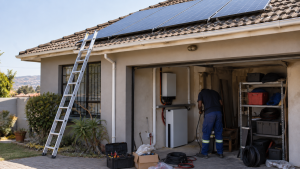
Solar panel prices matter, but the cash figure on a retailer’s shelf is only the start of the decision. Your larger cost is the Eskom-linked bill, after a 91.10% compounded tariff increase since April 2021.
Compare the upfront system cost with the long-term cost of doing nothing. A utility bill swap can turn a rising monthly expense into a planned solar payment, including options structured around R0 down.
The Baseline: South African Solar Panel & System Prices
Solar panel prices in South Africa depend on whether you are buying a component, a backup system or a complete energy solution. A panel price alone leaves out the inverter, battery, mounting, wiring, protection equipment, installation and compliance work that make the system useful.
A grid-tied system uses solar power while the grid is available and usually has less battery capacity. A hybrid system combines solar, batteries and Eskom supply, while an off-grid system needs enough generation and storage to carry the property without the grid.
Average Costs for 3-Bedroom Houses & Residential System Sizes
A three-bedroom home needs a design based on actual load, not bedroom count. A home with an electric geyser, pool pump, air-conditioning or work-from-home equipment can use far more power than another three-bedroom home.
A smaller system may focus on essential circuits during load reduction, such as lights, plugs, Wi-Fi and a fridge. A larger hybrid system can cover more daytime use, add solar generation for the whole property and store more power for the evening.
Start with bills and a list of the appliances you expect to run together. A site assessment should also check a north-facing roof, shading, usable roof area and the main distribution board before a final system size is chosen.
Retail Price Comparison: Cashbuild, Makro, Takealot, and Leroy Merlin
Cashbuild, Makro, Takealot and Leroy Merlin can be useful places to compare retail listings for individual solar components. Check the model number, rated output, what is included, delivery terms and whether the price applies to one item or a kit.
Those listings rarely show the full installed cost. They may exclude site design, roof mounting, electrical protection, cable runs, labour, commissioning and the Certificate of Compliance issued by a registered electrician.
Use retail prices as a component benchmark, then compare them with an installed proposal on a like-for-like basis. A package with a lower shelf price can cost more once the missing equipment and specialist work are added.
Indicative Installed Price Ranges by System Size
Retail listings only show one part of the price. The list below gives a broad, real-world range for the core system cost at different sizes, before site-specific labour and add-ons are included.
- 3.5 kW system: around R75 000 core cost — basic residential lighting and essential circuits.
- 5 kW system: around R110 000 core cost — medium home usage.
- 8 kW system: around R175 000 core cost — large home or small office.
These are entry points, not fixed prices. Actual costs move with equipment choice and site-specific labour, so always ask for a full breakdown rather than comparing a single headline number.
System Components: Navigating Panel, Inverter, and Battery Costs
Panels make electricity when sunlight is available, but they are only one part of the system. The inverter converts and manages power, while batteries hold energy for use after sunset or during a grid interruption.
Inverter capacity controls how many appliances can run at once. Battery size controls how long selected loads can run, and solar array size controls how much energy can be produced on a normal day.
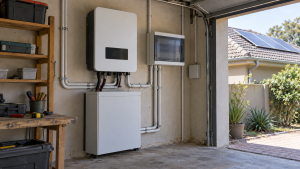
Mounting, surge protection, isolators, cable runs and the electrical installation matter as much as the visible hardware. For equipment supplied and installed by ZenSolar, the confirmed equipment choices are Fox ESS and Sigenergy.
The Capital Trap: Why Buying Solar Outright Isn’t Your Only Option
Cash purchase can make sense when capital is available and the project is simple. It can also tie up money that a household needs for other priorities or that a business needs for stock, payroll and growth.
The R4M Outright Purchase Bottleneck for South African Businesses
For a business, a large solar project can create an R4M outright-purchase bottleneck. Even where consumption justifies the project, taking that amount from working capital can delay operational plans or force trade-offs elsewhere.
Load profiles, operating hours, tariff structure and the location of consumption all affect the right commercial design. Daytime demand creates a different opportunity from evening-heavy demand.
Wheeling agreements can also form part of the conversation where generation and electricity use are at different sites. They are a way to examine energy supply and consumption across locations rather than treating every meter as an isolated problem.
Traditional Asset Loans vs. Cash-Flow-Friendly Energy Upgrades
A conventional asset loan spreads the capital cost, but it still centres the transaction on owning equipment from the beginning. The loan terms, deposit, interest, security and impact on borrowing capacity deserve the same attention as the solar design.
Commercial modelling should also account for tax incentives or capital-allowance treatment that may be current and applicable to the business. Eligibility depends on the entity, the asset treatment and the rules in force when the project proceeds.
A cash-flow-focused structure starts with the energy bill instead. It asks whether a planned monthly solar cost can fit within the money already leaving the business for electricity, while preserving capital for the business itself.
Zero Money Down: The Power of the Utility Bill Swap Method
The utility bill swap method compares two monthly paths: continued Eskom-linked expenditure or a solar payment designed around the property’s energy use. Instead of treating solar as a once-off purchase, it treats the move as a change in how you pay for energy.
R0-down structures remove the need to wait until all the capital is available. The quoted monthly amount, term, system scope and expected grid use should be reviewed together, because each one influences the cash-flow outcome.
Rent-to-Own: A Clear 5-to-10 Year Path to Complete System Ownership
Rent-to-own turns the system into a scheduled path to ownership. ZenSolar offers rent-to-own finance for residential and commercial customers, with terms that can provide a clear five-to-ten-year route to complete ownership.
The agreement should set out the payment schedule, term, ownership point and the system being installed. You can then compare the planned payment against the energy spend it is intended to replace.
PPAs and Leases: Keeping Solar as OpEx to Protect Your Cash Flow
A power purchase agreement, or PPA, focuses on the energy supplied rather than buying the equipment upfront. ZenSolar offers PPAs for residential and commercial customers, allowing the energy arrangement to be evaluated against the existing utility bill.
For a business, this can place solar within operating expenditure rather than demanding an immediate capital outlay. A lease is another market structure that can similarly prioritise periodic use payments; its exact accounting treatment follows the signed agreement and the business’s financial reporting.
Calculating Your True ROI Against Skyrocketing Eskom Tariffs
Build the estimate from real bills, preferably across different seasons, then match those bills to daytime use and load reduction needs. Commercial projects should add demand patterns, operating hours, funding costs and any relevant current tax treatment. For most homes, the payback period on a correctly sized system currently lands between four and eight years, and that window gets shorter every time Eskom pushes tariffs higher.
The Compounded 91.10% Increase: The Real Price of Doing Nothing
A compounded Eskom tariff increase of approximately 91.10% since April 2021 changes the baseline for every solar calculation. Staying entirely dependent on grid purchases is an ongoing financial decision, even when it does not require a new contract or installation.
Use today’s bill as the starting point, then test how future tariff changes affect the years ahead. That reveals why a predictable solar payment can be more useful to household budgeting and business planning than a retail price viewed alone.
Where the planned solar payment is below the relevant portion of the electricity spend it replaces, the monthly cash-flow difference can support the decision from the outset. Your own consumption and system design determine that comparison.
How a 10-Year Swap-Out Warranty Secures Your Payback Period
Unexpected equipment failure can interrupt the savings case and create an unplanned cost. For Fox ESS and Sigenergy equipment installed by an approved installer, ZenSolar provides a 10-year swap-out warranty.
That warranty should be considered with the system’s monitoring and maintenance plan. Remote monitoring can flag changes in production or battery performance early, while a clear service path helps keep the system working as designed.
What Solar Does to a Home’s Resale Value
Buyers increasingly treat solar as a selling point rather than a novelty. A home with a professionally installed system tends to draw more interest and can sell faster, because the next owner inherits lower running costs and less exposure to load reduction from day one.
Costs and Considerations Beyond the Quote
A few line items sit outside the headline system price and are easy to miss when comparing quotes.
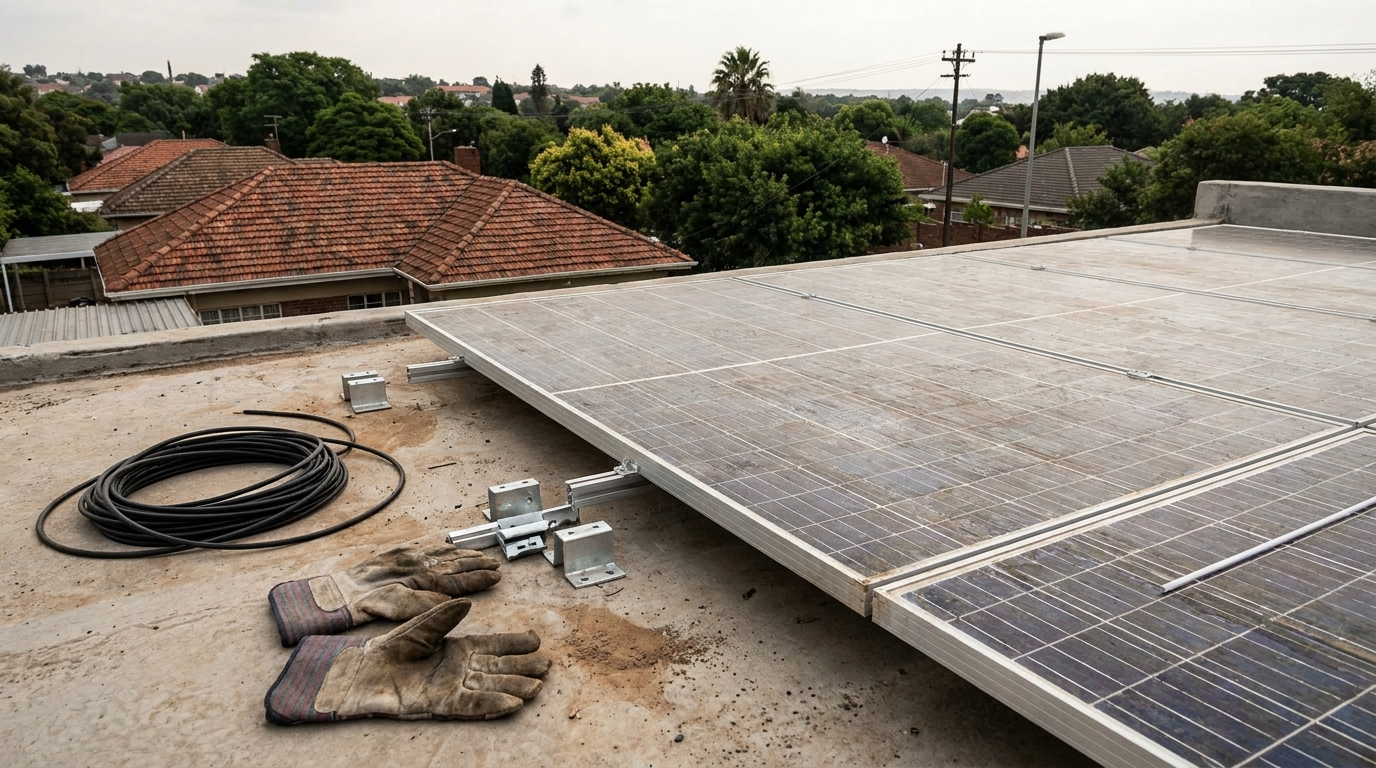
If your roof needs reinforcement before panels go up, a structural assessment from a qualified engineer may be needed, and that cost sits outside the standard installation quote.
Once the system is installed, tell your home insurer. A solar installation adds value to the property, and most policies need to be updated to cover the new equipment against theft, fire or storm damage.
FAQ
How much do solar panels cost for homes in South Africa?
Panel-only retail prices are only one line item. The complete cost depends on the system type, inverter, battery capacity, roof work, installation and compliance.
How many solar panels do I need for a 3-bedroom house in South Africa?
Bedroom count is a starting point, not a system size. Your bills, appliance load, daytime use, north-facing roof area and backup goal determine the correct array.
What is a rent-to-own solar system and how does it work?
It is a finance arrangement with scheduled payments that lead to ownership at the end of the agreed term. ZenSolar offers rent-to-own options for residential and commercial customers.
Is rent-to-own solar a good investment in South Africa?
It can fit when spreading the system cost supports your cash flow and the planned payment compares well with the electricity spend it replaces. Compare the term, system scope and expected grid use before deciding.
What happens to solar maintenance and warranty costs during a finance agreement?
Read the agreement’s maintenance responsibilities and service process alongside the quote. Fox ESS and Sigenergy equipment installed by an approved installer carries a 10-year swap-out warranty.
Ready to compare your electricity spend with a tailored solar plan? Book a site visit.