What a solar installation really is, and what it is not
Most solar quotes in South Africa look the same on paper and behave very differently on the roof. The difference almost always comes down to the design underneath the price, not the brand badge at the top of the page. This guide gives you the way an installer reads a quote so you can compare offers on the same terms.
A solar installation is a small power station on your roof. Panels turn sunlight into electricity. An inverter turns that electricity into something your home can use. Any battery you add stores the excess for the evening. That is the whole system, and the rest is paperwork, mounting, and the right hands on the tools.
What it is not is a magic fix for every outage, or a set-and-forget purchase that ignores your roof, your tariff, and your evening habits. It is a piece of equipment that performs in proportion to how well it was sized, mounted, and registered with the people who need to know about it.
Grid-tied, hybrid, or off-grid: which one makes sense
There are three flavours of solar installation, and your choice is the single biggest driver of price and behaviour.
A grid-tied system is connected to the municipal supply and to your home. It powers your house while the sun is out, and the grid handles everything else. It does nothing for you when the grid is down.
A hybrid system is grid-tied plus a battery. The panels run the home and charge the battery by day. The battery takes over when the grid drops or the sun goes down. For most South African homes, this is the right starting point.
An off-grid system is a private power station. It runs without any municipal connection at all. It costs the most because the battery has to carry you through the worst stretch of weather, not just one evening. Most homeowners do not need this, and a few cannot avoid it.
How big a system you need, and what each size can run
System size is measured in kilowatts of panel capacity and kilowatt-hours of battery storage. The right size depends on what you want to keep running during an outage, not on the size of the roof.
A small system for the essentials
A 3 kW panel array with a 5 kWh battery will keep the lights on, the router running, the fridge cold, and a laptop or two charged through a normal evening. It will not run a stove, a geyser, or an air conditioner for long. This is the right answer when the goal is staying in touch and keeping food safe.
A medium system for most of the house
A 5 kW array with a 10 kWh battery covers most of what a family actually uses in a day, including the fridge, lights, TV, and a microwave or kettle in short bursts. It will run for several hours on battery alone and recover quickly once the sun is back.
A large system that aims to cover nearly everything
An 8 kW or larger array with a 15 kWh or bigger battery is sized for the household that wants to forget the grid for most of the day. Heavy loads like a stove or a geyser still need care, but the system can carry the usual lights, plugs, and a sustained working-from-home setup without flinching.
What is on your roof and what is in your garage
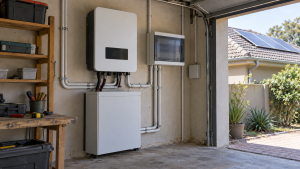
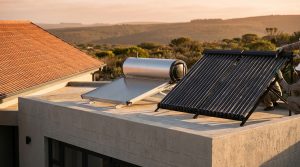
A typical home split puts the panels on the roof and the inverter and battery on a garage wall or in a utility room. None of it is decorative, and every part pulls its weight.
Panels, inverter, batteries, and the rest
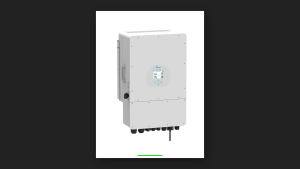
Panels do the collecting. The inverter does the converting between direct current from the panels, alternating current your home uses, and the battery language in between. The battery stores what you do not use right now.
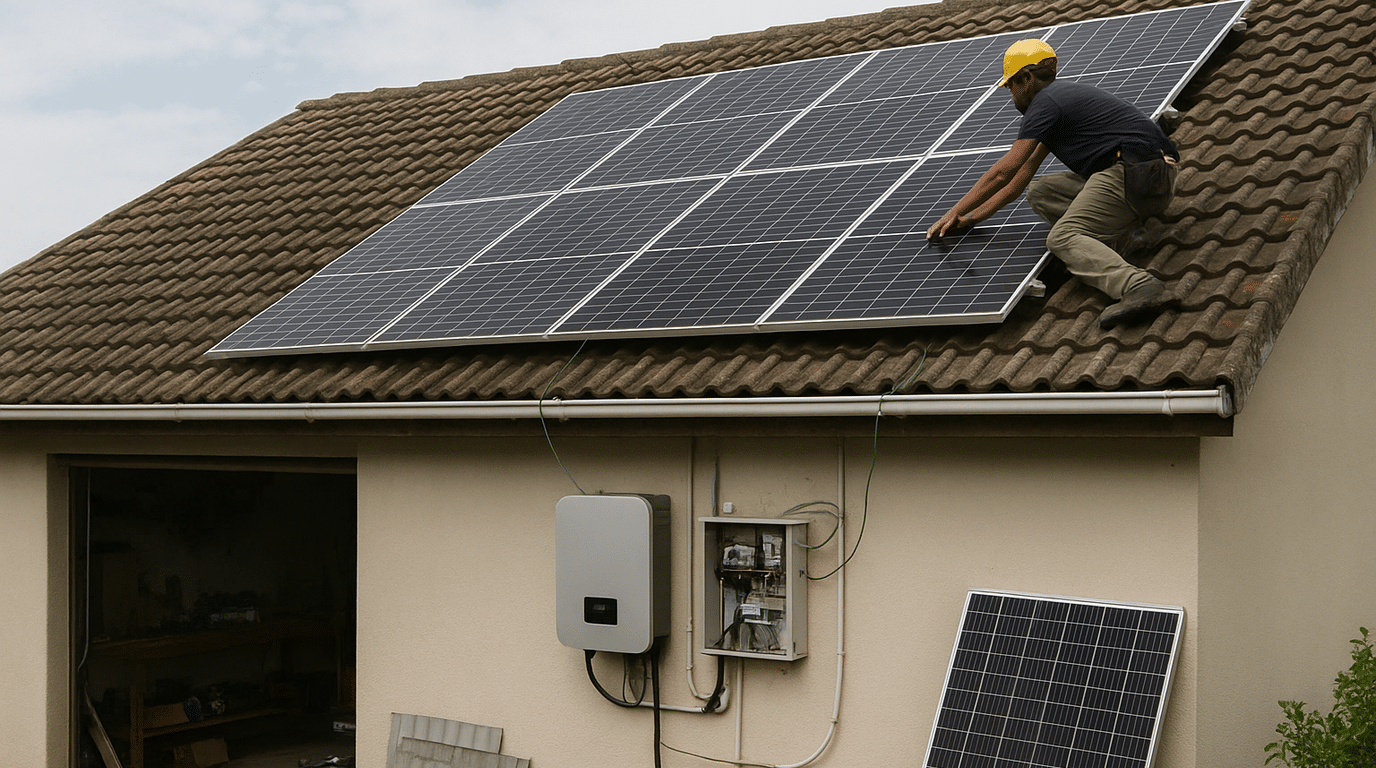
On top of that you have the mounting frame, which holds the panels at the right angle, the DC and AC cabling that ties it all together, isolation switches your electrician will point to, and a small meter or monitoring app so you can see what the system is doing. A north-facing roof with no shade will do considerably better than a shaded east-west one. Get the number for your own roof before you plan around it.
What a good installer handles, and what you handle
The split of work is clearer than most quotes suggest, and a good installer will tell you what they take on and what stays with you.
Site visit, design, quote, and the Certificate of Compliance
After the first call, the installer visits your roof, looks at your DB board, asks about your real usage, and then designs the system around that. Once you sign, they install, test, and issue a Certificate of Compliance from a registered electrician. That CoC is the legal proof that the work is safe, and your insurer will want to see it.
Registering with the municipality, and Eskom where it applies
The installer normally fills in and submits the SSEG application to your local municipality on your behalf. Where the supply comes straight from Eskom rather than the municipality, the same form goes to Eskom. This step is what allows you to feed back into the grid and what keeps the install legal.
Do you need permission from Eskom to install solar panels
For a system below the Small-Scale Embedded Generation threshold, you do not need a licence, but you do need to register the installation with the body that supplies your area so the reverse power flow is logged. South Africa’s rooftop solar market reached 3.2 GW of total installed capacity in 2023, according to GreenCape, and that scale is only possible because the SSEG rules draw a clear line below 1 MW, per SAPVIA.
How long the whole process takes, from first call to switch-on
From deposit to switch-on, a clean residential install takes three to six weeks. The site visit and quote usually happen within the first week. Mounting and electrical work take one to three days on site depending on the size of the array and the roof.
The variable part is municipal sign-off. Some municipalities turn SSEG applications around in two weeks, and some take much longer. Ask your installer which municipality you fall under and what their recent turnaround has been. That single answer is a better predictor of your switch-on date than anything in the quote.
How to compare quotes from different installers
Two quotes for the same kW number can be R40 000 apart and still be quoting the same job. The trick is to look at the same lines, in the same units, with the same inclusions.
What should be in every quote, line by line
Panel brand and model, panel count, inverter brand and model, inverter size, battery brand and capacity, mounting type, DC and AC cable lengths, the protection devices, the labour, and the CoC. If any of those are missing, ask for them in writing before you compare.
Then check what is excluded. Scaffolding, the DB board changes, the travel-to-site fee, the AC isolator, and the submission of the SSEG form are common omissions. Two quotes at the same headline price can sit on opposite sides of R15 000 once the missing lines are added.
What voids a warranty in practice
The equipment warranty on systems installed by an approved installer is 10 years, swap-out. Move the install to anyone outside that approved-installer network and the swap-out cover disappears. Use a non-approved electrician for the wiring, mount the panels yourself to save a day, or skip the CoC, and the manufacturer has the reason it needs to say no when something fails.
Same rule applies to water damage, lightning, and grid faults that were never logged. Keep the CoC, keep the SSEG approval letter, and keep the installer’s contact close. That is what carries the warranty when it counts.
How to pay for the system
There are three common ways to fund a home solar installation, and the right one depends on whether you want to own the asset or hand the problem to someone else.
Cash, rent-to-own, and power purchase agreements
Cash is the cheapest path over the life of the system. You own the panels and the inverter on day one, the warranty is yours, and the savings drop straight to your bottom line.
Rent-to-own spreads the cost over a fixed term, usually 5 to 7 years, and transfers ownership at the end. Monthly payments are higher than a financed purchase, but the installer keeps the maintenance risk for most of the term.
A power purchase agreement lets a third party own the system on your roof and sell you the electricity at a per-kWh rate, often below your municipal tariff. You get the benefit without the upfront cost, and you give up the asset.
What changes for businesses and commercial properties
Commercial sites can use the same finance options, and a fourth one becomes available at scale. Through a wheeling arrangement, a business can buy solar generation from a remote solar farm and have that power allocated to its municipal bill through the grid. For a warehouse or a factory with a poor roof and a large daytime load, this can outperform any rooftop install on its own.
For households, the tax angle is worth a mention. SARS allows individuals who pay Personal Income Tax to claim 25% of the cost of new and unused PV panels off their tax liability, up to a maximum of R15 000, per the South African Revenue Service. Keep the invoice and the serial numbers for the return.
When solar is not the right call for a particular home
Some roofs say no. Heavy shading from a taller tree or a neighbouring building will halve the output of even a premium array, and no amount of panel will fix it. If the roof is north-east with a chimney shadow across the prime hours, the numbers will struggle.
Some consumption patterns say no as well. A home that uses most of its electricity in the early evening, with little daytime load, will not earn the savings that justify the spend. And a household that is planning to move within two years will not own the asset long enough for the payback to land.
None of these are reasons to give up on solar. They are reasons to get a real number for the specific roof, and to ask whether the savings are worth the cost before signing.
A short checklist before you book a site visit
- Pull your last three municipal bills and note your average kWh per month.
- Decide what you want to keep running during an outage.
- Check your roof orientation and any shading from trees or taller buildings.
- Confirm whether your supply is from Eskom directly or through your local municipality.
- Ask each installer for a quote that lists panel count, inverter size, battery capacity, mounting, and CoC as separate lines.
- Ask which installer network signs off on the work, and how that affects the warranty.
FAQ
How much does a solar installation cost in South Africa? Most residential systems sit in a wide range that depends on panel count, inverter size, battery capacity, and roof type. Get three quotes that separate the same lines and compare them on those lines.
Do I need permission from Eskom to install solar panels? You do not need a licence for a small-scale system, but you do need to register the installation with the body supplying your area so the grid can log any reverse flow.
How long does a typical home solar installation take? From deposit to switch-on, three to six weeks, with the on-site work usually done in one to three days.
What is the difference between grid-tied, hybrid, and off-grid? Grid-tied uses the municipal supply with no backup. Hybrid adds a battery for evenings and outages. Off-grid disconnects from the municipal supply entirely and runs on panels and battery alone.
Will a solar system keep the lights on during outages? A hybrid system will, sized to the loads you actually want to run. A grid-tied system without a battery will not. Eskom’s Energy Availability Factor reached 65.85% year-to-date according to Eskom, which is an improvement, but the gap is filled by what is stored on your wall.
Book a ZenSolar site visit and we will measure your roof, your load, and your real number before you commit to anything.