Can you convert an existing electric geyser to solar?
In many cases, yes. A full solar geyser replacement isn’t your only option. Depending on the age, condition and position of your current geyser, a conversion can reuse your existing tank and add solar heating to it, which keeps the job smaller and the cost lower than starting from scratch.
Before you settle on a route, it helps to understand the two different ways a conversion actually works, since they use different equipment and suit different homes.
Thermal conversion vs PV conversion: the two paths
Thermal conversion
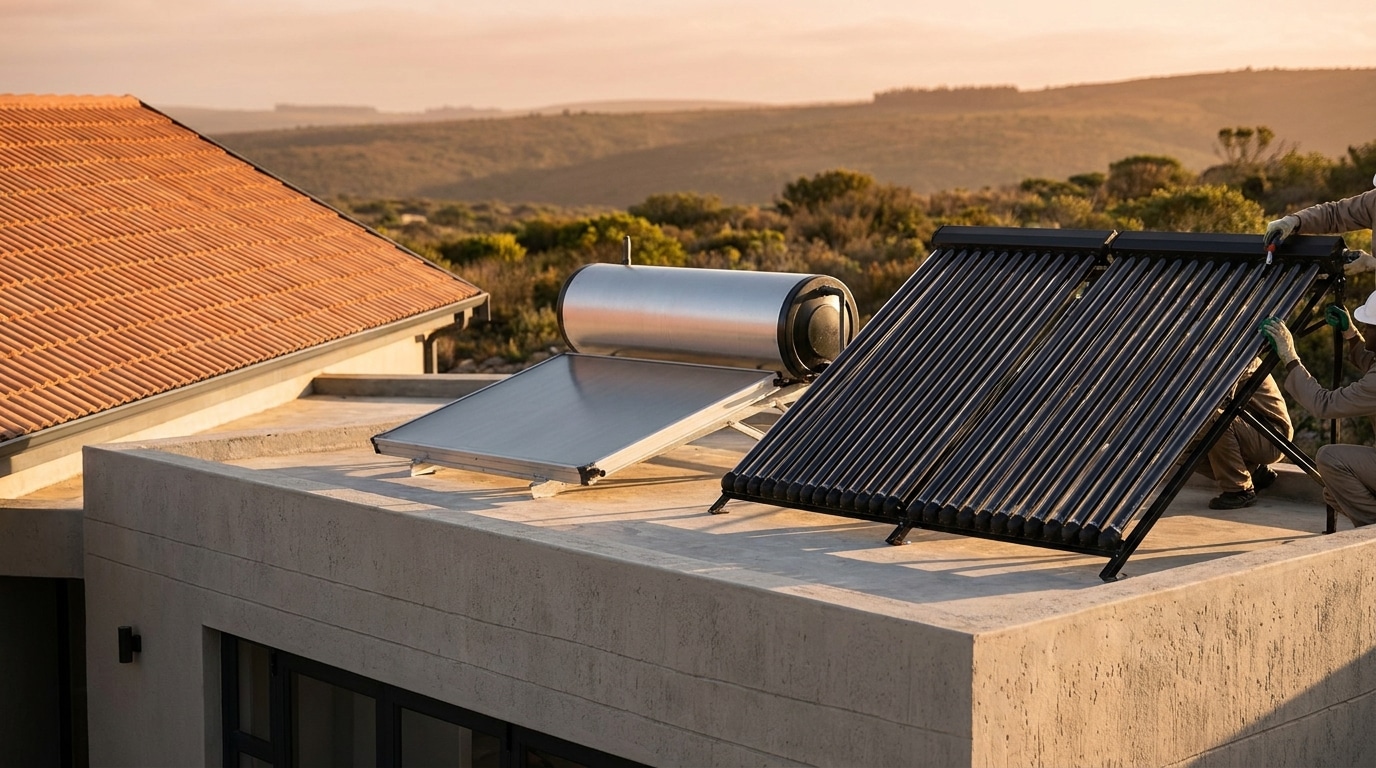
A thermal conversion adds a solar collector, either a flat-plate panel or a set of evacuated tubes, to your existing tank. The collector heats water (or a heat-transfer fluid) directly using the sun, and a small pump and controller circulate it through the tank. Your electric element stays connected as a backup for cloudy stretches.
PV conversion
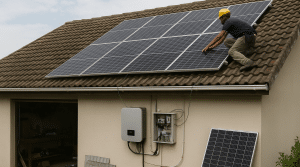
A PV conversion takes a different route. Standard solar panels generate electricity, and that electricity is directed to your geyser’s existing element, sometimes through a dedicated controller or timer, sometimes with a DC-rated element fitted in place of the old one. There’s no collector, no heat-transfer fluid and far less plumbing involved.
Both paths can use your current tank if it’s in good condition. The right one for you depends on your roof, your budget, and whether you’d want that solar capacity to power other things later.
Thermal vs PV at a glance
| Aspect | Thermal conversion | PV conversion |
|---|---|---|
| How it heats water | Collector heats water or fluid directly from the sun | Solar panels generate electricity that powers the existing element |
| Moving parts | Circulation pump and controller | Usually just a controller or timer, no pump |
| Plumbing work | More involved, since the collector and pipework connect into the tank | Minimal, mostly an electrical connection |
| Summer performance | Can run hot enough in peak summer to need a dump valve or some shading | No overheating risk in the same way |
| Later flexibility | Dedicated to water heating only | Panels can later feed other appliances or grow into a wider system |
What’s in a conversion kit?
Whichever path you take, it helps to know what you’re actually paying for.
Thermal kit
- Flat-plate or evacuated-tube collector
- Circulation pump
- Controller with tank and collector sensors
- Valves, brackets and connecting pipework
PV kit
- Solar panels
- Roof mounting brackets
- Controller or timer to manage when power reaches the element
- A DC-rated element, if your current one needs replacing
- Isolator switches for safety
The main conversion options
If you’re going the thermal route, there are three ways to approach it, depending on the state of your existing geyser.
1. Retrofit a solar collector to your existing tank
If your geyser is in good condition and correctly positioned, an installer can connect a flat-plate or evacuated-tube collector to it, together with a circulation pump and controller. Your existing element stays in place as a backup for long stretches of overcast weather.
2. Replace the tank with a solar-ready geyser
If your geyser is old or poorly positioned, it often makes more sense to replace it with a purpose-built solar tank at the same time as fitting the collector. Solar-ready tanks are designed for the temperatures and flow patterns of solar heating and are usually better insulated than older electric geysers.
3. Full solar geyser system
Where the existing installation is at the end of its life, a complete system (tank, collector, controller and safety valves) is the cleanest solution and comes with the benefit of a single warranty covering the whole installation.
How the conversion process works
- Assessment. An installer inspects your current geyser, roof orientation, water pressure and household hot-water usage.
- System selection. Based on the assessment, you choose between a retrofit, a tank replacement or a full system, sized to your household.
- Installation. A typical residential conversion is completed in a day or two, including plumbing, mounting and the controller.
- Certification. The work must be signed off with the relevant plumbing certificate of compliance, which a reputable installer arranges as part of the job.
What to check before you convert
- Tank age and condition. Converting a geyser that is near the end of its life saves money today but can cost more later. Ask for an honest assessment first.
- Roof orientation and shading. Collectors want clear north-facing exposure for the best year-round performance in South Africa.
- Water pressure. Your system must match your home’s pressure rating; most modern homes are high-pressure.
- Element compatibility. If you’re leaning towards a PV conversion, ask whether your current element can be used as is or whether it needs a DC-rated replacement.
- Frost protection. On the Highveld, make sure the proposed design handles sub-zero nights, either through an indirect design or a controller-managed frost cycle.
- Backup heating. Keep an element as backup so a week of rain never means a cold shower.
Why convert at all?
Because water heating is usually the largest single draw on a South African household’s electricity bill, and conversion is often the lowest-cost entry into solar water heating. Every sunny day after the conversion is heat you no longer buy from the grid at ever-increasing tariffs.
Our manufacturer-approved installer handles assessments, conversions and full installations across Midrand and the greater Gauteng area. Book your free solar consultation and get a clear, itemised recommendation before you spend anything.
Calculating the payback and ROI
Payback depends on more than one number, and it’s worth walking through each factor before you commit to a route.
- Daily hot water use. A larger household, or one with high hot-water demand, shifts more of its usage onto solar, which speeds up payback.
- Your electricity tariff. Check the rand-per-kWh rate on your municipal bill. The higher your current rate, the more each avoided unit is worth.
- Total installed cost. A retrofit onto a healthy tank costs less upfront than a full system, which changes how quickly the saving catches up to the spend.
- Future tariff increases. Tariffs tend to rise year on year, so the electricity you avoid buying next year will likely cost more than it does today. That improves the arithmetic the longer you own the system.
During an assessment, ask your installer to estimate the annual kilowatt-hours your geyser currently uses and how much of that the proposed design is expected to displace. A good installer works this out from your actual usage, not from a brochure figure.
Winter performance: the honest picture
A converted system still delivers in winter, but plan for it properly. Days are shorter, mornings are colder, and demand for hot water is at its annual peak. Good design compensates with adequate collector area, an insulated tank, and a controller schedule that tops up with the element in the early morning only when needed. Households that convert in autumn and set the controller thoughtfully typically sail through their first winter without noticing a difference at the tap.
Choosing a reputable installer
The quality of the installation determines how well a conversion performs and how safely it runs for years afterward, so it’s worth vetting who does the work as carefully as you vet the equipment.
- Confirm the work will be signed off with a plumbing certificate of compliance once it’s complete.
- Ask for a written, itemised quote before any work starts, so you know exactly what’s included.
- Check that the installer inspects your specific tank, roof and usage rather than quoting from a standard price list.
Our manufacturer-approved installers handles conversions and full installations to the required standards, with proper sign-off included as part of the job.
Frequently asked questions
Is it worth converting my electric geyser to solar?
For most households, yes, since water heating is typically the largest item on a South African electricity bill. The honest answer depends on your usage, your roof and which conversion route you choose, which is why an assessment matters more than a rule of thumb.
Can I keep my existing geyser tank?
Often, yes. If your tank is in good condition and correctly positioned, a retrofit lets you keep it and add solar heating on top. If it’s old or poorly placed, replacing it alongside the collector usually makes more sense.
What’s the difference between a thermal and a PV conversion?
A thermal conversion heats your water directly with a solar collector. A PV conversion uses solar panels to generate electricity that powers your existing element. Thermal is generally more efficient for water heating alone, while PV involves less plumbing and can later be expanded to power other things.
What does a conversion kit include?
A thermal kit includes a collector, pump, controller and connecting pipework. A PV kit includes panels, mounting brackets, a controller or timer and, where needed, a DC-rated element.
How much does a solar geyser conversion cost?
Cost varies by route, tank condition and household size, so we won’t guess a number here. Use our system sizer or book a free consultation for an itemised quote based on your own geyser and usage.
Who installs a solar geyser conversion?
Conversions should be handled by a qualified installer who can sign off the plumbing work correctly. Our manufacturer-approved installers covers assessments, conversions and full installations across Midrand and the greater Gauteng area.
Not sure which system is right for you?