
Buyer Guides & Comparisons
Is a solar system worth it
Is a solar system worth it?
Deciding to 'go solar' and you are not too sure if you are making the right decision? Read this article to help you make that decision. Things to ponder ...
“It makes absolutely no financial sense to keep paying for a resource like electricity that you can in fact generate for yourself with an asset that adds tremendous value to your property, hedges your costs for the next 20 to 25 years and will save you a massive amount of money over the cumulative lifespan of your solar investment”,
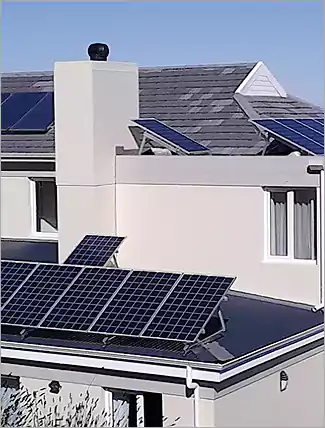
Solar power has become far cheaper to generate than it used to be, while Eskom’s tariffs have kept climbing.
It has only been in the last year, or two that renewable energy sources have officially become cheaper than fossil fuels. This is thanks to a phenomenal decade of reduced prices for solar; but what does that mean for the average homeowner?
In most cases, installing a rooftop photovoltaic solar panel system will offer greater lifetime value than staying connected to a conventional utility provider. However, that doesn’t mean that solar is the right choice for every homeowner.
Rather than try to sell you on solar like other commercial sites, in this article, we’ll take a closer look at who should, and should not go solar, and why.
Location will be the main factor deciding the potential value of solar for your home. This goes beyond just sunlight, and requires consideration of electricity rates, local policy and more.
Here’s a quick glance at the situations that tend to make solar worthwhile:
- You have high electricity bills
- Your roof receives a lot of sunlight
- You have sufficient surface area on your roof
- Your roof faces north (east or west also works)
- Your municipality allows you to register your solar system
- Energy Usage
Solar performs best on homes with high electricity bills so assessing your energy consumption is the best place to start. If you don’t know how much electricity your home consumes, look at your most recent energy bill. For the cost side, see the true cost of a solar power system in South Africa.
Under “billing period” you should see a figure labeled kilowatt-hour (kWh) used. If your home’s energy use is above 500 kWh per month, you’re likely a good candidate for solar.
Now in assessing the value solar poses for you, remember that a huge chunk of the price you’d pay for a solar installation will include time, labor and permits.
That essentially means there’s a minimum fee to hire the services of a solar installation company, and it depends on the size of the project. A free energy assessment gives you the numbers for your own home.
We wouldn’t recommend that anyone whose electricity use is below 500 kWh per month invest in solar. That’s because the savings that a few solar panels would generate over years probably won’t cover the minimum fees of hiring a full-service solar contractor.
Your roof’s sun exposure
Arguably the most important step in determining if solar is worth it for you is to evaluate your roof. South and west facing roofs are the best direction for solar panels, as these arrays will receive the most direct sunlight in the northern hemisphere. Your array will need direct sunlight for the majority of the day, especially during peak hours.
If your access to sunlight is blocked by neighboring buildings or trees, even for just a few hours of the day your system’s efficiency could suffer.
Irradiance maps offer a unique glimpse into the variations of how much sunlight roofs receive.
Your roof will also require sufficient space for a full array of solar panels. Keep in mind that a 5 kW system (around the minimum size) will require at least 15, and rooftops with ill-placed obstructions like chimneys, skylights and vents will lower the amount of available space.
Which homes benefit the most from solar panels?
If you are still undecided whether solar panels would be a worthwhile investment, consider the following factors needed for the successful integration of a solar system:
- Homes that get plenty of sun exposure: Your home should receive ample sunlight to take full advantage of solar panels. The ideal house will be free of obstructions, such as trees or tall buildings. In addition, the roof should be south-facing and have a steep slope that can hold a solar panel at a 15 to 40-degree angle. Solar panels will still work in less-than-ideal conditions. However, homes that receive little light or have limited roof space will not benefit from a system.Local levels of sun exposure
- Homeowners with high utility bills: If the cost of your utility bills is constantly high throughout the year, a solar system could help meet your energy needs. Remember that you may need more solar panels installed to offset the costs, leading to a more expensive system. On the other hand, if your monthly electric bill typically stays low, a solar system would not be an ideal investment for you. A solar panel installer will review your current electricity bill and make the best call based on your needs.
- Businesses that can claim a tax allowance: There is no cash rebate for home solar in South Africa any more. The home rebate ended on 28 February 2024. A business can still claim the Section 12B tax allowance on solar, which can lower the real cost.
- Homes where the municipality has clear rules for extra power: Extra energy from your panels can be stored in a battery or sent back to the grid. Some municipalities credit you for the power you send back and many do not, and the rules differ. Check with yours before you plan around it.
The bottom line
A solar energy system is not suitable for every homeowner. However, if your home has the right location and roofing and you experience high energy bills, then you might generate significant savings with solar energy. For the right home, solar energy is an investment that pays itself off over time, so be sure to take some time to consider the factors listed in this guide to determine if solar panels are worth it for you.
Talk to a solar expert to assist you if you are still not sure of the above.
Next useful step
Bring the question
back to the property.
Reading is orientation. A system, finance or technology decision still needs the property’s own electricity context.
Start an energy assessment