Key Takeaways
Transitioning to solar power provides predictable energy security and protection against rising utility costs. These points summarize the essential steps for configuring a high-efficiency power system.
- Precise sizing of your inverter matches actual home energy consumption patterns.
- Local environmental conditions determine the specific ventilation and mounting requirements for your unit.
- Correct electrical wiring, particularly grounding, ensures long-term system stability and safety.
- Software settings directly influence the efficiency of battery charging and grid interaction.
- Routine monitoring facilitates proactive issue detection before minor faults impact overall output.
Core hardware capabilities and technical specifications
Key technical parameters defining the Sunsynk range
Modern solar architecture relies on selecting the right infrastructure to convert DC energy accurately. Understanding the Solar Hybrid Inverters allows you to choose hardware based on specific power throughput capabilities. Engineers rely on these metrics to ensure that the conversion process remains stable under varying household load conditions.
| Technical Feature | Standard Specification | Performance Context |
|---|---|---|
| Max Efficiency | 97.6% | Optimized Conversion |
| MPPT Inputs | Dual Tracking | Advanced Harvesting |
| IP Rating | IP65 | Weather Resistance |
These specifications indicate that the hardware provides high-level energy conversion efficiency for most standard domestic setups. Selecting components with these parameters helps optimize the system against daily demand fluctuations.
Matching inverter capacity to domestic energy loads
Sizing an inverter requires analyzing your household’s peak electrical consumption during the busiest hours of the day. You should evaluate the total wattage of simultaneous appliances to avoid system bottlenecks.
- Audit your heavy-draw appliances such as geysers and ovens.
- Calculate the base load during standard operating hours.
- Verify peak surge capability to handle startup currents from induction motors.
A system that aligns with your calculated load ensures that internal components operate well within their thermal limits, extending the operational life of the device.
Distinctions between single-phase and three-phase hardware units
Choosing between single-phase and three-phase configurations depends almost entirely on the supply architecture of your property. Single-phase units are standard for most residences where a 230V connection exists, handling typical appliance profiles effectively. In contrast, three-phase configurations provide balanced power distribution for larger estates or properties with sophisticated heavy machinery load profiles. You should verify your existing utility supply before finalizing the purchase of your hardware unit.
Planning your solar storage installation
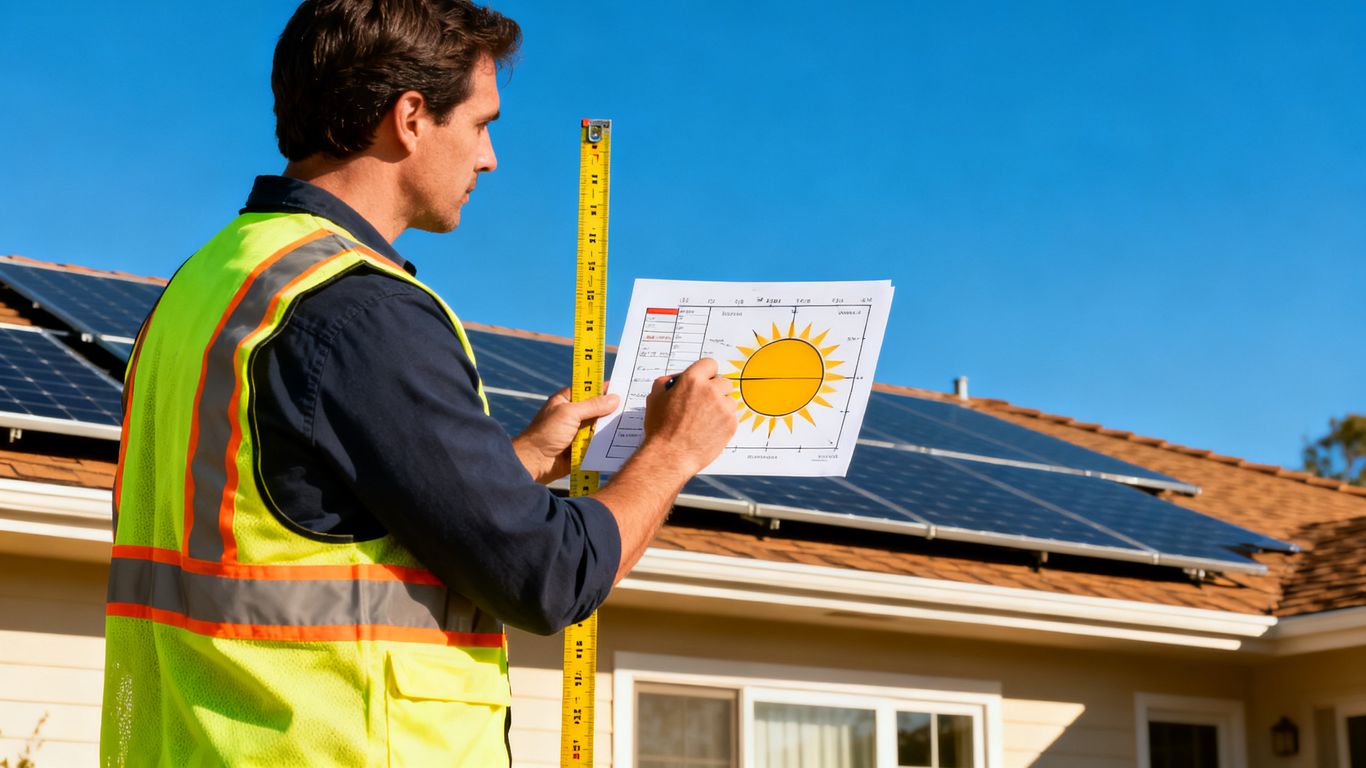
Calculating required battery capacity for energy independence
Achieving true energy independence demands a battery bank large enough to sustain your critical loads overnight. You should prioritize the depth of discharge limits and cycle life when evaluating various lithium-ion storage options. For many homes, a mid-sized storage buffer allows sufficient capacity to cover evening usage after the sun has set, ensuring you remain independent of grid-based electricity supply fluctuations.
Determining PV array sizing for optimal daily yields
Your solar array sizing should account for the orientation of your roof and typical annual sun hours in your specific region. We recommend calculating the total capacity needed to cover your daily energy draw, then adding a margin to account for cloudy spells. Oversizing the array slightly can significantly improve productivity during the winter months, helping to maintain stable energy production when daylight hours are restricted.
Assessing site ventilation and environmental requirements for mounting
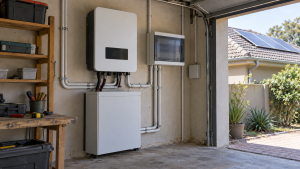
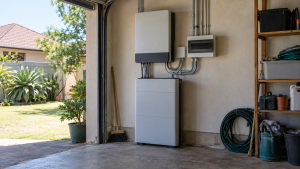
Effective heat dissipation remains the most significant factor in maintaining the long-term reliability of your energy system. You must ensure that the installation area provides at least 500mm of clearance around the top and sides of the unit for natural airflow. Avoid mounting devices in direct sunlight or areas with high humidity, as these conditions accelerate the degradation of sensitive power electronics.
Essential wiring and electrical standards
Connecting AC grid input and essential load outputs
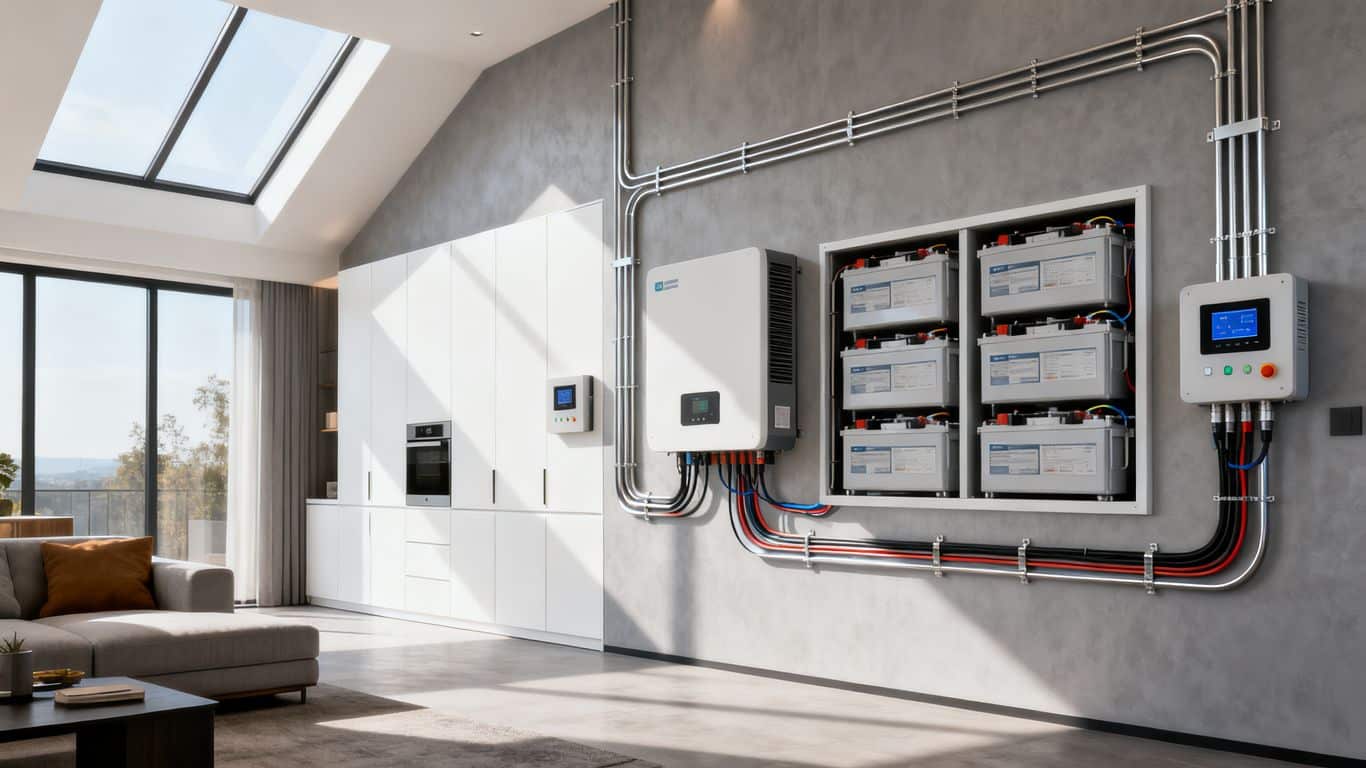
The fundamental design of your Sunsynk 8 kW Hybrid Inverter revolves around segregated AC pathways for the grid and critical appliances. Proper isolation ensures that your essential load circuits remain powered even if the grid connection is interrupted. You must verify that the cable cross-section matches both current requirements and local safety regulations to prevent thermal hazards.
Implementing robust earthing and surge protection protocols
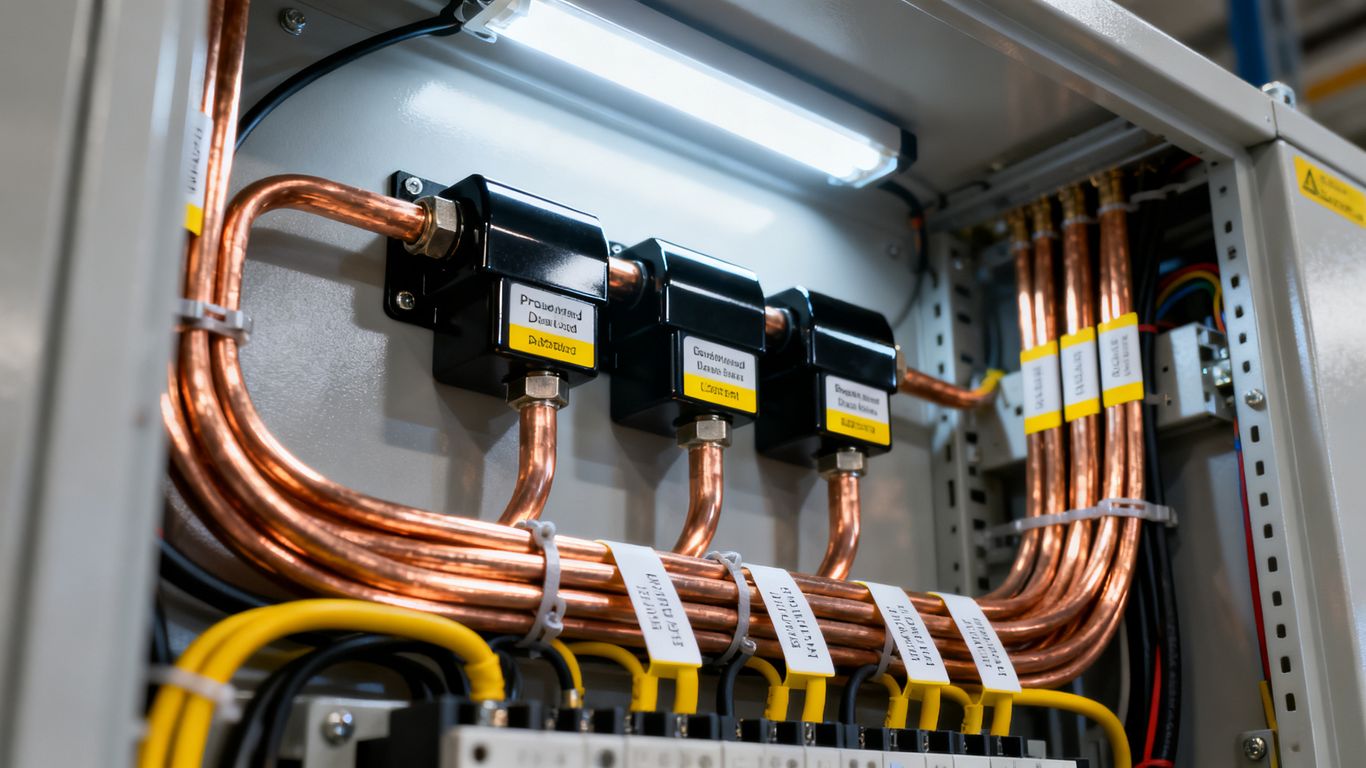
Electrical safety depends on a unified earthing system that guards against lightning strikes and power surges. We suggest installing dedicated surge arrestors on both the string input and the AC output sides of the setup.
Consistent earthing protocols serve as the primary defense against localized electrical faults, ensuring that both human operators and internal electronic components remain protected during adverse weather events.
Following these established protocols prevents common electrical noise that might otherwise interfere with data communication between system components.
Standards for DC input management and cable selection
DC cabling requires specific UV-resistant insulation to withstand the harsh environmental conditions of outdoor installations. You should bundle DC strings neatly to minimize inductive interference while ensuring that connections are made with industry-standard MC4 connectors for maximum seal integrity. If you are beginning your journey, referencing a professional solar installation guide is a useful step to ensure your cable management meets strict safety criteria.
Software configuration and communication settings
Navigating the Sunsynk touchscreen setup menu
The interface allows for granular control over every aspect of your power system. Users initially focus on setting the correct time and language, followed by configuring the communication protocol for connected batteries. Accessing these settings is intuitive, provided you have a fundamental grasp of your specific energy goals.
Defining battery charging profiles for lithium-ion storage
Battery health relies on using the correct voltage setpoints and maximum current limitations as specified by the manufacturer. You should program parameters for bulk, float, and equalization stages based on your battery type. Failing to define these profiles correctly can lead to reduced capacity over time, reducing the economic return on your initial investment.
Configuring grid export limits and islanding thresholds
Export limits prevent you from sending excessive energy back to the grid, which can be restricted by local utility policies. Alternatively, islanding thresholds define how the system behaves when the grid voltage or frequency drifts outside permissible tolerances. Tuning these settings requires careful coordination with your municipality to ensure your system remains compliant while maximizing your own self-consumption.
System monitoring and ongoing maintenance
Linking the inverter to the Sunsynk cloud interface
Cloud monitoring platforms transform raw electrical data into visual insights that improve overall management. By connecting your device to the web interface, you gain access to historical generation records and real-time power flows. Using Sunsynk smart solar storage solutions allows you to track these trends and adjust your consumption behavior to maximize the economic utility of your system.
Diagnosing system logs and common fault codes
System logs act as a digital record of power fluctuations and operational anomalies. If a warning light appears on the housing, interpret the specific code displayed on the screen against the technical manual provided with your unit. Most minor issues stem from wiring resistance or communication timeouts, which can often be resolved without professional intervention.
Routine maintenance schedules for consistent performance
Reliable performance requires a commitment to a semi-annual inspection cycle. You should clean the PV panels to keep yields high, check for loose DC connections, and test the operation of your surge protection devices. Regular upkeep protects your property and ensures the longevity of every installed component.
How Sunsynk integration compares to Fox ESS and Sigenergy
ZenSolar fits two brands and no others: Fox ESS and Sigenergy. Since that narrows what we can offer you, it deserves explaining rather than asserting.
First, what Sunsynk genuinely does well. The installed base in South Africa is deep, which means installer familiarity is high and a configuration problem is rarely novel. Running Sunsynk inverters with Sunsynk batteries gives you a single vendor across the whole system, and that coherence has genuine value when something needs attention. It is a capable platform and we will say so.
Where our two brands make a different argument. The case is not that the hardware above is bad. It is about what happens in years three to ten, which is where energy systems actually disappoint people.
One platform from a small house to a commercial site. The expensive mistake in home energy is outgrowing your ecosystem. Add a heat pump, a pool, an EV charger or a home office two years after commissioning and scaling often means changing brand — which means changing inverter, app and support channel at the same time. Fox ESS and Sigenergy both run continuous product families from single-phase residential through to three-phase commercial and industrial, so growth stays a capacity decision rather than a replacement decision.
Sigenergy is integrated rather than assembled. The SigenStor stack combines PV inversion, battery storage, system control and DC EV charging in one modular unit instead of four separately sourced boxes with four warranty conversations behind them. When something needs attention there is one manufacturer accountable for it. Most storage complaints turn out to be support complaints rather than hardware complaints, and this is the part that addresses them.
The warranty is written down, and we will show you the document. Sigenergy’s published warranty terms carry a 10-year period on the Sigen Battery and the Sigen Energy Controller, with the battery guaranteed to retain at least 60% of its usable capacity at 10 years, or a stated energy-throughput limit, whichever is reached first — extendable to 15 years if the system is purchased and registered within 12 months of commissioning. We quote those figures because we can point at the document they come from. Ask whoever else is quoting you to do the same; what happens next is informative.
Fox ESS is the volume-sensible half of the pair. Fox ESS sits behind Tsingshan Group and builds modular, stackable storage designed to be added to rather than replaced, across both single-phase and three-phase inverters. Where Sigenergy is the integrated premium answer, Fox ESS puts a well-specified system on a normal budget without dropping into the price tier where support quietly vanishes.
Whichever you choose, one thing decides more than the badge: every system we fit goes in through a manufacturer-approved installer, because that is what keeps the warranty valid on the day you need to use it. A warranty voided by an unapproved installation is worth exactly nothing, and that is true of every brand on this page.
Conclusion
A well-installed energy system provides a stable foundation for the property and real control over electricity costs. Proper installation standards and diligent maintenance are what keep it delivering the performance you expected, on any brand.
We fit Fox ESS and Sigenergy, and the reason is specific: the warranty terms are documented and we will put the document in front of you, one manufacturer stays accountable for the inverter and the storage together, and the platform scales from a single-phase home to a three-phase commercial site without a brand change. That is what narrowing our range to two brands was for.
Frequently Asked Questions
What are the main benefits of a hybrid inverter?
A hybrid inverter serves multiple roles by managing solar production, battery storage, and grid interaction within one unified system. This combination maximizes your self-consumption of generated energy and ensures that your critical loads continue to receive power even when technical issues affect the standard electrical supply.
How often should I monitor the inverter performance?
Ideally, keep an eye on your monitoring dashboard at least once a week to track energy yields and consumption patterns. Consistent monitoring is helpful for spotting irregularities early, allowing you to address inefficient energy usage or potential system faults before they become significant problems.
Why is earthing critical for solar installations?
Proper earthing is a fundamental requirement for both the safety of your home and the protection of your solar equipment. It redirects stray currents safely into the ground during electrical faults or power surges, preventing damage to the inverter electronics and mitigating risks to the structure of the building.
Can I install these systems outdoors?
Yes, many inverters are rated with specific environmental protections, such as IP65, which allow for safe outdoor installation. However, the lifespan of the hardware is significantly extended if you choose a location that is naturally shaded and protected from direct rain or excessive moisture.
How does ambient temperature affect performance?
High temperatures can force power electronics to reduce their operating capacity to manage heat, which decreases your overall system output. Maintaining adequate airflow around the unit is essential for keeping internal components at optimal working temperatures, particularly in warmer climates during the peak summer months.
Are specific cable sizes required for DC inputs?
The correct cable size depends on the total current handled by the specific string and the distance between the array and the inverter. You must use appropriately rated, UV-resistant cables to prevent overheating, ensuring that voltage drop remains within acceptable industry limits for high-efficiency operation.
What causes inverter fault codes to appear?
Fault codes usually trigger due to communication errors, grid disturbances, or battery voltage limits being exceeded. If a code appears, refer to the technical manual to determine the root cause, as most alerts provide clear information on whether the issue requires a simple setting adjustment or professional inspection.
Ready to take the next step with solar?
Speak to the ZenSolar team about the right system for your home or business — every system we sell is installed and supported through our manufacturer-approved installers.