Most South African homes run on a single-phase electrical supply, and most residential solar conversations are about single-phase inverters. But if your property has a three-phase connection — common on larger homes, smallholdings, workshops and virtually all commercial premises — the inverter decision changes completely. This guide explains what a three-phase supply actually is, how to tell which one you have, when a Sunsynk three-phase inverter is the right tool for the job, and the design decisions that follow from that choice.
Single-phase vs three-phase: the two-minute version
Electricity reaches your property through a supply from the municipality or Eskom. A single-phase connection delivers power through one live conductor at a nominal 230 V — perfectly adequate for a typical household. A three-phase connection delivers power through three live conductors, with 400 V between phases, and can carry considerably more total power. Utilities provision three-phase supplies where the expected load justifies it: large homes with substantial heating loads, properties with borehole pumps or machinery, and business premises.
The key rule for solar design is simple: your inverter should match your supply. A three-phase property served by a single-phase inverter can only generate, store and back up on one of its three phases — the other two carry on drawing full-price grid power. To serve the whole property properly, you either install a three-phase hybrid inverter or, in some designs, one inverter per phase. A single three-phase unit is usually the cleaner solution: one battery bank, one monitoring platform, one point of control.
How to check which supply you have
- Look at your main breaker. A single-phase supply has a main switch with one or two poles; a three-phase supply has a larger three- or four-pole main breaker.
- Count the rows in your distribution board. Three-phase boards are often visibly organised into phase groups, and may be labelled L1, L2, L3 or red, white, blue.
- Check your municipal account or ask your electrician. The supply type and amperage are recorded on your connection agreement, and any electrician can confirm it in minutes.
If you are not certain, do not guess — the entire system design hangs on this answer, and it is a five-minute check.
When you genuinely need a three-phase inverter
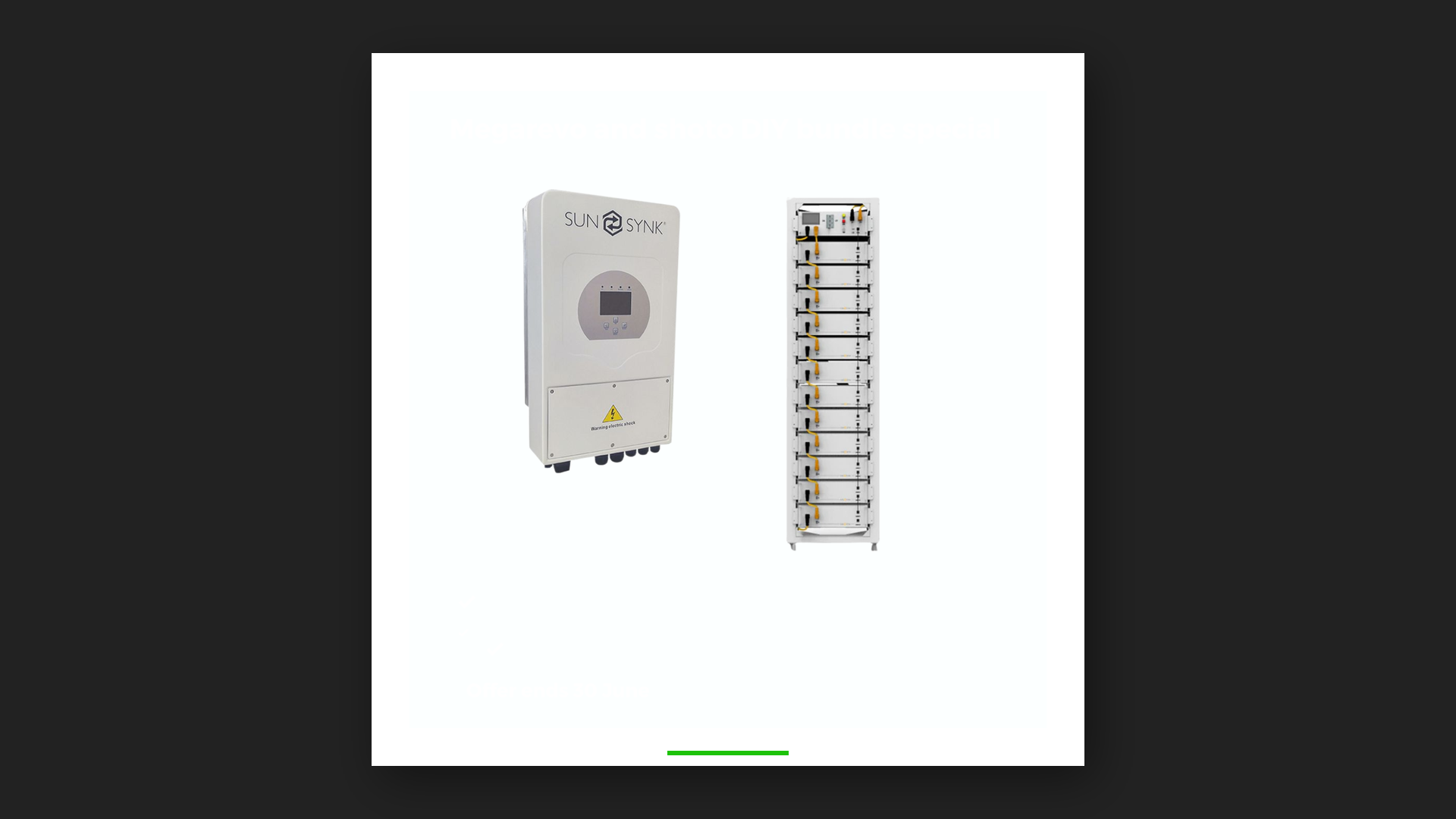
Sunsynk builds hybrid inverters across both single-phase and three-phase configurations, with three-phase models concentrated at the higher power ratings where those supplies typically live — ZenSolar does not supply Sunsynk, but the three-phase logic below applies whichever brand you are considering, including the Fox ESS and Sigenergy systems we install. A three-phase Sunsynk hybrid is the right call when:
- Your property has a three-phase supply and you want whole-property coverage. This is the defining case. One three-phase hybrid serves all three phases from a single battery bank.
- You run three-phase equipment. Borehole pumps, compressors, lifts, machine tools and many HVAC systems are three-phase motors. They physically require all three phases to run, so a single-phase system cannot support them at all.
- Your total demand exceeds what a single-phase system comfortably delivers. Larger power ratings on a single phase run into practical and regulatory ceilings; three-phase architecture spreads the load and scales further.
- You are a business protecting operations. For commercial premises, solar is a financial decision — offsetting daytime consumption at ever-rising tariffs. Most commercial supplies are three-phase, so the inverter follows. Our guide to commercial solar financing options covers how businesses typically structure the investment.
When you do not need one
If your home has an ordinary single-phase connection, a three-phase inverter is not an upgrade — it is the wrong component. You cannot use it to “future-proof” a single-phase house, because the supply itself is the constraint. The money is far better spent on the correctly sized single-phase hybrid with more battery capacity. If you are unsure what size system your consumption actually justifies, start with our guide on how to size a solar system.
Design considerations unique to three-phase systems
Phase balancing
A three-phase property has its circuits distributed across the three phases, and rarely evenly. One phase might carry the kitchen and geyser while another carries little more than lights. A good designer reviews the phase loading before specifying the system, because the inverter’s output per phase — and the share of the property each phase can serve independently of the grid — depends on it. Some designs rebalance circuits at the distribution board as part of the installation.
Essential-load design still applies
Just as with single-phase hybrids, you choose which circuits the inverter and battery carry when the grid is absent. On a three-phase property that decision is made per phase, which adds a layer of planning. It is worth doing deliberately rather than defaulting to “everything” — designating every circuit as essential inflates the battery requirement dramatically.
Battery sizing scales with the job
Three-phase properties are usually higher-consumption properties. The battery bank needs to reflect real overnight usage across all phases, not a rule of thumb borrowed from a townhouse installation. Measured consumption data beats estimation every time.
Compliance and workmanship
Three-phase hybrid installations involve more complex protection and changeover arrangements than single-phase work, and they must be signed off with an electrical Certificate of Compliance. This is not a DIY category. ZenSolar installations are carried out through our manufacturer-approved installers with the experience to do three-phase work properly — and the design mistakes that catch people out are covered in 7 costly solar mistakes to avoid at design stage.
Why the timing favours bigger systems
Three-phase systems are larger investments, which makes the current market conditions particularly relevant. Municipal and Eskom tariffs continue to rise above inflation year after year, while the hardware — panels, inverters and lithium batteries alike — costs meaningfully less than it did a few years ago. For high-consumption properties, that combination produces the strongest payback arithmetic the local market has seen in a decade. If you want to sanity-check the numbers for your own property before speaking to anyone, our article is a solar system worth it sets out the framework.
Frequently asked questions
Can I convert my house to three-phase to get a bigger solar system?
Supply upgrades are possible but they are a municipal application with costs and lead times, and for most homes they are unnecessary — a well-designed single-phase hybrid covers typical household demand. Consider a supply upgrade only if you have a genuine three-phase load requirement.
Can a three-phase inverter run my whole property independently of the grid?
It supports the circuits it is designed to support, within its power rating and your battery capacity. Whole-property coverage is possible but must be engineered deliberately — this is a design conversation, not a product feature you switch on.
Does three-phase change which battery I can use?
Battery brands generally are engineered to work across both architectures, so three-phase does not narrow your options on that front. What changes is the capacity and power the bank must deliver, which the design process determines. ZenSolar’s own systems pair Fox ESS or Sigenergy batteries with the matching inverter.
Is monitoring different on a three-phase system?
The platform is the same — you will see production, battery state and consumption on your phone — with the addition of per-phase visibility, which is genuinely useful for spotting imbalanced loads and understanding where your energy actually goes.
Which three-phase platform ZenSolar actually installs
Everything above about phase balancing, essential-load design and battery sizing applies regardless of inverter brand. Where the brand does matter is which two platforms we put behind our own three-phase installations, and why.
Sunsynk’s three-phase range is a legitimate option. It is well represented in the South African commercial and large-residential market, installers who work on three-phase sites regularly know it, and its higher-rated models are built for exactly the demand profile this article describes. That is a fair assessment and we are not going to dress it up as anything less.
Our reason for fitting Fox ESS and Sigenergy instead is the multi-year view. A three-phase property is usually a higher-consumption property already on a growth trajectory — more load, more circuits, sometimes a second building. Fox ESS and Sigenergy both span single-phase residential through to three-phase commercial within one product family, so expanding a three-phase system later is a capacity decision, not a platform change.
Sigenergy’s SigenStor design combines the inverter, battery, system controller and DC EV charging in one modular product, which on a three-phase site with real load complexity means one manufacturer accountable for the whole installation rather than an inverter supplier and a battery supplier each blaming the other’s equipment when a phase misbehaves. Its published warranty runs 10 years on the Sigen Battery and Sigen Energy Controller, guaranteeing at least 60% of usable battery capacity at that point or a stated energy-throughput limit, whichever comes first, extendable to 15 years when registered within 12 months of commissioning — we will show you that document rather than describe it.
Fox ESS, built on Tsingshan Group’s manufacturing scale, offers the same single- and three-phase range logic at a more budget-conscious price point, with modular storage designed to be added to as the property’s demand grows.
On three-phase work specifically, a manufacturer-approved installer matters even more than on a single-phase job, given the more complex protection and changeover arrangements involved — it is what keeps the warranty valid if a phase-balancing issue ever needs a claim.
Next step: measure, then decide
The three-phase question answers itself once your supply type and consumption are on paper. Run your property through our free System Sizer to see what your usage actually requires, then request a personalised quote. ZenSolar will design around your real supply, your real loads and your real bill, on Fox ESS or Sigenergy — which is the only way a three-phase system should ever be specified.
Not sure which system is right for you?
Not sure which system is right for you?