Rooftop solar power can keep selected parts of your property working through outages while reducing the electricity you buy from the grid. The useful question is not whether solar is good in general, but what system matches your roof, usage pattern and budget.
Start with the daily decisions: what must stay on, how your roof behaves in the sun, how the system will connect and how you will pay for it.
What rooftop solar power is and how it keeps your lights on
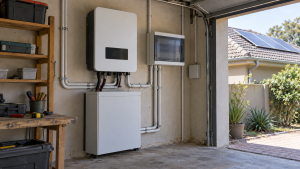
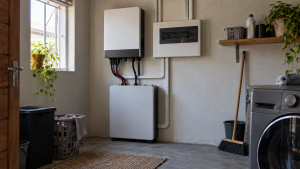
A rooftop solar system turns daylight into electricity through panels, then uses an inverter to make that electricity suitable for the appliances and circuits in your property. A battery stores energy for later, which matters when the grid is unavailable or when your household wants to use more of its own daytime generation after sunset.
System type decides what happens during an outage. Grid-tie systems work alongside the grid, hybrid systems can use battery power for selected circuits, and off-grid systems operate independently.
That distinction matters. A hybrid system with planned essential-load circuits can keep chosen needs running during load reduction.
Rooftop solar is now a familiar part of South Africa’s energy mix: GreenCape recorded rooftop solar PV capacity of 3.2 GW in 2023. Your own system still needs a design based on your site.
How much a rooftop solar system costs and what drives the price
A useful price starts with the job the system must do. Electricity use, backup requirements, battery capacity, roof access, cable routes, electrical work and local connection requirements drive the quote.
A system that offsets daytime consumption is not the same purchase as a hybrid system that powers essential circuits through an outage. Battery storage, difficult roofing and compliance work can all change the quote.
Electricity tariffs are part of that conversation. CSIR reports that the national average electricity tariff rose by an average of 10% a year from 2014 to 2024, compared with average inflation of 5.2% over the same period.
For current direct Eskom customers, Eskom states that NERSA approved an average electricity price increase of 8.76%; the same notice says municipal bulk purchasers will implement average tariff increases of 9.01% from 1 July 2026. Your municipal tariff structure and consumption profile determine the useful comparison for your property.
Sizing a system for your actual needs
System sizing begins with your bills and real habits, not a generic package. Use recent statements and decide whether the priority is lower grid consumption, resilience during outages, or both.
A site assessment also considers roof area, shade, structural condition, orientation and equipment space. The installer can then match the equipment to the work you need it to do.
What you want to run during an outage
Make an essential-load list before choosing a battery. Start with lighting, internet equipment, refrigeration, security and selected plug points, then consider larger appliances or business-critical equipment.
This turns a vague request for backup into a clear design brief. A system that supports a few essential circuits can be very different from one intended to carry heavy loads for an extended period.
What a north-facing roof gives you
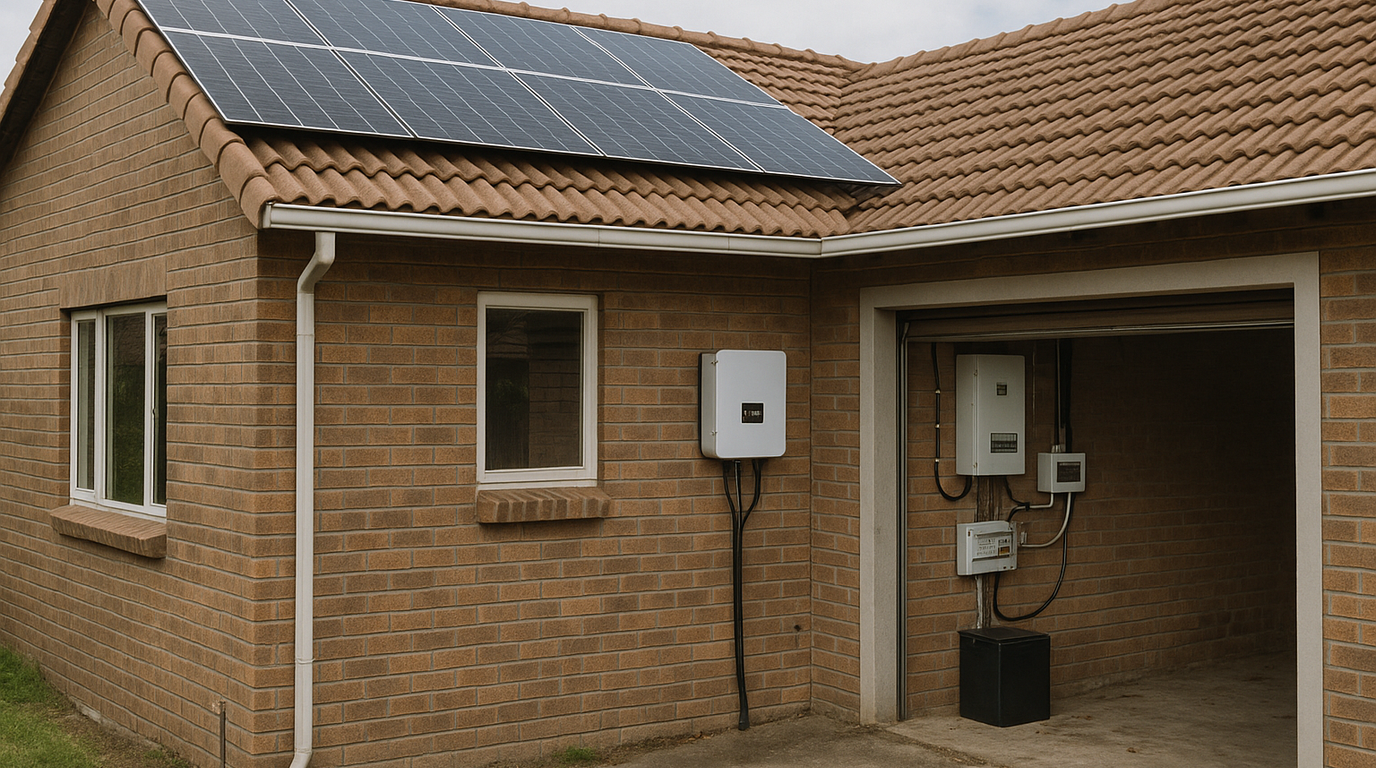
In South Africa, a north-facing roof usually gives panels a better view of the sun across more of the day. A clear north-facing plane can capture direct sunlight from the morning toward the afternoon, while shade from trees, chimneys or nearby buildings can reduce that advantage.
An east- or west-facing roof may still be suitable, especially when the direction aligns with when you use electricity. The site visit should compare roof sections and shade before the layout is fixed.
How installation works from site visit to switch-on
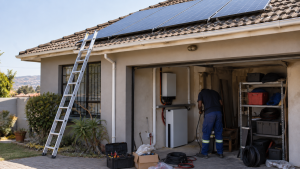
The process is straightforward when each decision happens in the right order. First, the installer assesses the site and your needs; next comes the proposed design, scope and quote; then the team schedules installation after the equipment, roof work and connection process are agreed.
During installation, the crew mounts panels, places the inverter and battery, runs protected cabling and configures essential-load circuits where needed. Testing comes before handover.
Connection rules are location-specific. Eskom and the local municipality set the relevant process for a grid-connected system, so the requirements for your supply point should be confirmed before work proceeds.
The certificate of compliance and Eskom registration
A Certificate of Compliance is the record that the electrical work has been checked and signed by a registered electrician. It is not paperwork to leave until the end, because the system design and installation must support a compliant sign-off.
Registration or approval for embedded generation may also be required by Eskom or your municipality, depending on who supplies the property and the connection arrangement. Keep the system documents, compliance record and approval correspondence together for future work, insurance queries or a property sale.
Paying for solar without an upfront lump sum
Solar does not have to begin with a single upfront payment. ZenSolar offers rent-to-own, power purchase agreements and wheeling agreements for both residential and commercial customers, so the conversation can begin with how you want to pay as well as what you need the system to do.
Under rent-to-own, you make payments toward owning the equipment. A power purchase agreement focuses on paying for the electricity produced under the agreement, which can suit a customer who wants a different route to solar generation.
Wheeling is different again. It is an arrangement for electricity generated at one point to be accounted for at another qualifying point through the grid, subject to the applicable agreements and rules.
Choosing an installer in a partner network model
ZenSolar works through a partner network of approved installers rather than a single branch. This gives you a route from site assessment to installation through a local approved professional while keeping the equipment, design and handover discussion connected.
Ask who will visit, who handles electrical sign-off, how the connection process will be managed and who you contact after handover. The scope should separate panel work, backup circuits, battery storage and connection administration.
ZenSolar fits Fox ESS and Sigenergy equipment through its approved installer network. That stated equipment warranty is a 10-year swap-out warranty when it is installed by an approved installer.
What maintenance looks like after year one
Solar equipment has no fuel deliveries, but it benefits from routine attention. Keep panels clear of dirt and debris, manage new shade and check monitoring for changes in generation or battery behaviour.
Do not open electrical enclosures or alter settings without professional support. Revisit the design before a roof repair, extension or large new appliance.
Good records make future service easier. Keep the equipment details, commissioning information, Certificate of Compliance, approval documents and the contact details for the approved installer in one place.
Commercial systems and how they differ
A commercial project starts with the same fundamentals but more operating constraints. The design must account for load profile, operating hours, roof access, safety, metering, continuity requirements and financing.
For scale, SAPVIA describes Small-Scale Embedded Generation as below 1 MW and commercial and industrial large-scale projects as 1 MW to 50 MW. The category does not replace a site-specific connection and engineering review.
A business may use solar to reduce daytime grid purchases, support essential operations through outages, or combine generation with a power purchase agreement or wheeling arrangement. The best structure follows the site, the tariff, the business risk and the organisation’s appetite for owning equipment.
FAQ
What happens if my roof does not face north?
The installer can assess east- and west-facing sections, shade and your daytime usage to find the most useful layout. A north-facing roof is helpful, but it is not the only factor.
Do I need Eskom’s permission before I install panels?
For a grid-connected system, confirm the applicable Eskom or municipal approval and registration process for your supply point before installation. Your approved installer should guide that process.
How long does a typical installation take from booking to completion?
The schedule depends on the site assessment, final design, equipment availability, roof access and the relevant connection process. Booking early gives the installer time to confirm each requirement in the right sequence.
Can I add more panels or batteries later?
Expansion may be possible if the original design, roof space, inverter capability and connection rules allow it. Raise future plans at the site visit so they can shape the design from the start.
What warranty comes with the equipment?
Fox ESS and Sigenergy equipment installed by an approved installer carries a 10-year swap-out warranty. Keep the approved-installer records with your commissioning documents.
If you want a rooftop solar power design based on your property, your essential loads and your payment preference, book a site visit with ZenSolar.