
Type “Pylontech battery price” into a search engine and you get a wall of numbers: different retailers, different models, different months, and very little help understanding why the figures vary so much. Here is the honest starting point for pricing any lithium battery in South Africa — and an honest disclosure before you read further: ZenSolar doesn’t sell Pylontech. We fit Fox ESS and Sigenergy, and we make that case later in this guide. The sticker price of a lithium battery is only one input into what your storage will actually cost you regardless of brand, and quoting a single rand figure in an article would be a disservice. It would be outdated within a stock cycle, and it ignores the variables that matter for your installation. This guide covers which Pylontech models are sold in South Africa, what actually drives the cost of a Pylontech system, how to compare quotes intelligently, and how that spend compares with the two brands we install.
Why Pylontech is priced the way it is
Pylontech is one of the most widely deployed battery storage brands in the world — though it isn’t one ZenSolar installs; our range is Fox ESS and Sigenergy. Its signature approach is modularity. Rather than one large battery, a Pylontech system is built from compact rack-mounted lithium iron phosphate (LiFePO4) modules that stack and combine into whatever total capacity you need.
That modularity is the single most important thing to understand about Pylontech pricing, because it changes the shape of the purchase. You are not choosing between a “small battery” and a “big battery.” You are choosing how many building blocks to start with, knowing you can add more later as your needs or budget grow.
Pylontech battery models available in South Africa
Pylontech sells several module ranges into the South African market, and you will see model names like the US2000C, US3000C, US3000D, UP2500, UP5000 and UF5000 mentioned by retailers and installers. They differ mainly in capacity per module and generation. Newer models tend to pack more usable energy into the same rack footprint than older ones, which is one reason two quotes naming “a Pylontech battery” can describe quite different hardware.
ZenSolar isn’t a Pylontech retailer — the brands we install are Fox ESS and Sigenergy — so for current Pylontech model availability, specifications and pricing, check with a reseller authorised to sell the brand directly. If you are weighing Pylontech against what we fit, our free System Sizer works out the capacity your household or business needs, regardless of brand.
The six real drivers of your Pylontech system cost
1. Total capacity: how many modules
The dominant cost driver is simply how many kilowatt-hours you buy. Each module carries its own cost, so a system built from four modules costs roughly twice the battery spend of two. This is why sizing comes before shopping. Every unnecessary module is capital spent on capacity you will not cycle, and every missing module is evening consumption still bought from the grid. Our guide on how to size a solar system explains how to derive your real requirement from your consumption.
2. Module generation and model
Pylontech’s range spans different module sizes and generations, for example the US3000C, UP5000 and UF5000 mentioned above, and newer, higher-capacity modules price differently per unit than smaller, older ones. Two quotes for “a Pylontech system” can describe quite different hardware. Always compare the model names and the total usable kilowatt-hours, not just the brand.
3. Racking, cabling and accessories
A stacked modular system needs its supporting hardware. A professional quote itemises this rather than folding it into a single line, and it typically includes:
- Battery brackets for stacking, or an enclosed battery cabinet
- Inter-battery connection cables between modules
- A main DC cable pack running from the battery bank to the inverter, usually via a DC protection device
- A communication cable linking the battery management system to the inverter
These items are modest individually but real collectively, and a suspiciously cheap quote often omits one or more of them.
4. The inverter partnership
A battery does nothing alone. If you already own a compatible hybrid inverter, your quote is essentially battery-plus-installation. If you are building a full system, the inverter is a major line item of its own, and its capacity must match the battery bank’s deliverable power. Pylontech modules communicate with the major hybrid platforms sold in South Africa, so you have genuine freedom on this pairing — just confirm the specific model and firmware combination against current compatibility documentation.
5. Installation and certification
Professional installation covers mounting, cabling, configuration of the closed-loop communication between battery and inverter, commissioning, and the Certificate of Compliance that your insurer and municipality expect. Installation complexity varies with cable runs, distribution board condition and site layout, which is why serious suppliers quote after understanding your site rather than off a price list. ZenSolar fits Fox ESS and Sigenergy only, through manufacturer-approved installers; we do not install Pylontech.
6. Market timing
Lithium prices, shipping costs and the rand-dollar exchange rate all move, and battery pricing moves with them. The encouraging long-term trend is that storage costs substantially less than it did a few years ago, while the grid electricity it displaces gets more expensive every year as Eskom tariffs climb. The gap between those two curves is exactly where your return lives.
Modularity changes the budget conversation
Because Pylontech systems grow module by module, the brand suits buyers who want to stage their investment. A common path is to start with the capacity your budget comfortably covers today, confirm your real-world usage over a year of monitoring, then add modules to the same rack as needs grow. The design caveat: tell your system designer upfront if you plan to expand, so the inverter, cabinet and cabling are specified for your eventual capacity rather than your starting point. Retrofitting an undersized foundation costs more than planning for growth.
How to compare Pylontech quotes like a professional
- Compare usable kilowatt-hours, not module counts or nameplate figures.
- Check the warranty basis. Lithium battery warranties are defined in years and energy throughput, so confirm the current terms for the exact model quoted, and that the stock is official-channel with locally backed warranty processing.
- Confirm what is included: racking, protection devices, communication setup, commissioning and the Certificate of Compliance should be itemised, not assumed.
- Confirm inverter compatibility in writing for your specific inverter model and firmware.
- Judge the installer, not just the hardware. Identical batteries deliver very different lifespans depending on configuration quality.
What storage is worth to you: run the numbers
The question behind the price question is really whether this pays off, and that is answerable with arithmetic. A battery earns its keep by storing your midday solar surplus and displacing the evening electricity you currently buy at tariffs that keep rising above inflation. The value of a Pylontech system for your property depends on your evening consumption, your tariff and your solar array: three numbers you already have or can measure. Our free solar ROI assessment turns them into a payback estimate, and is a solar system worth it? walks through the reasoning in plain language.
If cash flow rather than total cost is your constraint, storage is routinely financed as part of a solar installation in South Africa. See our overview of solar power financing options and our guide to calculating solar system monthly payments for how the repayment-versus-savings trade works.
Where Fox ESS and Sigenergy Fit
We have covered Pylontech pricing in detail without once claiming ZenSolar fits it, so here is the straight version: ZenSolar’s battery range is Fox ESS and Sigenergy. It’s worth explaining why, especially since the pricing logic above genuinely applies to any brand you choose.
What Pylontech does well. Pylontech, like Hubble, competes primarily on entry price, and its modular format is a legitimately good way to stage a purchase. If keeping the initial outlay down is what matters most to you, that is a real and reasonable reason to choose it — we are not going to pretend otherwise.
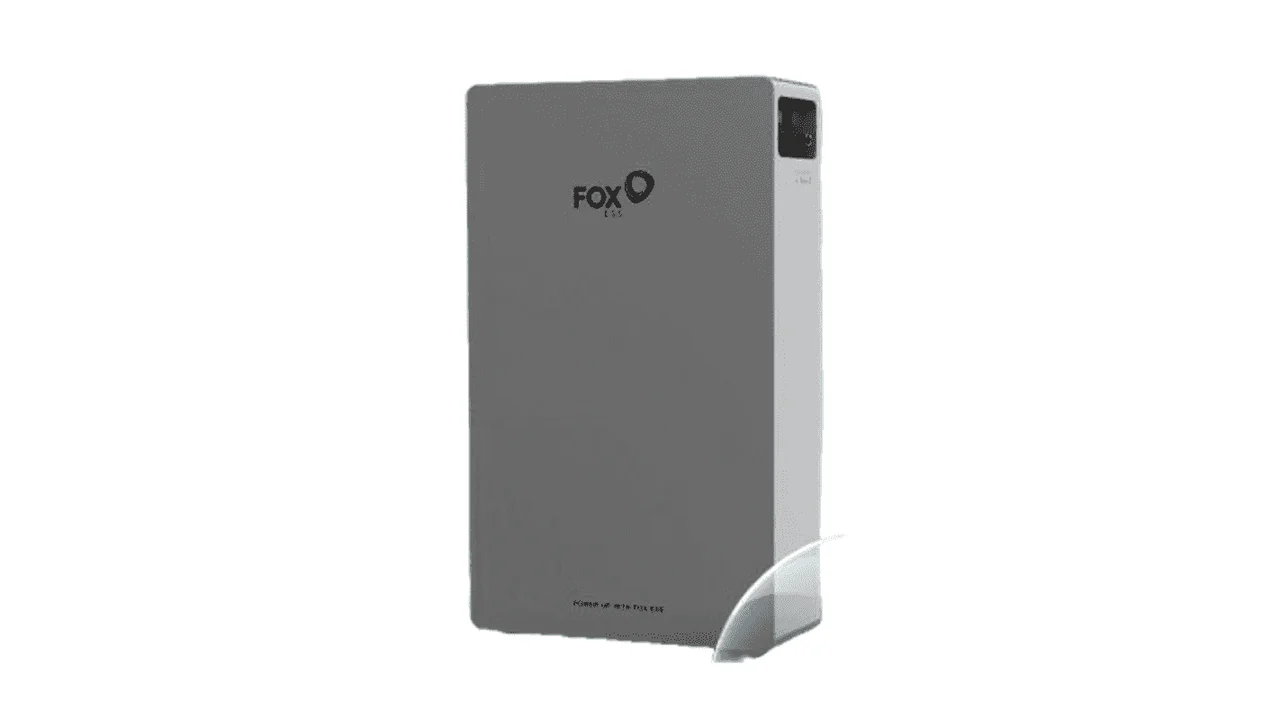
What the price difference buys with Fox ESS and Sigenergy. Both run as one continuous platform from a small home through to commercial scale, so adding capacity later is a sizing decision rather than a change of ecosystem. Sigenergy’s SigenStor combines inversion, storage, system control and DC EV charging into a single modular unit instead of separate boxes from separate suppliers. Fox ESS, backed by Tsingshan Group, keeps that platform logic at a more accessible price point.
The warranty we can actually show you. Fox ESS carries a 10-year swap-out warranty: a unit that fails inside the term is replaced, not repaired. Sigenergy’s terms are published: a 10-year term on the Sigen Battery and the Sigen Energy Controller, with the battery guaranteed to retain at least 60% of its usable capacity at 10 years — or a stated energy-throughput limit, whichever comes first — extendable to 15 years if the system is purchased and registered within 12 months of commissioning. Ask any battery supplier, Pylontech included, to put their terms in writing before you commit to a module count.
Get a real number for your home
Generic price lists cannot tell you what a correctly sized, professionally installed battery system costs for your property, whichever brand it is built around. A site-specific quote can, and it costs you nothing. Our own recommendation is Fox ESS or Sigenergy, for a specific reason: we can put the warranty terms in writing in front of you before you sign, and the platform scales with your property instead of requiring a brand change later. Start by modelling your consumption in our free System Sizer, then request a personalised quote from ZenSolar. That quote will be built around Fox ESS or Sigenergy, sized to your actual usage and installed by a manufacturer-approved installer, with every cost item on the table before you commit. Fox ESS carries a 10-year swap-out warranty, so a unit that fails inside the term is replaced rather than repaired.
Frequently asked questions
Where can I buy Pylontech batteries in South Africa?
Through a reseller authorised to sell the brand, rather than grey-market stock, so the warranty is locally registered and honoured. ZenSolar isn’t that reseller — we install Fox ESS and Sigenergy — but the same rule applies whichever brand you choose: buy official-channel stock and confirm the warranty is registered in your name.
Which Pylontech models are available?
South African retailers commonly carry the US2000C, US3000C, US3000D, UP2500, UP5000 and UF5000. The right one for you depends on your target capacity and how many modules you want to start with; see the models section above and our sizing guide for how to narrow it down.
What accessories do I need with a Pylontech battery?
Brackets or a cabinet for stacking, inter-battery connection cables, a main DC cable pack to the inverter, and a communication cable for the battery management system. A proper quote itemises all of these rather than bundling them into an unclear lump sum.
Is it cheaper to buy all my modules now or add them over time?
Buying once avoids repeat call-out and commissioning costs and locks your whole bank into matched modules. Staging spreads the capital and lets measured usage guide the final capacity. Neither is universally cheaper: the honest answer depends on how confident you are in your consumption data today. If your evening usage is well measured, buy the right size once. If you are genuinely uncertain, start conservatively, monitor for a season, and expand on evidence, just make sure the cabinet, cabling and inverter are specified for the eventual capacity from day one.
Why do two quotes for the same capacity differ so much?
Almost always for one of four reasons: different module models behind the same headline capacity, items missing from the cheaper quote (racking, protection, commissioning, certification), grey stock versus official-channel stock with a locally backed warranty, or different installation scopes for different site conditions. Line the quotes up item by item and the mystery usually disappears. The cheaper quote is not always the one that survives the comparison.
Not sure which system is right for you?