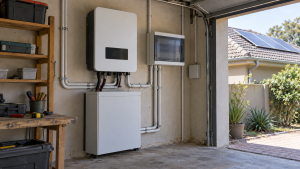
Ask South African installers which lithium batteries they fit most often, and Hubble comes up fast. The brand shows up on installer vans, in comparison threads, and on the compatibility lists of the hybrid inverters most homes here run. Familiarity isn’t the same as understanding, though, and a battery is a decade-long commitment. One fact worth knowing before you read on: ZenSolar isn’t a Hubble retailer. We fit Fox ESS and Sigenergy, and we lay out the reasoning near the end. That doesn’t change anything below — this guide covers what Hubble Lithium is, which models are available, how the technology works day to day, and how to check a Hubble battery against what your own home actually needs, on its own merits.
Hubble Lithium: the short version
Hubble Lithium is a South African battery brand focused on lithium iron phosphate (LiFePO4) storage for homes and businesses. That chemistry has become the industry standard for stationary energy storage, thanks to its thermal stability, tolerance of daily cycling and long service life. Hubble is not one of ZenSolar’s installed brands — our range is Fox ESS and Sigenergy — but its products are widely paired with the hybrid inverter brands common in the local market.
The local footprint matters more than buyers often realise. Battery warranties, firmware updates and technical support are only as good as the channel behind them. A brand embedded in the South African market, with local distribution behind it, is a safer bet than an anonymous import, whatever the spec sheet says.
Popular Hubble battery models in South Africa
Hubble’s range spans a few model families, and the names come up often enough on quotes and compatibility lists that it helps to know what each is generally aimed at.
AM-2 and AM-5: the residential mainstays
The AM-2 and AM-5 are the models most homeowners land on first. They’re sized for typical household evening loads and turn up most often on quotes for a single-battery retrofit or a new hybrid install. Both mount on a wall or rack and pair with major hybrid inverter platforms; confirm the specific inverter pairing against the current compatibility list before you buy.
AM-5+ and AM-10+: for bigger homes and expansion
Households with higher overnight consumption, or anyone who wants headroom to add capacity later, typically look at the AM-5+, the AM-10+, or a parallel bank of smaller units. The right choice depends on your measured usage rather than the model name, which is why sizing should come before you settle on a specific unit.
Hubble Cloudlink: monitoring your battery remotely
Cloudlink is Hubble’s remote monitoring accessory. It connects your battery’s BMS data to an app, so you (or your installer) can check charge state and cycling behaviour without opening the enclosure. It’s worth confirming it’s included on your quote if remote visibility matters to you, since it turns “is the battery doing what it should” into a quick phone check instead of a guess.
| Model family | Typical fit | Notes |
|---|---|---|
| AM-2 | Smaller homes, lighter evening loads | Common single-unit retrofit choice |
| AM-5 | Average family home | The most frequently quoted residential model |
| AM-5+ / AM-10+ | Larger homes or higher usage | Also used as an expansion unit alongside existing batteries |
Current pricing and full technical specifications for each model change from time to time, so we keep those on our own product pages rather than freezing them into this guide. Run your numbers through our System Sizer to see which tier actually matches your household before you commit to a model.
What LiFePO4 means for you in practice
- Daily cycling is the design intent, not an abuse case. These batteries are built to charge from your panels every day and discharge every evening for years on end, which is exactly the job a South African solar home asks of them.
- Deep usable capacity. Lithium batteries make most of their rated capacity genuinely usable day to day, unlike the older lead-acid technology they replaced, where routine deep discharge destroyed lifespan.
- Built-in intelligence. A battery management system (BMS) supervises every cell, controlling charge rates, balancing and protection, and communicates continuously with your inverter so the two work as one machine.
- Stable, safe chemistry. LiFePO4 is the conservative choice among lithium chemistries for home installation, which is exactly what you want bolted to a wall in your garage.
If you want the fuller grounding before comparing brands, our explainer on what makes solar batteries different covers the chemistry and terminology in plain language.
How to evaluate a Hubble battery for your home: six checks
1. Usable capacity, in your terms
Battery models are marketed by kilowatt-hours, but the number that matters is how many evening-and-overnight hours your household gets from the usable portion. Start from your measured consumption between sunset and sunrise (not a guess) and work backwards. Our guide on how to size a solar system shows the method.
2. Power delivery, not just storage
Capacity says how long; the continuous and peak discharge ratings say how much at once. A battery must comfortably deliver your real evening peak (kettle, oven and geyser element overlapping) within its rated output, or the grid quietly tops up the difference at full tariff.
3. Inverter compatibility, confirmed properly
“Compatible” should mean the battery appears on your inverter’s approved list with full communications support, so the BMS and inverter negotiate charging behaviour automatically. Hubble batteries are widely supported across the popular hybrid platforms, but the specific pairing on your quote should be verified, not assumed.
4. Expansion path
Households change. Check how the model scales (additional units in parallel are the usual route) and whether your inverter and wiring plan leave room for that growth, so a bigger battery bank later is an addition rather than a rebuild.
5. Warranty, in writing
Read the warranty term and its conditions: what usage pattern it assumes, what documentation it requires, and who handles a claim locally. A correctly installed and configured battery from an authorised channel keeps that paperwork intact; a grey-market bargain usually does not.
6. Installation quality
Battery lifespan is heavily influenced by its environment and configuration: mounting, ventilation, cable sizing, protection devices and correct BMS-to-inverter setup. This is accredited-installer work ending in a Certificate of Compliance. ZenSolar does not supply or install Hubble. Our own systems are Fox ESS and Sigenergy, fitted by manufacturer-approved installers for exactly this reason.
Where a Hubble battery fits in the bigger system
A battery never performs in isolation. It performs inside a design. The panels must generate enough surplus to fill it by mid-afternoon; the inverter’s time-of-use programme decides when it charges and how deep it runs; and the household’s habits determine whether stored energy covers the expensive evening hours. That’s why the sensible buying order is design first, components second: settle the system architecture, then the sizes, then the brands. Our overview of the best solar system for a home in South Africa walks through how the pieces interlock.
The economics: why storage pays off
The case for adding storage strengthens every year for a simple reason: the gap between what daytime solar costs you (nothing, once installed) and what evening grid power costs you (more every year, as Eskom tariffs keep rising) keeps widening. A battery is the bridge across that gap. It moves your free midday energy to the hours when you would otherwise pay the most. Meanwhile lithium hardware costs sit well below where they were a few years ago. Whether that arithmetic lands at a payback you like depends on your consumption and tariff; is a solar system worth it gives you the framework, and if the capital outlay is the constraint, our guide to solar power financing options covers the structured routes.
Where Fox ESS and Sigenergy Fit
Hubble has earned its place on this page on merit, and we are not going to undercut that by pretending we install it. ZenSolar’s range is Fox ESS and Sigenergy, so here is the honest version of why.
Hubble’s real strength is price. Hubble, like Pylontech, competes hard on entry cost, and that is a legitimate reason to choose it — for a lot of households the sticker price is the deciding factor, and there is nothing dishonest about that trade-off. We are not going to dress that up as a flaw.
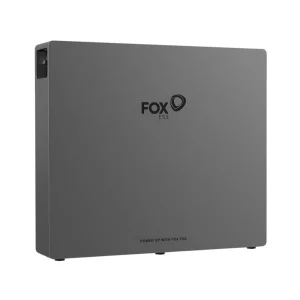
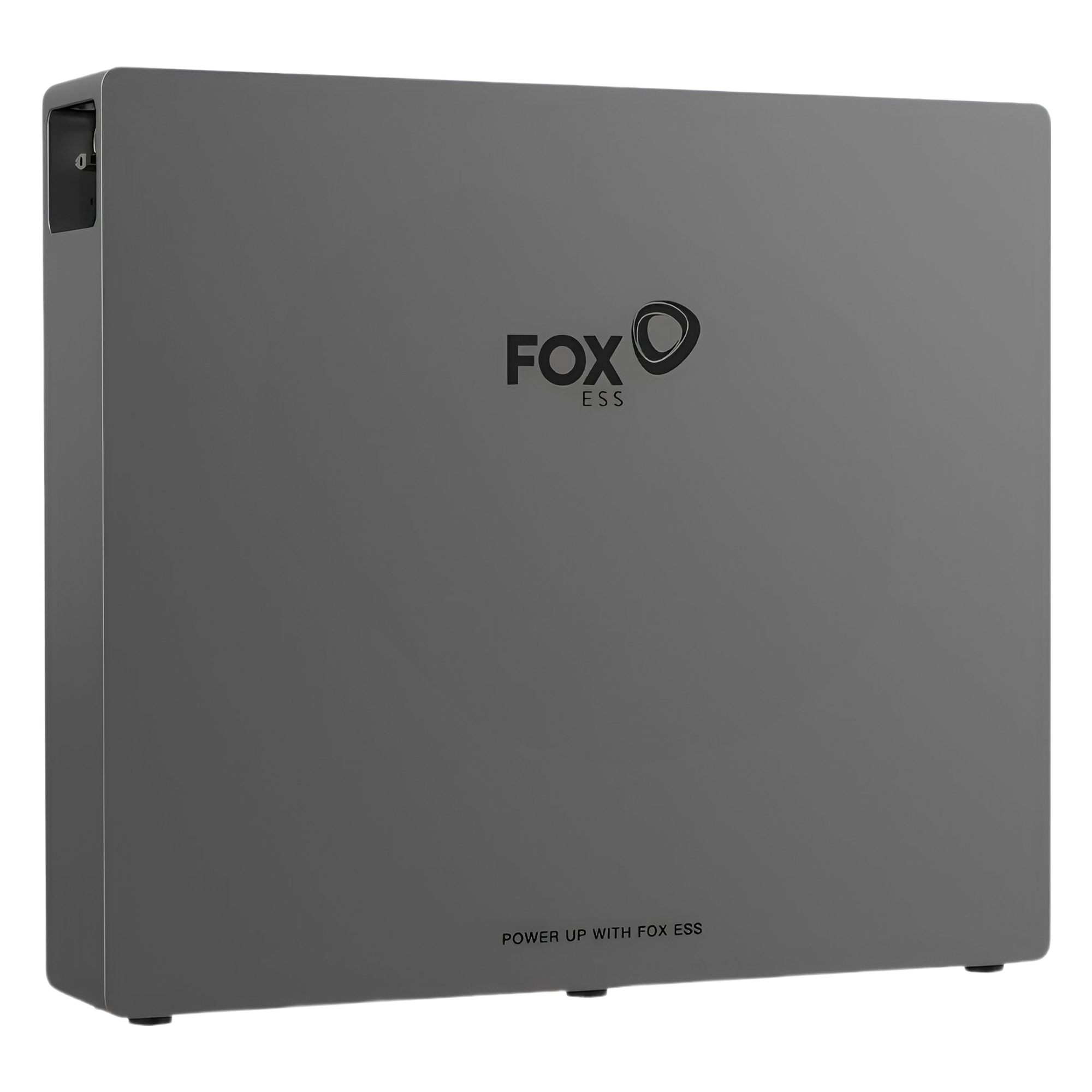
What the price difference buys with our two brands. Fox ESS and Sigenergy both run one continuous product line from a small home up to a commercial site, so a bigger battery later is a capacity decision, not a change of ecosystem. Sigenergy folds inversion, storage, system control and DC EV charging into one modular unit rather than several boxes from several suppliers. Fox ESS, built by Tsingshan Group, is the more affordable of the two, aimed at buyers who want that platform logic without the premium price tag.
The warranty we can actually put in front of you. Fox ESS carries a 10-year swap-out warranty — a failed unit inside the term is swapped out rather than left with you while a repair is negotiated. Sigenergy’s terms are published: 10 years on the Sigen Battery and the Sigen Energy Controller, with the battery guaranteed to retain at least 60% of its usable capacity at 10 years — or a stated energy-throughput limit, whichever comes first — extendable to 15 years if the system is purchased and registered within 12 months of commissioning. That is the kind of commitment worth asking for from whoever quotes you, Hubble included.
Frequently asked questions
Can I add a Hubble battery to my existing inverter?
If your inverter is hybrid-capable and the Hubble model is on its compatibility list, usually yes. The assessment takes minutes and should be the first question on any retrofit quote.
Hubble, Freedom Won or Pylontech: which should I choose?
These three aren’t part of what ZenSolar fits — we install Fox ESS and Sigenergy — but if you’re weighing them against each other anyway, correct sizing and installation quality will affect your outcome more than the choice between reputable brands. Let the design settle capacity and power first; the brand decision follows from compatibility, availability and value for your specific system.
How many batteries do I need?
That’s a measurement question, not an opinion question. It falls straight out of your overnight consumption and your independence goals. Run your numbers through our free System Sizer and see.
Does a battery need maintenance?
LiFePO4 batteries are largely maintenance-free day to day. There are no fluid checks or equalisation rituals to worry about. What they do benefit from is a sensible environment (cool, ventilated, protected from weather) and an occasional glance at the Hubble Cloudlink app to confirm normal cycling. An annual system health check by your installer covers the rest.
Next step: size it, then buy it
Whichever battery ends up on your property, the buying order is the same: use the System Sizer to establish what capacity your evenings actually need, or run the solar ROI assessment to see the savings first. Our own recommendation is Fox ESS or Sigenergy, for a specific reason: a written warranty before you sign, and a platform that adds capacity instead of forcing a brand change when your needs grow. Request a personalised ZenSolar quote and we will design the battery, the inverter pairing and the installation around that answer.
Not sure which system is right for you?