When a solar project moves from “reducing the house bill” to “changing how a business buys energy”, the equipment conversation changes with it. The Sunsynk 12kW hybrid class is one of the units that carries that shift: big enough to anchor a genuine commercial-scale installation, familiar enough to South African installers that support and expertise are never far away. This guide covers the 12kW class from a project perspective — not just what the unit does, but how a well-run commercial installation is scoped, designed and delivered around it.
What “Commercial-Scale” Really Means at 12kW
The 12kW class serves sites where electricity is a business input rather than a household convenience: workshops and light manufacturing, retail premises with refrigeration and climate control, hospitality operations with concentrated morning and evening demand, agricultural operations running pumps and cold storage, and large mixed-use properties. What these sites share is a consumption profile with real simultaneous demand — multiple significant loads that must run together — and a monthly bill large enough that rising Eskom tariffs show up directly in the operating numbers. A 12kW continuous output, backed by appropriate surge capacity for motor start-ups, is what lets that mix run on solar without compromise.
The Sunsynk 12kW Class in Brief
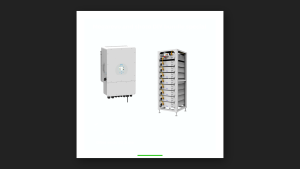
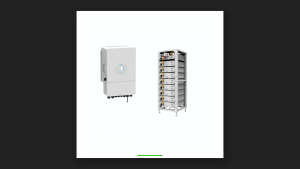
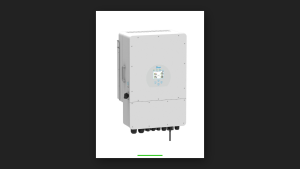
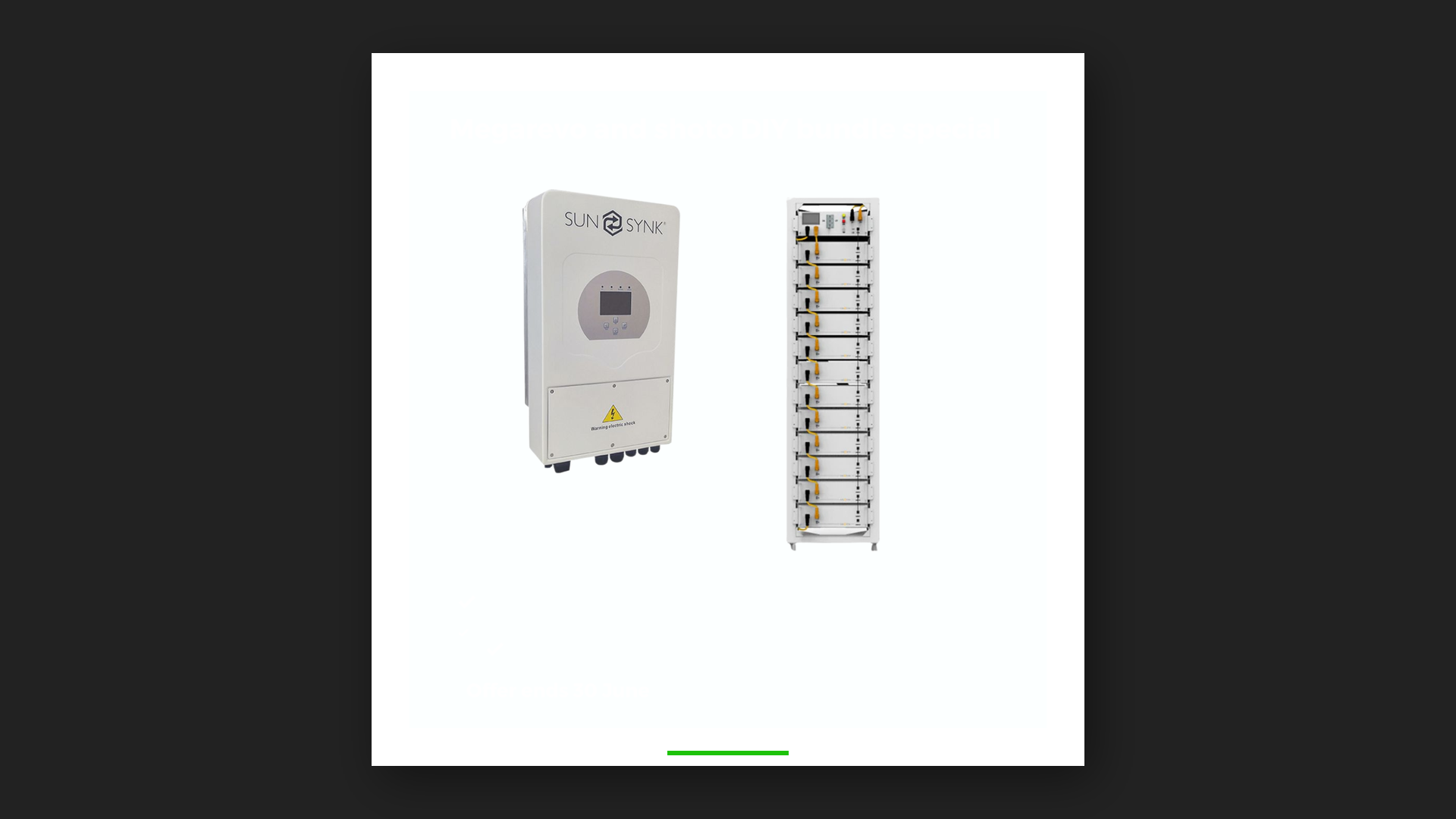
Sunsynk hybrids integrate solar conversion, battery management and grid interaction in one unit, with remote monitoring across the system. The characteristics that matter most at this scale:
- Continuous and surge output — the difference between running a compressor-heavy site smoothly and nuisance-tripping. Verify both figures on the current datasheet for the exact model quoted.
- Phase configuration — at this capacity, many sites are on three-phase supply, and the model must match it. Confirm your supply type before shortlisting anything.
- PV input allowance — the class typically supports an array oversized relative to AC output, lifting winter and overcast-day harvest; limits are model-specific.
- Parallel capability — Sunsynk’s stacking support means the first 12kW unit can become part of a larger bank as the operation grows, subject to model-specific limits.
- Battery ecosystem — Sunsynk pairs with a range of proven lithium banks in the local market. ZenSolar’s own installs, on either Sunsynk or another brand’s inverter, run on Fox ESS or Sigenergy batteries — see why further down this page.
How a Proper Commercial Project Runs
The equipment is the easy part; the project discipline around it is what separates a system that performs from one that disappoints. A well-run 12kW-class installation follows a recognisable pipeline:
Step 1: Measure Before You Design
A commercial design starts with data — interval consumption logging over at least a representative week, ideally longer, capturing seasonal and operational patterns. This reveals true peak simultaneous demand, the shape of the daily load curve, and which loads dominate. Guessing at this stage is how systems end up mis-sized in both directions. Our primer on how to size a solar system explains the underlying logic.
Step 2: Design the System Around the Load Curve
With real data, the designer matches array size to daytime consumption, battery capacity to the evening and overnight profile, and inverter capacity to the measured peaks — deciding along the way which circuits are carried by the inverter and which remain grid-only. On three-phase sites, load balancing across phases is part of this work.
Step 3: Handle Compliance as Part of the Job
Grid-connected commercial systems must be registered as small-scale embedded generation with the municipality or Eskom, use equipment approved under the applicable grid-connection standards, and close out with an Electrical Certificate of Compliance from a registered electrician. Insurers increasingly ask for proof of all three. A professional installer builds this into the project plan rather than treating it as an afterthought.
Step 4: Commission, Monitor, Verify
Commissioning should include verifying production against design expectations and configuring monitoring so the business can see generation, consumption and battery behaviour continuously. Monitoring is how underperformance gets caught in week two instead of month eight.
Scaling Beyond the First Unit
One of the strongest arguments for the 12kW class as a commercial entry point is that it does not box you in. Sunsynk’s parallel architecture allows additional units to be added alongside the first, so a growing operation can expand generation capacity in steps that follow the business — new cold storage, an additional workshop, an extended trading day — rather than betting the full future requirement upfront. For this to work smoothly, the initial electrical design must anticipate expansion: cable routes, board capacity and array space are much cheaper to provide for on day one than to retrofit.
The Financial Logic for Businesses in 2026
For a business, this is a capital-allocation decision, and the inputs are unusually favourable: Eskom tariffs have risen above inflation year after year, component costs are lower than two or three years ago, and a well-designed system keeps producing across a 20-plus-year equipment life. Solar converts a volatile, escalating operating expense into predictable self-supply, and the depreciation treatment of renewable-energy assets can improve the after-tax position — a conversation for your accountant. Funding routes matter too: many businesses prefer to preserve working capital and finance the installation against the savings it generates. Our guides to business loans for solar energy projects and solar power financing options map the landscape, and the article on calculating solar system monthly payments shows how repayments compare against a current bill.
Buying It Right
Three procurement rules protect a commercial purchase. Insist on authorised stock with a warranty claimable through a South African channel. Insist on a system-level, itemised quote naming exact models, compliance costs and commissioning scope. And choose an installation team with demonstrable experience on this class of project — ask to see comparable sites. ZenSolar does not carry Sunsynk. We deliver commercial-scale systems on Fox ESS and Sigenergy, through a manufacturer-approved installer network, giving you one accountable supplier across equipment, design, compliance and installation.
Frequently Asked Questions
Is the 12kW class enough for my site, or should I look at 16kW?
Only your measured peak demand can answer that. If logged peaks sit comfortably under the 12kW class’s capability with margin for surges, it is the right buy; if they push beyond it, step up or plan a paralleled pair.
Can the system grow with the business?
Yes — paralleling additional units is the standard expansion route, subject to model-specific limits. Design for it upfront and expansion becomes an incremental cost rather than a rebuild.
Do we need batteries immediately?
Not necessarily. Daytime-heavy operations sometimes start with a generation-only phase and add storage later. If evening operations or continuity matter, include storage from day one and size it against the measured load curve.
Common Pitfalls in Commercial-Scale Projects
The failure patterns in this class are remarkably consistent, and all are avoidable. Systems designed from a single month’s electricity bill rather than logged interval data, which miss seasonal peaks entirely. Quotes accepted on price without confirming authorised stock, leaving the warranty theoretical. Phase configuration assumed rather than checked, discovered at delivery. Compliance treated as the customer’s problem, surfacing later as an insurance or municipal headache. And expansion never discussed at design time, so the growth that was always coming requires rework that forethought would have made trivial. A supplier who walks you through consumption logging, compliance and expansion planning before talking hardware is telling you something important about how the rest of the project will run.
Why a commercial-scale build changes the brand calculation
At household scale a brand mismatch is an inconvenience. At commercial scale, with more capital committed and more downtime cost if something goes wrong, it is worth spelling out plainly why ZenSolar builds commercial systems on Fox ESS and Sigenergy rather than Sunsynk.
Sunsynk earns its place in this class. Its parallel architecture is a genuinely solid way to scale a commercial site in steps, the local installer base understands three-phase commercial deployments, and support channels are well established. None of that is in dispute, and a competently designed Sunsynk commercial system will work.
The case for the two brands we fit is about the next decade of the site, not the first year. A business that adds a second building, a cold-storage expansion or a longer trading day does not want that growth to trigger a change of inverter platform, app and support relationship. Fox ESS and Sigenergy both run one continuous product line from single-phase residential right through to multi-unit commercial and industrial installations, so the business scales the same system rather than replacing it.
Sigenergy’s SigenStor architecture folds inversion, battery, system control and DC EV charging into a single modular product, which matters more, not less, at commercial scale — one manufacturer accountable for a system with real operational stakes attached to it, instead of an inverter supplier and a battery supplier each pointing at the other during a fault. Its published warranty terms run 10 years on the Sigen Battery and Sigen Energy Controller, guaranteeing at least 60% of usable battery capacity at that point or a stated energy-throughput limit, whichever comes first, extendable to 15 years if registered within 12 months of commissioning — a document, not a sales claim.
Fox ESS, backed by Tsingshan Group’s manufacturing scale, gives commercial buyers a modular, stackable system built to expand rather than be replaced, across single- and three-phase configurations, at a price point that respects a business’s capital planning.
On a commercial project specifically, a manufacturer-approved installer is not optional — it is what keeps a warranty enforceable on hardware that a business is depending on for continuity, not convenience.
Model the project on your own consumption
Before any supplier conversation, get your numbers straight: run your site’s profile through our free system sizer, then use the solar ROI assessment to see what a 12kW-class system does to your operating costs. When you are ready, request a personalised quote for a site-specific commercial design on Fox ESS or Sigenergy.
Not sure which system is right for you?
Not sure which system is right for you?