If you have been searching for a Freedom Won battery price, you have probably noticed something frustrating: almost nobody publishes a simple number. That is not evasiveness. A lithium battery is one component inside a larger solar or storage system, and what you ultimately pay depends far more on your home, your inverter and your energy habits than on a sticker on a box. One thing to know before you read further: ZenSolar does not sell Freedom Won. We fit Fox ESS and Sigenergy, and we explain why later in this guide. That does not make the pricing logic below less useful to you — a kilowatt-hour of storage costs roughly what it costs no matter who is quoting you — so this guide explains what actually drives the cost of a Freedom Won battery installation in South Africa, how to compare quotes properly, and how that spend stacks up against the two brands we do install.
Who Freedom Won are, in brief
Freedom Won is a South African battery brand and one of the most established names in the local energy-storage market. The company builds lithium iron phosphate (LiFePO4) batteries — the chemistry that has become the standard for home and business energy storage because it is stable, tolerant of daily cycling and long-lived when managed properly. ZenSolar does not carry Freedom Won — we fit Fox ESS and Sigenergy — but Freedom Won’s standing in the local market is genuine and worth understanding on its own terms, which is what the rest of this guide sets out to do.
Because the brand is engineered and supported locally, spare parts, firmware support and warranty processes run through South African channels rather than an overseas head office. For a component you expect to work every day for a decade or more, that local support footprint is a genuine part of the value — and part of what you are paying for.
Why there is no single Freedom Won battery price
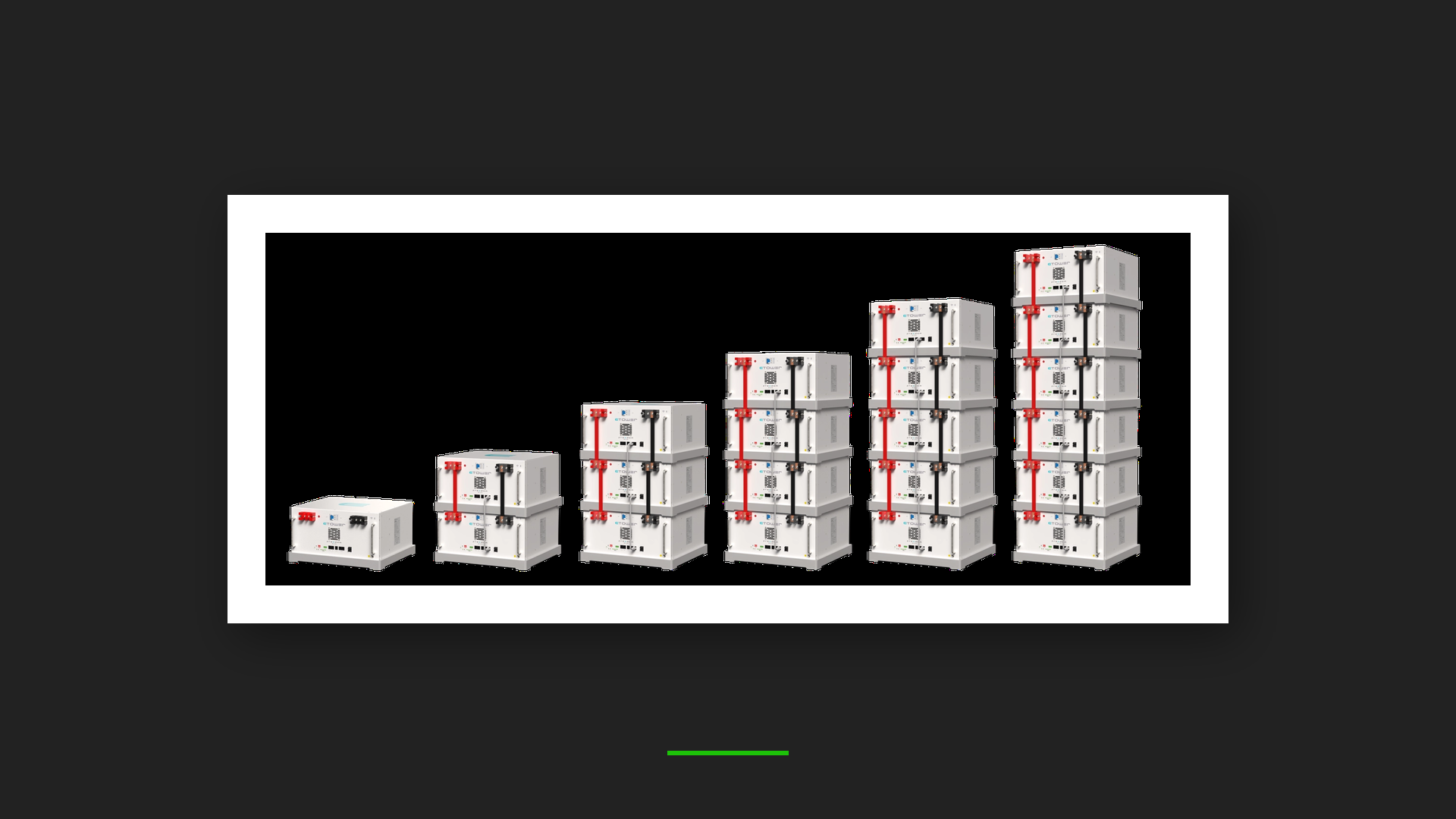
Freedom Won builds batteries across a wide range of capacities, from compact units for townhouses to large banks for farms and commercial buildings. Two households can both “buy a Freedom Won battery” and end up with completely different systems. The main reasons quotes vary:
- Capacity (kWh): the single biggest driver. A battery sized to run essential circuits overnight costs a fraction of one sized to carry a whole property through the evening peak and into the morning.
- Power rating (kW): how much the battery can deliver at once. Higher continuous and peak power ratings mean more robust internals, and that shows up in the price.
- One battery or a bank: larger homes and businesses often install multiple units in parallel. Cabling, busbars and balancing hardware scale with the bank.
- Your existing inverter: a battery must communicate with the inverter that charges and discharges it. If your current inverter is compatible, you pay for a battery. If it is not, the quote grows to include an inverter change.
- Installation specifics: mounting location, cable runs, distribution-board work and the electrical Certificate of Compliance all vary from property to property.
- Retrofit or new build: adding storage to an existing solar array is a different job from designing battery, inverter and panels together from day one.
Start with the size, not the price
The most expensive mistake battery buyers make is anchoring on a number before they know what capacity they actually need. Undersize the battery and it will be flat before morning, cycled hard and retired early. Oversize it and you have paid for kilowatt-hours that sit idle. The right sequence is to measure your evening and overnight consumption first, then price the battery that matches it. Our guide on how to size a solar system walks through the method, and it applies to storage just as much as to panels.
It also helps to understand what separates one lithium battery from another before you compare brands — usable capacity, cycle life and depth of discharge are explained in plain language in our article on what makes solar batteries different.
How to compare Freedom Won quotes like-for-like
Once you request quotes, make sure every line item is visible so you are comparing the same job. A meaningful quote should specify:
- The exact model and its rated capacity in kWh, plus the usable capacity — the figure that actually matters day to day.
- Continuous and peak power output in kW.
- The warranty term and what it covers, including any throughput or cycling conditions.
- Whether the price includes installation, cabling, protection devices and the Certificate of Compliance, or hardware only.
- Who performs the installation and who stands behind the workmanship afterwards. ZenSolar installations are carried out through our manufacturer-approved installers, and the accountability for that work should always be in writing.
Be wary of any quote that is dramatically cheaper than the rest. In batteries, that usually means grey-import stock without valid local warranty backing, an undersized unit, or an installer cutting corners on protection equipment.
Is a battery worth the spend right now?
The economics of storage in South Africa have shifted in the buyer’s favour. Eskom and municipal tariffs keep climbing year on year at rates above inflation, while lithium battery prices have fallen substantially compared with two or three years ago. A battery lets you store your own midday solar production and use it in the evening, when tariffs and consumption are both at their highest — which is exactly where the savings sit. Time-of-use tariff structures reward the same behaviour: charge when energy is cheap or free from your panels, discharge when it is expensive.
Whether that translates into a payback period you are happy with depends on your consumption profile and tariff. We have set out the full reasoning framework in is a solar system worth it — the same logic applies when you add storage to the picture.
Spreading the cost
A battery is a significant capital item, and many buyers finance it rather than paying cash — especially when the monthly repayment can be offset against the electricity savings the battery generates. If that route interests you, start with our breakdown of solar power financing options and our guide to calculating a solar system monthly payment, which shows how to weigh a repayment against a shrinking utility bill.
Where Fox ESS and Sigenergy Fit Into This
We have spent this whole guide on Freedom Won pricing without ever pretending ZenSolar fits it, so it is worth being direct about what we do instead and why.
What Freedom Won gets right, plainly. Freedom Won batteries are engineered and built in South Africa. That is a structural advantage, not a sales line: locally held spares mean a failed part is not stuck on a container ship, lead times are not hostage to an overseas shipping schedule, and there is a South African entity to hold accountable if something goes wrong. If local manufacture is what matters most to you, Freedom Won earns that position honestly, and we are not going to argue otherwise.
What Fox ESS and Sigenergy do instead. Both brands run one continuous product platform from a small home through to a commercial site, so adding capacity later is a sizing decision rather than a brand change. Sigenergy’s SigenStor takes that further, combining inversion, storage, system control and DC EV charging in one modular unit instead of four separately sourced boxes, each with its own warranty desk to deal with. Fox ESS, backed by Tsingshan Group, is the more budget-conscious half of the pair — modular, stackable storage designed to be added to rather than replaced.
The figure we can actually show you. Fox ESS carries a 10-year swap-out warranty: a unit that fails inside the term is replaced, not booked into an open-ended repair while you sit without power. Sigenergy’s is published: a 10-year term on the Sigen Battery and the Sigen Energy Controller, with the battery guaranteed to retain at least 60% of its usable capacity at 10 years — or a stated energy-throughput limit, whichever comes first — extendable to 15 years if the system is purchased and registered within 12 months of commissioning. Ask any installer quoting you a battery, whichever brand it carries, to put their warranty terms in writing before you sign. It is the most useful single question a buyer can ask.
Common questions
Can I add a Freedom Won battery to my existing solar system?
Often, yes — it depends on whether your inverter is hybrid-capable and appears on the battery’s compatibility list. An assessment of your current setup is the first step; compatibility determines whether this is a straightforward addition or a larger upgrade.
How long will the battery last?
LiFePO4 batteries are designed for years of daily cycling, and lifespan is heavily influenced by how the battery is sized and managed. A correctly sized battery cycling within its intended depth of discharge will comfortably outlast an undersized one being flattened every night. The warranty document, not a salesperson’s estimate, is the figure to rely on.
Do I need solar panels to use one?
No — a battery can be charged from the grid and used to shift your consumption to cheaper periods. That said, pairing storage with solar panels is where the strongest returns are, because the energy you store costs you nothing to generate.
Is Freedom Won one of ZenSolar’s brands?
No. Freedom Won is a genuinely established South African brand and this guide treats it honestly, but ZenSolar’s approved range is Fox ESS and Sigenergy only. The same pricing logic above — and a written warranty — applies when we quote you one of those two.
Get a real number for your home
The honest answer to “how much does a Freedom Won battery cost?” is still: it depends on the system your property needs. That arithmetic does not change if the battery is a Fox ESS or a Sigenergy instead — capacity, power rating and installation complexity drive the price either way. Our recommendation is Fox ESS or Sigenergy, for a specific reason: we can put the warranty terms in writing in front of you before you sign, and the platform is built so your first purchase does not have to be your last if your needs grow. Run your details through our free System Sizer to see what capacity fits your consumption, or complete the solar ROI assessment to see the savings picture first. From there, ZenSolar can prepare a personalised, itemised quote for your home or business, built around Fox ESS or Sigenergy hardware.
Not sure which system is right for you?