Most "best backup" articles online are written by shops trying to move a specific battery or inverter off the shelf. Their sizing advice never quite adds up. The honest starting point is your home, your tariff, and your outage pattern. Then a number. Then the gear.
This guide walks you through picking the right backup power supply for home south africa buyers actually need in 2026, without overspending on capacity you will never use.
What "power backup for home" actually means in 2026
The four kinds of home backup you will see in the market
You will meet four main types. A UPS is the small box near your PC. It covers a few minutes. A portable power station is a battery in a box with handles. An inverter plus lithium battery is a permanently installed wall unit. A generator is a petrol or diesel engine that makes electricity. Each one fits a different job.
A UPS keeps your router and PC alive long enough to save work. A portable station runs a lamp and a phone for a few hours. An inverter and battery system runs the lights, fridge, alarm and TV for hours. A generator runs almost anything, as long as you have fuel.
Why the question has changed: tariffs, not just outages
Two years ago, backup was almost entirely about Eskom outages. That frame is fading. The Eskom fleet is steadier than it was, and the average yearly tariff has climbed well above inflation for a full decade (CSIR). NERSA has just approved another increase averaging 8.76% for direct Eskom customers, with municipal bulk buyers adding roughly 9.01% from 1 July 2026 (Eskom). The driver now is the monthly bill, not the lights going out.
What a backup system can, and cannot, run in a normal house
The "must keep on" list (lights, wifi, alarm, fridge, charging)
Start with what you cannot do without. Wi-Fi router and fibre box. A few LED lights. The alarm panel and any outdoor beams. The fridge, so the food stays cold. Phone and laptop chargers. In most homes this adds up to between 200 and 400 watt-hours per day. A modest 3 kWh battery covers it comfortably.
The "nice to have" list (kitchen circuits, a study, the TV room)
Next, the things you would like to keep going. The TV and decoder. A study with a laptop and a monitor. A kettle or a microwave on short bursts. Add roughly 1 to 2 kWh per day for this layer. If you work from home, push the study higher in the list. If you do not, push it down.
What backup does not cover unless you oversize
Whole-house air conditioning, pool pumps, stoves and geysers are the big loads. A geyser alone can pull 3 kW. Running all of it from a battery gets expensive fast. Be honest about what is on the "must keep on" list, and treat the rest as a stretch goal for a future solar-plus-storage setup.
Sizing your backup the honest way
Work out the kWh you need per day
List every appliance you want to back up. Write down its wattage. Estimate the hours you will run it. Multiply, then add extra for losses. A typical four-person home lands between 5 and 10 kWh per day on a sensible list. That range, not a salesman’s figure, sets your battery size.
Work out the peak kW you need when everything starts at once
Some appliances pull a big surge at start-up. Fridges, pumps and microwaves all spike. Add up the highest likely simultaneous draw, then double it as a rule. Most South African homes in this bracket end up between 3 kW and 5 kW of inverter capacity. Anything larger pushes the price up sharply.
How long you actually want the system to last on battery alone
One evening is a common target. That works out to roughly 2 to 4 kWh for a lean list. A full overnight stretch means 5 to 8 kWh. A whole weekend off-grid is a different project and a different budget. Pick the shortest runtime that still feels safe, because doubling the battery roughly doubles the cost.
Inverter and battery, generator, or portable power station
Inverter plus lithium battery: the default for most homes
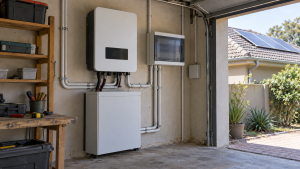
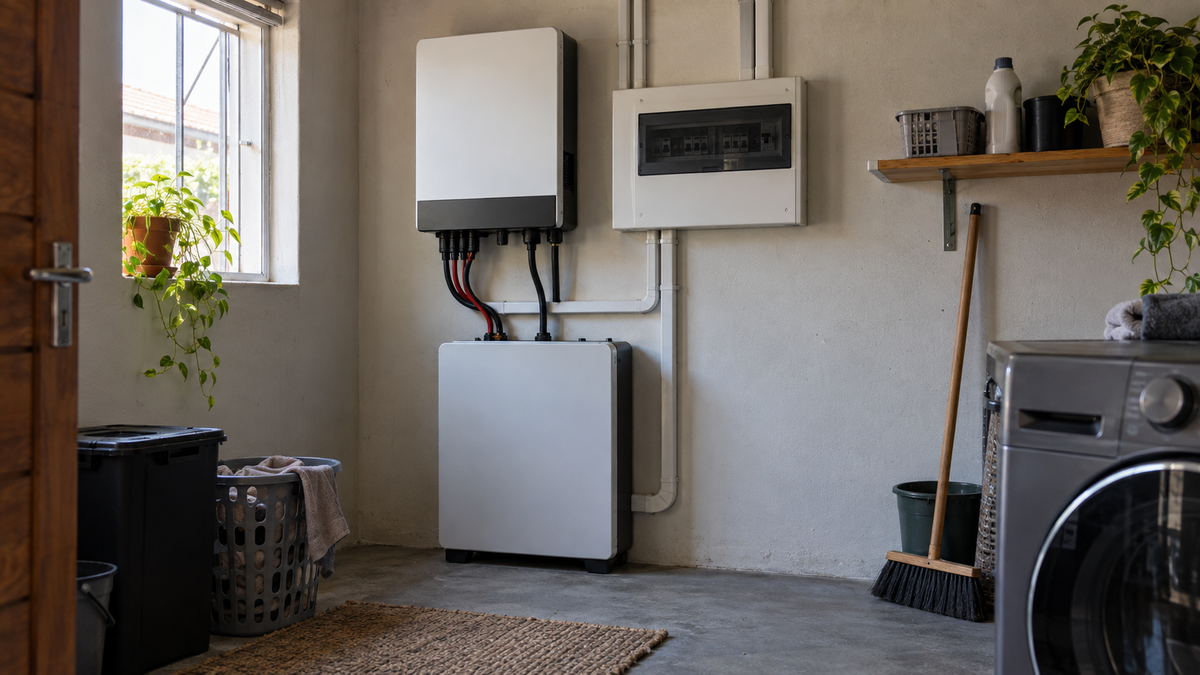
For a family home, this is the right starting point. It is silent. It switches on by itself. It runs the fridge, lights and Wi-Fi for many hours. Once you add panels later, the same inverter often does double duty as the heart of a full solar system.
Generator: cheap to buy, costly to run
A 5 kVA petrol generator costs far less than a 5 kWh battery system. The catch is fuel, oil, filters, and the noise. Over ten years, fuel and maintenance easily outrun the original purchase price. Generators also need you outside in the dark to start them.
Portable power station: useful for a flat or small backup only
A 1 to 2 kWh portable station is a sensible buy for a small flat, a home office, or a tenant who cannot do a wall install. For a full house, the price per kWh is high and the runtime is short. Use it for what it is, not as a whole-house answer.
Lithium-ion vs lead-acid: the real cost over ten years
Lead-acid batteries cost less up front. They also wear out faster, lose capacity the deeper you discharge them, and need replacing roughly every 3 to 5 years. Lithium-ion costs more on day one and lasts 10 years or more in a home setup. Over ten years, the lithium route usually works out cheaper once you count the replacements. Lead-acid also needs a ventilated room. Lithium sits on a garage wall.
The total cost picture matters more than the sticker price. A lead-acid bank that gets replaced twice in a decade can quietly cost more than a lithium bank that does not. This is one of the few areas where paying more now genuinely pays you back.
Price ranges in South Africa and what drives them
What changes the price most
Battery capacity is the biggest single driver. Inverter brand and size is next. Then the roof layout, the cable run from the DB board, and whether you need a new box or just an add-on. Monitoring, warranty length and installation difficulty all add up. The market for rooftop solar has grown fast, with installed capacity reaching 3.2 GW by 2023 and a residential addressable market near 10 GW (GreenCape). That growth has brought more installer choice and steadier pricing.
Where the hidden costs sit (cabling, DB board work, installation)
The battery and inverter are the visible line items. The hidden ones are the DC cable from the battery to the DB, the AC protection gear, a small board if your current one is full, the mount, and labour. For a typical three-bedroom house, expect installation costs on top of the kit price to vary depending on the complexity of the job. Get this in writing before the crew arrives.
From backup-only to a full solar-plus-storage setup later
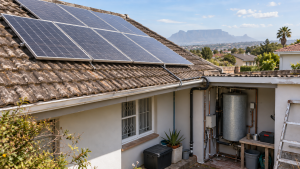
This is where a lot of buyers lose money. A basic backup-only inverter cannot grow into a solar system later. A hybrid inverter can. If there is any chance you will add panels in the next five years, pay the small extra now for a hybrid unit and a battery that accepts DC charge from panels. Your backup spend today becomes the core of a full solar-plus-storage system tomorrow.
GreenCape expects about 6 GW of solar PV and 6.5 GWh of battery storage to be in place by 2030 (GreenCape). The skills, parts and financing are getting easier to find each year. Plan for the upgrade on day one.
A short buying checklist before you request a quote
- Your kWh per day target, written down.
- Your peak kW, written down.
- Your runtime target in hours, written down.
- Your "must keep on" list, written down.
- Whether you want hybrid or backup-only, decided in advance.
- A clear answer on lead-acid or lithium, with eyes open on lifespan.
- Three quotes from three installers, with the same spec each time.
What a proper site visit should cover, and what to ask
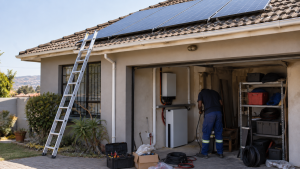
A real site visit is not a sales pitch. The installer should walk the roof, check the DB board, measure the cable run, and ask about your monthly bill and your outage pattern. They should leave you with a written design, a bill of materials, and a price. If you feel pushed, slow the meeting down.
Ask how the inverter switches over during an outage. Ask what the warranty covers and what it excludes. Ask who does the COC if any electrical work is done. Ask for the brand and model of every part. If the answers are vague, get a second opinion.
On the tax side, individuals who pay Personal Income Tax can claim a rebate of 25% of the cost of new and unused PV panels, up to a maximum of R15 000 against their tax liability (SARS). Panels only, not the inverter or battery. Confirm the current rules with your tax practitioner before you plan around them.
Ready to see what your home would actually need? Book a site visit and get a written design with a real number on it.