Key Takeaways
A lease to own solar agreement can make a system easier to afford, but the monthly payment is only one part of the decision.
- You may use the system before legal ownership transfers.
- The contract should explain installation, maintenance, insurance, escalation, and settlement costs.
- A lower monthly payment can still produce a higher full-term cost.
- Your home, credit profile, electricity use, and plans to move all affect suitability.
- Compare the agreement with a cash purchase and a loan before signing.
What lease to own solar means
Solar companies in South Africa can be quick to quote a monthly figure and slow to show the total cost over ten or fifteen years. Lease to own solar sits between renting a system and buying it outright. You pay for access to the equipment over an agreed period, with ownership transferring only if the contract says so. The exact structure matters more than the label.
Lease versus rent-to-own versus instalment sale
A lease normally gives you the right to use the panels, inverter, battery, and related equipment while another party owns them. A rent-to-own agreement usually adds a stated route to ownership after payments or a final settlement. An instalment sale is closer to a purchase from the start, but you pay in stages and the seller or financier may retain security until the balance is cleared.
Do not assume that “rent to own” means you will own the system automatically. Ask whether ownership transfers for no extra payment, for a final balloon payment, or only after a separate buyout. You should also ask who owns the equipment if you cancel before the scheduled end date.
How ownership actually transfers
Ownership can transfer at the end of the payment period, after a final amount is paid, or through an option that you must actively exercise. The contract should state the date, amount, process, and condition of the transfer. It should also explain whether the equipment remains under warranty and whether any registration or municipal paperwork is needed.
Read the ownership clause alongside the default clause. A contract may describe an attractive final transfer while allowing the provider to repossess the system after missed payments. The practical question is simple: what will you own, and what will you still owe, on the last day?
What you pay each month and what is included
The monthly amount may cover more than the equipment itself. It can include installation, administration, monitoring, maintenance, insurance, interest, and other contract charges. Some agreements bundle these items, while others leave them to you. Ask for an itemised schedule before you compare offers.
A solar payment also does not replace your municipal or Eskom account. You may still pay for electricity imported from the grid, fixed charges, and any applicable service fees. The system reduces the amount of energy you buy, but it does not make every electricity charge disappear.
Hardware, installation, and monitoring
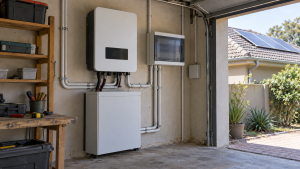
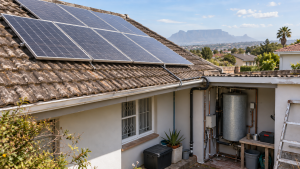
Check the equipment schedule first. It should identify the system capacity in kW or kWp, battery capacity in kWh, inverter model, panel count, mounting equipment, and protection devices. It should also say what happens if a listed component is substituted.
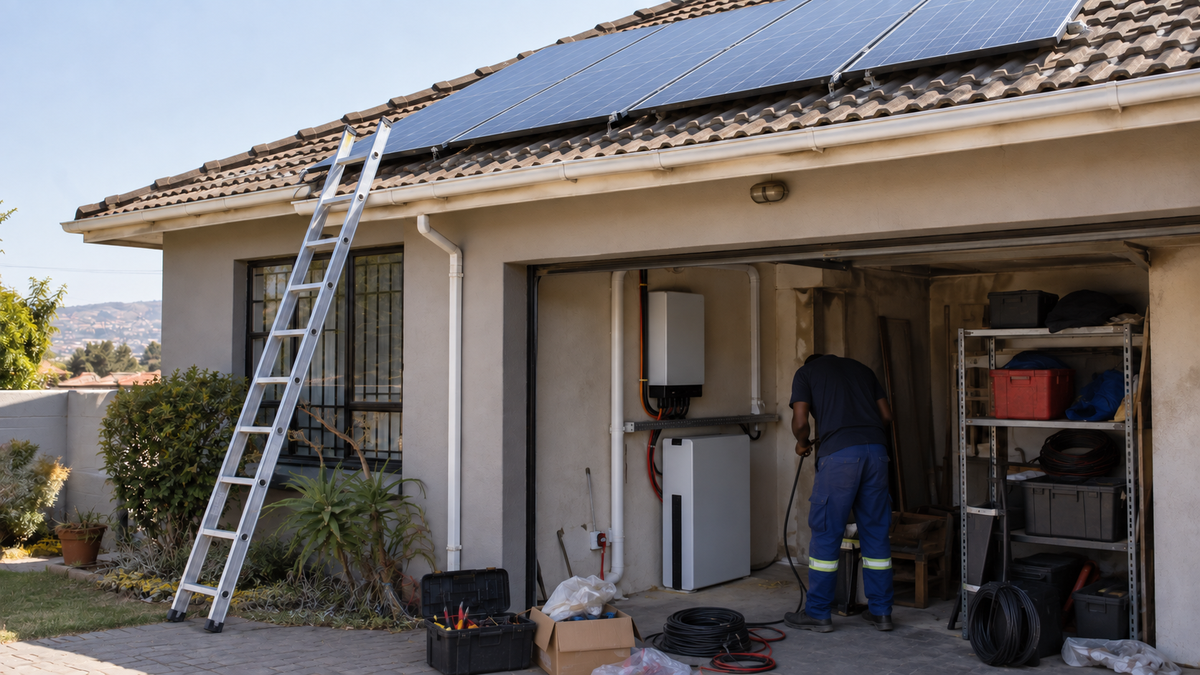
The installation section should cover design, roof work, electrical work, certificates, commissioning, and handover. Monitoring should be described in plain terms. Find out whether you receive access to an app, who checks faults, and whether mobile data or internet costs sit with you.
ZenSolar sells solar systems and financing in South Africa, while Fox ESS is one of the authorised brands it may supply. The brand or model in an agreement should still match the written equipment schedule.
Maintenance, repairs, and insurance
A lease can look predictable until a repair falls outside the provider’s definition of normal wear. Ask who pays for call-outs, replacement parts, labour, software support, storm damage, theft, and roof repairs. Also check whether a failed battery reduces your payment while it is being repaired.
Insurance needs the same care. The contract may require you to insure the equipment, or it may include cover in the monthly charge. Confirm the excess, exclusions, claim process, and responsibility for damage caused by roof leaks or building work.
Escalation clauses and how to read them
An escalation clause increases your payment over time. It may be a fixed annual percentage, a change linked to an index, or a review decided under terms in the agreement. A payment that feels manageable in year one may be materially different later.
Ask the provider to show the first payment, the highest scheduled payment, and the total of all scheduled payments. Then check whether fees rise even when the system produces less energy than expected. The full payment path matters more than the opening monthly number.
Who lease to own suits
Lease to own solar can suit you when you want a system but cannot or do not want to pay the full purchase price immediately. It may also help you spread the cost across the period in which you use the equipment. That convenience has a price, so your decision should begin with your household budget and long-term plans.
Your roof, electricity use, property ownership, and expected time in the home all matter. A system designed for a large daytime load may make sense for one household and poor sense for another. Use your own bill and usage history rather than a generic example.
Homeowners without the cash to buy outright
If a cash purchase would drain your emergency fund, spreading payments may be sensible. You keep money available for other needs while using the system. You should still compare the contract’s full cost with the amount you could save by waiting and buying later.
The agreement should not hide the cash price. Ask for the equipment and installation price, the amount financed, every fee, and the total payable. Without those figures, you cannot tell whether the arrangement is affordable or simply easier to say yes to.
Homeowners who want a fixed monthly cost
A fixed payment can make household budgeting easier, particularly when the contract has no annual escalation. But “fixed” must be defined. It may apply only to the equipment payment and not to electricity imported from the grid, insurance, monitoring, or service charges.
Ask what happens if your energy use changes. A growing family, a home office, a pool pump, or an electric vehicle can alter your demand. The payment may stay fixed while your electricity bill rises because the system no longer matches your usage pattern.
When lease to own is the wrong choice
Lease to own may be a poor fit if you have enough cash to buy outright and value the lowest possible total cost. It can also be awkward if you may sell the property soon, since a buyer may not accept the agreement. A roof that needs replacement soon creates another concern.
You should pause if the contract does not show the total payable, the ownership date, the settlement amount, or the treatment of repairs. Pressure to sign before you can review those terms is a reason to step back, not a reason to move faster.
The total cost over the full term
The right comparison is not the monthly payment against your current bill. It is the full cost of each route, measured over the same period and against the same system output. Include the money you pay upfront, the money you pay each month, and the money due at the end.
Solar equipment prices have changed, while electricity tariffs have also moved. GreenCape reports that South Africa’s renewable energy market is expected to exceed 22 GW by 2030, with demand for renewable generation growing rapidly. That wider market context does not decide your contract, but it is another reason to compare the actual equipment and terms rather than relying on a sales label.
Comparing cash, loan, and lease to own
A cash purchase is usually the simplest benchmark. You pay for the system, own it, and carry the responsibility for future repairs and insurance. A loan spreads the cost but adds interest and may involve security or settlement conditions. Lease to own spreads payments and may bundle services, but ownership can be delayed and the total can be higher.
Put each option into the same simple model. Include your deposit, every scheduled payment, the final settlement, likely maintenance, insurance, and any fee for moving or cancelling. Then compare the model with the electricity cost you expect to avoid, using your own consumption and tariff.
What drives the final rand amount
The final amount depends on the system size, battery capacity, installation complexity, contract length, interest or finance charges, escalation, maintenance cover, insurance, and the ownership transfer terms. A larger battery may cost more but could change how much energy you buy at different times. A longer contract may reduce the monthly amount while increasing the total paid.
A tax position may also affect a purchase decision. SARS states that an individual who pays Personal Income Tax and installs new, unused PV panels can claim 25% of the panel cost up to a maximum rebate of R15 000 against their tax liability. Check whether a lease structure gives you the same treatment, rather than assuming it does.
Credit checks, affordability, and "no credit check" offers
A finance provider needs to assess whether the payments are affordable. The wording may differ between providers, but the questions are familiar: your income, regular expenses, existing debt, payment history, and the value of the proposed commitment. A “no credit check” phrase can describe a different process rather than a free pass.
You should know who makes the affordability decision and what information they use. Read the privacy and consent wording before submitting documents. The monthly figure is only useful when it reflects the payment you are actually likely to be approved for.
What an affordability check actually involves
An affordability check may ask for proof of income, bank statements, identity documents, household expenses, and details of existing accounts. It may also include a credit bureau enquiry. The provider should explain the documents required and whether the enquiry is recorded.
Be accurate about your expenses. A payment that only works when you leave out rates, insurance, school costs, or other debt is not affordable in practice. Ask whether the payment changes after an introductory period or when the escalation clause starts.
What "no credit check" usually means in practice
“No credit check” can mean that the provider uses a different risk assessment, asks for a larger deposit, requires another form of security, or offers the equipment under different ownership terms. It does not necessarily mean there is no affordability test. It may also mean that fewer details are shown before you commit.
Ask for the exact approval conditions in writing. Check the deposit, fees, payment dates, default consequences, and whether the provider can access or remove the equipment. If the offer avoids these questions, it is not yet clear enough to compare.
Selling the house, moving, and ending the contract early
A solar contract attached to a house can affect a sale just as much as a roof alteration or another long-term obligation. The buyer, estate agent, conveyancer, provider, and insurer may all need clear information. Deal with this before you list the property.
Your contract should state whether it can be transferred to the buyer, settled before transfer, or cancelled under specific conditions. Do not rely on a verbal assurance that the next owner can simply take over.
What happens when you sell
There are usually three practical paths: the buyer takes over the agreement, you settle the remaining amount, or the equipment is removed if the contract permits it. Each path can affect the sale price, timing, and paperwork. The buyer may also want their own inspection of the system.
Ask for a written transfer process and the documents required. Confirm how the warranty, monitoring account, insurance, and maintenance obligations move to the new owner. If a provider must approve the buyer, include enough time for that approval in the sale process.
Early settlement and what to check in the contract
Early settlement is not always the remaining monthly payments added together. It may include a discounted balance, an administration fee, unpaid charges, and a final ownership amount. Request a settlement quote that is valid until a stated date.
Check whether the contract allows early settlement at any time. Look for notice periods, cancellation fees, equipment removal costs, and conditions about damage or outstanding maintenance. The settlement clause is one of the sections worth having a conveyancer or financial professional read with you.
How Eskom tariffs change the math
The value of solar depends partly on the electricity cost you would otherwise pay. CSIR reports that the national average electricity tariff increased by an average of 10% a year from 2014 to 2024, compared with average inflation of 5.2% over the same period. Eskom says the approved average electricity price increase for customers supplied directly by Eskom is 8.76%, while municipal bulk purchasers will implement average increases of 9.01% from 1 July 2026.
These figures show why a static comparison can mislead you. Future tariffs affect the value of the energy your system produces, but your actual result depends on your municipality, tariff structure, usage profile, system size, battery behaviour, and contract payment. A higher tariff does not automatically make every lease attractive.
Modelling your own saving before you sign
Start with twelve months of electricity bills if you have them. Record your monthly kWh, tariff, fixed charges, and the times when you use the most energy. Then compare the expected solar output with the payment schedule, including escalation and any final transfer amount.
A useful model should answer five questions before you sign:
- How much energy will the system produce in summer and winter?
- How much of that energy will you use directly?
- How much will the battery shift into higher-value periods?
- What will the grid bill still contain after installation?
- What will you have paid when ownership transfers?
After the list, test the model with lower production and higher maintenance costs. You can also review SAPVIA for industry information on small-scale embedded generation and use the GreenCape market context when thinking about the wider sector. The decision should still come from your roof, bills, contract, and budget.
Conclusion
Lease to own solar can solve a cash-flow problem, but it does not remove the need to compare ownership, contract risk, and total cost. Read the escalation, maintenance, settlement, and transfer clauses before you focus on the monthly payment. If you want to work through your own usage and system requirements, ZenSolar can help you book a call before you commit to an agreement.
Frequently Asked Questions
Is lease to own solar the same as buying solar panels?
No. You usually use the system before you own it, and ownership depends on the transfer terms in the contract.
Does the monthly payment include my electricity bill?
Usually not. You may still pay for electricity imported from the grid, fixed charges, and other municipal or service fees.
Can I sell my house with a solar lease in place?
Possibly, but the contract may require a buyer transfer, early settlement, or another approval process. Check this before listing the property.
What is an escalation clause?
It is a term that increases the payment over time. It may use a fixed annual increase, an index, or another method stated in the agreement.
Is a no-credit-check solar offer automatically easier to obtain?
No. It may use a different affordability or risk process, require security, or include different deposits and fees.
How should I compare a cash purchase with lease to own?
Compare the same system and expected output, then include the deposit, all payments, escalation, maintenance, insurance, settlement, and ownership costs.
What should I ask before signing a solar lease?
Ask who owns the equipment, when ownership transfers, what the total payable is, who covers repairs, what happens when you move, and how early settlement works.