Key Takeaways
The Sunsynk 8kW hybrid inverter provides a robust foundation for residential and light commercial energy systems, focusing on consistent power delivery and efficient management. Understanding its technical bounds and configuration options ensures you get the most out of your investment.
- The inverter manages solar, battery, and grid inputs dynamically to maximise self-consumption.
- Proper cooling and ventilation are critical for maintaining the unit’s longevity and performance.
- Comprehensive monitoring software allows for real-time oversight of your energy yields.
- Balancing system sizing involves matching your peak loads with the inverter’s continuous output capacity.
- Professional configuration of charge parameters is essential for optimising battery health and grid interactions.
Technical specifications and performance
The architecture of this system relies on precise engineering to manage energy conversion from diverse sources. By converting DC inputs into stable AC power, the unit ensures your household remains supplied, even when grid conditions fluctuate.
Understanding the 8kW power rating
This unit delivers 8,000 W of continuous output, which is generally sufficient for most modern single-phase households. You can power standard high-demand appliances like a geyser or heat pump while maintaining energy independence. When integrating the Sunsynk 8kW Hybrid Inverter into your setup, ensure your main incoming circuit can support the rated output to avoid nuisance tripping.
Efficiency and conversion rates
The internal conversion process boasts high efficiency, minimising energy loss as heat. Maintaining this efficiency requires keeping the device in a well-ventilated space, as thermal performance directly impacts how effectively the unit handles load spikes. When you evaluate the Sunsynk 8kW ECCO Hybrid Inverter, you are looking at a system designed to keep power conversion costs low over the long term.
Input compatibility for solar arrays
You have significant flexibility when configuring your photovoltaic strings. The system accepts up to 10,400 W of DC input, allowing you to size your panel array to match your property’s specific consumption profile. Properly calculating your voltage ranges prevents overloading the inputs and helps achieve optimal daily yields.
Multi-MPPT tracking capabilities
Dual independent trackers allow you to arrange solar strings on different roof pitches or orientations without losing efficiency. This means you can harvest energy from sunrise through sunset, effectively smoothing out your generation curve across the day. Using Sunsynk’s range of power management tools, you can ensure that each tracker operates at its maximum power point, regardless of shading or orientation differences.
Compatibility and integration
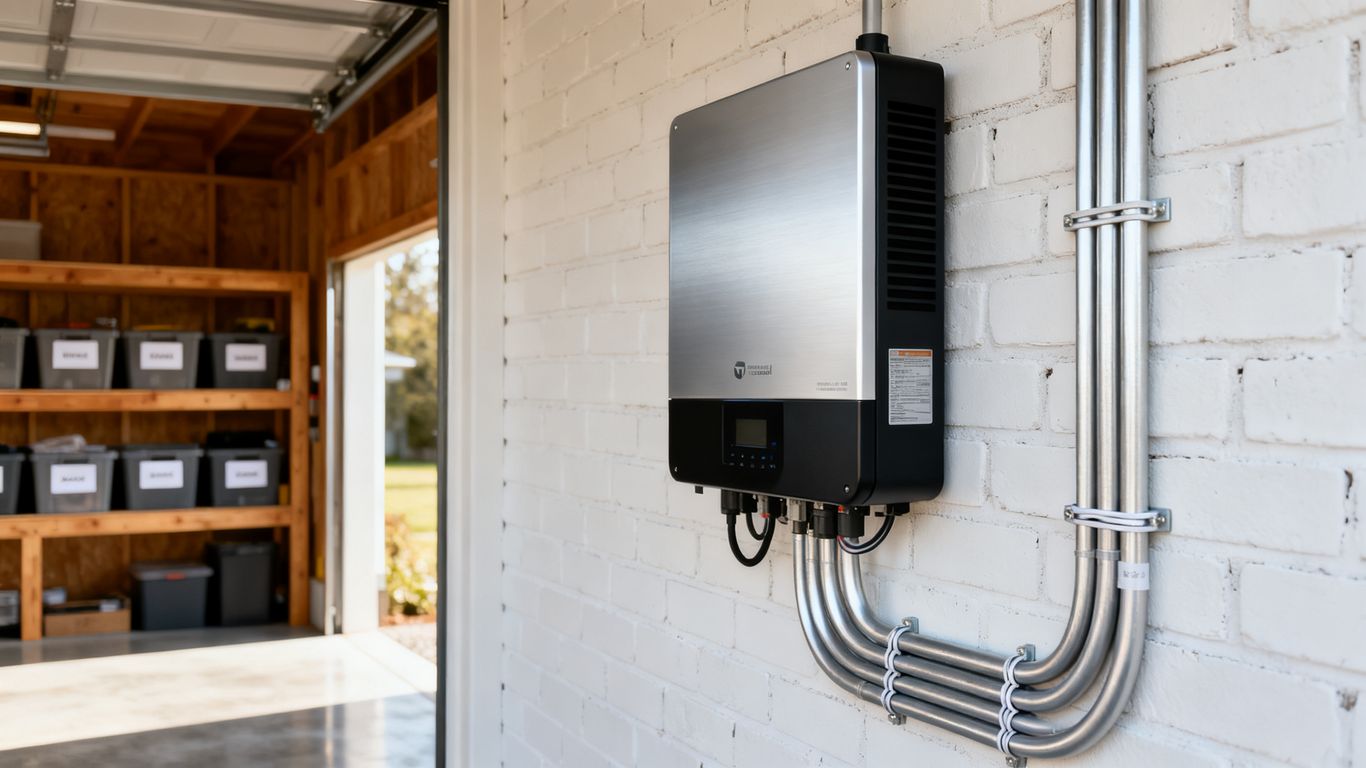
Seamless integration is the hallmark of a high-functioning energy system. Whether you are adding a storage bank or connecting a secondary energy source, the hardware communicates via standard protocols to keep your system balanced and responsive.
Battery storage options and communication
Your chosen battery bank should support 48V low-voltage architecture. Compatibility covers a wide range of popular lithium-ion technologies, with the inverter using RS485 or CAN protocols to manage charge states automatically. ZenSolar frequently recommends testing communication links early in the commissioning process to verify that the battery management system and the inverter are syncing correctly.
Grid-tied versus off-grid functionality
The device is built to operate in parallel with the national grid while offering seamless switching to maintain power during outages. This hybrid nature provides the perfect balance of reliability and grid reliance. Configuring these parameters through the official software ensures that your switch-over remains near-instant, protecting sensitive electronics.
Integrating with third-party solar panels
Most modern Tier-1 solar modules are fully compatible with this inverter’s input specs. It is essential to match the open-circuit voltage and short-circuit current of your chosen panels with the inverter’s requirements. ZenSolar experts often assist homeowners in verifying these technical parameters before procurement begins.
Compatibility with backup generators
You can introduce a generator as a secondary feed if your local weather patterns lead to extended periods of low generation. The inverter manages this input by automatically handling the connection timing and power transfer to prevent back-feeding the grid inappropriately. Accessing comprehensive solutions for these connections helps maintain safety during complex system configurations.
Installation and safety considerations
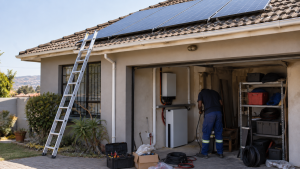
Proper mounting and wiring are not just about neatness; they are fundamental to safe operation. The housing requires enough clearance to allow for natural convection, which is the primary cooling mechanism for this unit.
Mounting requirements and heat dissipation
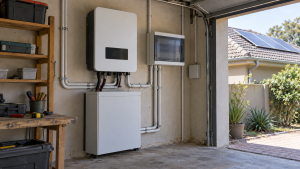
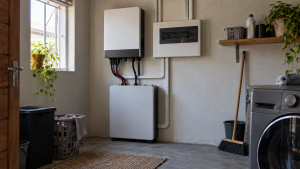
Mount the unit on a vertical, non-flammable surface. Leave at least 500 mm of clearance to the sides and a similar distance above and below the device to allow air to flow freely. This ensures the unit stays within its optimal operating temperature, which is essential for performance during summer months.
Electrical wiring and DC protection
Direct current lines carry high voltage and require appropriate circuit breakers at every entry point. Use cabling rated for the maximum expected current to prevent overheating. Always ensure that the earth connection is verifyied, as this provides the reference needed for the inverter to maintain its internal fault-detection routines.
Regulatory standards and industry certifications
Compliance is mandatory for any grid-connected equipment. The gear holds certifications that meet local safety standards for utility interaction. Ensuring your installation is compliant typically requires an inspection by a registered professional, which secures your property and keeps your insurance policy intact.
Safety protocols for the inverter housing
The outer shell is built to a high ingress protection standard, making it resistant to moisture and dust. While durable, you should treat it with the same caution as any other electrical distribution board. Never attempt to open the main body while the system is energised or connected to a live DC source.
Monitoring and system configuration
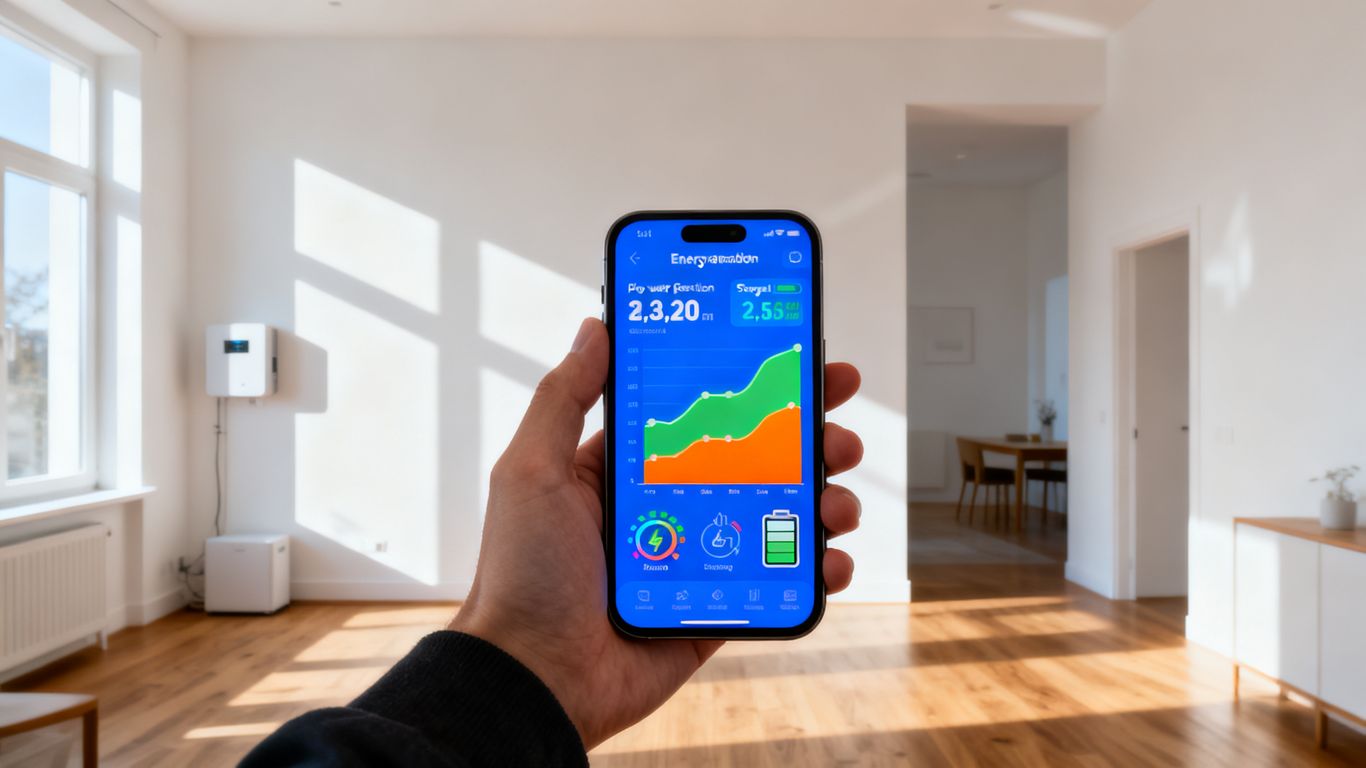
Mastering the interface allows you to dictate your system’s behaviour. By reviewing historical data points, you can refine your self-consumption strategy to suit your specific household rhythms.
Navigating the Sunsynk software interface
The menu structure provides granular control over each aspect of the operation. You can customise output priorities, define the states of charge for your batteries, and toggle specific safety limits. Simple, logical navigation makes it easy for any homeowner to observe system health at a glance.
Remote monitoring via cloud services
Connectivity via Wi-Fi or GSM allows you to check your system from anywhere. This cloud-based monitoring provides the data needed for long-term troubleshooting and helps identify trends in your consumption. If a fault occurs, the error reporting system alerts you immediately, enabling a quick response.
Setting discharge and charge parameters
You can define exactly when the batteries should contribute to your load or when they should accept energy from the grid. For many, this means prioritising solar power storage during the middle of the day. Setting these parameters requires careful attention to your annual usage patterns and the storage capacity of your current bank.
Optimising for Time-of-Use tariffs
By adjusting discharge schedules, you can avoid using grid power during peak pricing hours. Use the Sunsynk 8kW Hybrid Inverter in South Africa as your primary tool to shift your load to cheaper windows. The goal is to draw your grid power when it is most affordable and rely on your battery bank whenever the price spikes.
Troubleshooting and ongoing maintenance
Even a high-quality system requires periodic checks. Most issues can be prevented by following a simple maintenance schedule that keeps the internal systems clear and the software updated.
Diagnosing common error codes
When the system displays a status code, consult the user manual to identify the root cause. Many codes relate to transient grid fluctuations which resolve themselves, but repeated errors suggest a deeper configuration issue. ZenSolar maintains a list of common adjustments that usually resolve these triggers without needing a site visit.
Firmware updates and performance optimisation
Regular updates ensure your inverter benefits from the latest communication protocols and battery management improvements. These updates are typically pushed via the monitoring portal. Always back up your current settings before triggering an update to stay on the safe side.
Scheduled maintenance for cooling systems
Although the unit uses silent, passive cooling, dust can eventually collect on the heat sinks. Once a year, use compressed air to clear airflow paths. This prevents heat buildup that could throttle your performance. Consider these maintenance tasks as part of the total cost of ownership for your energy station:
- Perform a visual inspection of cable terminals for any corrosion or looseness.
- Check the main battery state of health through the monitoring app dashboard.
- Clean the external surface of the heat sink to maintain optimal air exchange.
- Test the operation of the circuit breakers to ensure they function properly in an emergency.
Contacting official service support channels
When a fault persists, reach out through authorised channels. Have your inverter serial number and system logs ready, as this significantly shortens the time required for diagnostics. Only trust certified service partners to handle internal repairs or component resets.
Assessing the value for your property
Determining the economic viability of your investment relies on your specific household needs. While solar is a standard upgrade in 2026, comparing the 8kW model against your real-world load is the most important step.
Balancing load requirements and system sizing
You should size your system based on your total annual usage rather than just peak demand. The current market standard for homes is a balance of storage and generation. You can refer to this table for a comparison of typical system capabilities:
| Feature | 5kW Inverter | 8kW Inverter | 12kW Inverter |
|---|---|---|---|
| Max Continuous Output | 5,000 W | 8,000 W | 12,000 W |
| Recommended Battery Size | 5-10 kWh | 10-20 kWh | 20 kWh+ |
| Primary Application | Small Homes | Average Households | Large Properties |
Lifespan and expected return on investment
With solar component prices currently quite favourable, the ROI period is the most attractive it has been in years. Most systems are designed to operate for two decades, meaning your initial outlay is spread across many years of protected energy costs. Focusing on independence from utility increases is the best way to safeguard your future finances.
Comparing the 8kW model to larger alternatives
While a 12kW unit offers more headroom, the 8kW model is the "sweet spot" for most South African homes. It provides enough power to run essential and non-essential loads without the price premium of commercial-grade hardware. Choosing the right size means avoiding underutilised capacity while ensuring you aren’t bottlenecked during high-demand periods.
Environmental benefits of hybrid systems
Every unit of solar energy you consume reduces the amount of power that must be generated by fossil fuels. By transitioning to hybrid technology, you are lowering your individual carbon footprint while improving the resilience of your local power supply. It is a direct action toward a more sustainable and economically stable future.
Get Expert Energy Advice
If you are ready to take control over your power consumption and want to see if this inverter is the right fit for your home, take the next step. Our engineers are here to help you size your system correctly for maximum impact. Use our ZenSolar solar assessment to calculate your project requirements today.
How the Sunsynk 8kW compares to Fox ESS and Sigenergy
ZenSolar fits two brands and no others: Fox ESS and Sigenergy. Since that narrows what we can offer you, it deserves explaining rather than asserting.
First, what Sunsynk genuinely does well. Sunsynk has one of the deepest installed bases in South Africa, which means most installers have configured one, spares move quickly, and a fault is unlikely to be the first of its kind. Pairing a Sunsynk inverter with Sunsynk’s own batteries gives you single-vendor coherence — one brand, one app, one support number — and that has real value. We are not going to pretend it is a bad inverter, because it is not.
Where our two brands make a different argument. The case is not that the hardware above is bad. It is about what happens in years three to ten, which is where energy systems actually disappoint people.
One platform from a small house to a commercial site. The expensive mistake in home energy is outgrowing your ecosystem. Add a heat pump, a pool, an EV charger or a home office two years after commissioning and scaling often means changing brand — which means changing inverter, app and support channel at the same time. Fox ESS and Sigenergy both run continuous product families from single-phase residential through to three-phase commercial and industrial, so growth stays a capacity decision rather than a replacement decision.
Sigenergy is integrated rather than assembled. The SigenStor stack combines PV inversion, battery storage, system control and DC EV charging in one modular unit instead of four separately sourced boxes with four warranty conversations behind them. When something needs attention there is one manufacturer accountable for it. Most storage complaints turn out to be support complaints rather than hardware complaints, and this is the part that addresses them.
The warranty is written down, and we will show you the document. Sigenergy’s published warranty terms carry a 10-year period on the Sigen Battery and the Sigen Energy Controller, with the battery guaranteed to retain at least 60% of its usable capacity at 10 years, or a stated energy-throughput limit, whichever is reached first — extendable to 15 years if the system is purchased and registered within 12 months of commissioning. We quote those figures because we can point at the document they come from. Ask whoever else is quoting you to do the same; what happens next is informative.
Fox ESS is the volume-sensible half of the pair. Fox ESS sits behind Tsingshan Group and builds modular, stackable storage designed to be added to rather than replaced, across both single-phase and three-phase inverters. Where Sigenergy is the integrated premium answer, Fox ESS puts a well-specified system on a normal budget without dropping into the price tier where support quietly vanishes.
Whichever you choose, one thing decides more than the badge: every system we fit goes in through a manufacturer-approved installer, because that is what keeps the warranty valid on the day you need to use it. A warranty voided by an unapproved installation is worth exactly nothing, and that is true of every brand on this page.
Conclusion
A well-specified 8kW hybrid inverter puts you in charge of your household energy and insulates you from the volatility of grid supply. The Sunsynk 8kW will do that job, and if you already own one, the guidance above is what gets the best out of it.
Where we come out differently is on the ten-year view rather than the first-year one. We fit Fox ESS and Sigenergy for one stated reason: we can put the warranty terms in front of you before you sign, one manufacturer stays accountable for the whole stack, and the system grows with the house without a brand change. That is what we narrowed our range to two brands in order to be able to promise.
Frequently Asked Questions
Is an 8kW inverter suitable for a standard home?
An 8kW inverter is typically sufficient for a standard home, accommodating high-load appliances and daily usage patterns, though your specific sizing depends on your total consumption.
How long should I expect the inverter to last?
With proper installation and regular maintenance, these systems are designed for a service life spanning two decades, with individual components often warrantied for shorter, multi-year periods.
Does this system require a grid connection?
While it is a hybrid system, it is designed for grid-tied operation to ensure seamless power switching. Off-grid usage is possible but requires a carefully considered battery-to-inverter ratio.
Can I add more panels later?
Yes, the system is modular. You can start with a smaller array and expand your solar capacity as your budget allows, provided your inverter inputs are configured to accommodate the additional strings.
Will this inverter work during a power outage?
Yes, it is designed to switch to battery or solar power automatically when it detects a loss of grid integrity, maintaining consistent supply to your designated priority loads.
Is it possible to monitor the system on my phone?
Most modern hybrid systems include cloud-based monitoring apps that allow you to track real-time consumption, battery levels, and energy yields from your mobile device.
What do I do if an error code appears?
Check your user manual for the specific code definition. If it is not a temporary grid fluctuation, contact an authorised professional for a diagnostic check to ensure the system remains safe and functional.
Ready to take the next step with solar?
Speak to the ZenSolar team about the right system for your home or business — every system we sell is installed and supported through our manufacturer-approved installers.