Why the 5kW hybrid class matters
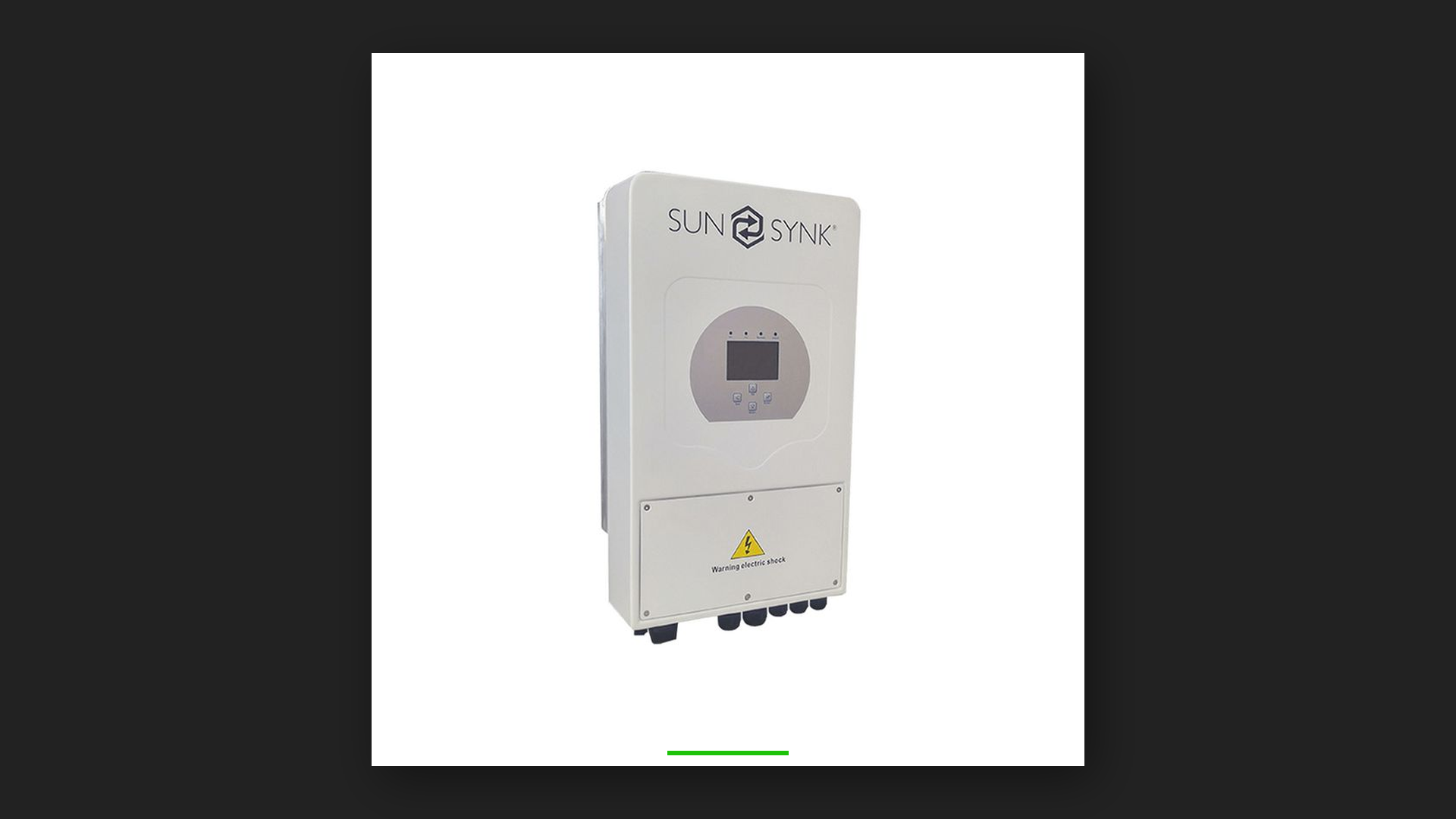
The 5kW hybrid inverter is the sweet spot for a large share of South African family homes. It is large enough to run the essential and comfort circuits of a typical household while charging a battery from solar, yet compact enough to keep the installation cost sensible. Sunsynk’s 5kW hybrid is one of the most widely installed units in this class in South Africa, with strong local distributor and support presence.
What “hybrid” actually means
A hybrid inverter combines three jobs in one box:
- Solar inverter – converts DC power from your panels into AC power for the house.
- Battery manager – charges and discharges a battery bank intelligently, prioritising solar energy.
- Grid interface – blends grid power in seamlessly when solar and battery cannot cover the load.
The practical result: your home draws the cheapest available energy at any moment, and your daytime solar production is stored for evening use instead of being lost.
What to check on the specification sheet
Exact figures vary by model revision, so always confirm against the current official datasheet for the unit quoted to you. The items that matter:
- Continuous output rating – the load the inverter can carry all day, which should comfortably exceed your measured household baseline.
- PV input capacity – how much panel wattage you can connect. Oversizing the array relative to the inverter within the manufacturer’s allowance improves winter and morning performance.
- Battery voltage and compatibility – the unit is designed for 48V battery banks; check the approved-battery list for the brands you are considering.
- Surge handling – motors such as pool pumps and borehole pumps draw brief start-up surges the inverter must tolerate.
- Parallel capability – Sunsynk hybrids in this class support paralleling, so a growing household can add a second unit later rather than replacing the first.
- Monitoring – the unit connects to an app-based monitoring platform so you can see production, consumption and battery state on your phone.
Who it suits
- Households whose evening load is dominated by lights, electronics, a fridge or two and general plugs.
- Homes planning a staged journey: inverter and modest battery first, more panels or a second battery later.
- Small offices and home businesses where working through the day on solar is the primary goal.
Homes with heavy simultaneous loads – multiple air conditioners, large workshop equipment, extensive electric heating – should discuss the larger units in the range or a parallel pair before settling on a single 5kW unit.
Installation notes worth knowing
- The inverter must be installed by a qualified electrician and signed off with a certificate of compliance; this is also what your insurer will expect.
- Circuit selection matters: deciding which circuits the inverter backs up is as important as the hardware itself.
- Placement affects lifespan: a cool, ventilated, dust-limited spot beats a hot garage wall.
How the Sunsynk 5kW compares to what ZenSolar fits
ZenSolar installs two inverter and battery brands, Fox ESS and Sigenergy, so before you shortlist the Sunsynk 5kW it is worth knowing where we stand and why.
What Sunsynk genuinely gets right at this size. The 5kW class is Sunsynk’s best-known unit in South Africa, and that scale brings real benefits: most installers have wired one before, spares and replacement parts move quickly through local distribution, and troubleshooting a fault is rarely a first-time problem for whoever you call. We are not going to pretend that installed base doesn’t count for something, because it does.
Why we still fit something else. Our reservation is not about whether the 5kW does its job on day one. It is about what a household looks like five years in, once a heat pump, a pool pump or an EV charger has been added and the original 5kW no longer covers it. Fox ESS and Sigenergy both run one continuous product family from a single-phase starter home through to a three-phase commercial site, so adding capacity later is a decision about size, not a decision about switching brand, app and installer network.
Sigenergy in particular consolidates the inverter, battery, system controller and DC EV charging into one modular SigenStor unit rather than four separately sourced boxes, which means one manufacturer stands behind the whole installation instead of several suppliers each pointing at the others when something goes wrong. Its published warranty runs 10 years on the Sigen Battery and the Sigen Energy Controller, with the battery guaranteed to retain at least 60% of its usable capacity at that point (or a stated energy-throughput limit, whichever comes first), extendable to 15 years if you register within 12 months of commissioning — and we will show you that document rather than just quote the numbers at you.
Fox ESS, backed by Tsingshan Group, is the more budget-conscious half of the two: modular, stackable storage built to be added to as your needs grow, across both single-phase and three-phase inverters, without the compromises that show up in the cheapest tier of the market.
Every system we design is installed by a manufacturer-approved installer, which is the detail that actually keeps a warranty valid the day you need to call on it.
Our recommendation
The right question for any 5kW-class inverter, Sunsynk included, is whether it is the correct size for your measured usage rather than a guess. That part of the advice above still holds regardless of brand.
Where we land is Fox ESS or Sigenergy, for a specific reason: one manufacturer accountable for the whole system, a warranty we can put in front of you in writing before you sign, and a platform that grows with the house instead of forcing a brand change when your load does. Tell us about your home and typical loads, and we will size the panels, inverter and battery as a system, with an itemised quotation. Book your free solar consultation or read about financing the installation.
Not sure which system is right for you?
Not sure which system is right for you?