Somewhere between the compact batteries that suit a townhouse and the industrial racks that power factories sits the capacity class most large South African homes and many small businesses actually need: roughly ten kilowatt-hours of storage. Freedom Won, the South African manufacturer, competes strongly in this class — worth knowing upfront, though: ZenSolar doesn’t fit Freedom Won. We install Fox ESS and Sigenergy, and this guide explains why further down, alongside what a 10kW-class Freedom Won battery offers, who genuinely needs this much storage, and how to confirm the size is right before you buy.
First, Untangle the Units: 10kW vs 10kWh
Battery shopping is plagued by a units muddle worth clearing up, because it changes what you are buying:
- Kilowatt-hours (kWh) measure energy — how much electricity the battery can store. This determines how long your stored solar power lasts into the evening.
- Kilowatts (kW) measure power — how fast the battery can deliver that energy. This determines how many appliances can draw from it simultaneously.
When people search for a “10kW battery” they almost always mean a battery in the 10kWh energy class. Freedom Won’s naming convention helpfully quotes both figures for its models — total energy alongside deliverable power — so you can see both dimensions of what you are getting. When you compare quotes, always check both numbers, and check the usable energy figure rather than just the nameplate.
What Sits Inside a Freedom Won Battery
Freedom Won builds on lithium iron phosphate (LiFePO4) chemistry — the stationary-storage standard chosen for its thermal stability, long cycle life and high usable depth of discharge. An integrated battery management system supervises the cells and communicates with your hybrid inverter over a closed-loop link, so the inverter always knows the battery’s true state rather than estimating it. Freedom Won batteries are designed to communicate with a broad range of hybrid inverter platforms sold in South Africa; the specific pairing should always be confirmed against current compatibility documentation before you buy.
Being a South African manufacturer matters at this capacity level too: support, documentation and warranty processing happen locally, in the market the product was engineered for. For a deeper look at the chemistry and why it matters, see our guide to the differences between solar batteries.
Who Actually Needs 10kWh of Storage?
The honest test is your evening consumption — the electricity you use between sunset and sunrise, which is what a battery exists to cover from your own solar generation.
Larger family homes
A four-bedroom home with a family’s typical evening pattern — cooking, geyser top-ups, lighting, entertainment, devices, perhaps a pool pump running its cycle — can comfortably consume in the region of 8 to 15kWh between afternoon and morning. For homes in this band, a 10kWh-class battery means the majority of evening consumption comes from stored solar rather than the grid. Smaller batteries in the 5kWh class serve modest households well, but in a larger home they run empty mid-evening, and the balance of the night is bought from Eskom at tariffs that keep climbing above inflation.
Small businesses
For a small business — a practice, restaurant, guesthouse or workshop — a 10kWh-class battery shifts surplus daytime generation into the early evening and smooths consumption peaks. For premises that trade into the evening, that stored energy directly displaces peak-hour grid purchases. The decision here is purely financial: storage capacity versus tariff avoided. Our guide to commercial solar financing options covers how businesses structure the investment, including the cash-flow logic of financing a system whose repayments are offset by the electricity it no longer buys.
Homes planning ahead
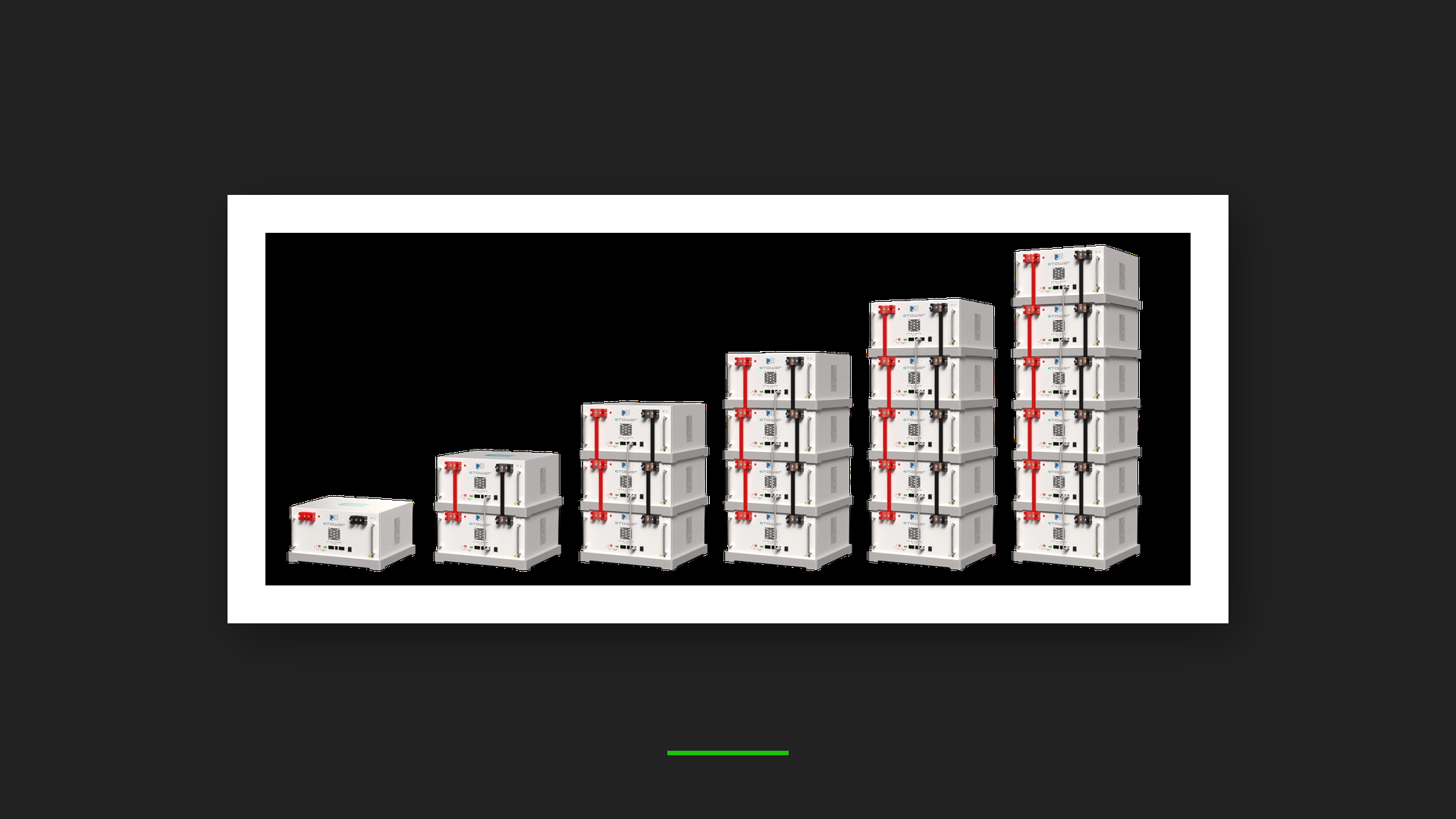
Consumption rarely shrinks. Electric vehicles, home offices and growing families all push evening usage upward. Freedom Won’s range is also expandable in configurations that allow capacity to grow, but there is a practical argument for buying the right size once: a correctly sized battery from day one is simpler than a retrofit expansion later. If you are on the boundary between classes, size for the direction your household is moving.
Matching the Battery to the Rest of the System
A 10kWh battery does not operate in isolation. Three pairings have to be right:
- Inverter power. Your hybrid inverter’s rating determines how much of the battery’s stored energy can flow at once. A 10kWh-class battery typically partners with the mid-to-large residential hybrid inverters — your designer will match deliverable battery power to inverter capacity so neither becomes the bottleneck.
- Solar array size. The battery can only store what your panels generate beyond your daytime consumption. An undersized array leaves an expensive battery half-charged in winter; the array and battery must be sized together.
- Your consumption profile. The whole design starts from your actual daily kilowatt-hours, ideally from your municipal bills or a metering exercise — not from a rule of thumb.
This is exactly the discipline covered in our guide on how to size a solar system, and it is the difference between a battery that transforms your bill and one that disappoints. If you want the arithmetic done for you, our free System Sizer models your consumption and recommends a system — battery capacity included — in minutes.
The Economics of the 10kWh Class in 2026
Storage is the part of a solar system that converts generation into independence, and its economics have moved decisively in the buyer’s favour: battery prices have fallen compared with a few years ago while the grid electricity a battery displaces gets more expensive every year. For a home or business with real evening consumption, a correctly sized 10kWh-class battery is not a lifestyle purchase — it is a yield-bearing asset with a payback period you can calculate in advance. Run your own figures through our solar ROI assessment, or start with the reasoning in is a solar system worth it?
Installation: Done Once, Done Right
A battery of this capacity is a serious electrical installation: mounting, DC cabling, protection devices, inverter communication setup and a Certificate of Compliance are all part of a professional job. Whoever installs it, insist that the closed-loop inverter communication is actually enabled and verified rather than skipped, because that is what protects your warranty and your cells. ZenSolar does not supply or install Freedom Won — we fit Fox ESS and Sigenergy, through manufacturer-approved installers.
Where Fox ESS and Sigenergy Fit
Ten kilowatt-hours is a serious commitment, so it’s worth being straight about what ZenSolar actually sells before you read another word of spec detail: Fox ESS and Sigenergy, not Freedom Won. Here is the reasoning behind that, at the capacity level this guide is about.
Freedom Won’s advantage doesn’t disappear at 10kWh. A locally manufactured battery means locally held spares and a support desk that isn’t twelve time zones away — genuinely useful at any capacity, and more so on a larger, more expensive bank where downtime costs more. We won’t argue otherwise.
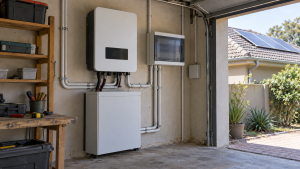
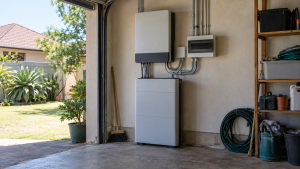
Our case at this size. A 10kWh-class home or small business is exactly the kind of buyer likely to outgrow a single battery within a few years — an EV, a second dwelling, a growing business. Fox ESS and Sigenergy are both built as one product family from residential through commercial capacity, so the next module is an addition, not a platform change. Sigenergy takes it further: the SigenStor unit combines inversion, storage, system control and DC EV charging in one modular product, which matters more, not less, once you are running a system this size.
What we will actually commit to in writing. Fox ESS carries a 10-year swap-out warranty, so a failure inside the term is replaced rather than repaired. Sigenergy’s is published: 10 years on the Sigen Battery and the Sigen Energy Controller, with the battery guaranteed to retain at least 60% of its usable capacity at 10 years, or a stated energy-throughput limit, whichever comes first, extendable to 15 years if the system is purchased and registered within 12 months of commissioning. On a purchase this size, ask for that in writing from whoever quotes you.
Next Step
If your evening consumption justifies the 10kWh class, that conclusion holds regardless of brand — the sizing arithmetic in this guide applies equally to a Fox ESS or Sigenergy battery. Our recommendation is one of those two, because we can show you the warranty terms before you sign and because the platform grows with a business or a household instead of forcing a brand change later. Confirm the sizing with our free System Sizer, then request a personalised quote and ZenSolar will design the complete Fox ESS or Sigenergy system — battery, inverter and array, matched correctly — for your home or business.
Common Questions About the 10kWh Class
Is a 10kWh battery too much for an average household?
For a modest household with light evening usage, often yes — capacity that never cycles is capital earning nothing, and a smaller unit serves better. For larger family homes with real evening consumption, 10kWh is frequently the honest fit. The deciding evidence is your consumption between sunset and sunrise, which your municipal bills or a metering exercise will reveal in a week.
Can I start smaller and expand to 10kWh later?
Freedom Won’s range includes configurations that allow expansion, and staged investment is a legitimate strategy — but declare it at design stage. The inverter, cabling and mounting should be specified for your eventual capacity, and expansion practicalities differ by model, so plan the destination before buying the first step.
Will a 10kWh battery run everything in my house at once?
That is a power question, not an energy question. How much the battery can deliver at any moment is set by its power rating and your inverter’s capacity working together; the 10kWh figure describes how long the stored energy lasts. A properly designed system matches both dimensions to your loads — which is why sizing looks at your peak demand as well as your daily consumption.
Not sure which system is right for you?