Most of the solar conversation in South Africa revolves around hybrid inverters and batteries, so it surprises many buyers to learn that Deye — one of the most widely installed inverter brands in the country — also makes a full range of grid-tie inverters with no battery connection at all. For the right property, a grid-tie inverter is the leanest, most cost-effective way to cut an electricity bill. This guide explains what a Deye grid-tie inverter is, how it differs from the hybrid units you have probably been quoted on, and how to work out which architecture actually suits your consumption.
What Is a Grid-Tie Inverter?
A grid-tie (or grid-tied, or string) inverter does one job: it converts DC electricity from your solar panels into AC electricity, synchronised with the grid supply, and feeds it to your loads in real time. There is no battery port and no energy storage. When the sun is shining, your appliances run on solar first and the grid tops up the difference. When the sun is not shining, you draw from the grid as normal.
Deye’s grid-tie range covers single-phase units for homes through to larger three-phase units for commercial rooftops, using the same core power electronics expertise that made the brand’s hybrid range a household name in South Africa.
Grid-Tie vs Hybrid: The Real Difference
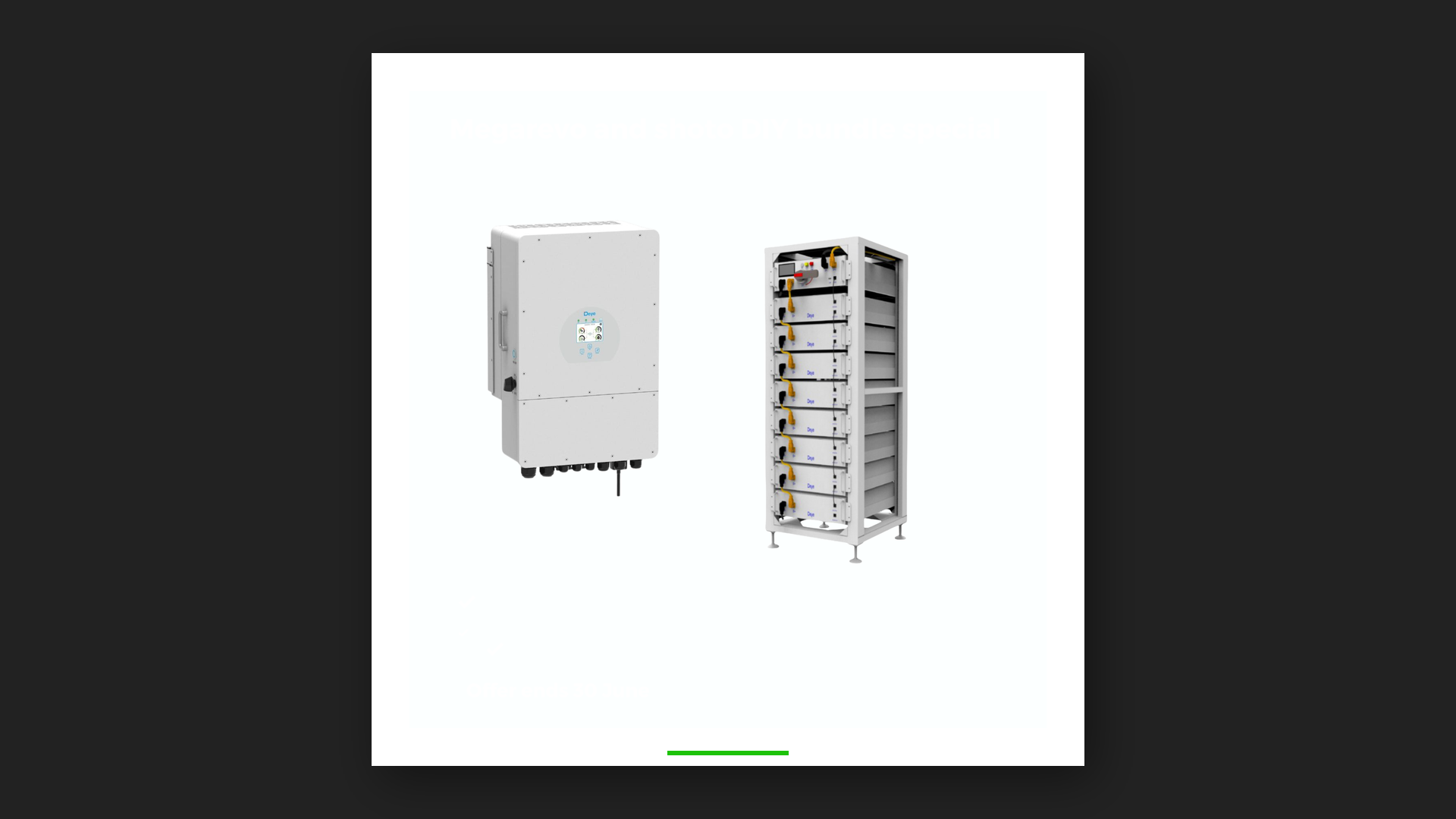
A hybrid inverter is a grid-tie inverter plus a battery manager. That extra capability is genuinely valuable for many households — but it is not free, and it is not always necessary.
- Grid-tie: converts solar to usable power in real time. Simpler hardware, fewer components, lower system cost. Savings come from consuming your own generation as it is produced.
- Hybrid: does everything grid-tie does, and also charges and discharges a battery, letting you shift your midday solar surplus into the evening.
One technical behaviour is worth understanding upfront: all grid-tie inverters are required to disconnect and stop producing when the grid supply is absent. This is a mandatory safety feature called anti-islanding — it protects technicians working on the lines. A grid-tie system is therefore a bill-reduction tool that works alongside the grid, not a means of independence from it. If storing and shifting your own energy matters to you, a hybrid system with a battery is the right architecture.
Who Is a Grid-Tie System Actually Right For?
The economics of grid-tie hinge on one question: how much of your electricity do you use while the sun is up?
- Businesses with daytime loads. Offices, workshops, retail, cold storage and manufacturing typically consume most of their power between 08:00 and 17:00 — exactly when panels produce. Grid-tie systems suit this profile beautifully, converting nearly every kilowatt-hour generated into a kilowatt-hour not bought from the utility. For businesses, this is a pure operating-cost decision; our guide to commercial solar financing options covers how SA companies structure it.
- Work-from-home households. If your home runs computers, air conditioning, a pool pump and appliances through the day, a meaningful share of your consumption is solar-coincident.
- Properties planning staged investment. Some buyers start with panels and a grid-tie or hybrid inverter, then add storage later. If batteries are in your five-year plan, discuss this with your designer at the start — choosing a hybrid inverter from day one is usually cleaner than adding storage to a grid-tie system afterwards, which requires either replacing the inverter or adding separate equipment.
Conversely, if almost nobody is home before sunset and your consumption peaks in the evening, a pure grid-tie system will export or waste much of what you generate, and a battery-backed hybrid will serve you far better. Our article on the best solar system for a home in South Africa works through these architecture choices in detail.
The Paperwork: Registration and Compliance
Any inverter that synchronises with the grid — grid-tie or hybrid — falls under your municipality’s or Eskom’s small-scale embedded generation (SSEG) rules. In practice this means:
- Your system generally needs to be registered with your electricity supplier, using approved equipment and documentation prepared by your installer.
- Feeding energy back into the grid is only permitted where your supplier allows it and the correct metering is in place — requirements differ by municipality, so this is confirmed per project, not assumed.
- The installation must be signed off with a Certificate of Compliance (CoC) by a qualified electrician.
None of this should intimidate you: it is routine for professionals. On the systems we install — Fox ESS and Sigenergy — our manufacturer-approved installers handles this compliance documentation as part of the job. What the paperwork does mean is that DIY and informal installations carry real risk — legally and for your insurance.
Why the Economics Work in 2026
The case for daytime solar has never been stronger. Eskom tariffs continue to rise faster than inflation year after year, while the hardware itself — panels and inverters alike — costs less than it did a few years ago. Every kilowatt-hour your grid-tie system produces and you consume is a kilowatt-hour you never buy, at whatever the tariff has climbed to. Because a grid-tie system has fewer components than a battery system, its payback arithmetic is simple and often very fast for daytime-heavy users.
Whether it beats a hybrid system for your property depends entirely on your consumption profile. That is a calculation, not a guess: run your figures through our free solar ROI assessment, or read is a solar system worth it? for the full reasoning framework.
Sizing a Deye Grid-Tie System
Grid-tie sizing is driven by your daytime load, your roof space and your supplier’s export rules. Oversizing a grid-tie inverter relative to your daytime consumption wastes capital on energy you cannot use; undersizing leaves savings on the roof. The sizing method — measuring consumption, profiling loads across the day, matching array and inverter capacity — is the same discipline as any solar design, and our guide on how to size a solar system walks through it step by step. Deye’s grid-tie range is broad enough that a well-sized match exists for anything from a townhouse roof to a warehouse.
How Fox ESS and Sigenergy Fit Into a Grid-Tie Decision
Everything above is about architecture, not brand — and on architecture, Deye’s grid-tie range genuinely holds up. It spans single-phase homes through to three-phase commercial rooftops, and South African installers know the platform well. We are not going to pretend otherwise.
Where we differ is what we sell and stand behind. ZenSolar does not supply, install or service Deye equipment, grid-tie or hybrid. We fit two brands only: Fox ESS and Sigenergy.
That matters even on a grid-tie build, because grid-tie is rarely the last word. Add a heat pump, a pool pump, an outage pushing you towards backup power, or simply a change of mind two years in, and the property needs a battery. Fox ESS is built modular and stackable, designed to be added to rather than replaced, across both single-phase and three-phase inverters — so growth from a grid-tie start is a capacity decision, not a fresh design from scratch. Sigenergy goes further: the SigenStor stack combines PV inversion, battery storage, system control and DC EV charging in one modular unit, spanning residential through to commercial and industrial sites, instead of four separately sourced boxes with four different support lines.
The warranty terms are ones we will show you the document for. Fox ESS carries a 10-year swap-out warranty — a unit that fails inside the term is replaced, not repaired. Sigenergy’s published terms cover the Sigen Battery and the Sigen Energy Controller for 10 years, with the battery guaranteed to retain at least 60% of its usable capacity at 10 years, or a stated energy-throughput limit, whichever is reached first, extendable to 15 years if the system is purchased and registered within 12 months of commissioning. Every Fox ESS or Sigenergy system we quote is fitted by a manufacturer-approved installer, which is what keeps that warranty valid.
The Bottom Line
A grid-tie inverter is the quiet workhorse of solar: no battery, no storage management, just efficient conversion of sunlight into bill reduction. For daytime-heavy consumers — especially businesses — that architecture can be the most capital-efficient solar investment available. For evening-heavy households, a hybrid inverter with battery storage is the better tool, for the reasons covered above. Either way, the right answer is written in your consumption data, not in a brand name.
Our position on the brand question is stated, not implied: we fit Fox ESS and Sigenergy, and nothing else, because one manufacturer stays accountable for the whole stack, the warranty terms are ones we can put in front of you before you sign, and a property can grow from a grid-tie start to a full battery system later without a brand change. Want to know which architecture your usage actually supports? Model your consumption in our free System Sizer, or request a personalised quote.
Quick Answers
Can I add a battery to a Deye grid-tie inverter later?
Not directly — a grid-tie unit has no battery port. Storage can be added alongside it with separate equipment, or the inverter can be replaced with a hybrid. If storage is realistically in your plans, specifying a hybrid from the start is usually the cleaner and cheaper path, which is why this question belongs in your first design conversation rather than your third year of ownership.
Is a grid-tie system cheaper than a hybrid system?
For the same solar capacity, yes — you are buying simpler hardware and no battery. Whether it is better value depends entirely on when you consume electricity: daytime-heavy users capture most of the savings a hybrid would deliver at a lower capital outlay, while evening-heavy households leave savings unrealised without storage.
Do I still need registration and a CoC for a grid-tie system?
Yes. Any grid-synchronised inverter falls under small-scale embedded generation rules, and the installation requires a Certificate of Compliance. Your installer handles the paperwork; on the systems we install — Fox ESS and Sigenergy — our manufacturer-approved installers takes care of it as part of every job.
Not sure which system is right for you?