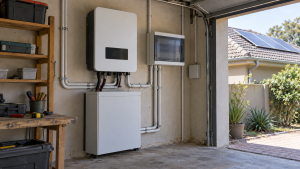
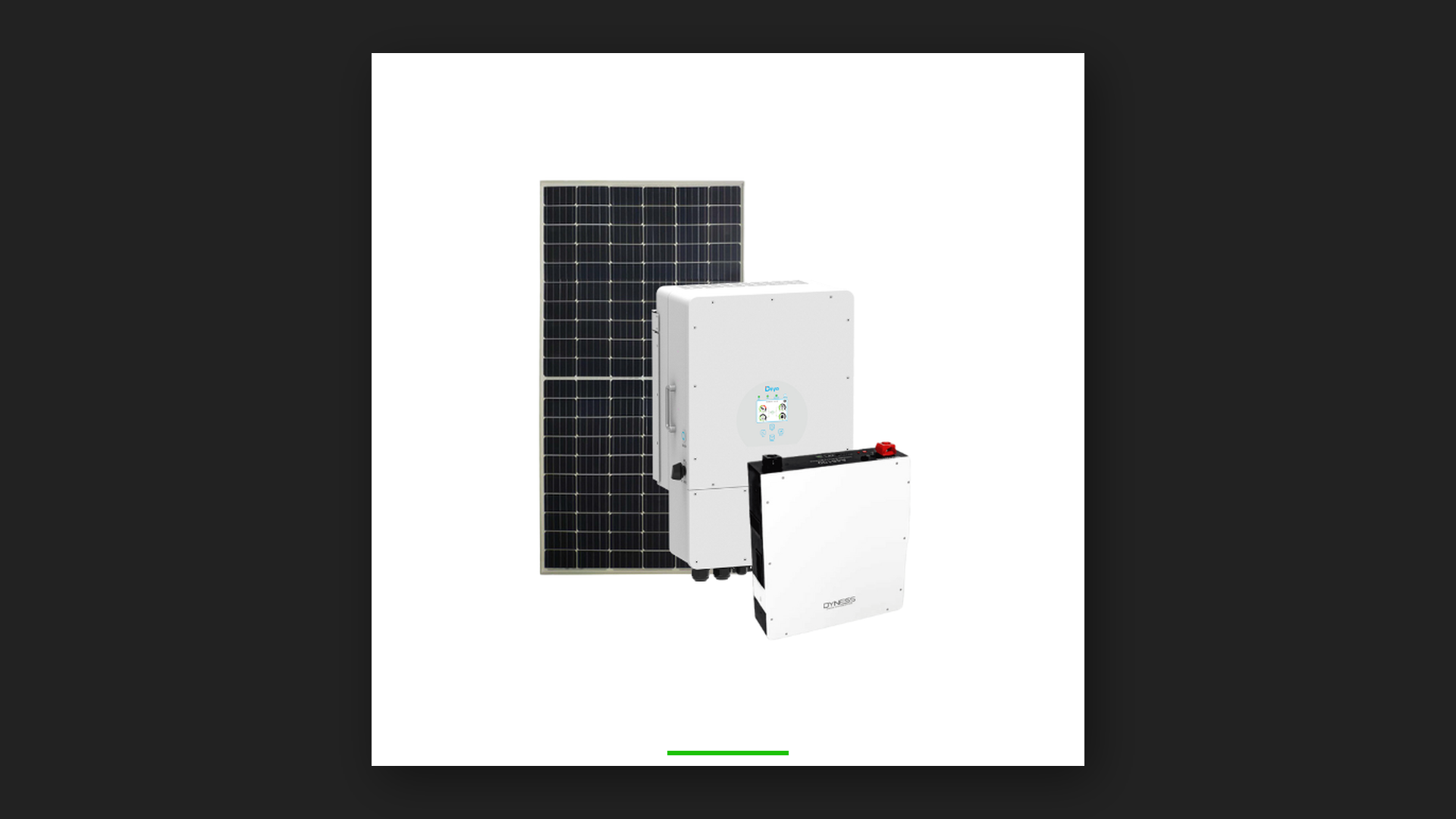
Deye’s popularity in South Africa has a side effect: the brand is sold everywhere, by everyone — established solar retailers, wholesalers, online marketplaces and informal importers alike. The unit in the photo may look identical across all of them, but what you are actually buying differs enormously depending on the channel it came through. This guide explains how Deye distribution works in South Africa, why the authorised channel matters more for an inverter than for almost any other purchase, and the specific questions that separate a properly backed supplier from a risky one.
Where ZenSolar fits: we install Fox ESS and Sigenergy systems, not Deye — more on why further down. Everything on this page still applies whichever brand you buy.
How Inverter Distribution Actually Works
Deye, like other major inverter manufacturers, does not sell directly to South African homeowners. Its products reach you through a chain: the manufacturer appoints distributors who import official stock, and those distributors supply retailers and installers, who sell to you. Alongside that official chain runs a grey market: units bought abroad or through unofficial channels and imported independently.
The hardware may be genuine in both cases. The difference is everything wrapped around it — and with a device that will sit at the heart of your electrical installation for a decade or more, the wrapping is most of what you are paying for.
Why the Official Channel Matters for an Inverter
- Warranty that actually functions. Manufacturer warranties are honoured through the official distribution chain. A grey-import unit may carry a warranty on paper that no local distributor is obliged to process — leaving you shipping a heavy power-electronics device overseas, or simply absorbing the loss.
- Firmware and technical support. Hybrid inverters are software products as much as hardware. Official-channel units are supported with appropriate regional firmware and access to local technical escalation when something needs diagnosis.
- Repairs and spares. When a unit needs attention years from now, the official chain is what connects you to assessment and repair. We cover this ecosystem in our guide to the leading hybrid brands and it applies across all of them.
- Stock provenance. Official stock is the correct regional specification, stored and handled properly. Grey stock’s history — voltage spec, storage conditions, age — is unknowable.
- Insurance and compliance confidence. Your installation must be certified with a Certificate of Compliance, and insurers expect professionally supplied and installed equipment. A paper trail through legitimate channels protects you when it matters.
What to Look For in a Deye Supplier
Whether you are buying through a retailer like ZenSolar or comparing suppliers, the checklist is the same:
1. Traceable official stock
Ask directly: is this unit official South African channel stock, and who backs the warranty locally? A legitimate supplier answers plainly and puts the warranty terms in writing. Evasion on this question is your cue to walk away.
2. A functioning warranty process
The question is not “is there a warranty?” but “what happens when I claim?” Who do you contact, who assesses the unit, and who is responsible for resolution? Suppliers who have actually processed claims can describe the process; box-shifters cannot.
3. Technical competence, not just stock
A Deye hybrid inverter must be correctly sized, programmed and commissioned — battery communication, charge parameters, grid settings. A supplier who only moves boxes leaves you to solve all of that. Look for one who designs systems: who asks about your consumption before quoting, and whose installation path is professional. Ask for evidence of accreditation on the exact product line — a certificate or documented training, not just a verbal assurance — because that is what keeps the manufacturer’s warranty enforceable and the Certificate of Compliance meaningful.
4. Honest sizing advice
A supplier’s sizing behaviour reveals its incentives. A good one derives your inverter capacity from your loads and consumption — the discipline in our guide on how to size a solar system — rather than upselling capacity you will never use. Oversizing is one of the classic traps in 7 costly solar mistakes to avoid at design.
5. Complete, itemised quotes
The inverter is one line of a real installation: protection devices, cabling, installation labour and the Certificate of Compliance all belong on the quote. Suspiciously low prices usually mean missing items you will pay for later.
Red Flags Worth Taking Seriously
- Prices dramatically below every established supplier — the discount usually equals the missing warranty and support.
- No physical presence or track record in South Africa, and no verifiable customer history.
- Inability to state who processes warranty claims locally.
- Pressure to buy hardware without any discussion of your consumption, site or installation.
- “Install it yourself” encouragement — an uncertified installation risks your insurance and your compliance status.
Where ZenSolar Fits — and Where It Doesn’t
ZenSolar does not distribute Deye. We are not going to dress that up as anything other than what it is: our own installations are built around two brands, Fox ESS and Sigenergy, chosen because one platform can span a small house through to a commercial site, and one manufacturer stays accountable for the whole stack instead of several suppliers pointing at each other when something goes wrong. Every ZenSolar system is fitted by a manufacturer-approved installer, which is what keeps the warranty enforceable in the first place — the exact principle that should decide who installs your Deye system too, wherever you buy it.
None of that is a reason to avoid Deye if it’s already what you’ve researched and priced. It is a reason to run the checks above — official stock, a real warranty process, an accredited installer, an itemised quote — with the same rigour you’d want applied to any brand, including ours.
The 2026 Backdrop
The reason supplier quality deserves this much attention is that the underlying investment case is so strong. Eskom tariffs keep climbing above inflation while component prices sit well below where they were a few years ago — payback on a well-designed system is the best it has been in a decade. The only way to lose in this environment is through avoidable errors, and channel risk is the most avoidable of all. Whether the numbers work for your property is a calculation you can run today with our free solar ROI assessment; if financing is part of your plan, start with solar power financing options.
Next Step
Buy the channel, not just the box. If a Deye system is on your shortlist, start with our free System Sizer to establish what capacity your property needs, then decide on the brand with the checklist above in hand — and if a Fox ESS or Sigenergy system is of interest, request a personalised ZenSolar quote for one, installed by a manufacturer-approved partner with the warranty terms in writing before you sign.
Frequently Asked Questions
How can I tell whether a Deye unit is official South African stock?
Ask the supplier to confirm in writing that the unit was imported through official South African distribution and to name who backs the warranty locally. A legitimate supplier answers both questions without hesitation and reflects them on your invoice and warranty documentation. If the answer is vague — “it carries an international warranty” is the classic evasion — treat the unit as grey stock and price the missing support into your comparison.
Is a grey-import inverter ever worth the saving?
For a device expected to run at the heart of your electrical installation for a decade, almost never. The discount is typically a fraction of the system cost, while the exposure — an unprocessable warranty claim, missing regional firmware support, questions from your insurer after an incident — can cost you the whole unit or more. Cheap hardware with no recourse is not cheap.
Should I choose Deye or a brand like Fox ESS / Sigenergy?
That depends on what you value. Deye’s advantage is scale — a large installed base, broad installer familiarity and a wide range of models. Fox ESS and Sigenergy’s advantage is consolidation — fewer companies in the chain, one warranty to track, and a platform built to grow with you rather than be replaced. Neither answer is wrong. The checklist on this page — official stock, a real warranty process, an accredited installer, a Certificate of Compliance — applies whichever way you decide. If Fox ESS or Sigenergy end up on your shortlist, ZenSolar can quote you directly; for a Deye purchase, the same questions apply to whoever you buy from.
What should I check before signing anything?
Four items: the exact inverter model and capacity with the warranty terms in writing; confirmation of official channel stock; a complete itemised quote including the Certificate of Compliance; and evidence the supplier sized the system from your actual consumption rather than a guess.
Not sure which system is right for you?