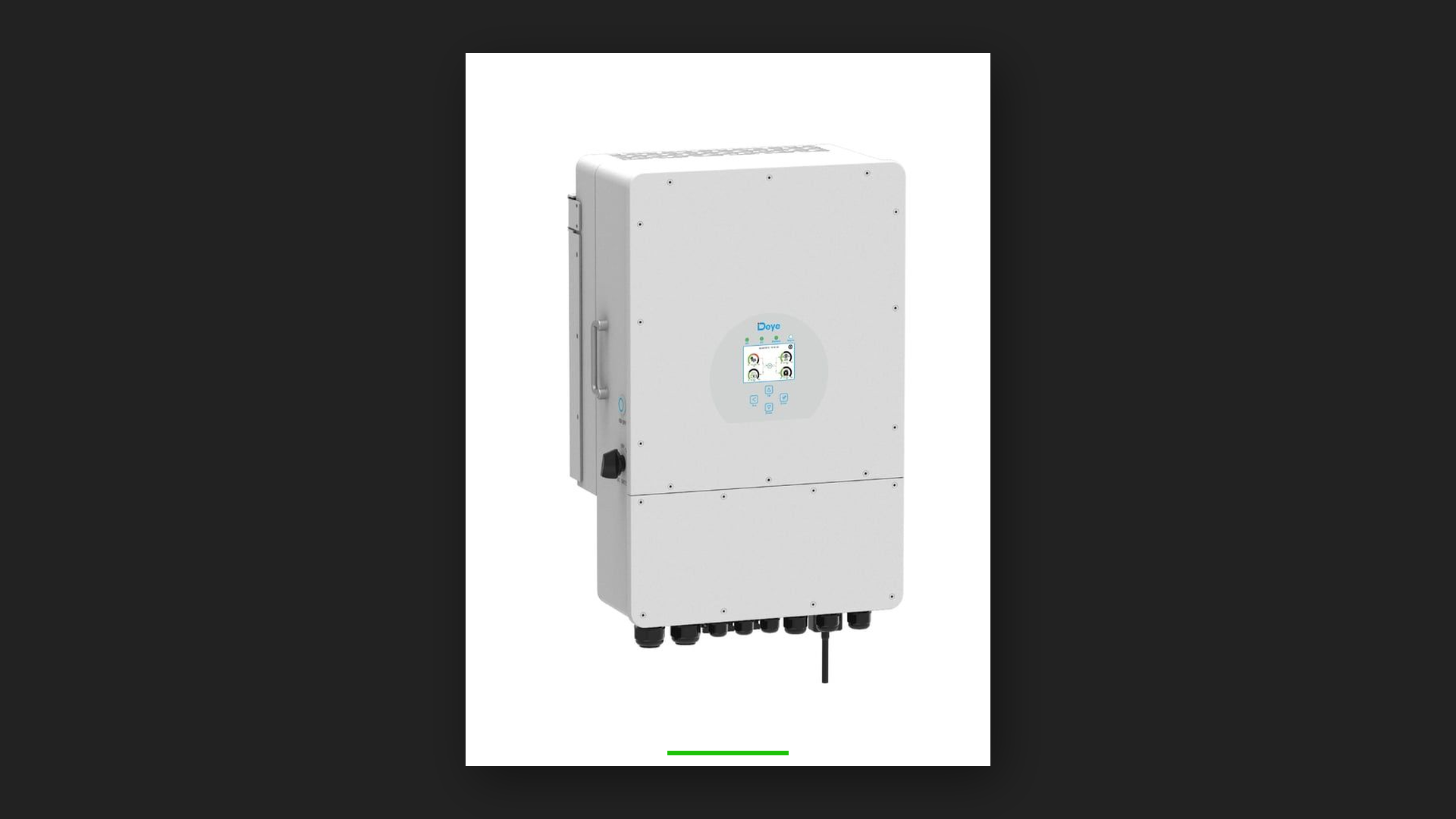
Deye hybrid inverters are everywhere in the South African market — which means “Deye inverter for sale” returns everything from reputable solar suppliers to marketplace listings with a stock photo and no paperwork. Deye is one of the world’s largest hybrid inverter manufacturers and one of the most installed brands in the country, and plenty of Deye owners run their systems for years without a complaint. This page will not pretend otherwise. What it will do is walk you through the part of buying an inverter that has nothing to do with the brand on the box: the channel it came through, the installer who fits it, and the paperwork that decides whether your warranty is real.
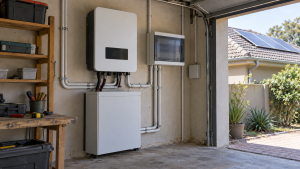
Where ZenSolar fits: we install Fox ESS and Sigenergy systems, not Deye — more on why below. Everything on this page still applies whichever brand you buy.
Grey imports and the warranty that quietly disappears
Deye’s popularity has a side effect: an active grey-import and second-hand market alongside the official one. A grey import is stock brought into the country outside the manufacturer’s official distribution — the unit itself may be entirely genuine, but the local distributor has no record of it and no obligation to honour a claim on it. A used unit adds a second unknown: power electronics age with heat and load, and nothing on the casing tells you how the last three years treated it. Ask plainly where the stock came from and who is responsible for the warranty locally, and get the answer in writing. A vague answer is the warning, not the reassurance.
The installer matters as much as the inverter
An inverter is not an appliance you plug in and forget. It has to be sized correctly, wired with the right protection, configured for your specific battery, and commissioned properly — and most manufacturer warranties are conditional on exactly that being done by an installer the manufacturer has actually trained and approved. An unaccredited installer can still do a competent job, but neither you nor the manufacturer has any way to verify that in advance, and a bad install is one of the most common ways a genuine, correctly bought inverter ends up with no working warranty at all. The lowest quote in your inbox is often the one that skipped this step.
Why we don’t sell Deye — and what we’d tell you if you buy one anyway
We are not going to pretend Deye is a bad choice — it isn’t. It’s a mature, widely supported platform with a large local installer base, and the checklist below applies whether you buy it from us, a competitor, or anyone else. ZenSolar has chosen to build its own installations around Fox ESS and Sigenergy instead: one platform spanning a small house through to a commercial site, so growing your system later is a capacity decision rather than a replacement decision, and one manufacturer accountable for the whole stack instead of several suppliers pointing at each other when something goes wrong. Every ZenSolar system is fitted by a manufacturer-approved installer, which is what keeps that warranty valid in the first place — the same principle that should guide a Deye purchase from anyone.
Whichever brand you land on, the Certificate of Compliance is not negotiable. It’s a legal requirement for electrical work in South Africa, and its absence can cause problems with your insurer and at the point of selling your property. Don’t let anyone talk you out of it to save a few hundred rand.
The buyer’s checklist
Before money changes hands, insist on all of the following:
- A sizing conversation. Any seller who quotes without asking about your consumption, supply type and battery plans is moving a box, not solving your problem.
- A sealed, new unit with its serial number intact — the serial ties the machine to its warranty.
- A written local warranty, with the claim process running through your supplier in South Africa, not a form on an overseas website.
- Battery compatibility confirmed by model, against the inverter’s approved list — “it should work” is not confirmation.
- Accredited installation and a Certificate of Compliance included or arranged.
- Commissioning and monitoring setup — the system handed over configured, with the monitoring app running on your own account.
And walk away from: prices dramatically below every established supplier, sellers with no verifiable business identity, “manufacturer warranty overseas” arrangements, and anyone suggesting you skip certification. Each of those saves you money right up until it costs you far more. The same judgement applies to the system around the inverter — the design shortcuts that ruin good hardware are catalogued in 7 costly solar mistakes to avoid at design stage.
Timing: why buyers are moving now
Two curves frame the decision. Electricity tariffs continue rising year after year at rates above inflation — the expense curve. Solar hardware, inverters included, costs meaningfully less than it did two or three years ago — the equipment curve. The gap between them is the return on a well-designed system, and it is as wide as the local market has seen in a decade. Payback arithmetic for your own consumption is the real test; is a solar system worth it walks through it honestly. If the capital outlay is the sticking point, structured payment routes are covered in our guide to solar power financing options.
Questions to ask any supplier before you pay
- Is this official South African channel stock, and who backs the warranty locally — in writing?
- Is the unit new and sealed, with its serial number intact?
- Who is installing it, and are they accredited on this specific product?
- Will I receive a Certificate of Compliance on completion?
- What does the quote include beyond the inverter — protection devices, cabling, labour, commissioning?
- Who do I call if something needs attention in year three, four or five?
A supplier who answers all six without hesitation has earned the next conversation. One who can’t is telling you something, even if they don’t say it directly.
What to have ready when you ask for a quote
A supplier can only quote a system as good as the information you give them. Five minutes of preparation turns a vague estimate into a real proposal:
- Twelve months of electricity usage if you can get it — from municipal bills or your prepaid purchase history. Winter and summer differ, and the design should see both.
- Your supply type and main breaker size — single-phase or three-phase, and the amperage on the main switch.
- Your evening priorities — which rooms and appliances matter most between sunset and bedtime, since that is the load the battery will carry.
- Roof basics — orientation (north-facing is ideal in South Africa), approximate available area, and roofing material.
- Your growth plans — an electric vehicle, a cottage, a workshop. Designing the headroom in now is far cheaper than rebuilding for it later.
Make the purchase in the right order
Find the machine your property needs first; then buy that machine from a channel that stands behind it. Step one takes minutes: run your details through the free System Sizer, or start with the solar ROI assessment if you want the financial picture up front. Step two is a conversation — request a personalised ZenSolar quote and get a Fox ESS or Sigenergy system, backed by a manufacturer-approved installer, not just a box.
Not sure which system is right for you?