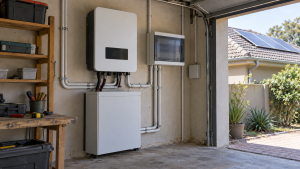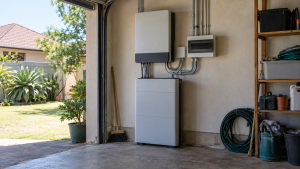
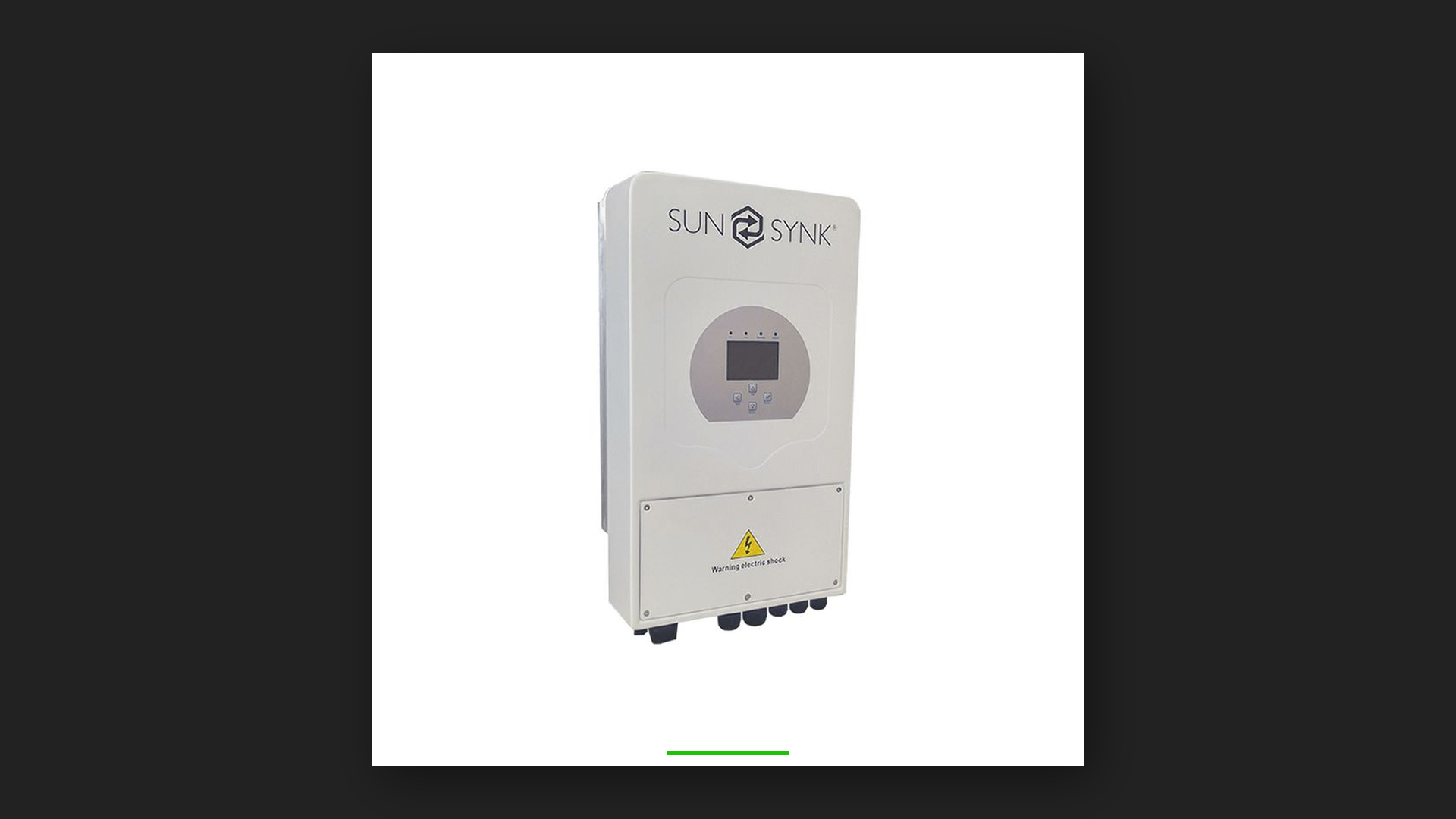
A hybrid inverter without a battery is a day worker: it earns while the sun shines and clocks off at dusk. Pair a Sunsynk inverter with the right battery and the system starts working the evening shift too — storing free midday production and spending it through the hours when tariffs and household demand both peak. But “the right battery” is doing a lot of work in that sentence. Pairing an inverter and battery is a compatibility, sizing and configuration exercise, and getting it wrong is one of the most common and expensive mistakes in South African solar. Here is what to know before you commit to a combination.
Where ZenSolar fits: we install Fox ESS and Sigenergy systems, not Sunsynk. Everything below on pairing still applies whichever brand you buy — our own take on skipping the pairing question entirely is near the end.
Why the pairing matters more than either component
A modern lithium battery is not a passive tank — it has its own battery management system (BMS) supervising its cells, and it expects to negotiate continuously with the inverter about how fast to charge, how deep to discharge and when to protect itself. That negotiation happens over a communications link between the two machines. When the pairing is right, inverter and battery behave as one appliance: the battery’s own electronics set the rules and the inverter respects them automatically. When the pairing is wrong — or configured lazily — you get the classic symptoms: batteries that never quite fill, systems that shut down under load, warranties compromised by out-of-spec operation, and savings that never match the sales pitch.
Sunsynk hybrids are designed around exactly this managed-battery model, and in the South African market they are routinely paired with battery brands such as Freedom Won, Hubble and Pylontech.
The four layers of a correct pairing
1. Compatibility: is the battery on the approved list?
Inverter manufacturers maintain lists of batteries they have tested and approved for communications integration. The first question for any proposed combo is simply whether the specific battery model appears on the list for your specific inverter model — not the brand generally, the model. An approved pairing means the BMS and inverter speak the same protocol and the integration has been validated, which also keeps both warranties on solid ground.
2. Capacity: does the battery match your evenings?
Battery capacity should be sized from your measured consumption between sunset and sunrise — the hours the battery exists to cover. Too small, and it runs flat mid-evening and cycles brutally hard every day; too large, and capital sits idle that could have gone into more panels. The method is set out in our guide on how to size a solar system, and the background on battery specifications — usable capacity, cycle life, depth of discharge — is covered in what makes solar batteries different.
3. Power matching: can each side keep up with the other?
Two ratings must line up. The battery’s continuous discharge rating should cover the load the inverter will actually ask it to carry at your evening peak — otherwise the system leans on the grid precisely when tariffs are highest. And the battery must be able to absorb the charge current available from your midday solar surplus, or the array’s production gets throttled. A well-designed combo has no bottleneck in either direction; an ill-matched one wastes whichever component is stronger.
4. Configuration: the settings that make or break it
Even a perfectly matched pair performs badly if commissioned carelessly. The battery type and protocol must be set correctly, protection parameters must match the battery’s specification, and the time-of-use programme should reflect your household’s actual rhythm — when the battery charges, how deep it runs before the reserve floor, and what stays in hand for the morning. This is accredited-installer work, finished with a Certificate of Compliance — confirm before you sign off on a quote that whoever is commissioning your system will set these values for your specific hardware combination, not leave them on defaults.
Common combo mistakes we see
- Buying the components separately at different times without checking the approved list — the bargain battery that cannot talk to your inverter is no bargain.
- Sizing the battery by budget instead of by consumption, then blaming the hardware when it is flat by dinner time.
- Ignoring expansion. If you plan to grow the bank later, the inverter choice, cabling and mounting layout should leave room for parallel units now — retrofitting an unplanned expansion costs far more.
- Mixing old and new batteries casually. Expanding a bank is done under specific conditions the manufacturer defines; mismatched ages and states of health drag the whole bank down when done wrong.
- Grey-market components. An approved pairing only protects you if both halves carry valid local warranties through identifiable channels.
What a well-paired system feels like to live with
The day has a rhythm you can watch on the monitoring app: the array covers the morning load and fills the battery through the middle of the day; the evening runs almost entirely on stored sunshine; the grid contributes little or nothing until the small hours, if at all. Month by month, that rhythm shows up as a municipal bill that has shrunk to a fraction of its former self — the arithmetic our guide to solar savings versus monthly payments works through in detail. And because tariffs keep rising above inflation while the hardware costs materially less than it did a few years ago, every year the combo runs, the gap it saves you widens; is a solar system worth it lays out the full financial case.
Frequently asked questions
Can I run a Sunsynk inverter without a battery and add one later?
Yes — hybrids operate happily as solar-only systems, and “battery-ready now, battery later” is a common and sensible path. Just choose the inverter with your future battery in mind, so the model you eventually want is on the approved list and the capacity you will need fits the inverter’s battery input.
Which battery brand pairs best with Sunsynk?
Freedom Won, Hubble and Pylontech are all established pairings for Sunsynk in the local market. Between reputable approved options, the deciding factors are your required capacity and power, expansion plans, warranty terms and value for your specific design, not brand mythology.
Does an unapproved battery physically work?
Sometimes, in a crude voltage-controlled mode — and it is a false economy. Without proper communications, the inverter cannot see the battery’s true state or respect its limits, which risks premature wear and warranty complications on both sides. Insist on an approved, communicating pairing.
Should I spend spare budget on more battery or more panels?
It depends on which side of your system runs out first. If your battery is full by early afternoon and surplus solar is going unused, more storage captures it. If the battery never quite fills before sunset, more panel capacity is the better spend. Your monitoring data answers this question directly — and it is exactly the trade-off a proper design process resolves before you buy, rather than after.
Or Skip the Pairing Question Entirely
Everything above is real, and if you already own a Sunsynk inverter, getting the compatibility, sizing, power matching and configuration right between it and a separate battery is exactly as important as this guide makes it sound. That said, all of that complexity exists because you’re matching two, sometimes more, separate products from separate manufacturers.
Sigenergy removes the question rather than answering it: its SigenStor stack combines the inverter, battery, system controller and DC EV charging in one modular unit from one manufacturer, so there’s no cross-brand compatibility list to check and no battery-to-inverter negotiation to get wrong, because it was never split into two products to begin with. Fox ESS is our other line — modular, stackable storage designed to be added to as your needs grow rather than replaced outright, for households that want a simpler, volume-sensible setup. Both are fitted only by manufacturer-approved installers, which is what keeps the warranty enforceable.
On Sigenergy specifically, the published terms are ones we can put in front of you before you commit: a 10-year warranty on the Sigen Battery and Sigen Energy Controller, at least 60% usable capacity guaranteed at 10 years (or a stated energy-throughput limit, whichever comes first), extendable to 15 years if registered within 12 months of commissioning.
Not sure which system is right for you?