“Off-grid” might be the most misused term in South African solar. Plenty of buyers ask for a Deye off-grid inverter when what they actually want is a hybrid system that makes them largely independent of the grid — and the distinction is not pedantic, because the two architectures are designed for different jobs, sized differently and priced differently. This article unpacks what off-grid and hybrid actually mean, where Deye’s equipment fits, and how to work out which architecture your situation genuinely calls for.
The three system architectures, defined
Grid-tied (no battery)
Panels and an inverter feed the property while the sun shines; the grid covers everything else. Simple and cost-effective, but there is no storage — evening consumption is grid consumption, and the system cannot power anything without the grid present.
Hybrid (grid-interactive with battery)
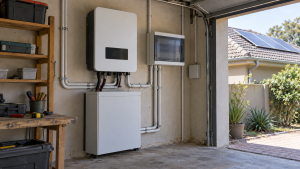
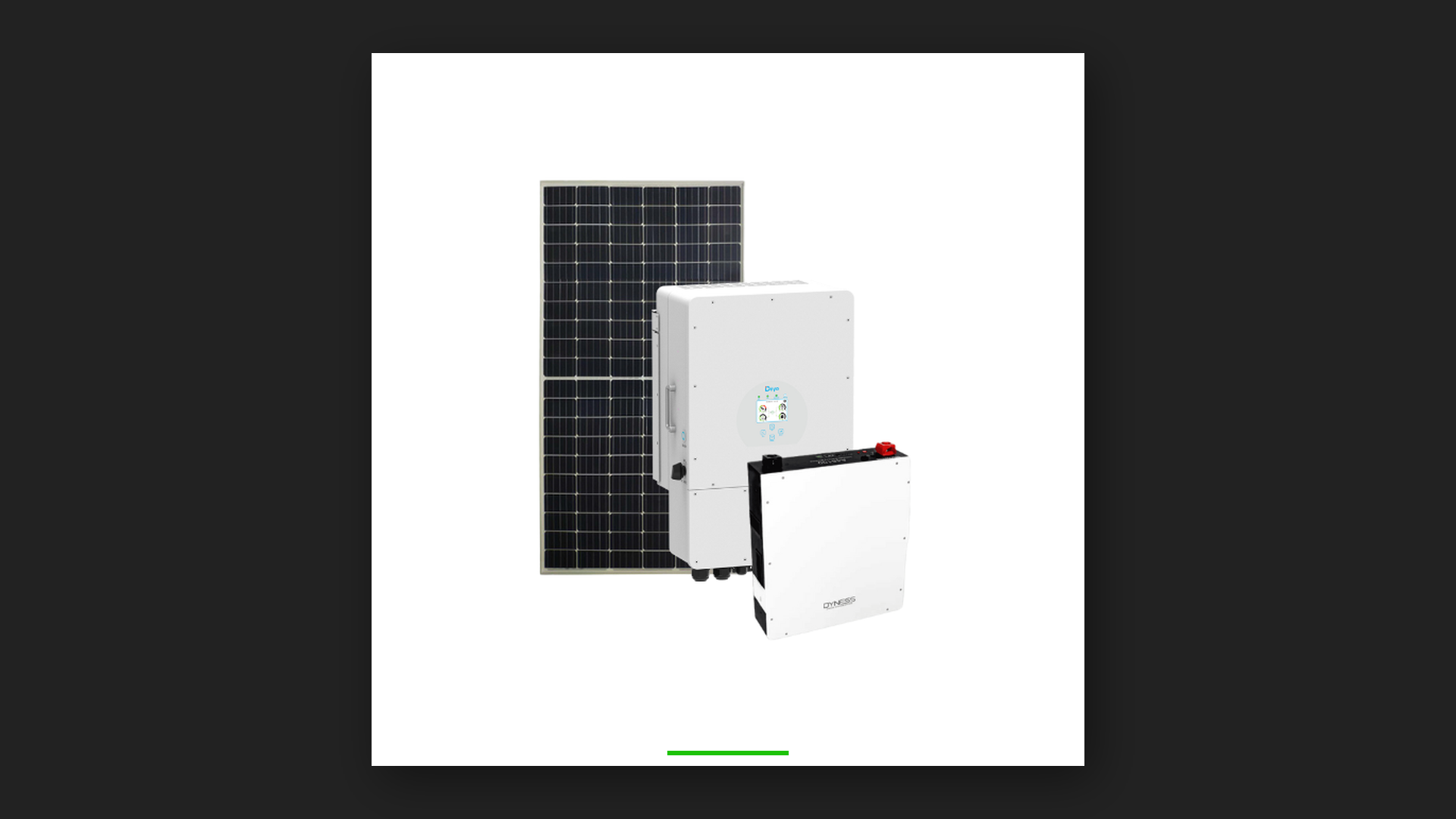
The architecture behind most modern South African installations, and the core of Deye’s popular range. A hybrid inverter manages solar, battery and grid together: it harvests the midday sun, stores the surplus, runs the home on stored energy through the expensive evening hours, and keeps the grid available as a backstop. Deye built a large part of its South African reputation on this category — ZenSolar does not supply Deye, but the architecture explanation below applies to any hybrid inverter, including the Fox ESS and Sigenergy systems we install. Programmable time-of-use logic lets the system buy from the grid only when it is cheapest, if at all. The result: most of the independence, without abandoning the safety net.
True off-grid (stand-alone)
No grid connection at all. The inverter, panels and battery bank — sometimes with a generator for extended overcast periods — must carry every load, every day, all year. The system is the utility. Deye’s product family spans equipment used in genuinely off-grid designs as well, but the engineering bar is entirely different: there is no backstop, so the design must handle the worst week of winter, not the average day.
Why “off-grid” usually is not what homeowners actually need
When most people say they want to go off-grid, what they mean is: I want to stop being at the mercy of rising electricity prices. That goal is real and achievable — but a hybrid system achieves it more sensibly than literal grid disconnection for anyone whose property already has a connection. Consider the arithmetic:
- The last few percent is the expensive part. A well-sized hybrid can supply the large majority of a household’s annual energy from solar and storage. Covering the final stretch — long runs of overcast winter days — off-grid requires a dramatically larger battery bank and array that sit underused for most of the year. With a hybrid, those rare shortfalls simply flow from the grid instead of from capital.
- The grid is a useful servant even when it is an expensive master. Kept in the design as a fallback, it lets you size for your real consumption pattern rather than the theoretical worst case.
- Independence is a dial, not a switch. A hybrid lets you start with meaningful independence and expand the battery or array later as budget allows — a path our guide on how to size a solar system maps out in practical terms.
The economic backdrop strengthens the hybrid case further: tariffs keep climbing above inflation while component prices are well below their levels of a few years ago, so every stored kilowatt-hour displaces an increasingly expensive grid purchase. The full financial argument is set out in is a solar system worth it.
When true off-grid genuinely is the answer
Off-grid is not a lifestyle upgrade — it is the correct engineering answer in specific situations:
- No grid connection exists, and the cost of establishing one (new lines, transformers, connection fees for a remote site) rivals or exceeds a stand-alone system. Farms, lodges, remote smallholdings and new builds far from infrastructure are the classic cases.
- The connection is impractical to maintain — properties at the end of long rural feeders where supply quality is chronically poor.
- Mobile or temporary installations — site offices, agricultural pump stations and similar stand-alone loads.
If you are in one of these categories, respect what the design must do: carry your worst-case week, not your average day. That means honest load measurement, generous battery capacity from a brand with real local support — our own off-grid designs run on Fox ESS or Sigenergy — panel capacity sized for winter production, and usually a generator input for extended overcast periods. Off-grid systems are also where design shortcuts hurt most; the classic errors are catalogued in 7 costly solar mistakes to avoid at design stage.
Deye off-grid vs Deye hybrid: how the difference shows up in practice
- Design target: a hybrid is sized to maximise savings against your tariff; an off-grid system is sized to guarantee supply through the worst conditions. Same physics, different question.
- Battery bank: hybrids typically carry one to two days of evening-and-overnight consumption; off-grid banks must bridge multi-day weather events, so they are substantially larger relative to the load.
- Array size: a hybrid array is tuned to your consumption and roof; an off-grid array is tuned to the shortest, cloudiest days of winter.
- Failure mode: when a hybrid runs short, the grid quietly fills the gap. When an off-grid system runs short, the lights go out — hence conservative sizing and generator provision.
- Cost profile: for the same household, true off-grid costs materially more, because you are buying certainty rather than savings. Whichever direction you go, structured payment routes exist — see our overview of solar power financing options.
Questions to settle before you choose
- Does the property have a grid connection today, and what does keeping it cost annually in fixed charges?
- What is your measured daily consumption — summer and winter — rather than your estimate?
- Which loads are non-negotiable on a dark winter Tuesday, and which are flexible?
- Is there space (and budget appetite) for the larger array and battery bank an off-grid design demands?
- If hybrid: what share of independence gets you comfortable — and what does each additional step cost?
That last question deserves a real number rather than a feeling, and this is exactly what a proper design process produces.
The bottom line
If your property has a grid connection, a Deye hybrid inverter with a well-sized battery delivers what most “off-grid” searchers are actually after: energy independence, insulation from tariff increases, and control over your own supply — while keeping the grid as a cheap insurance policy. If your property has no connection, or getting one is prohibitively costly, a true off-grid design is the right tool, engineered without shortcuts. Either way, the architecture decision should fall out of measured consumption and site reality, not terminology.
One more question worth asking
Can I start hybrid and go fully off-grid later?
Often, yes — if the original design anticipates it. Battery banks can be expanded and arrays extended, and a property that gradually reduces its grid reliance to near zero can eventually question the connection itself. Tell your designer this is the ambition at the outset, so the inverter platform and wiring leave the road open.
Where Fox ESS and Sigenergy fit into this decision
The hybrid-vs-off-grid distinction above holds regardless of which inverter brand ends up on the wall. Here is where ZenSolar stands on brand, and why it is a separate decision from the architecture one.
Deye’s case is a fair one. Its range genuinely spans grid-tied, hybrid and true off-grid designs, its generator-port and battery-chemistry flexibility suit demanding off-grid sites specifically, and a very large share of South African installers have configured one. None of that is in question.
We fit Fox ESS and Sigenergy for a reason that applies to both architectures above. A hybrid system today can become a near-off-grid system in a few years as a battery bank or array is extended, and an off-grid system may later need capacity added as a site’s demand grows. Fox ESS and Sigenergy both run one continuous product family from small residential through to commercial and industrial scale, so that growth is a capacity decision rather than a platform change, whichever architecture you started with.
Sigenergy adds a further point specific to this article’s subject: the SigenStor unit combines the inverter, battery, system control and, where relevant, DC EV charging into one modular product, so there is one manufacturer accountable for the whole stack rather than an inverter supplier and a battery supplier each blaming the other when an off-grid system runs short in a bad week. Its published warranty runs 10 years on the Sigen Battery and Sigen Energy Controller, guaranteeing at least 60% of usable battery capacity at that point or a stated energy-throughput limit, whichever comes first, extendable to 15 years if registered within 12 months of commissioning — a document we will hand you, not a number we quote from memory.
Fox ESS, manufactured under Tsingshan Group, is the more price-conscious half of the pair: modular, stackable storage built to be added to as a system’s demand grows, whether that system is a grid-connected hybrid or a stand-alone design, across single- and three-phase configurations.
Whichever architecture your site needs, insist on a manufacturer-approved installer — it is what keeps the warranty valid, and on an off-grid system specifically, it is what stands between a bad-weather week and the lights actually going out.
Find out which side of the line you are on
Run your property through our free System Sizer to put real numbers to your consumption, or start with the solar ROI assessment to see the savings case. ZenSolar designs and fits both hybrid and stand-alone systems on Fox ESS or Sigenergy equipment, through a manufacturer-approved installer network. Request a personalised quote and get an architecture recommendation based on your site, not a search term.
Not sure which system is right for you?
Not sure which system is right for you?