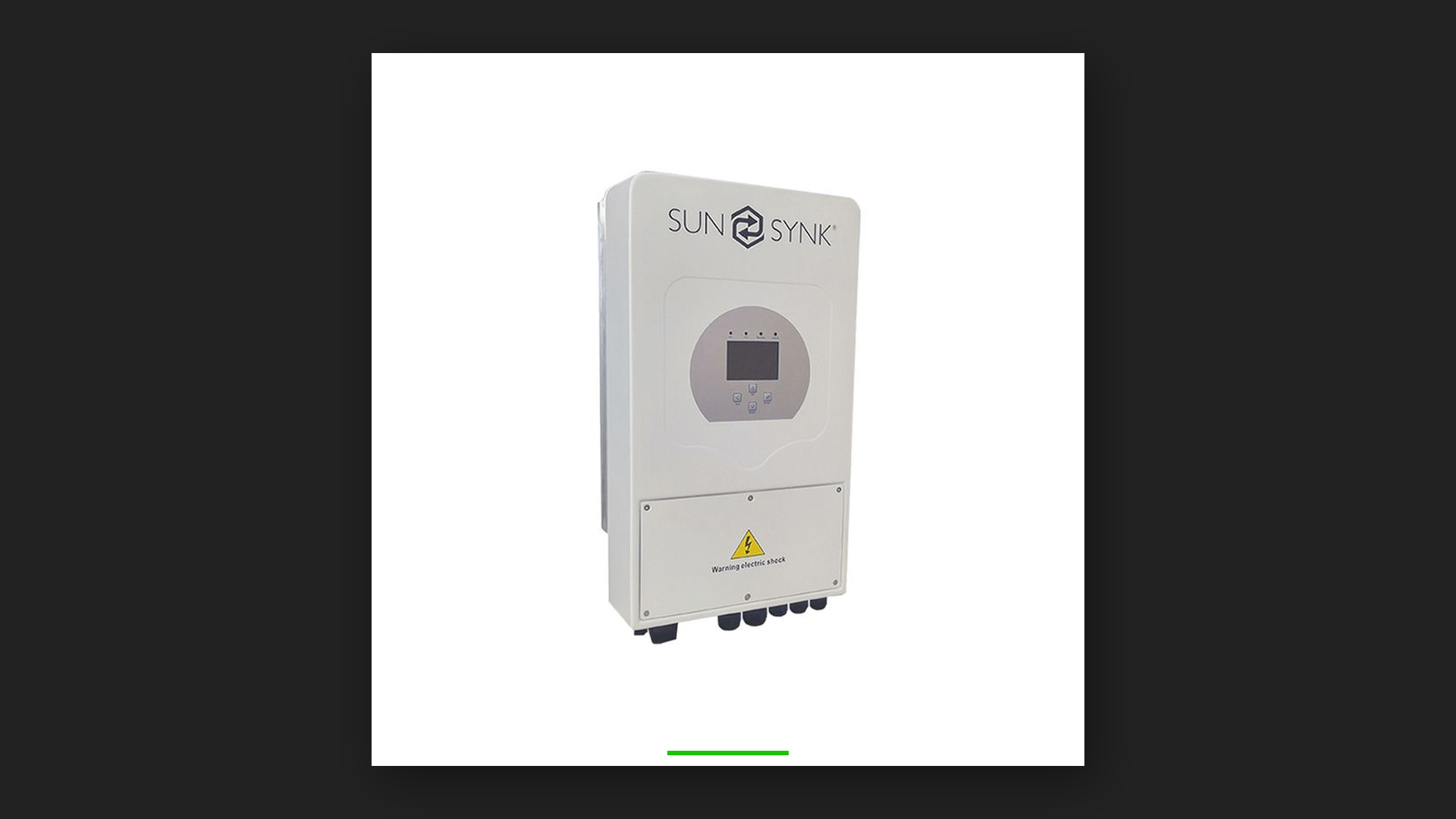
Search “Sunsynk inverter for sale” and you will find everything from established solar retailers to marketplace listings of unclear origin — often for what looks like the same box. Sunsynk is one of the most widely installed hybrid inverter brands in South Africa, and the great majority of Sunsynk owners are happy with their systems. This page is not here to talk you out of that. It is here because an inverter is a ten-year-plus relationship — warranty support, firmware updates, correct installation, someone to call when it behaves oddly — and the channel you buy through decides whether that relationship actually exists.
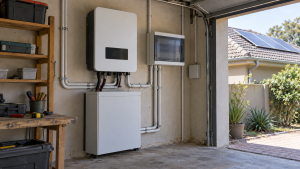
Where ZenSolar fits: we install Fox ESS and Sigenergy systems, not Sunsynk. Everything below still applies whichever brand you buy — but if a Sunsynk purchase isn’t locked in yet, a quick conversation with us is worth having first.
Grey imports: the discount that usually isn’t one
A grey import is a unit brought into South Africa outside the manufacturer’s official local distribution — bought abroad, routed through an unofficial reseller, or simply unclear in its history. The hardware itself can be entirely genuine. What is missing is the paper trail: the brand’s local distributor has no record of the unit and no obligation to support it, so a warranty claim on a grey import is often a claim nobody local will process. You end up owning a box, not a backed product.
Checking is simple. Ask the seller whether the unit came through the brand’s official South African channel, and ask them to confirm in writing who handles a warranty claim locally. A legitimate supplier answers immediately. “The warranty is handled by the manufacturer overseas” is the sentence that should end the conversation.
Buy the system, not just the box
There is a real difference between an inverter bought as part of a designed, installed system and one bought alone off a marketplace listing. In the first case, it is sized to your consumption, paired with a compatible battery, installed by professionals and signed off with a Certificate of Compliance — supplier, installer and manufacturer are all identifiable if something goes wrong. In the second, all of that becomes your problem: matching the unit to your supply type, checking battery compatibility, finding an installer, arranging certification. The box is only ever step one.
Warranty validity depends on the installer, not just the invoice
This is the detail buyers miss most: a manufacturer’s warranty is rarely unconditional. It typically depends on the unit being installed and commissioned by an approved installer, wired and configured correctly, and registered the way the manufacturer requires. Get any of that wrong and you can end up owning a genuine, properly purchased inverter with a warranty that does not actually apply — not because the hardware let you down, but because the installation did.
Why “accredited” is worth checking, not assuming
Accreditation is the manufacturer’s confirmation that a specific installer has been trained on that specific product — sizing it correctly, wiring the protection devices, configuring battery communication, and commissioning the system so it behaves the way the spec sheet promises. An unaccredited installer might still do good work, or might not; neither you nor the manufacturer has any way to know in advance, which is exactly why an unaccredited install so often voids the cover you thought you had. The cheapest quote in the pile is frequently the one missing this step, and it is the one that costs the most on the day something goes wrong.
The Certificate of Compliance is not optional
Electrical work in South Africa requires a Certificate of Compliance (CoC) — a legal requirement, not a nice-to-have. Without one, you risk problems with your insurer on any claim connected to your electrical installation, and problems at the point of selling your property, where a valid CoC is expected as a matter of course. Any supplier who suggests a CoC is optional for a “simple” job is asking you to carry a risk that has nothing to do with the inverter itself.
Questions to ask before you pay anyone
- Is this unit official South African channel stock, and who backs the warranty locally — in writing?
- Is the unit new and sealed, with its serial number intact?
- Who is installing it, and are they accredited on this specific product?
- Will I receive a Certificate of Compliance on completion?
- What does the quote include beyond the inverter itself — protection devices, cabling, labour, commissioning?
- Who do I call if something needs attention in year three, four or five?
If a supplier cannot answer all six without hesitation, that is your answer.
Match the model to the house before you buy anything
The most common inverter-buying mistake is not brand choice — it is buying a size that does not fit the property. An undersized inverter throttles your solar harvest; a needlessly large one wastes capital that would deliver more benefit as extra battery capacity. Sizing comes first, purchase second. Our guide on how to size a solar system explains the method, and what the best solar system for a South African home looks like shows how the inverter fits into the bigger design.
Remember, too, that the inverter is one line on the quote, not the whole picture. Panels, battery, mounting, protection equipment and workmanship all contribute — our breakdown of solar installation costs shows how a full system quote is built up.
Red flags that should end the conversation
- Prices dramatically below every established supplier — in this market, that is a warning, not a windfall.
- No physical address, no company registration, payment by direct transfer to a personal account.
- “Warranty through the manufacturer overseas” — code for no effective warranty at all.
- Sellers who cannot tell you whether the unit suits a single-phase or three-phase supply, or which batteries it has been approved to work with.
- Any suggestion that you can install it yourself and skip the Certificate of Compliance. That certificate is a legal requirement, and its absence can compromise insurance cover on your entire property.
Why buying now makes financial sense
The purchase you are weighing up sits in unusually favourable conditions. Electricity tariffs continue their long climb at rates above inflation, while inverter and battery hardware costs significantly less than it did two or three years ago. Every month a correctly sized system is running, it is converting free midday sunshine into avoided evening tariffs — the arithmetic behind this is laid out in is a solar system worth it. And if the capital outlay is the obstacle, structured payment options exist; see our overview of solar power financing options.
Common questions from Sunsynk buyers
Can I buy the inverter now and add the battery later?
Yes — a hybrid inverter runs happily without a battery, and adding storage later is a natural upgrade path. Just confirm that the battery you eventually plan to use is on the inverter’s compatibility list so the two will communicate properly. Our article on what makes solar batteries different is a good primer for that decision.
Is Sunsynk a good inverter to buy?
Sunsynk is a well-established brand and one of the most widely installed hybrid inverters in South Africa; plenty of owners are satisfied with their systems. ZenSolar’s own installations are built around Fox ESS and Sigenergy instead — one platform spanning residential through commercial, one manufacturer accountable for the whole stack, and every system fitted by a manufacturer-approved installer, which is what keeps the warranty valid. If you are set on Sunsynk, everything above still applies: buy through the official channel, get the warranty in writing, and insist on an accredited installer and a Certificate of Compliance.
What information should I have ready before asking for a price?
Your recent electricity usage (from your municipal bill or prepaid history), your supply type, and a sense of which loads matter most to you in the evenings. With those three facts, a supplier can quote a system rather than a guess.
How long does the process take from order to switch-on?
Once the design is agreed, a typical residential installation is measured in days of work, with the overall timeline driven by stock, scheduling and any municipal paperwork rather than the installation itself. A firm timeline belongs in your quote — ask for it in writing along with the warranty terms.
The sensible next step
Before you buy any inverter, find out what your home actually needs — it takes a few minutes with our free System Sizer, or start with the solar ROI assessment if the financial case interests you first. From there, ZenSolar can put together a personalised quote for a Fox ESS or Sigenergy system — one manufacturer accountable for the whole stack, and installation exclusively through a manufacturer-approved installer, which is what keeps the warranty valid.
Not sure which system is right for you?