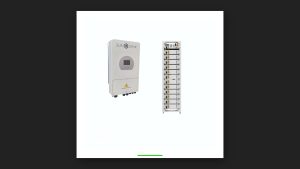
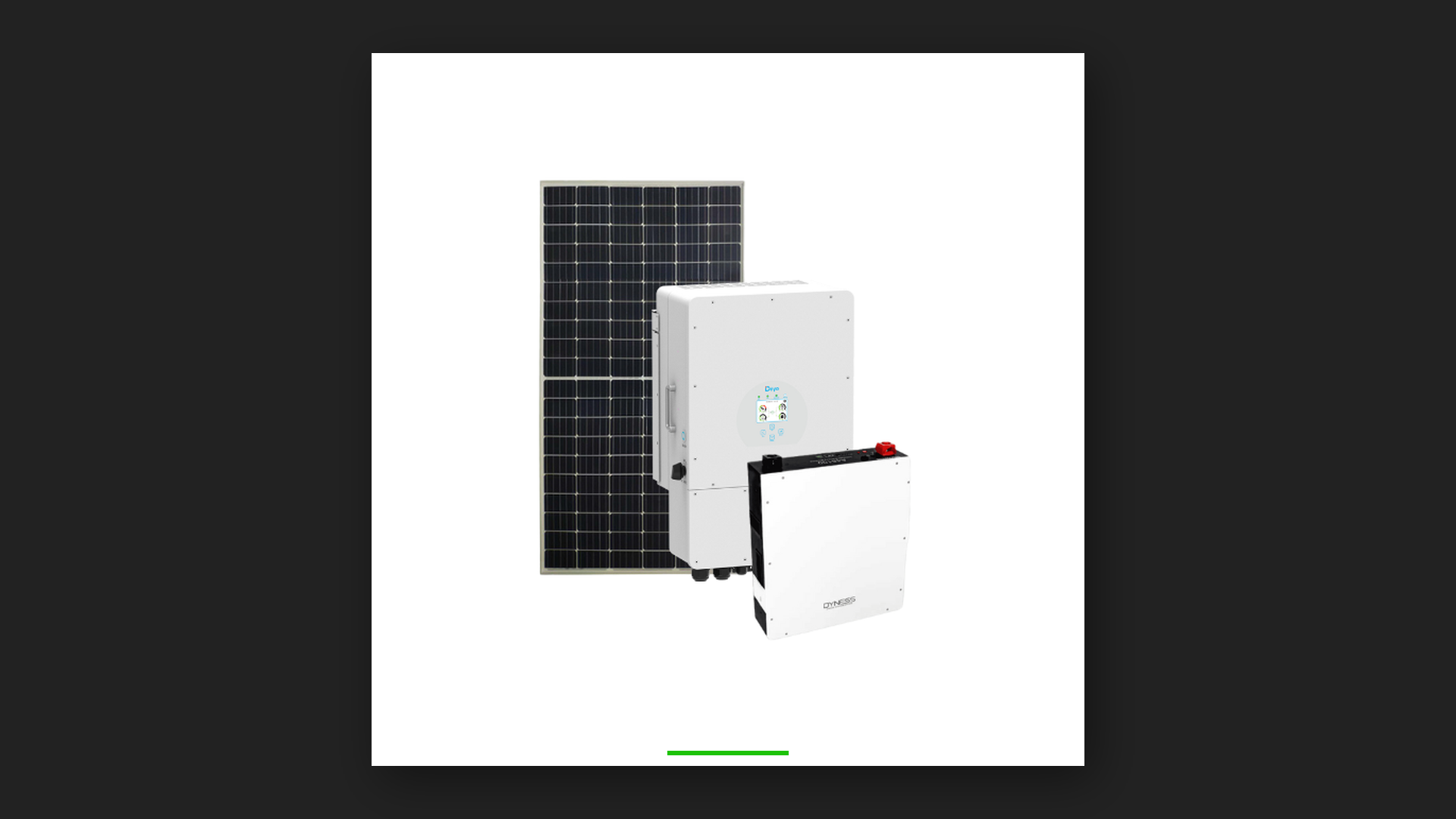
Deye is one of the most widely installed inverter brands in South Africa, and that popularity brings a flood of price questions. Why did one supplier quote noticeably more than another for what looks like the same unit? Why did last quarter’s quote no longer stand? And how much should you actually budget for a Deye-based system?
This guide won’t hand you a single rand figure that goes stale in a few weeks. Instead it explains how Deye’s range is structured, what actually drives the cost of a Deye inverter in South Africa, and how to tell whether the quote sitting in your inbox is a fair one.
The short answer: it depends which Deye
“Deye inverter” covers a wide family of products, from compact single-phase hybrids for townhouses to three-phase machines built for commercial sites. The gap between the smallest and largest units in the range is large. Asking for “the price of a Deye inverter” is a bit like asking for the price of a bakkie without saying which one.
Before any price conversation makes sense, you need three answers: what capacity you need, whether you’re on single-phase or three-phase power, and whether you want hybrid battery capability. Those three answers narrow the field to a specific model, and only then does a quote actually mean something.
How Deye’s range is structured
Thinking in tiers makes the pricing landscape easier to navigate.
- Compact residential hybrids, for smaller homes and modest consumption. The most affordable entry into genuine solar-plus-storage.
- Mid-range residential hybrids, the 5kW to 8kW classes that dominate South African family-home installations. This is where competition between suppliers is fiercest and value is usually best.
- Large residential and light-commercial hybrids, the 10kW to 12kW classes, for big homes, home businesses and small commercial sites.
- Commercial three-phase machines, the 12kW-and-up three-phase units used on business premises, farms and industrial sites.
Each step up the ladder adds continuous output, solar input capacity and features, and cost rises with it. Landing on the right rung is a sizing question before it’s a budget question. Our walkthrough on how to size a solar system shows how to get to the right capacity from your own consumption data.
What you’re actually paying for
A Deye hybrid isn’t just a box of electronics. The price reflects a stack of engineering that cheaper, simpler inverters skip.
- Hybrid architecture that blends solar, battery and grid power without you managing the switching yourself.
- MPPT trackers that squeeze maximum harvest from your panels through the day.
- Battery management integration that protects a lithium bank over thousands of cycles.
- A monitoring platform that lets you check the system’s behaviour from your phone.
- Surge capacity that starts pumps and motors without complaint.
When a quote looks suspiciously cheap, one of those layers is usually missing, or the unit is grey stock without a claimable local warranty.
Why two quotes for the same model differ
Even for one specific Deye model, quotes vary between suppliers and across time. The main reasons:
- Exchange rate movement. Inverters are imported, so the rand sets the baseline landed cost. This is why quotes carry validity periods.
- Stock position. A supplier holding stock bought at a better rate can price differently from one ordering against today’s rate.
- Authorised versus grey channel. Authorised stock carries a warranty that can actually be claimed in South Africa. Grey stock can look cheaper right up until something goes wrong.
- What’s included. Some quotes are bare hardware, others include delivery, commissioning support or accessories. Itemise before you compare.
What a complete quote should itemise
Before you accept any Deye pricing, check that the quote:
- Names the exact model and capacity, not just “Deye hybrid inverter.”
- States the warranty period and confirms it is claimable through a South African channel.
- Specifies single-phase or three-phase to match your connection.
- Separates hardware from installation, certification and grid-registration costs.
- Confirms compatibility with your chosen battery brand and model.
- Has a stated validity period, so you know how long the number holds.
This is also why a headline inverter price on its own isn’t the number that matters. The inverter is one line on a system quote. Panels, battery, mounting, cabling, certification and installation all sit alongside it, and a system that looks cheap on the inverter line can still come out expensive once the rest is added (or the reverse). Compare two quotes item by item, not total by total.
Common pricing mistakes to avoid
The expensive errors we see are rarely about paying too much per kilowatt. They’re structural.
Buying an undersized unit to save money, then replacing it within two years as consumption grows. Buying grey stock and discovering the warranty is theoretical. Comparing a bare-hardware quote against a full-installation quote and assuming the first supplier is cheaper. Sizing the inverter without thinking about the battery and array it must serve, when the three components need to be designed together.
A system-level quote beats a component-level one for exactly that reason. For a fuller picture of where the rest of a system budget goes, see our detailed breakdown of solar panel installation costs.
Deye vs the alternatives
Deye competes closely with Sunsynk and Fox ESS in the residential and light-commercial space. Deye’s strengths are the breadth of its range, its strong support for pairing multiple units together, and the sheer installer familiarity that comes with being one of the country’s most-installed brands. If you’re weighing brands rather than budgets, our comparison of Fox ESS and Deye is a good place to start — and later in this guide we set out why ZenSolar itself fits neither.
Frequently asked questions
Why doesn’t this guide list exact Deye inverter prices in rand?
Because a number printed today is often wrong by the time you read it. Deye hardware is imported, so pricing moves with the exchange rate and with each supplier’s stock position, sometimes from one week to the next. A range that looked accurate when we wrote this could be stale within a month. What stays useful for longer is knowing what drives the price and how to read a quote, which is the point of this guide. For a number you can actually rely on, use our System Sizer or request a personalised quote.
Is the cheapest quote automatically the worst deal?
No, and it isn’t automatically the best one either. A lower number can mean a genuinely competitive supplier, or it can mean bare hardware with installation and certification left off, or grey stock with no claimable warranty. Run every quote through the itemisation checklist above before you compare totals.
What should a Deye-based system quote include, besides the inverter?
A proper quote covers the panels, the battery, mounting and racking, cabling and protection, certification and grid-registration costs, and installation labour, in addition to the inverter itself. If any of those is missing or vague, ask for it in writing before you sign.
How do I get an accurate, current price for my own home?
Start with our free System Sizer to establish the capacity you actually need, then request a personalised quote. That’s the only way to get a number that reflects today’s exchange rate, current stock and your specific site, rather than a range that was accurate when someone else wrote it down.
Can I buy a Deye inverter from ZenSolar?
No. Fox ESS and Sigenergy are the only inverter and battery brands we fit, so any quote you request from us will be priced on one of those two, not on Deye. That’s a deliberate choice, explained further down this guide, not an oversight.
The cost of waiting
Whatever a Deye inverter costs this quarter, grid electricity is on a one-way escalator. Eskom tariffs have risen above inflation year after year, with no sign of the trend breaking. Solar hardware, meanwhile, costs less than it did two or three years ago.
That combination is why payback periods on well-designed systems are about as short as they’ve been in a decade. The relevant comparison isn’t this quote against last year’s quote. It’s this quote against another year of paying the utility for power you could be generating yourself.
If the upfront amount is the obstacle, financing can convert it into a monthly figure that often sits comfortably against your current bill. Our guides to solar financing options and calculating solar system monthly payments explain how.
A note on second-hand and grey-market deals
Because Deye is so widely installed, second-hand units and grey-imported stock circulate constantly on classifieds and marketplaces, often at tempting discounts. Approach both with caution.
A second-hand hybrid arrives with an unknown history (how it was installed, how hot it ran, whether firmware was kept current) and typically no transferable warranty support. Grey stock may be brand new, yet still leave you outside the local warranty chain when something fails in year three.
An inverter is the component your entire system depends on for a decade or more. The discount on an unsupported unit is rarely worth the risk it carries. If budget is the constraint, a smaller authorised unit sized correctly, or a financed purchase spread against the savings, is almost always the sounder route than an unsupported bargain.
What the price gap to Fox ESS and Sigenergy actually buys
Everything above is a genuine picture of what that hardware costs and why quotes vary. It isn’t, however, what ZenSolar installs. We fit two brands, Fox ESS and Sigenergy, and since that costs you the option of the cheapest configuration on the market, the difference deserves a straight explanation rather than a shrug.
The honest part first. Deye is frequently the sharper-priced option among the major hybrid brands, and if the deciding constraint on your project is the number at the bottom of the page, Deye or a similarly positioned brand will usually win on price. We’re not going to pretend the rand figures say something they don’t.
What the price gap buys, in our view, is what happens after the invoice is paid. Fox ESS and Sigenergy both run one continuous product family from a single-phase home to a three-phase commercial site, so adding a heat pump, an EV charger or a second building later is a capacity decision, not a brand change. Sigenergy’s SigenStor unit combines inversion, storage, system control and DC EV charging in one modular block, which means one manufacturer is accountable for the whole stack instead of four suppliers pointing at each other when something needs attention. Its published warranty documents carry a 10-year term on the Sigen Battery and the Sigen Energy Controller, with the battery guaranteed to retain at least 60% of its usable capacity at 10 years, or a stated energy-throughput limit, whichever comes first, extendable to 15 years if registered within 12 months of commissioning, and we’ll show you that document before you sign. Fox ESS, backed by Tsingshan Group, is the more budget-conscious of the two: modular, stackable hardware built to be added to rather than replaced, without dropping into the price tier where support quietly disappears.
So the number you get from us won’t be the cheapest Deye quote on the market, and we’re not going to tell you it is. It will be a number we can back with a warranty document and one accountable manufacturer, which is the trade we think is worth making.
Start by establishing what you actually need: run your consumption through our free system sizer, then use the solar ROI assessment to see the payback picture for your home or business. With those numbers in hand, request a personalised quote for a Fox ESS or Sigenergy system, itemised and honest.
Not sure which system is right for you?