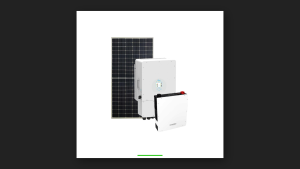
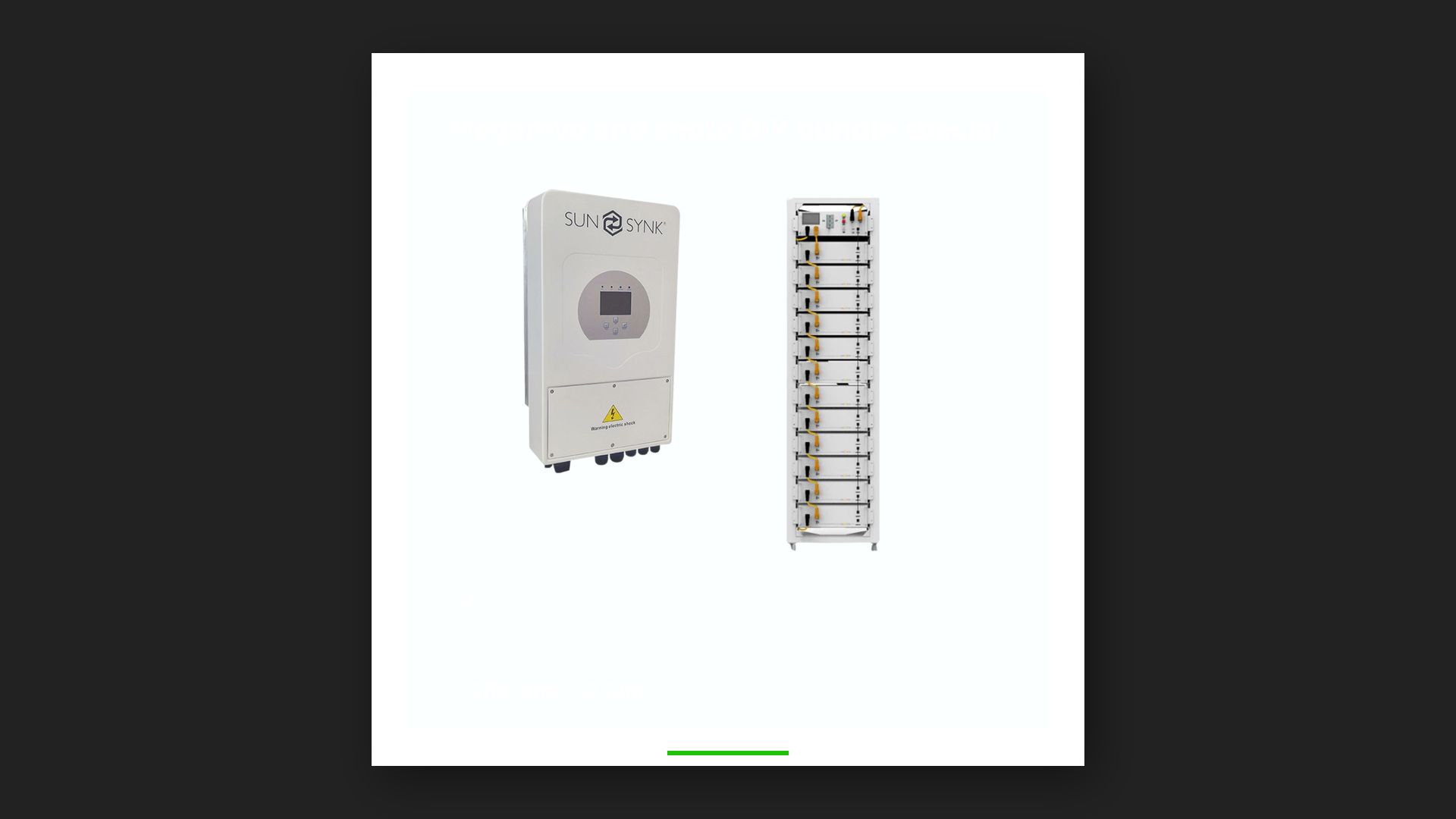
If you have started collecting solar quotes in South Africa, you will have noticed something frustrating: the price of a Sunsynk inverter seems to change depending on who you ask, which model is on the table, and what else is bundled into the deal. That is not dishonesty — it is the nature of a product that spans everything from compact residential units to commercial three-phase machines. Rather than quoting numbers that would be outdated within a month, this guide explains exactly what drives the price of a Sunsynk inverter in 2026, so you can read any quote with confidence and know when you are getting fair value.
Why We Don’t Publish a Single Price
A responsible answer to “how much does a Sunsynk inverter cost?” has to start with the honest caveat: there is no one number. Pricing moves with the exchange rate, shipping costs, stock levels and the specific model and capacity you need. Any article that promises a fixed figure is either out of date or guessing. What stays constant is the set of factors that determine where your quote lands — and those are worth understanding in detail before you spend anything.
The Six Factors That Drive Sunsynk Inverter Pricing
1. Capacity (kW Rating)
The single biggest price driver is the size of the unit. Sunsynk’s range runs from compact residential hybrids up to large three-phase machines, and price climbs with continuous output capacity. The right question is not “what does the biggest one cost?” but “what capacity does my consumption actually require?” — an oversized inverter is wasted capital, while an undersized one will trip under load. Our guide on how to size a solar system covers how to get this decision right.
2. Hybrid Functionality
Sunsynk is best known in South Africa for hybrid inverters — units that manage solar, battery and grid together. A hybrid costs more than a simple grid-tie inverter of the same capacity because it includes battery charging electronics and changeover capability. For most South African buyers the hybrid premium is worth paying: it is what delivers genuine energy independence and lets you use stored solar power in the expensive evening hours.
3. Single-Phase vs Three-Phase
Three-phase models cost more than single-phase equivalents. If your property is on a three-phase supply — common for larger homes, smallholdings and virtually all commercial premises — your inverter choice and budget need to reflect that from the start.
4. The Exchange Rate
Like almost all solar hardware sold in South Africa, Sunsynk inverters are imported. The rand’s movement against major currencies feeds directly into landed cost, which is why quotes carry validity periods and why two quotes a few months apart can differ noticeably even for the identical model.
5. Warranty and Support Channel
Two prices for the “same” inverter are not the same product if one comes through an authorised local channel with a full, claimable warranty and the other is grey stock. A warranty is only worth something if the supplier who sold you the unit can actually process a claim in South Africa. Paying slightly more for authorised stock is usually the cheapest insurance you will ever buy on a solar project.
6. What’s Bundled Around It
Most people don’t buy an inverter alone — they buy a system. Quotes vary because of what surrounds the inverter: panels, batteries, mounting, cabling, protection devices, installation labour and certification. When comparing quotes, always separate the inverter line item from the rest so you are comparing like with like. Our breakdown of solar panel installation costs explains where the rest of a system budget goes.
Sunsynk’s Range: Matching Model to Budget
Thinking in capacity bands is more useful than thinking in prices. At the entry level, compact hybrids suit townhouses and homes with modest consumption. The mid-range — the most popular territory for South African family homes — covers the well-known 5kW and 8kW hybrid classes. Above that sit the larger residential and light-commercial units, and finally the three-phase commercial machines. Each step up buys you more continuous output, more solar input capacity and more room to grow. The most cost-effective purchase is the smallest unit that comfortably covers your realistic peak demand with a margin for start-up surges.
Total Cost of Ownership Beats Sticker Price
An inverter is a 10-to-20-year asset, and the cheapest unit on day one is not necessarily the cheapest over its life. Factors that swing the long-term picture include build quality and thermal design, warranty length and claimability, monitoring capability that catches faults early, and the ability to parallel additional units instead of replacing the inverter when your needs grow. Sunsynk’s popularity in South Africa also has a practical benefit: parts, expertise and installer familiarity are easy to find, which keeps lifetime service costs sensible.
Financing the Purchase
Because an inverter usually arrives as part of a full system purchase, most buyers fund it the same way they fund the rest of the project. South African buyers have more routes than ever — from bank products to rent-to-own structures. If the capital outlay is the sticking point, start with our overview of solar power financing options or see which banks are offering solar financing to understand what monthly repayments could look like against your current electricity spend.
Why the Timing Matters in 2026
Two curves have been moving in opposite directions for years: Eskom tariffs keep climbing above inflation, while solar component costs have fallen compared with two or three years ago. That combination means every month you delay, you pay more for grid electricity that a correctly sized system would have generated for you. The payback mathematics on a quality inverter-led system are the strongest they have been in a decade — which is exactly why the question worth asking is not “what does a Sunsynk cost?” but “what is it costing me not to have one?”
How to Get an Accurate Price for Your Situation
Here is the process we recommend before you commit to anything:
- Establish your real consumption — from municipal bills, a prepaid history or a consumption logger.
- Size the system around that data, not around a salesperson’s default package.
- Decide whether you need battery storage from day one or want to add it later.
- Get a written, itemised quote that names the exact model, confirms authorised stock and spells out the warranty terms.
- Check that installation, certification and grid registration are included, not hidden extras.
ZenSolar does not sell Sunsynk. The two brands we install and stand behind are Fox ESS and Sigenergy, and we set out why further down this page. That does not make the pricing checklist above any less true — a named model, authorised stock and written warranty terms are the standard to hold any supplier to, whoever ends up quoting you.
Three Quick Questions Price-Shoppers Ask
Should I wait for prices to come down further?
Hardware pricing moves with the exchange rate in both directions, but the tariff you pay Eskom moves in only one. Waiting for a marginally better hardware price while paying escalating rates for another year rarely works out in your favour — the payback mathematics already reward acting now.
Is a second-hand Sunsynk a bargain?
Usually not. You inherit an unknown installation history, an uncertain warranty position and no relationship with the supplier who has to support it. The saving on the sticker seldom survives the first fault.
Does a bigger inverter mean bigger savings?
No — savings come from the array and battery matched to your consumption. An oversized inverter is idle capital. Size against your measured demand and spend the difference where it earns.
Where Fox ESS and Sigenergy fit into the price conversation
Everything above about reading a quote applies whatever brand ends up on it. Here is where we sit, and why we priced ourselves out of the Sunsynk conversation on purpose.
Sunsynk’s price advantage is real. Its scale in South Africa means competitive pricing, wide stock availability and installers who are not learning the platform on your roof. If landed cost per kW is the deciding factor, Sunsynk will usually come out ahead on the quote, and we are not going to argue otherwise.
What that price does not capture. A quote is a snapshot of one purchase. It says nothing about whether the household still fits the same inverter in five years, or how many suppliers you end up talking to if the battery and the inverter come from different manufacturers. Fox ESS and Sigenergy both run one continuous product family from single-phase residential through to three-phase commercial, so a bigger battery or a second array later is a capacity decision, not a new-brand decision.
Sigenergy takes that further: the SigenStor unit combines inversion, battery, system control and DC EV charging in a single modular product rather than four boxes from four suppliers, which means one manufacturer to deal with if anything needs attention. Its published warranty covers the Sigen Battery and the Sigen Energy Controller for 10 years, guaranteeing at least 60% of usable battery capacity at that point (or a stated energy-throughput limit, whichever comes first), and it extends to 15 years if you register within 12 months of commissioning — we will hand you that document, not just recite the figures.
Fox ESS, built on Tsingshan Group’s manufacturing base, is the more price-conscious of the pair: modular, stackable storage designed to be added to as demand grows, in both single-phase and three-phase form, without dropping into the tier where support quietly disappears once you have paid.
Whichever brand you choose, insist on a manufacturer-approved installer. That is the detail that actually keeps the warranty valid on the day you need it, not the invoice.
What we would actually quote you
The most useful price is still the one attached to a system designed for your home or business, and the sizing exercise above holds regardless of brand. Start with our free system sizer to establish the capacity you actually need, then run the solar ROI assessment to see the payback picture. When we quote you, it will be a Fox ESS or Sigenergy system, priced on your consumption, with the warranty terms attached in writing rather than promised verbally.
Not sure which system is right for you?
Not sure which system is right for you?