
Key Takeaways
Optimising your energy independence involves choosing equipment that aligns with current efficiency standards and grid requirements. A well-designed solar configuration ensures you maintain control over your domestic energy usage.
- Prioritise inverters with versatile battery compatibility.
- Always ensure local regulatory adherence during wiring phases.
- Balance grid export strategies with self-consumption targets.
- Monitor system performance data to refine load management.
- Schedule routine maintenance to extend total hardware life.
Technical specifications and performance hardware
Selecting the right hardware formulates the backbone of your energy system. You must look for equipment that handles voltage stability and operational loads without compromise. The Deye 5kW hybrid inverter serves as a common benchmark for residential setups, offering clear power regulation parameters.
Input and output voltage ratings
Your system performance relies on strict adherence to input and output voltage ranges specified by electrical codes. Input voltage must remain within the inverter’s MPPT window, typically between 150V and 425V, to prevent performance degradation. High-quality cables help manage current flow, ensuring that every watt generated by your arrays reaches the output stage efficiently for your home circuits.
Compatibility with low-voltage lithium-ion batteries
Flexible battery integration allows your setup to store excess energy for evening usage. Most modern residential inverters are compatible with low-voltage lithium-ion units, providing a balance between capacity and safety. Choosing a battery system that communicates directly with your inverter hardware ensures seamless discharge cycles, protecting the longevity of your electrochemical storage assets during daily operation.
Efficiency levels and power factor management
Efficiency is the primary metric for long-term ROI. You need to account for conversion losses that occur when DC power changes into usable AC. By maintaining a clean power factor, you prevent energy displacement and keep your equipment running cool under heavy loads.
| Feature | Specification | Impact |
|---|---|---|
| Max Efficiency | 97.6% | Lower waste |
| Power Factor | 0.8-1.0 | Stable grid interaction |
| MPPT Range | 150-425V | Array flexibility |
Regular monitoring of these metrics helps identify when your system might need an efficiency audit. If your installation is not meeting these thresholds, inspect your cabling for resistance issues or check for array shading.
Operating modes for grid-tie and off-grid use
Understanding how your hardware manages energy flows is essential for energy independence. You want to maintain a system that effectively decides between export, storage, and local consumption. Modern controllers make these decisions automatically, though manual tweaks allow you to align performance with your specific habits.
Managing grid export and internal self-consumption
Your daily goal usually involves running as much of the home as possible on your own solar output. When solar production exceeds demand, the unit decides whether to charge the batteries or push surplus to the grid. By adjusting these settings, you prioritise self-consumption over exporting, which is the most logical approach for reducing your annual electricity spend.
Automated transition to backup power during network outages
Reliable systems detect voltage drops on the main line within milliseconds. Transitioning to a battery-backed supply must be rapid enough to prevent your appliances from resetting or losing power entirely. This automated response provides a stable, consistent flow that keeps your critical services running without intervention, demonstrating the high performance often associated with reputable solar hybrid inverter manufacturers.
Programmable interaction with smart load management
You can tailor your equipment to interact with specific appliances based on current environmental conditions. These programmable modes include:
- Prioritise heavy appliance operation during peak sunlight hours.
- Limit battery discharge capacity to preserve health.
- Schedule grid charging during cheaper tariff windows.
- Throttle output if the internal temperature exceeds limits.
These automated sequences prevent your batteries from depleting too quickly and keep your bottom line protected. Setting up these protocols is a simple way to increase your autonomy from incoming supply costs.
Installation requirements and wiring standards
Proper installation dictates the lifespan of your electronic components. You should always ensure that wiring conforms to local electrical standards, keeping runs as short as possible to minimise voltage drop. Professional Deye’s best inverter products require precise environmental conditions to function at their best.
Mounting considerations for optimal thermal performance
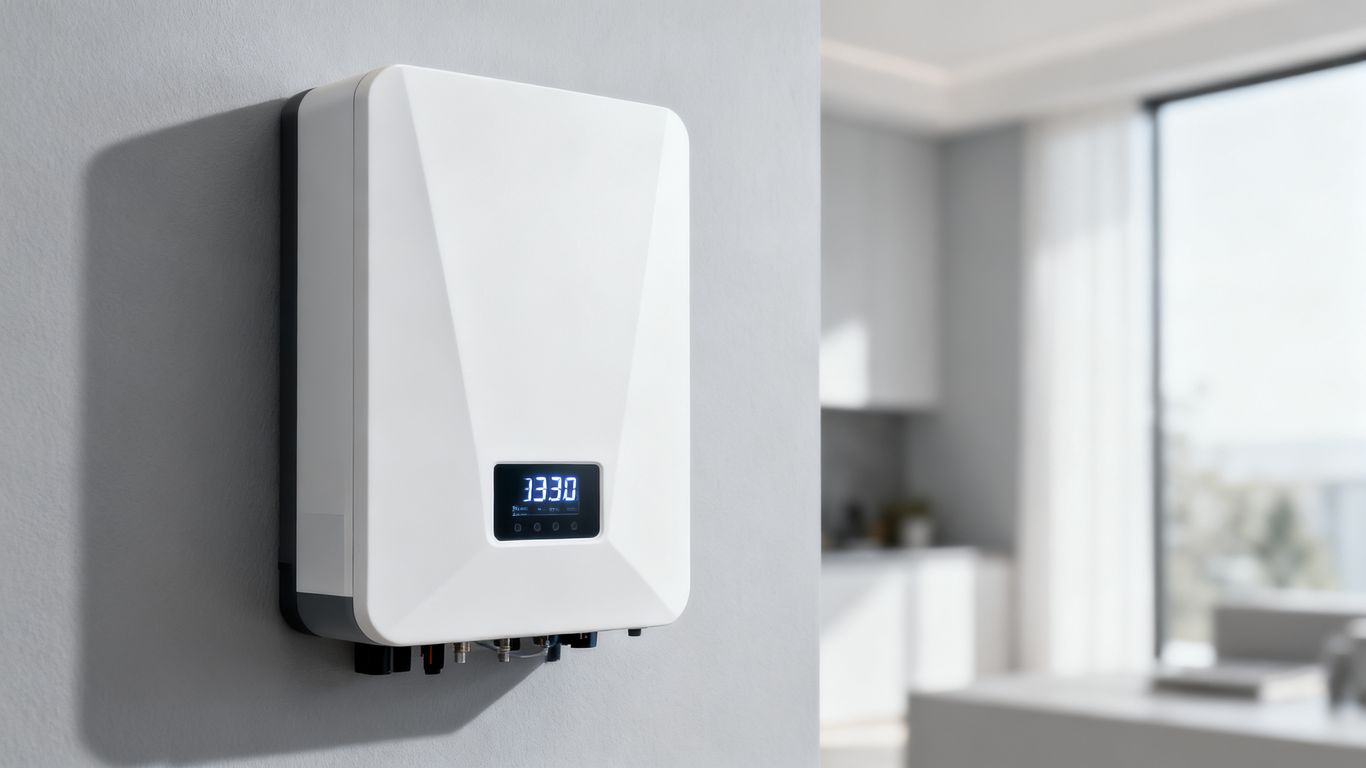
Choosing a mounting location is about more than just convenience. You need an area with adequate airflow where the unit is shielded from direct heat gain in the afternoon. Vertical wall mounting on a solid, non-combustible material helps heat dissipation, which is vital for maintaining the internal hardware temperature within safe operating bounds.
Sequential connection of AC and DC circuitry
Connecting your solar array to the DC input requires caution. Always isolate the DC isolator before making physical connections, and ensure your polarity matches the terminal labels exactly. After securing the DC side, you can proceed to bridge the AC wiring, following the sequential procedure provided by the manufacturer to avoid potential voltage surges at startup.
Communication port setup for monitoring peripherals
Adding communication peripherals like Wi-Fi sticks or data loggers allows you to see what is happening inside the box. You connect these through the designated ports on the bottom of the unit. Ensure shielding is intact for any long-run data cables to prevent signal interference from the high-power AC cables nearby.
Monitoring, software, and system configuration
Data is a powerful tool for maintaining your solar energy performance. You can use real-time tracking to spot trends in your consumption and adjust your habits accordingly. The right software configuration turns a basic power inverter into a smart controller for your home.
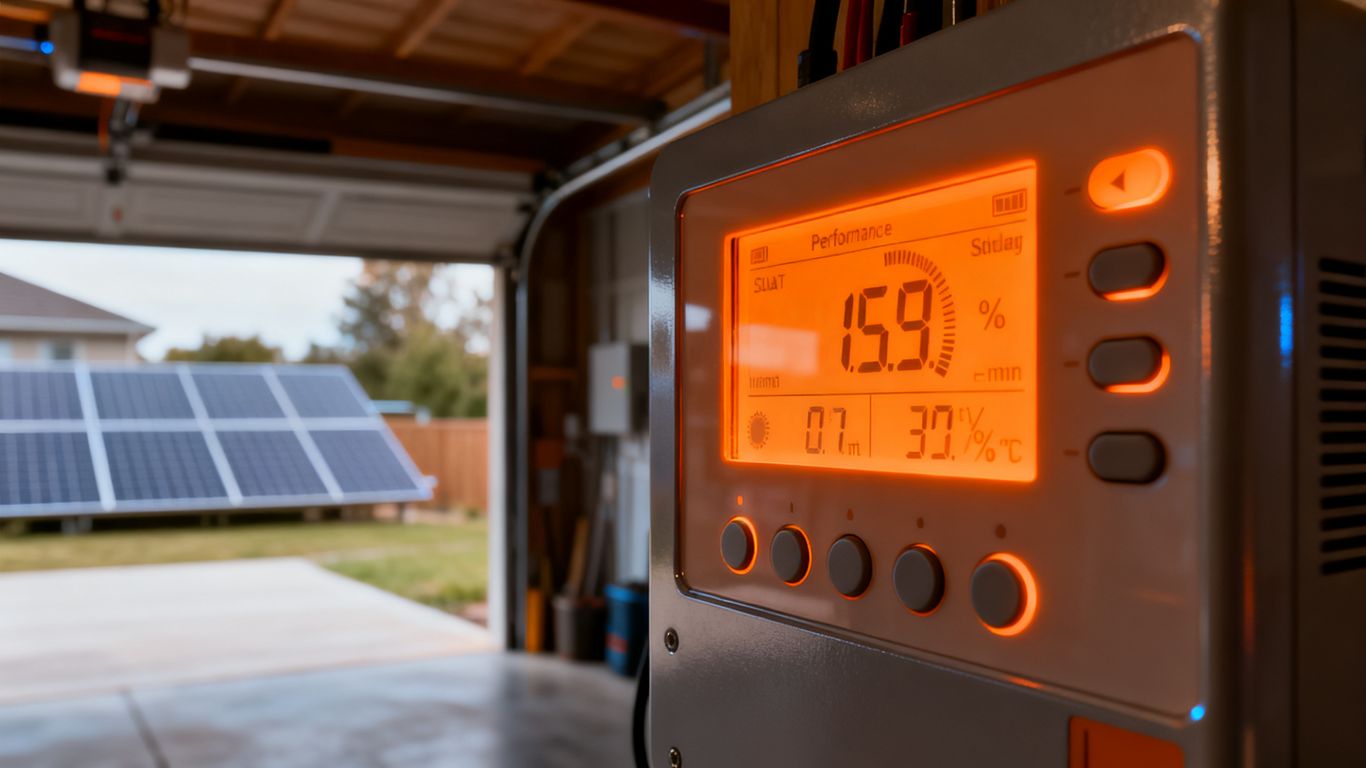
Interface options for real-time performance tracking
Most modern units provide a mobile app or local web page to monitor output variables. Accessing this data lets you see how your panels perform compared to theoretical expectations. By checking these metrics weekly, you can verify your generation is meeting forecasted needs without guessing.
Advanced parameter adjustment for peak shaving
Peak shaving refers to the technique of limiting your demand from the incoming supply during the most expensive times of the day. You program the inverter to augment your solar energy with battery power, effectively flattening your consumption peaks. This method stops you from drawing extra power that commands a premium rate, keeping your overhead predictable.
Firmware update procedures and data logging
Updates are necessary to patch bugs and add new utility functions. Most systems handle updates over the network, though you might need to initiate these via the configuration portal. Keeping logs is essential for warranty claims, as these records show how the unit was operated over its service life.
Maintenance, safety, and troubleshooting
Staying proactive with your maintenance schedule helps prevent failure rather than reacting to it. You will find that keeping your physical environment clean is just as important as the electronic settings you choose. A well-tended system is your best defense against unexpected downtime at your home.
Routine inspection protocols for hardware durability
Check your inverter for signs of dust accumulation or insect ingress every few months. Keeping the heat sink clear prevents the cooling fans from working unnecessarily hard. You should also touch test your DC cable terminations periodically to ensure everything stays tight, as thermal expansion can cause connections to loosen over time.
Interpreting common fault codes and alert indicators
Each model has a unique list of error codes displayed on the front screen. You must keep your system manual handy to decode these when they appear. Common errors usually relate to grid voltage fluctuations or battery communication timeouts, which you can often clear by restarting the unit after checking the relevant cabling.
Industry standards and electrical safety compliance
All modifications to your distribution board must meet local building requirements. You need to ensure that surge protection is installed correctly, as it acts as a gatekeeper against transient spikes. Always prioritise working under local electrical codes to ensure your warranty remains valid and your house insurance stays compliant.
Strategic implementation in UK domestic setups
Strategic deployment involves aligning your setup with your daily rhythm to maximise the financial impact. In the UK, this means balancing your solar yield against varying grid-supply tariffs and managing your storage cycles to suit domestic needs. You are looking to turn your house into a self-regulated energy hub.
Integration with time-of-use electricity tariffs
Smart tariffs influence when you choose to import power from the grid. You should configure your system so that it charges off-peak if your solar generation is insufficient for the coming day. This synchronisation prevents you from paying standard rates when you could have stored cheaper energy overnight.
Enclosure resilience in variable weather conditions
While most indoor inverters are robust, you might need extra protection if installing in a garage or utility area with high humidity. Proper seals on all conduit entries prevent moisture from creeping into the sensitive electronic internals. Ensuring your enclosure is IP-rated correctly for your specific installation environment guarantees that humidity does not lead to corrosion over the years.
Warranty support and technical service guidance
Look into available solar power inverters that provide clear paths for technical assistance. Most manufacturers offer extended warranty options if you have your system commissioned by a certified expert. Keeping documentation of your initial setup process will simplify any troubleshooting requests you may need to make later in your system’s life.
How the Deye 5kW compares to Fox ESS and Sigenergy
ZenSolar fits two brands and no others: Fox ESS and Sigenergy. Since that narrows what we can offer you, it deserves explaining rather than asserting.
First, what Deye genuinely does well. Deye’s flexibility is real: compatibility across lithium and lead-acid chemistries, a dedicated generator port, a low-voltage 48V battery connection that installers find safe and quick to work with, and parallel capability for properties that later need more. Combined with how many South African installers know the platform intimately, that is a credible package and we are not going to argue with it.
Where our two brands make a different argument. The case is not that the hardware above is bad. It is about what happens in years three to ten, which is where energy systems actually disappoint people.
One platform from a small house to a commercial site. The expensive mistake in home energy is outgrowing your ecosystem. Add a heat pump, a pool, an EV charger or a home office two years after commissioning and scaling often means changing brand — which means changing inverter, app and support channel at the same time. Fox ESS and Sigenergy both run continuous product families from single-phase residential through to three-phase commercial and industrial, so growth stays a capacity decision rather than a replacement decision.
Sigenergy is integrated rather than assembled. The SigenStor stack combines PV inversion, battery storage, system control and DC EV charging in one modular unit instead of four separately sourced boxes with four warranty conversations behind them. When something needs attention there is one manufacturer accountable for it. Most storage complaints turn out to be support complaints rather than hardware complaints, and this is the part that addresses them.
The warranty is written down, and we will show you the document. Sigenergy’s published warranty terms carry a 10-year period on the Sigen Battery and the Sigen Energy Controller, with the battery guaranteed to retain at least 60% of its usable capacity at 10 years, or a stated energy-throughput limit, whichever is reached first — extendable to 15 years if the system is purchased and registered within 12 months of commissioning. We quote those figures because we can point at the document they come from. Ask whoever else is quoting you to do the same; what happens next is informative.
Fox ESS is the volume-sensible half of the pair. Fox ESS sits behind Tsingshan Group and builds modular, stackable storage designed to be added to rather than replaced, across both single-phase and three-phase inverters. Where Sigenergy is the integrated premium answer, Fox ESS puts a well-specified system on a normal budget without dropping into the price tier where support quietly vanishes.
Whichever you choose, one thing decides more than the badge: every system we fit goes in through a manufacturer-approved installer, because that is what keeps the warranty valid on the day you need to use it. A warranty voided by an unapproved installation is worth exactly nothing, and that is true of every brand on this page.
Conclusion
A residential solar installation is a significant investment in resilience and long-term running costs. Smart monitoring, correctly configured backup modes and consistent usage habits are what turn any hybrid inverter, Deye included, into a system that pays for itself.
Our own recommendation is a Fox ESS or a Sigenergy, and the reason is specific rather than promotional: the warranty terms are documented and we will show you the document, one manufacturer remains accountable for the whole stack, and the platform scales from a single-phase house to a commercial site without a brand change. That is the thing we are actually selling.
Frequently Asked Questions
Can I install a hybrid inverter myself?
While hardware setup is straightforward, high-voltage electrical work requires professional certification for safety and compliance reasons. You should always engage a qualified installer to handle the grid connection and final commissioning.
How often should I update the unit firmware?
You should check for firmware updates once or twice a year to ensure your unit has the latest performance improvements or security patches. Automated updates often make this a simple, behind-the-scenes event.
What happens if the internet connection is lost?
Your inverter will continue to function normally even without an internet connection. The unit loses only remote monitoring and reporting capabilities, but it retains all programming and energy management functions locally.
Can I expand my battery capacity later?
Yes, most modular systems allow you to add compatible battery banks as your power needs grow. You must verify that your chosen inverter supports the total capacity of the expanded bank before committing to new hardware.
What is the typical lifespan of these units?
Most modern hybrid inverters are rated for a service life of ten to fifteen years. Regular maintenance, proper thermal management, and avoiding extreme electrical strain will help you reach that target.
Why does my inverter make a noise?
Inverters often house active cooling fans that spin up during high-demand periods or hot weather. A low hum is normal, but any grinding or tapping sounds should be investigated as a potential mechanical fault.
Does weather impact the inverter directly?
While the inverter is usually indoors, environmental conditions like heat and moisture impact the longevity of internal components. Proper ventilation and humidity control in your installation area are just as important as the solar generation statistics themselves.
Ready to take the next step with solar?
Speak to the ZenSolar team about the right system for your home or business — every system we sell is installed and supported through our manufacturer-approved installers.