
Thinking about getting off grid solar financing in South Africa? It’s a big step, and honestly, the upfront cost can seem pretty daunting. But don’t let that stop you. There are actually quite a few ways to make it work without emptying your bank account. We’ll break down how to get the money sorted so you can start enjoying your own power.
Key Takeaways
- Several South African banks offer loans specifically for solar installations, making off grid solar financing more accessible.
- Explore different loan terms, interest rates, and requirements from various banks to find the best fit for your budget.
- Consider alternative financing like asset finance or Power Purchase Agreements (PPAs) if traditional loans aren’t ideal.
- Look into tax incentives and potential benefits like net metering to reduce the overall cost of your solar system.
- Securing off grid solar financing usually involves getting a quote from a supplier first, then applying for the loan.
Understanding Off-Grid Solar Financing Options
Thinking about going off-grid with solar power in South Africa is a big step, and let’s be honest, the initial cost can seem pretty daunting. It’s not like buying a new toaster; these systems are a significant investment. But here’s the good news: you don’t necessarily need a mountain of cash saved up to make it happen. That’s where solar financing comes into play. It’s basically a way to spread out the cost of your solar setup over time, making it much more manageable.
What Constitutes Solar Finance?
Solar finance is essentially a collection of financial tools and plans designed to help you pay for solar energy systems without having to cough up all the money upfront. Think of it as a bridge that connects your desire for clean energy with the reality of your budget. These options make solar power accessible to more people, whether you’re a homeowner looking to reduce your monthly bills or a business aiming for more sustainable operations. It’s all about making the switch to solar easier on your wallet.
Exploring Various Solar Finance Avenues
There are a few different paths you can take when looking for solar financing. Each has its own way of working, so it’s worth understanding them to see which fits your situation best.
- Solar Loans: These are pretty straightforward. You get a loan specifically for your solar system, and you pay it back over a set period, usually with interest. The big plus here is that you own the system outright from the start.
- Power Purchase Agreements (PPAs):
- With a PPA, a third party installs and owns the solar system on your property. You then buy the electricity it generates from them at an agreed-upon price. Often, there’s little to no upfront cost for you.
- Solar Leases: Similar to PPAs, a third party owns and maintains the system. Instead of buying the power, you pay a monthly fee to lease the solar panels themselves. This can be a good option if you want a hands-off approach.
The goal of these financing methods is to remove the biggest hurdle: the initial price tag. By breaking down the cost, solar becomes a realistic option for many more South Africans.
Benefits of Leveraging Solar Finance
Why bother with financing? Well, the advantages go beyond just getting the system installed. The primary benefit is making solar affordable without a huge upfront payment. But there’s more to it:
- Immediate Savings: As soon as your system is up and running, you can start seeing a reduction in your electricity bills. These savings can even help cover your loan or lease payments.
- Predictable Costs: With fixed loan payments or PPA rates, you gain more certainty about your energy expenses, shielding you from unpredictable Eskom tariff hikes.
- Increased Property Value: Homes with solar installations are often more attractive to buyers and can command a higher selling price. It’s an investment that can pay off down the line.
- Environmental Impact: You get to contribute to a cleaner environment by using renewable energy, which is a pretty good feeling in itself.
Navigating South African Banks for Solar Loans
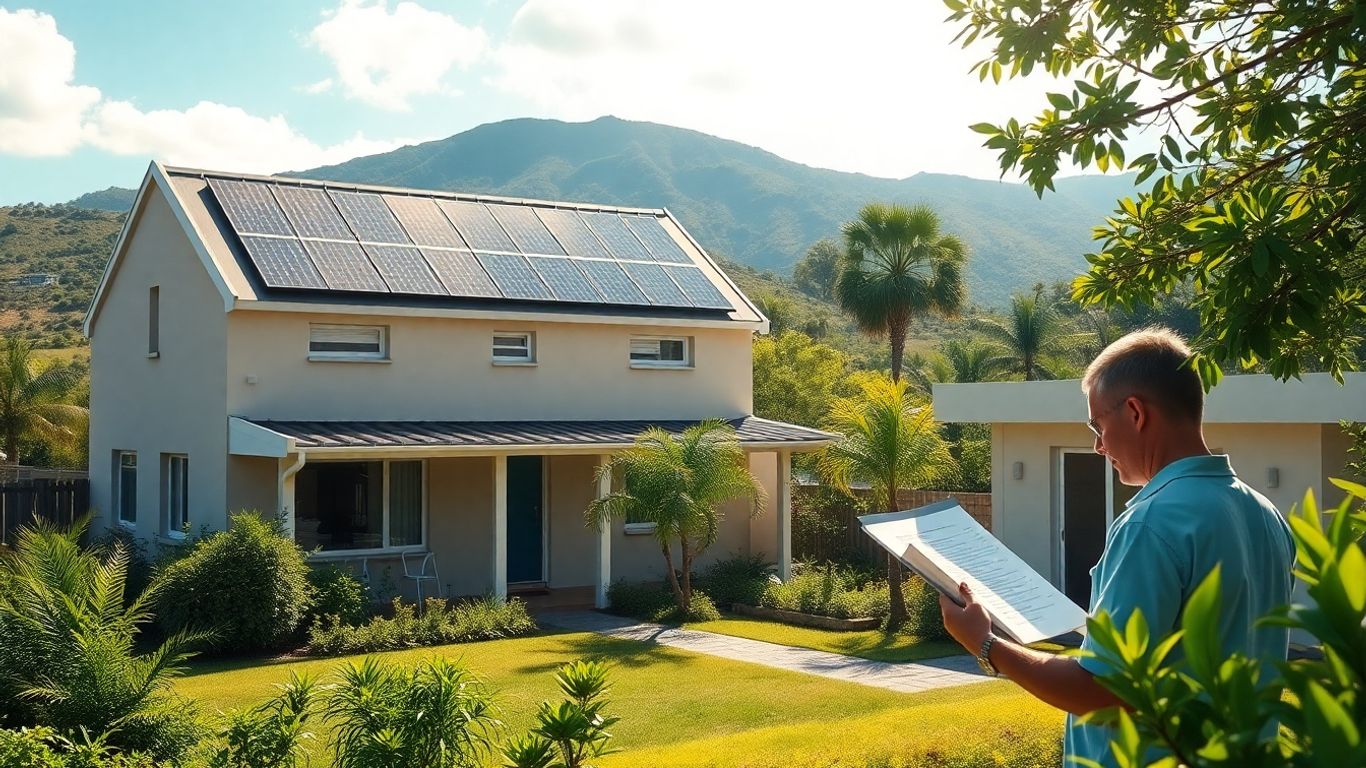
So, you’re thinking about getting solar panels for your place in South Africa, and you need a loan. That’s where the banks come in. It can feel a bit like a maze trying to figure out who offers what and what you actually need to get approved. Let’s break it down.
Key Banks Offering Solar Finance Solutions
Several major South African banks are stepping up to help homeowners and businesses go solar. You’ll find that institutions like Standard Bank, FNB, and Nedbank are actively offering specific loan products or incorporating solar financing into their existing offerings. WesBank also plays a role, particularly with asset finance options that can cover solar installations. These banks recognize the growing interest in renewable energy and are trying to make it more accessible. The key is to find a bank that understands your specific needs and offers competitive terms.
Here are some of the players you might want to look into:
- Standard Bank: Often has various personal and business loan options that can be used for solar.
- FNB: Known for its innovation, FNB may have dedicated solar finance packages or integrate them into home loan products.<
- Nedbank: Has been quite vocal about its support for green initiatives and offers specific solar finance solutions, sometimes through partnerships.
- WesBank: While primarily an asset finance provider, WesBank can be a good option for financing the solar system itself as a distinct asset.
Evaluating Loan Terms and Interest Rates
Once you’ve identified a few banks, the next step is to really look at the details of their loan offers. It’s not just about getting the money; it’s about getting it on terms that make financial sense for you. You’ll want to compare:
- Interest Rates: This is a big one. A lower interest rate means you’ll pay less over the life of the loan. Look for both fixed and variable rates and understand how they might change.
- Loan Tenure (Repayment Period): How long do you have to pay the loan back? A longer period might mean lower monthly payments, but you’ll likely pay more interest overall. A shorter period means higher monthly payments but less interest paid.
- Fees: Are there any upfront initiation fees? What about monthly service fees or early settlement penalties? These can add up.
- Loan Amount: Does the loan cover the full cost of the system, including installation, or just the equipment?
It’s easy to get caught up in the excitement of going solar, but taking the time to compare loan offers from different banks is really important. A slightly better interest rate or a more flexible repayment schedule can save you a significant amount of money in the long run. Don’t be afraid to ask questions and get everything in writing before you sign anything.
The Application Process for Solar Loans
Getting approved for a solar loan usually involves a few standard steps, similar to applying for other types of loans. Banks need to assess your ability to repay.
- Gather Your Documents: You’ll typically need proof of identity (like your ID book or driver’s license), proof of income (payslips, bank statements), and proof of address. You’ll also need detailed information about the solar system you plan to install.
- Get a Quote: Most banks will require a formal quote from a reputable, and often pre-approved, solar installation company. This quote should detail the system’s components, installation costs, and projected performance.
- Submit Your Application: This can often be done online, at a branch, or sometimes through a dedicated consultant. You’ll fill out the bank’s application form and submit all the required documentation.
- Credit Assessment: The bank will review your credit history and financial standing to determine your creditworthiness.
- Approval and Disbursement: If approved, the bank will outline the final loan terms. Once you accept, they will disburse the funds, usually directly to the solar installer.
Remember, the bank wants to see that the solar project is a sound investment, both for you and for them. Having a clear, detailed quote and a good credit history will go a long way.
Alternative Financing for Your Solar Investment
So, you’re looking into solar for your place in South Africa, but the upfront cost feels like a bit much? Don’t sweat it. While traditional loans are one way to go, there are other smart ways to get your solar system up and running without emptying your bank account.
Utilizing Asset Finance for Solar Systems
Think of your solar panels and equipment as a valuable asset. Asset finance works a bit like a loan, but it’s specifically tied to the equipment you’re buying. This can be a good route if you’re a business or even a homeowner looking to acquire the system outright. The equipment itself often serves as collateral, which can sometimes lead to better terms. It’s a way to own your solar power generation from the get-go.
Refinancing Existing Loans for Solar Projects
This is a clever move some people make. You might have an existing home loan or a business loan. If you’ve built up some equity or have a good repayment history, you could look into refinancing that existing loan. The idea is to borrow a bit more against your property or business, and use those extra funds to pay for your solar installation. Often, you can get a lower interest rate on a refinanced loan compared to a brand-new solar-specific loan, potentially saving you money over time. It’s like consolidating your debt but with a productive, energy-saving purpose.
Exploring Power Purchase Agreements (PPAs)
PPAs are a bit different, and they’re becoming quite popular, especially for larger setups. With a PPA, a solar company installs and owns the solar system on your property. You then agree to buy the electricity the system generates from them at a set price for a number of years. The big plus here is that you usually don’t have to pay anything upfront to get the system installed. You just start paying for the electricity it produces, which is often cheaper than what you were paying the grid. It’s like having a solar power plant on your roof without the headache of owning or maintaining it.
It’s important to read the fine print with any financing option. Understand exactly what you’re agreeing to, especially regarding ownership, maintenance responsibilities, and the total cost over the life of the agreement. Don’t be afraid to ask questions until you’re completely comfortable.
Maximizing Financial Benefits of Solar Installations
.So, you’re thinking about going solar in South Africa, and that’s great! Beyond just helping the planet, there are some pretty sweet financial perks to consider. It’s not just about saving money on electricity bills, though that’s a big one. We’re talking about things like tax breaks and even boosting your property’s value. Let’s break down how you can really make your solar investment pay off.
Understanding Tax Incentives for Solar
South Africa offers some incentives to make solar more attractive. For businesses, there’s a capital allowance, often called Section 12B. This lets you write off a good chunk of the solar system’s cost against your taxable income, and you can do it pretty quickly. Think of it as getting a tax break that significantly lowers your tax bill.
For homeowners, South Africa’s individual solar tax rebate was a once-off scheme that has since closed, so the overall financial picture depends mainly on lower monthly electricity bills. The key is to look at how these incentives reduce your net cost of going solar.
Qualifying for Net Metering and Feed-in Tariffs
This is where you can actually earn money from the sun. Net metering is a system where your solar panels feed excess electricity back into the grid. Your electricity meter runs backward, so to speak, and you get credits on your bill for the power you send out. It’s a neat way to offset your consumption.
Feed-in Tariffs (FiTs) are a bit different. With FiTs, you’re paid a set rate for every kilowatt-hour of electricity you generate and feed into the grid. This is often more structured and can provide a predictable income stream, especially for larger installations.
It’s important to check with your local municipality or the utility provider (like Eskom or a municipal supplier) to see exactly how these programs work in your area, as rules can vary.
Increasing Property Value with Solar
Think of solar panels as an upgrade for your home or business. Studies and real estate trends show that properties with solar installations often sell for more than comparable homes without them. Buyers see the long-term savings on electricity bills and the environmental benefits, making your property more appealing.
Installing solar isn’t just about reducing your monthly expenses; it’s an investment that can pay dividends for years to come. The combination of reduced energy costs, potential income from the grid, and increased property value makes a strong financial case for making the switch to solar power.
Here’s a quick look at how these benefits stack up:
- Reduced Electricity Bills: Immediate savings from generating your own power.
- Potential Income: Earn credits or payments through net metering or feed-in tariffs.
- Tax Advantages: Business owners can benefit from accelerated depreciation.
- Property Value Increase: Homes and businesses with solar are often more attractive to buyers.
- Environmental Contribution: While not strictly financial, contributing to a cleaner environment has its own rewards.
Steps to Secure Your Off-Grid Solar Financing
Alright, so you’ve decided to go off-grid with solar power in South Africa. That’s a big step, and getting the financing sorted is key. It’s not as complicated as it might seem at first glance, but you do need a plan. Think of it like preparing for a big trip – you need to know where you’re going, what you need, and how you’ll pay for it.
Finding and Vetting Solar Suppliers
First things first, you need to find a reputable company to supply and install your solar system. This isn’t the time to go with the cheapest option you find online without doing some digging. You want a company that knows their stuff, has good reviews, and can actually handle the installation properly. Ask around, check online reviews, and see if they have any certifications. It’s also a good idea to get a few different quotes from different suppliers. This helps you compare not just prices, but also the equipment they recommend and their installation plans. Don’t be afraid to ask them tough questions about their experience and what kind of warranties they offer.
Obtaining a Needs Analysis and Quote
Once you’ve narrowed down your suppliers, the next step is to get a detailed needs analysis and a formal quote. A good supplier will come to your property (or do a thorough remote assessment) to figure out exactly how much power you need. They’ll look at your current electricity usage, the size of your home, and how much sunlight you get. Based on this, they’ll put together a quote that details the system components (panels, inverter, batteries, etc.), the installation costs, and the estimated energy production. This quote is your golden ticket for applying for finance. Make sure it’s clear, itemised, and includes all potential costs. You can use resources like EcoFlow’s guide to help you understand your energy needs better before you even talk to a supplier.
Applying for Finance with Your Quote
With your detailed quote in hand, you’re ready to apply for financing. This is where you’ll approach banks or other financial institutions. You’ll need to present your quote, proof of income, identification, and any other documents they require. Some banks might offer specific solar loans, while others might let you refinance an existing bond or use asset finance. It’s worth shopping around to compare interest rates, repayment terms, and any upfront fees. Remember, the goal is to find a financing plan that makes the solar system affordable for you over the long term.
Securing financing often involves demonstrating the long-term financial benefits of the solar installation, such as reduced electricity bills and potential increases in property value. Lenders want to see that the investment makes sound financial sense.
The Installation and Activation Journey
Arranging Installation Post-Finance Approval
So, you’ve got the green light on your solar financing. That’s fantastic news! The next big step is getting your system installed. Once your loan or finance agreement is finalized, it’s time to connect with the solar supplier you chose. They’re the ones who will handle the actual setup of your solar panels, batteries, and all the other bits and pieces. Make sure you have your approved quote and finance details handy when you contact them to schedule the installation. They’ll work with you to find a date that fits your schedule.
Typical Timeline for Solar Project Activation
Getting a solar system up and running isn’t usually an overnight thing, but it’s often quicker than you might think. From the moment you first talk to your chosen solar provider to when your system is fully active and generating power, the whole process can take anywhere from two to four weeks. This timeframe includes things like site assessments, getting any necessary permits, the actual installation work, and the final checks and activation by the utility company or your installer.
Here’s a rough breakdown of what happens:
- Week 1: Initial consultation, site survey, and final quote confirmation.
- Week 2: Installation of panels, inverter, and battery system.
- Week 3-4: Electrical connections, system testing, and final inspection\ activation.
Ensuring Ongoing Operations and Maintenance
Getting your solar system installed and running is a huge achievement, but the journey doesn’t quite end there. To keep your system performing at its best for years to come, a little bit of ongoing care is needed. Many reputable solar suppliers offer maintenance packages. These can include regular check-ups, cleaning of the panels, and prompt attention if any issues pop up. It’s a good idea to ask about these services when you’re choosing your supplier. Proper maintenance helps prevent unexpected downtime and keeps your energy savings consistent.
Think of it like owning a car. You wouldn’t just buy it and never think about oil changes or tire rotations, right? Your solar system is a significant investment, and a little regular upkeep goes a long way in protecting that investment and making sure it keeps doing its job efficiently.
Wrapping Up Your Solar Financing Journey
So, getting solar power for your place in South Africa doesn’t have to mean emptying your bank account right away. We’ve looked at how loans from banks like Nedbank, Wesbank, and Standard Bank can help spread the cost. Plus, options like asset finance through MFC make it even more doable. Remember to get a quote from a vetted supplier first, and then explore those financing avenues. It might seem like a lot of steps, but think about the long-term savings and the peace of mind from having your own power. It’s definitely worth looking into to get your off-grid solar project off the ground.
Frequently Asked Questions
What exactly is solar financing?
Solar financing is basically a way to pay for solar panels and the equipment needed to use them without paying for everything all at once. It’s like getting a loan or a payment plan so you can start using solar power sooner and pay for it over time.
Which South African banks offer loans for solar panels?
Several big banks in South Africa, like Wesbank, Standard Bank, and FNB, have loan options specifically for solar energy projects. They understand that people want to use cleaner energy and offer ways to help make it happen.
Can I use my existing home loan to pay for solar panels?
Sometimes, you can look into refinancing your current home or business loan to include the cost of solar panels. This might help you get a better interest rate or spread out your payments, making it easier to afford the solar system.
What's a Power Purchase Agreement (PPA)?
A PPA is a deal where a company installs and manages solar panels on your property, and you agree to buy the electricity they produce. The best part is that you often don’t have to pay anything upfront, and you can start saving on electricity costs right away.
Are there any tax breaks for installing solar panels in South Africa?
Yes, there can be! Businesses might be able to deduct the cost of solar systems from their taxes faster. Homeowners might also get credits or money back. Plus, if you generate more electricity than you use, you might be able to sell the extra back to the grid.
How long does it take to get solar panels installed after getting financing?
Once your loan or financing is approved and you have a quote from an installer, the actual installation and getting everything working usually takes about 2 to 4 weeks. The installers will handle most of the process for you.
Zensolar
Commercial and residential solar specialists
We help South African families and businesses break free from rising electricity costs with custom solar solutions that can cut your bills by up to 92% from day one. From consultation to installation, we make going solar simple so you can enjoy energy independence and predictable monthly savings In Gauteng, NW, Cape town and KZN
Address
51 Gustav Preller St, Vorna Valley, Midrand.
Phone
+27 11 045 9062