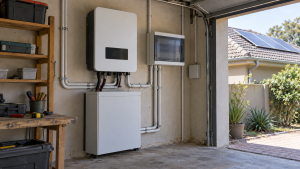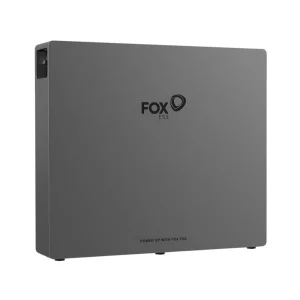
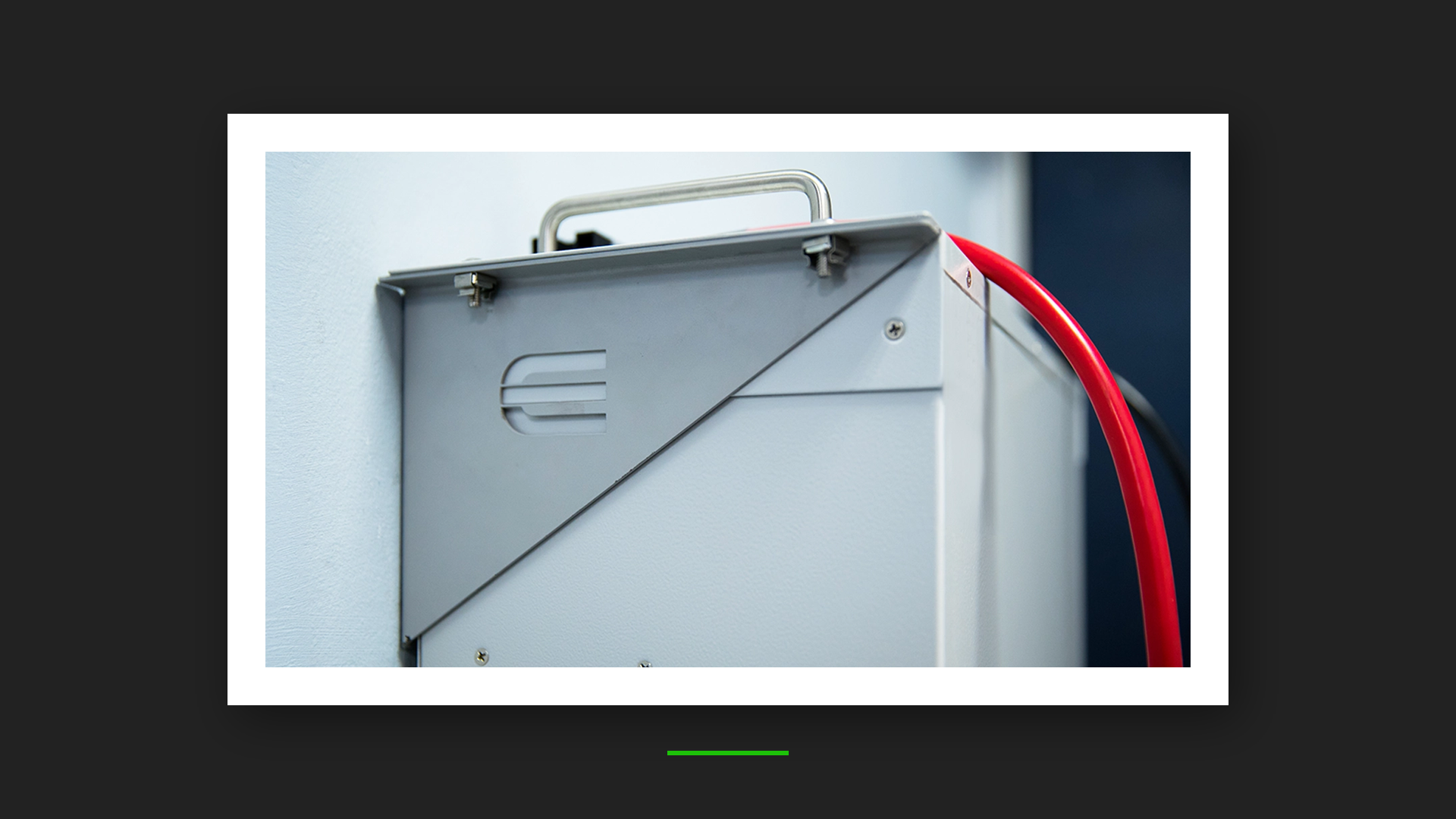
Freedom Won is one of the few battery manufacturers on the South African market that designs and builds its energy storage products locally, and its name comes up in almost every serious conversation about home and business solar storage in this country. Full disclosure up front: ZenSolar doesn’t install Freedom Won — we fit Fox ESS and Sigenergy, for reasons this guide gets to later — but the technology inside a Freedom Won battery is worth understanding regardless of who ends up installing it. This guide unpacks the lithium chemistry Freedom Won uses, how it differs from older battery types, and what that means for the lifespan and day-to-day economics of your solar system.
Who Is Freedom Won?
Freedom Won is a South African energy storage company that has been building lithium battery systems for homes, businesses and industrial applications for years. For South African buyers, that local footprint matters in practical ways: product support, warranty processing and technical documentation are handled in the same market where you bought the battery, and the products are engineered with South African grid conditions and usage patterns in mind.
Freedom Won is not one of ZenSolar’s installed brands — our range is Fox ESS and Sigenergy — but understanding the platform is still useful, since it’s a name you’ll meet in almost every South African storage conversation.
The Core Technology: Lithium Iron Phosphate (LiFePO4)
Freedom Won builds its batteries on lithium iron phosphate chemistry, usually abbreviated as LiFePO4 or LFP. This is a deliberate engineering choice, and it is worth understanding why it has become the dominant chemistry for stationary solar storage worldwide.
Why LiFePO4 rather than other lithium chemistries?
Not all lithium batteries are the same. The lithium cells in a laptop or electric vehicle are often a different chemistry (such as NMC) optimised for maximum energy density, because weight and space are at a premium. A battery bolted to the wall of your garage has different priorities:
- Thermal stability. LiFePO4 cells are among the most thermally stable lithium chemistries available. The phosphate-based cathode is far more resistant to overheating than older lithium chemistries, which is exactly what you want from a product that lives inside your home.
- Cycle life. A solar battery is charged and discharged nearly every day. LiFePO4 cells tolerate thousands of charge and discharge cycles, which translates into many years of daily use before capacity fades meaningfully.
- Stable voltage delivery. LiFePO4 delivers a relatively flat voltage curve through most of its discharge, so your inverter receives consistent power whether the battery is nearly full or well into its usable capacity.
- No cobalt. LiFePO4 chemistry avoids cobalt, which simplifies the supply chain and reduces the environmental and ethical concerns associated with cobalt mining.
LiFePO4 versus lead-acid: the numbers that matter
Many South African homes still have ageing lead-acid banks installed years ago. The difference in usable performance is substantial:
- Depth of discharge. Lead-acid batteries generally should not be discharged below about half of their rated capacity without shortening their life dramatically. Lithium iron phosphate batteries are routinely designed to use the large majority of their rated capacity day after day. That means a lithium battery with the same nameplate capacity gives you significantly more usable energy.
- Cycle life. Where a deep-cycle lead-acid battery may be exhausted after a few hundred full cycles, LiFePO4 cells are rated for thousands.
- Efficiency. Lithium batteries waste less energy in the charge–discharge round trip, so more of the solar power you generate actually reaches your appliances.
- Maintenance. There is no electrolyte to top up and no equalisation charging regime to manage.
If you are still weighing up battery types, our guide to the differences between solar batteries covers the comparison in more depth.
The Battery Management System: The Quiet Guardian
Cells are only half the story. Every Freedom Won battery includes a battery management system (BMS), the electronic supervisor that protects the cells and communicates with the rest of your solar system. The BMS continuously monitors cell voltages, temperature and current, and it intervenes to prevent conditions that would damage the cells, such as over-charging, over-discharging or operation outside safe temperature limits.
Just as importantly for a solar installation, the BMS talks to your hybrid inverter, typically over a CAN bus communication link. This closed-loop communication means the inverter always knows the battery’s true state of charge and its charging limits, rather than estimating them. The result is more accurate charging, better protection and more reliable day-to-day operation. Freedom Won batteries communicate with the major hybrid inverter platforms sold in South Africa; always confirm the specific pairing against the current compatibility documentation for your inverter model.
What the Technology Means for Your Wallet
Technology only matters insofar as it changes the economics, and in 2026 the economics are compelling. Eskom tariffs continue to climb year after year at rates above inflation, while the cost of solar components has fallen compared with just a few years ago. A long-life lithium battery changes how much of your solar generation you actually get to use:
- Evening self-consumption. Solar panels produce most of their energy in the middle of the day, while most households consume most of their electricity in the morning and evening. A battery stores your surplus midday generation and releases it when you need it, directly displacing electricity you would otherwise buy at ever-rising tariffs.
- Energy independence. The more of your own generation you can store and use, the less your monthly costs depend on decisions made by your utility.
- Lifespan matching. A quality solar installation is a twenty-year asset. A battery chemistry rated for thousands of cycles is the appropriate partner for panels and inverters designed to last decades.
Whether the investment case works for your specific usage profile is a question of numbers, not opinion — our article on whether a solar system is worth it walks through the reasoning, and our free solar ROI assessment lets you run the calculation with your own figures.
Freedom Won’s Product Approach
Freedom Won builds its residential and commercial ranges around the same LiFePO4 foundation, offered in different formats and capacities to suit different installations — from compact units for townhouses to larger capacity models for family homes and small businesses, and scalable configurations beyond that for commercial premises. Capacities are typically described by two numbers: the total energy the battery stores and the power it can deliver at any moment. Both matter, and the right combination depends on your household’s consumption pattern.
Getting that pairing right is a sizing exercise. If you are not sure what capacity you need, start with our guide on how to size a solar system, which explains how daily consumption, appliance loads and solar array size interact.
How to Buy a Freedom Won Battery the Right Way
A lithium battery performs as designed only when it is specified and installed correctly. A few practical rules:
- Match the battery to the inverter. Confirm that the battery model is on your inverter manufacturer’s compatibility list and that closed-loop communication will be enabled at commissioning.
- Size from data, not guesswork. Base the capacity on your actual daily consumption, not a rule of thumb.
- Use a qualified installer. ZenSolar connects every customer with our manufacturer-approved installers, so the battery is installed, configured and certified professionally.
- Think in decades. Consider expandability — can you add capacity later as your needs grow?
How Fox ESS and Sigenergy’s Technology Compares
Everything above is a fair account of Freedom Won’s engineering, and none of it changes because ZenSolar happens to fit different brands. Here is how Fox ESS and Sigenergy’s technology sits alongside it.
Where Freedom Won has the edge. Being designed and built in South Africa is a real technical and practical advantage: local engineering means the product is tuned to South African grid conditions from the outset, and it means spares, firmware support and warranty processing don’t have to cross an ocean. We are not going to pretend an imported platform matches that.
Where Fox ESS and Sigenergy make a different case. Both build on the same LiFePO4 foundation described above — the chemistry argument isn’t a point of difference between brands, it’s industry consensus. The difference is architecture. Sigenergy’s SigenStor integrates inversion, storage, system control and DC EV charging into a single modular unit, rather than a battery, an inverter and a charger from three separate manufacturers each running their own BMS logic. Fox ESS, backed by Tsingshan Group, keeps the same modular, stackable approach to storage without the integration, at a more accessible price point.
The warranty commitment behind the technology. Fox ESS carries a 10-year swap-out warranty, which means a failure inside the term is met with a replacement unit rather than a repair queue. Sigenergy’s is: a 10-year term on the Sigen Battery and the Sigen Energy Controller, with the battery guaranteed to retain at least 60% of its usable capacity at 10 years — or a stated energy-throughput limit, whichever comes first — extendable to 15 years if the system is purchased and registered within 12 months of commissioning. Good chemistry is table stakes; a warranty you can read is what turns it into a purchase decision.
Ready to Find Your Fit?
Freedom Won’s LiFePO4 technology is genuinely solid engineering, built on the chemistry that has become the industry standard. Our recommendation is still Fox ESS or Sigenergy, for a specific reason: the integrated Sigenergy architecture and the written Sigenergy warranty terms are things we can show you before you commit, and both platforms scale as one product family rather than requiring a brand change down the line. The next step either way is working out what size system your home actually needs. Use our free System Sizer to model your consumption and get a system recommendation in minutes, or request a personalised quote from the ZenSolar team and we will design the right Fox ESS or Sigenergy combination for your home.
Not sure which system is right for you?