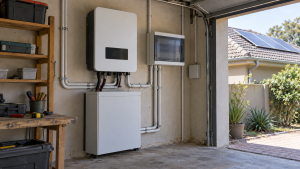
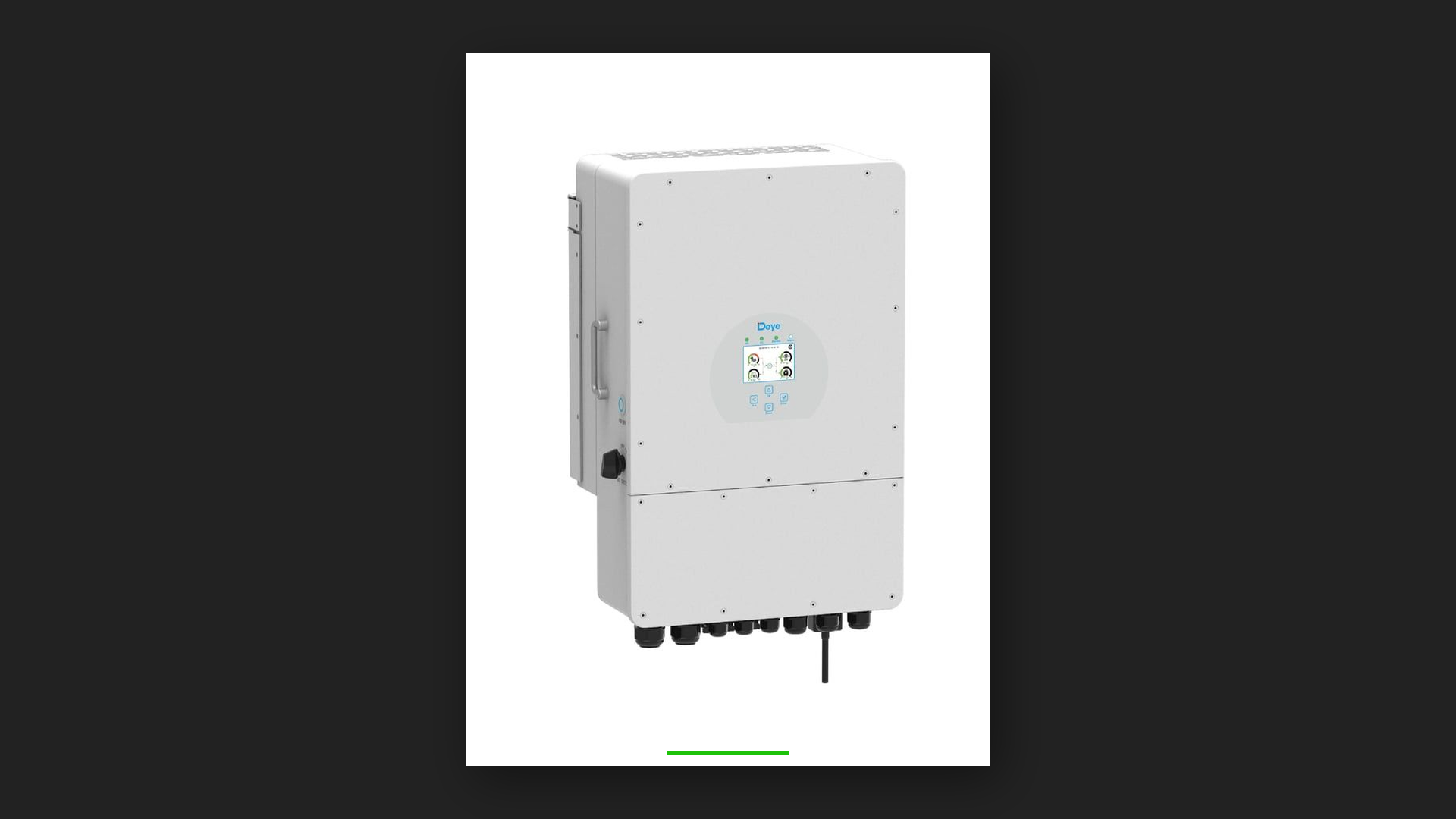
Deye inverters in South Africa
Deye has become one of the most commonly installed hybrid inverter brands in South Africa. The range runs from compact single-phase units for townhouses to three-phase machines built for large homes and commercial premises, and the brand’s wide local footprint means spares, firmware support and installer familiarity are easy to find.
One thing upfront: ZenSolar doesn’t sell Deye. We fit Fox ESS and Sigenergy, and we explain why further down this guide. That doesn’t make the technical picture below any less useful — the specifications and buying logic are the same whoever quotes you, and knowing them properly is what stops you overpaying or under-sizing regardless of which brand you end up with.
The Deye inverter range explained
Single-phase hybrids for homes
The single-phase hybrid units in the roughly 5kW to 8kW class are the volume sellers for family homes. They combine solar conversion, 48V battery management and grid blending in one unit, with app-based monitoring as standard.
Large single-phase and three-phase hybrids
Moving up the range, the 10kW, 12kW and 16kW classes serve large residences, smallholdings and light commercial sites, with three-phase models where the supply demands it. These units support the bigger PV arrays and battery banks that come with serious energy independence goals.
Off-grid and grid-tie variants
Beyond the hybrid line, Deye also makes dedicated off-grid units and grid-tie units without battery ports. Most homeowners want the hybrid, since it keeps every option open, from pure self-consumption to full battery backup.
Deye model classes at a glance
Exact model numbers, current stock and pricing change often enough that we’d rather send you to a live source than print a number here that’s wrong by the time you read it. The table below covers the two hybrid classes most residential buyers compare.
| Model class | Phase | Battery type | Best for |
|---|---|---|---|
| 5kW to 8kW hybrid | Single phase | 48V lithium | Standard family homes |
| 10kW to 16kW hybrid | Single phase or three phase | 48V lithium | Large homes, smallholdings and light commercial sites |
If you’re shortlisting a Deye model, work from the manufacturer’s current datasheet for that exact revision. Figures like PV input headroom and parallel limits change between revisions and shouldn’t be taken from an article, this one included.
What to check before you buy
- Match the continuous rating to your measured load, not to a guess. An energy audit of a few typical days tells you what the house actually draws morning, noon and night.
- Confirm battery compatibility. Deye hybrids work with the widely used 48V lithium batteries in the local market, including brands such as Freedom Won, Hubble and Pylontech, but always check the approved list for your specific battery brand and firmware pairing.
- Check PV input allowances. The datasheet specifies how many strings and how much panel wattage each model accepts. A good designer uses that headroom deliberately.
- Surge and motor loads. Pool pumps, boreholes and compressors need surge capacity, so tell your installer about them upfront.
- Parallel and expansion options. Many models can be paralleled later, which is often the cheapest way to grow a system.
- Warranty and support channel. Buy through a channel with a clear local warranty process, in writing, and keep proof of a compliant installation, since it matters for both warranty and insurance.
Installation and compliance
A hybrid inverter installation must be performed by a qualified electrician, wired to a sensible backup-circuit plan, and certified with a certificate of compliance. Registration requirements with your municipality or supply authority apply to grid-connected systems, and a professional installer will handle that paperwork as part of the project.
How Deye compares to Fox ESS and Sigenergy
We fit two inverter and battery brands and no others: Fox ESS and Sigenergy. Since that means we’re not the people to sell you the Deye system described above, it’s worth explaining the decision rather than just asserting it.
First, what Deye genuinely does well. The range breadth is real: one design language running from a compact single-phase townhouse unit through to a three-phase machine for a commercial site, with an installed base in South Africa that’s hard to match. That familiarity is not a small thing — a fault on a Deye unit is rarely the first of its kind for the installer looking at it, and spares move quickly because so many are in the field. We’re not going to pretend that’s not a genuine strength.
Where our two brands make a different case. The question isn’t whether Deye is good hardware. It’s what happens from year three onward, which is where energy systems tend to disappoint people, long after the buying decision is forgotten.
Growing a system without changing ecosystem matters more than it sounds. Add a pool, an EV charger or a home office a couple of years after commissioning, and on many platforms that means a new inverter, a new app and a new support number, because the brand you bought into doesn’t run the size you now need. Fox ESS and Sigenergy both carry one product family from small residential right through to commercial and industrial, so a growing site adds capacity rather than starting over.
Sigenergy takes that further: the SigenStor stack puts PV inversion, battery storage, system control and DC EV charging in a single modular unit, instead of four boxes from four suppliers, each with its own warranty conversation. Sigenergy’s published warranty documents carry a 10-year term on the Sigen Battery and the Sigen Energy Controller, with the battery guaranteed to retain at least 60% of its usable capacity at 10 years, or a stated energy-throughput limit, whichever comes first — extendable to 15 years if the system is purchased and registered within 12 months of commissioning. We can put that document in front of you before you sign, which is the whole point of quoting it.
Fox ESS, backed by Tsingshan Group, is the volume-sensible half of the pair: modular, stackable storage designed to be added to rather than replaced, across single-phase and three-phase inverters, for buyers who want a well-specified system without the premium price tag. Every system we fit goes through a manufacturer-approved installer, because that’s what keeps the warranty valid the day you actually need it.
Which model is right for your home?
The Deye range above is real, and if you buy through a reputable authorised channel with proper installation, it’s a genuinely capable platform. That part of this guide stands regardless of who you buy from.
Our own answer, though, is Fox ESS or Sigenergy, for a specific reason: one manufacturer stays accountable for inverter and battery together, the warranty terms are written down and we’ll show you the document, and the system grows with your house without a brand change down the line. That’s the promise we narrowed our range to two brands in order to make, and it’s the reason we design every quote around Fox ESS or Sigenergy rather than the Deye range covered above.
Book your free solar consultation or explore solar financing options.
Frequently asked questions
Can I start small and grow the system?
Yes, and this is one of the range’s practical strengths. A common path is to install the inverter with a modest battery and a partial panel array, then add panels or a second battery as budget allows. Discuss the growth plan upfront so the installer sizes cabling, mounting and protection for the end state, not just day one.
How does monitoring work?
Deye hybrids report to an app-based platform over your home Wi-Fi. You can see solar production, household consumption, battery state of charge and grid draw in near real time. That’s also the fastest way to spot a problem early: a flat production curve on a sunny day is a service call, not a mystery.
What maintenance does an inverter need?
Very little by design. Keep the unit’s ventilation clear, keep dust down, and have the installation checked when your system gets its periodic service. Firmware updates are handled through the support channel and occasionally add meaningful improvements, another reason to buy through a proper local channel rather than a grey import.
Which battery brands work with a Deye inverter?
Deye hybrids are built around the standard 48V lithium battery protocol used by most of the local market, and brands commonly paired with it include Freedom Won, Hubble and Pylontech. If you already own a battery from another brand, check its approved list and firmware version before you commit to a Deye inverter.
Where does ZenSolar fit into a Deye purchase?
Nowhere directly — Fox ESS and Sigenergy are the only inverter and battery brands we fit, so a Deye unit and its warranty claim need to run through a retailer that actually carries the brand. If you go that route, get their warranty and support process in writing before you pay, the same standard we’d want you to hold us to on Fox ESS or Sigenergy.
Not sure which system is right for you?