The two pressure classes, in plain terms
Solar geysers are sold in two pressure classes, and the choice matters more than most buyers expect. A high-pressure system delivers hot water at mains-equivalent pressure, the strong, even flow most modern South African homes are already plumbed for. A low-pressure system runs on gravity feed or reduced pressure, with a gentler flow at the tap. Neither is better in the abstract. The right one depends on how your home is plumbed today and what your household expects from a shower.
How to tell which one your home needs
Start with your current shower. If it already runs with strong, even pressure through a modern mixer tap, your home is almost certainly plumbed for high pressure, and a high-pressure solar geyser is the direct replacement for what you have now.
Check the nameplate on your existing geyser too. It states the pressure rating, and most geysers installed in South African homes over the past two decades are high-pressure units.
Mixer taps are a good tell as well. Modern single-lever mixers are built for balanced high-pressure hot and cold supply. Fit one of these to a low-pressure geyser and you will get frustrating flow and temperature swings every time you shower.
Where low-pressure systems still make sense
Low-pressure solar geysers still suit outbuildings, staff accommodation, smallholdings and budget installations. The design is simple, the price is usually lower, and a thermosiphon system has very few parts that can fail. Where the plumbing is basic and everyone is happy with gravity-fed flow, low pressure is a rational choice, not a compromise.
High pressure versus low pressure at a glance
The two classes trade off comfort, cost and complexity in opposite directions. Here is how they compare on the factors that actually decide the choice for most households.
| Factor | High-pressure system | Low-pressure system |
|---|---|---|
| Water flow at the tap | Strong and even, matches mains pressure | Gentler, gravity fed |
| Best suited to | Main homes with modern plumbing and mixer taps | Outbuildings, staff quarters, smallholdings, budget builds |
| Price relative to the other class | Higher, due to stronger tanks and extra safety valves | Lower, simpler construction |
| Fitting into existing plumbing | Usually a like-for-like swap | Needs pressure-control hardware if mixed with high-pressure plumbing |
| Moving parts and failure points | More hardware to maintain (valves, controls) | Fewer moving parts |
What the choice means day to day
Comfort
High pressure gives you the shower you are already used to. Low pressure is noticeably gentler. Some households do not mind at all, others find it hard to live with. Be honest with yourself about which camp you are in before you choose on price alone.
Cost
High-pressure systems use stronger tanks and extra safety valves, so they cost more than a low-pressure equivalent of the same capacity. That premium buys compatibility with the mixer taps and plumbing most homes already have.
Installation
Swapping a high-pressure electric geyser for a high-pressure solar unit is usually a straightforward like-for-like conversion. Feeding a high-pressure house from a low-pressure tank is a different job entirely. It needs pressure-control hardware and careful design, and in a main residence it is rarely worth the compromise.
Safety and compliance
Both pressure classes must be installed to South African plumbing standards, with the correct safety valves fitted and a certificate of compliance issued on completion. Ask for this upfront. A reputable installer includes it as part of the job, and any quote that skips it is a warning sign.
Which tank size fits your household
Tank capacity should track how many people live in the home and how many bathrooms run hot water at once, not the other way around. A single person or a couple in a one-bathroom home needs far less stored hot water than a family of five running two bathrooms before school and work. A granny flat, staff accommodation, or regular guests on the property add to the total draw, whatever the pressure class you choose.
Because the right capacity depends on your household size, your water use habits, and your roof, we would rather match you to an accurate size than quote a generic one here. Our System Sizer takes those details and returns a specific tank size and configuration for your home, in either pressure class.
Vacuum tubes or flat-plate collectors
Both pressure classes are available with either collector type, and this choice is separate from the high-pressure or low-pressure decision. Vacuum tube collectors tend to keep working better on cold or overcast days, because each tube is individually insulated. Flat-plate collectors are simpler and rugged, and they perform very well in areas that get strong, consistent sun for most of the year. Your installer should recommend a collector type based on your region and roof, not sell you whichever one happens to be in stock.
Our recommendation
For a main family home with modern plumbing, choose a high-pressure solar geyser. It keeps the shower experience you already have while moving the heating load onto the sun and off a rising Eskom bill. Reserve low-pressure systems for secondary buildings, staff quarters, and genuinely budget-driven projects where gravity-fed flow is already accepted.
Not sure what your home is running? Our manufacturer-approved installers can confirm your pressure class during a free assessment and quote the right system first time. Book your free solar consultation.
Converting between pressure classes
Here is a common scenario. The house has an old low-pressure gravity-feed geyser in the ceiling, and the owners want proper pressure at the shower. The right moment to make that change is exactly when you go solar. Converting to a high-pressure solar system means fitting a pressure-control valve on the cold feed, upgrading the safety hardware, and sometimes upgrading sections of pipework to handle the higher pressure. That work is far cheaper done as part of a planned installation than added later as a retrofit. The reverse almost never happens. Once a household has real water pressure, nobody gives it up voluntarily.
Frequently asked questions
How does a low-pressure solar geyser work?
A low-pressure solar geyser is fed by gravity from a tank mounted above the geyser, often in the roof space or on a stand. Water moves through the system at reduced pressure rather than mains pressure, which keeps the tank and fittings simpler and generally cheaper.
How does a high-pressure solar geyser work?
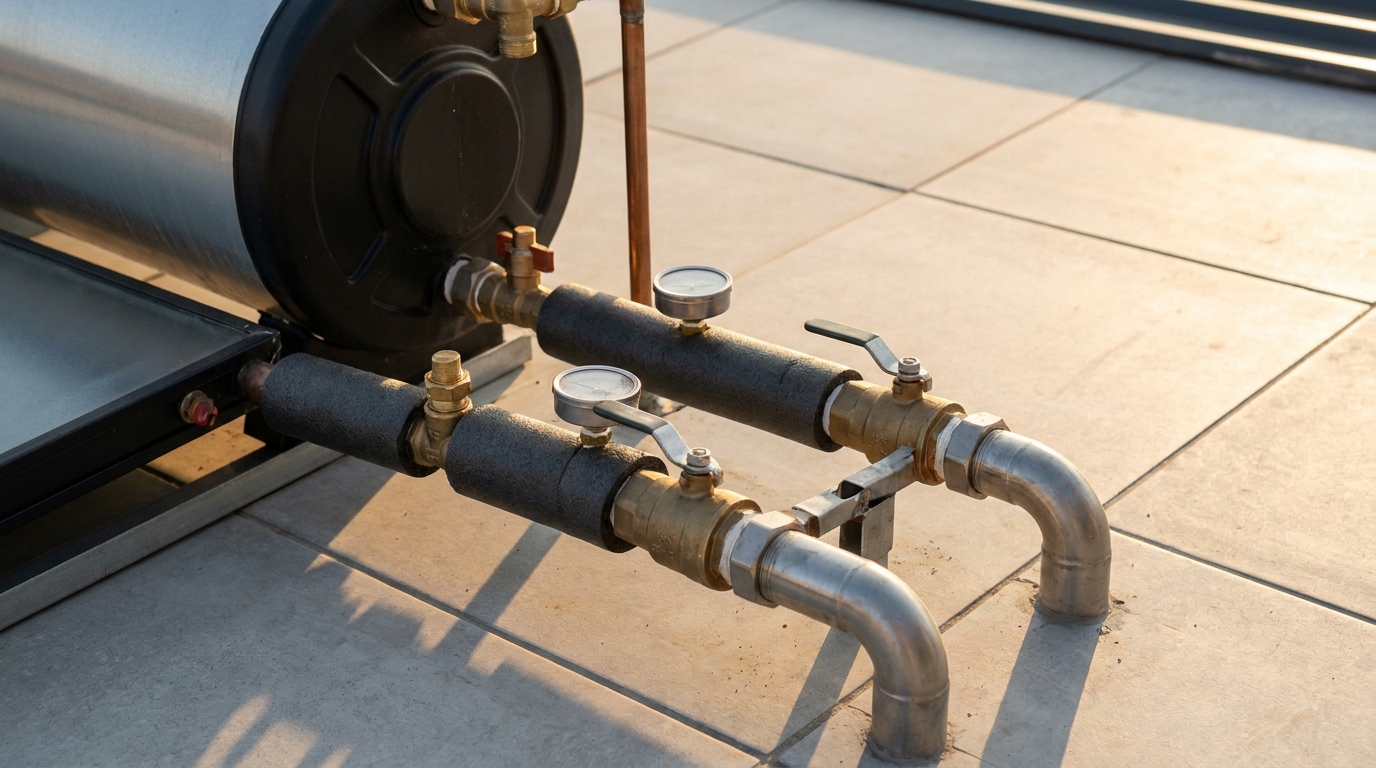
A high-pressure solar geyser connects directly to your home’s mains water supply, so it delivers the same strong, even flow as a standard electric geyser. It needs a stronger tank and additional safety valves to handle that pressure safely.
What is the difference between vacuum tube and flat-plate collectors?
Vacuum tube collectors are sealed glass tubes that insulate the heat-absorbing element inside, so they hold up well on cold or overcast days. Flat-plate collectors are a single panel under glass, simpler to build and very effective in areas with strong, consistent sun. Either type can be paired with a high-pressure or low-pressure tank.
How many people can a solar geyser support?
It depends on the tank size, your household’s hot water habits, and how many bathrooms run at the same time, not on pressure class. Rather than guess, use our System Sizer to match a tank size to your household.
What is included with a solar geyser system?
A complete system includes the storage tank, the solar collector (vacuum tube or flat-plate), the mounting structure for your roof, the connecting pipework, and the safety valves and controls required for your pressure class. Installation and a certificate of compliance are part of the job, not an optional extra.
Do I need a professional to install a solar geyser?
Yes. Both pressure classes must be installed to South African plumbing standards, with the correct safety valves fitted and a certificate of compliance issued on completion. Our manufacturer-approved installers handles installation for every system we sell.
Questions to ask on any quote
- What pressure class is the proposed tank, and does it match your existing plumbing and mixers?
- Is the collector a vacuum tube or flat-plate design, and is that the right type for your region?
- What is the tank made from, and what warranty applies to the tank, the collector and the workmanship separately?
- Which safety valves are included, and is the certificate of compliance part of the price?
- Is the collector sized for your area’s winter conditions, not just the summer average?
Not sure which system is right for you?