What is a solar geyser?
A solar geyser heats the water in your tank using energy captured from the sun, instead of drawing on electricity from the grid. In most South African homes the geyser is the single largest electricity consumer, so switching your water heating to solar is one of the most direct ways to bring your monthly bill down.
A solar PV system generates electricity for your whole home. A solar geyser does one job only: it heats water. That narrow focus is part of why the payback tends to be attractive. You’re replacing the most energy-hungry appliance in the house with heat the sun provides for free.
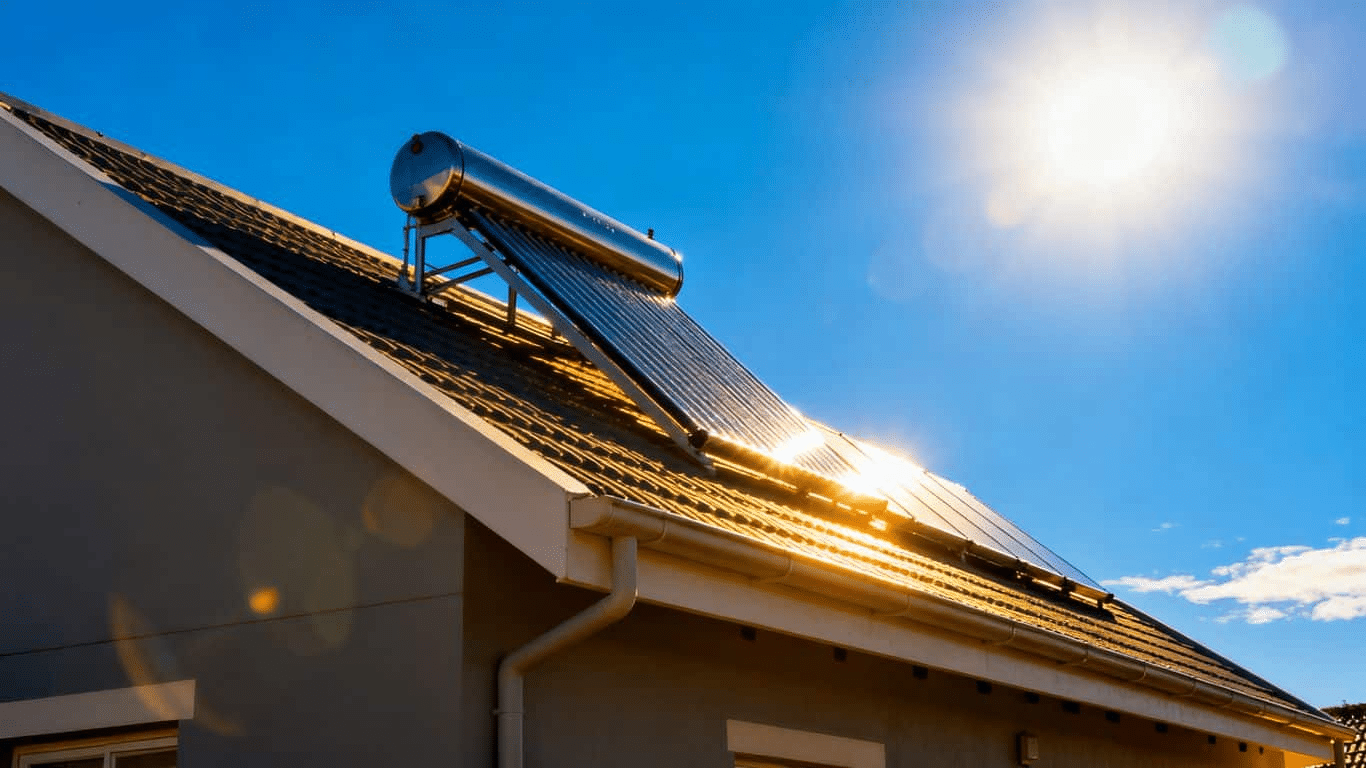
The basic mechanism is simple. Sunlight hits a collector on the roof and warms an absorber surface inside it, and that heat moves into the water in your tank, either directly or through a separate fluid loop, without drawing any electricity. Where the heat is captured, how it’s transferred, and where the tank sits are the design choices behind the types below.
The main types of solar geyser
Flat-plate collector systems
A flat-plate collector is an insulated panel with a dark absorber surface that captures solar heat and transfers it to water circulating through internal pipes. Flat-plate systems are robust, handle South African hail conditions well when properly specified, and suit most residential roofs.
Evacuated-tube collector systems
Evacuated-tube collectors use rows of glass vacuum tubes. The vacuum acts as insulation, which makes these collectors efficient in cooler weather and on overcast days. They tend to perform strongly in winter, when hot-water demand is highest.
High-pressure vs low-pressure systems
This distinction decides whether a solar geyser will work with your home’s plumbing at all, so it matters at least as much as the choice between flat-plate and evacuated-tube. A high-pressure system is built for homes on municipal mains water, which describes most urban South African properties, and it keeps the shower and tap pressure you’re already used to. A low-pressure system is designed for a gravity-fed supply, where water comes from a header tank on the roof rather than a pressurised municipal line, and it’s specified differently to suit that gentler flow. Getting this wrong at the quoting stage is one of the more common, and most avoidable, mistakes in a solar geyser purchase.
Direct vs indirect systems
In a direct system, the water you use is heated in the collector itself. In an indirect system, a heat-transfer fluid circulates through the collector and warms your water via a heat exchanger. Indirect systems are the usual choice in frost-prone parts of Gauteng and the Highveld, because the transfer fluid protects the system on cold nights.
Thermosiphon vs pumped systems
A thermosiphon system places the tank above the collector, usually on the roof, and circulates water naturally as it heats. A pumped (split) system keeps the tank out of sight, in the ceiling or a cupboard, and uses a small circulation pump. Thermosiphon systems are simpler; pumped systems keep your roofline clean.
How to choose the right size for your household
Tank size is one of the first decisions in specifying a solar geyser, and it should be driven by how many people live in the house and how they use hot water, not by whatever happens to be on special that week. A single person or a couple in a small household is typically well served by a smaller tank. A larger family, especially one showering back to back in the morning, needs enough stored volume to avoid running out of hot water before everyone is done. That’s the difference between the 150L system and the 300L system mentioned below: the same technology, sized for different demand.
Getting the exact number right also depends on things a general guide can’t know, like your household’s peak usage times, your local climate, and how much backup electric element you want built in. Rather than guess, use our System Sizer to get a recommendation matched to your actual household, or tell us about your current geyser and hot water habits before you commit to a tank size.
What are the real benefits?
- Lower electricity bills. Water heating is typically the biggest single item on a household bill, and a correctly sized solar geyser takes most of that load off the grid.
- Protection against tariff increases. Electricity tariffs in South Africa have risen steeply year after year. Every kilowatt-hour your geyser does not draw is a kilowatt-hour you never pay escalating rates on.
- Long service life. Quality collectors are simple devices with few moving parts, and a well-installed system should serve you for many years with basic maintenance.
- A practical first step into solar. Many homeowners start with a solar geyser and later add PV panels, an inverter and a battery as budget allows.
What drives the cost?
Rather than quoting a single figure, it helps to understand the variables, because they change the price materially from home to home:
- Tank capacity: a 150L system for a small household costs less than a 300L system for a large family.
- Collector type: flat-plate and evacuated-tube systems are priced differently, and efficiency needs differ by region.
- New install vs conversion: reusing or replacing your existing geyser tank changes the scope of work.
- Roof and plumbing complexity: a single-storey home with easy roof access is a simpler job than a double-storey with a concealed geyser.
- High-pressure vs low-pressure: most modern homes need a high-pressure system, which is specified and priced accordingly.
The honest answer on price is that it depends on your home, which is why we recommend a proper assessment rather than a guess. We can size the system against your actual hot-water usage and give you a firm, itemised quotation.
Installation and maintenance, done right
Installation isn’t a weekend DIY project: it means proper bracket fixing on the roof, a correctly sized backup element, and safe work at height. Every ZenSolar installation runs through our manufacturer-approved installers, and a compliant job ends with a Certificate of Compliance (CoC), the paperwork confirming the work meets South African standards, which matters if you ever sell the house or make an insurance claim. When comparing systems, equipment carrying SABS approval is a reasonable baseline to look for. Maintenance itself is light: an occasional rinse of the collector to keep dust and pollen off, and a periodic check of the safety valve. There’s no combustion and very few moving parts, so most of what you’re checking for is visual, leaks, wear, or a tree that’s grown enough to shade the panel.
Solar geyser vs other ways to heat water with solar
A dedicated solar geyser isn’t the only option for solar-assisted hot water. A heat pump pulls heat from the surrounding air rather than from sunlight directly, using a modest amount of electricity to do it, so it keeps working at night and on overcast days. A PV diversion setup takes power your solar panels are already producing and would otherwise export to the grid, and redirects it into your geyser’s electric element instead. For water heating specifically, a solar thermal geyser tends to be the simpler, more direct choice: it does one job and needs no inverter or battery to do it. If you already have, or are planning, a PV system for the rest of the house, PV diversion can be a useful add-on rather than a substitute for the geyser itself.
Frequently asked questions
Do I need a high-pressure or low-pressure solar geyser?
Most homes on municipal water need a high-pressure system, since that matches the mains pressure you already have and keeps your shower and taps performing the way you’re used to. Low-pressure systems are for properties on a gravity-fed or tank-fed supply. If you’re not sure which applies to your home, tell us about your current geyser and we’ll confirm before you order anything.
Can I convert my existing electric geyser to solar?
In many cases, yes. Conversion usually means keeping your existing tank and adding a solar collector and controller, or replacing the tank if it’s old or the wrong size for solar. Whether conversion or full replacement makes more sense depends on the age and condition of what you already have.
Does a solar geyser still heat water without mains electricity?
Yes, and this is one of its real advantages. Because the heat comes directly from the sun rather than an electrical element, a solar geyser keeps producing hot water on its own schedule, independent of your electricity supply. It’s part of the broader case for solar: control over a basic household need, instead of leaving it entirely dependent on the grid.
Is a solar geyser right for you?
If your household uses hot water every day and your electricity bill keeps climbing, the answer is very likely yes. The next step is simple: tell us about your home and your current geyser, and we will connect you with our manufacturer-approved installer for a no-obligation assessment and quote.
Book your free solar consultation or explore solar financing options to spread the cost.
Not sure which system is right for you?