
Thinking about getting solar panels in South Africa for your place? It’s a pretty big decision, and honestly, you don’t want to mess it up. Getting it wrong could mean wasting money or just not having the peace of mind you hoped for. With so many options out there, figuring out the best solar panels South Africa has to offer can feel overwhelming. That’s where this guide comes in. We’re going to break down what really matters when you’re looking at panels, highlight some of the top contenders you’ll find in South Africa right now, and point you to places where you can actually buy them. Let’s get started and find you some good panels.<\/p>
Key Takeaways
When picking solar panels in South Africa, look at how much power they make (Pmax), how well they turn sunlight into electricity (efficiency), and what kind of warranty they come with.
Pay attention to how much the panel’s power drops each year (degradation rate) and how it handles heat (temperature coefficient) – lower numbers are usually better.
Bigger panels often give you more bang for your buck in terms of cost per watt, with 450W and up being popular choices for homes.
For South Africa’s sunny climate, panels that perform well in heat and have good durability ratings for wind and snow are a smart bet.
Consider brands like AIKO, Canadian Solar, JA Solar, JinkoSolar, Trina Solar and LONGi, as they are frequently recommended and have local support.
1. AIKO NeoStar (ABC)
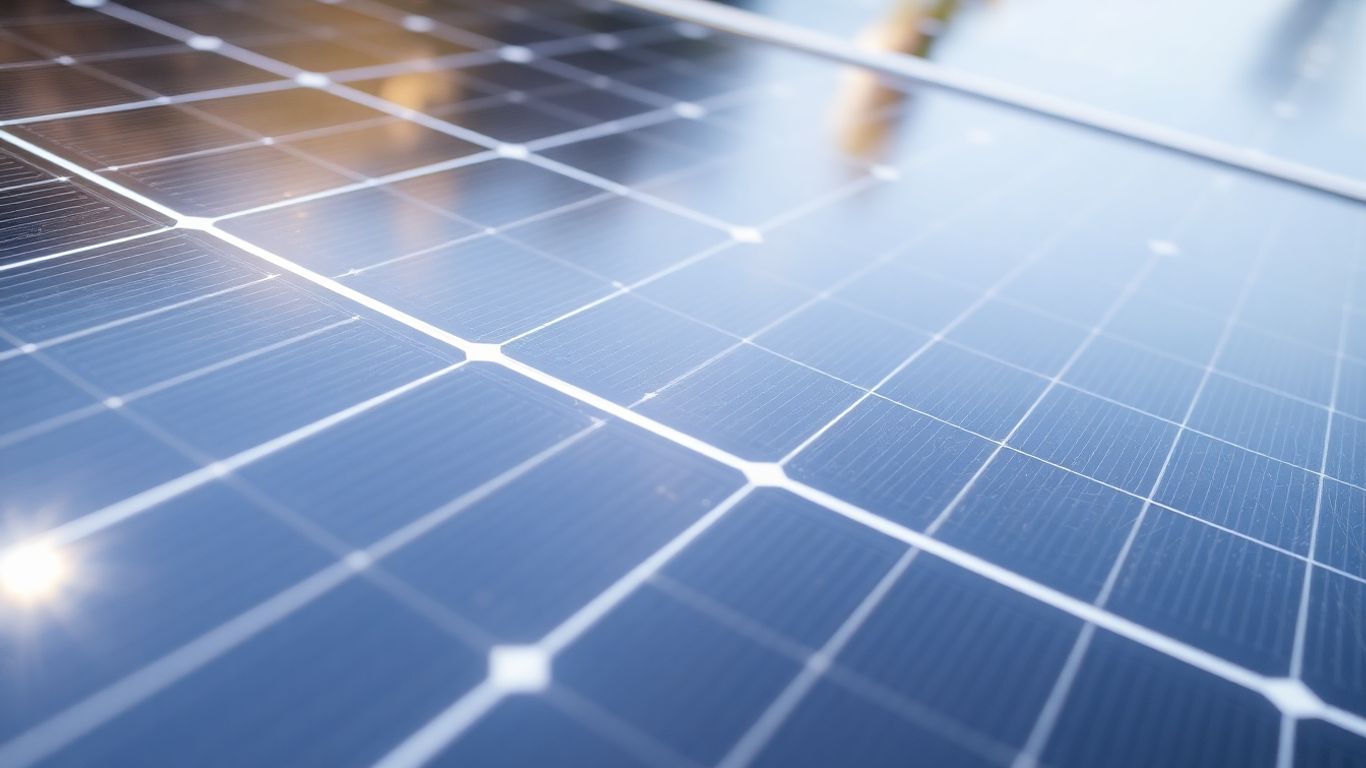
If you want the most out of a limited roof, AIKO’s NeoStar range is the panel we put first. It uses ABC – all-back-contact – cell technology, which moves every electrode and grid line to the back of the cell. The front face is completely clear, so all of it is working.
That one design decision does two things at once. It lifts output, because none of the front surface is shaded by its own wiring. And it looks different – no silver grid lines, just a flat black panel, which matters more than people admit on a north-facing roof you have to look at every day. AIKO reports over 200GW of cumulative cell and module shipments and more than 1,200 granted patents, so this is not a boutique product.
Here’s what actually separates it from a standard panel:
More power from the same roof area: AIKO puts the ABC platform at 6-10% higher output than TOPCon panels of the same size. If your roof is the constraint rather than your budget, that is the number that matters.
Partial shade costs you less: a chimney, a tree or a neighbour’s wall drags the string down far less than it would on a conventional panel. It is not the same thing as fitting optimisers, and we won’t pretend it is – but on a roof with intermittent shade it is a real difference.
Silver-free metallisation: AIKO replaced the silver paste in the electrodes. Two consequences – the panel isn’t exposed to the silver price, and there is less grid-line breakage over its life.
Built for heat and handling: high-temperature restriction and micro-crack resistance are both designed in, which counts for more on a Highveld roof than in the European datasheets most panels are specced against.
How it ages. This is where AIKO separates from the volume tier. On AIKO’s own published degradation figures – no more than 1% in year one, then no more than 0.35% a year – a NeoStar panel is still producing roughly 88.9% of its original output in year thirty. The Tier 1 TOPCon panels further down this page sit at about 87.4% at the same point. Thirty years is longer than most people stay in a house, so the honest way to read that number is resale value and fewer surprises, not a promise about your own electricity bill in 2056.
AIKO costs more per panel than the volume brands below, and we’re not going to dress that up. You are buying more output per square metre, better behaviour in shade and heat, and a slower decline. On a large roof with no shade and no space constraint, a Canadian Solar or LONGi array is the sensible buy and we will tell you so. On a constrained, shaded or awkward roof – or where the system has to look good – AIKO earns the difference.
AIKO already has a South African reference installation, the Costwold Downs residential project, listed in their own case centre. If you want to know what a NeoStar array would produce on your specific roof, call us on 011 045 9062 and we’ll size it properly rather than quoting you a panel count off a template.
2. Canadian Solar HiKu6
When you’re looking at solar panels for a bigger setup, like a commercial building or even a small solar farm, the Canadian Solar HiKu6 CS6W-545MS is definitely worth a look. These aren’t your typical small rooftop panels; they’re built for serious power generation.
These panels are designed to pack a punch, offering high output and solid reliability for larger installations.
They use advanced cell technology that helps reduce power loss, which is a big deal if you have some shading or tiny cracks that can happen over time. Plus, they’re built tough to handle South Africa’s weather, whether it’s intense sun or strong winds.
Here’s a quick rundown of what you can expect:
High Power Output With a nominal power of 545W and an efficiency of 21.3%, these panels get a lot of energy from the sun.
Durability: They can handle heavy snow loads (up to 5400 Pa) and strong winds (up to 2400 Pa), making them suitable for various environments.
Reduced Degradation: Canadian Solar has put in work to minimize power loss over the years. Expect degradation to be around 2% in the first year and then about 0.55% annually, backed by a 25-year linear power warranty.
Shading Tolerance: The design helps it perform better even when parts of the panel are shaded.
Canadian Solar HiKu6 CS6W-545MS Specifications
group
Specification | Value |
|---|---|
Nominal Power (Pmax) | 545 W |
Module Efficiency | 21.3% |
Dimensions (L × W × H) | 2278 × 1134 × 30 mm |
Weight | 27.6 kg |
Cell Type | Monocrystalline PERC, 182 mm wafer |
Max System Voltage | 1500 V |
Product Warranty | 12 years |
Linear Power Warranty | 25 |
While these panels are great for large projects, their size and weight might make them a bit tricky for standard residential rooftops. You’ll want to make sure your roof structure can handle them, and installation might require a bit more effort compared to smaller panels. It’s also worth noting that the 12-year product warranty, while decent, is shorter than some competitors who offer 25 years on the product itself.
In South Africa, you’re likely looking at a price range of R 7,500 to R 9,000 per panel. Keep in mind that shipping, taxes, and where you buy it from can change that price, so always get a few quotes to compare.
3. JinkoSolar Tiger Pro
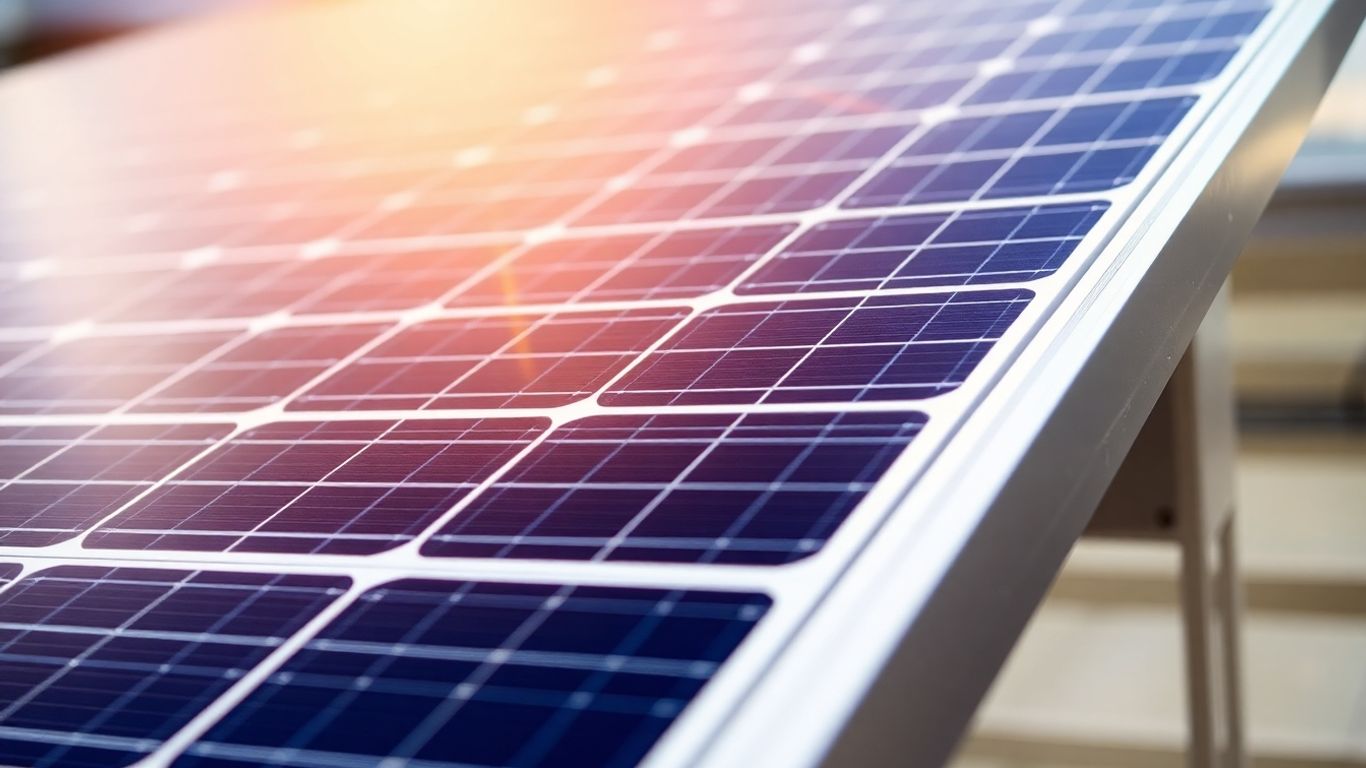
JinkoSolar’s Tiger Pro series offers a couple of interesting options, especially if you’re looking at larger commercial or utility-scale projects. They come in both monofacial and bifacial versions, which is pretty neat. The main idea behind the Tiger Pro is to pack a lot of power into each panel using their 182 mm half-cut monocrystalline cells and multi-busbar tech. This setup helps reduce power loss, which is always a good thing.
The bifacial model is where things get really interesting, as it can capture light from both sides, potentially boosting your energy yield significantly. This is especially true if you have a reflective surface underneath, like a white roof or light-colored ground. However, if your installation site doesn’t have much reflectivity, the monofacial version might be a more straightforward and cost-effective choice.
Here’s a quick look at what you can expect:
Monofacial Tiger Pro 72HC: This is your solid, reliable workhorse. It’s great for standard commercial setups or ground mounts where you’re mainly concerned with the front side’s performance. It offers a slightly higher nominal power output, up to 550W, and comes with a 25-year performance warranty.
Bifacial Tiger Pro 72HC: This one is designed to squeeze out extra energy. By using a dual-glass design instead of a backsheet, it can grab reflected light from the rear. Depending on your setup, this could mean an extra 5% to 25% power. It also boasts a longer 30-year performance warranty.
Both versions are built tough, designed to handle pretty heavy wind and snow loads, which is important given South Africa’s varied weather. They also have a decent temperature coefficient, meaning they won’t lose too much power when it gets hot.
When deciding between the two, think about your installation site. If you’ve got reflective surfaces or want to maximize every bit of energy, the bifacial is worth the extra cost. For more standard applications, the monofacial is a proven performer.
Pricing can vary, but generally, the monofacial panels might run you around R6,500 to R7,500 each, while the bifacial ones could be closer to R7,500 to R9,000 per panel. It’s always a good idea to shop around for the best deal.
4. Trina Solar Vertex S+
When you’re looking at solar panels for your home or a smaller commercial building in South Africa, the Trina Solar Vertex S+ series is definitely worth a look. These panels are designed to be pretty compact and not too heavy, which makes them a good fit for a lot of different roofs. They pack a punch in terms of how much power they can generate, especially considering their size.
The Vertex S+ line uses advanced N-type cell technology, which generally means they’ll keep producing well for a long time with less power loss each year compared to older types. This is a big deal because you want your solar investment to keep paying off for decades.<\/p>
Here’s a quick look at what some of these panels offer:
High Efficiency: You can get models with efficiencies up to 22.5%, meaning you get more electricity from the same amount of roof space.
Durability: They’re built tough, able to handle pretty significant snow and wind loads. Some versions even have a dual-glass design for extra protection against the elements.
Warranty: Trina offers a solid warranty, often 15 years for the product itself and 30 years for power output on certain models, giving you some peace of mind.
Installation: Their design makes them easier to install, and they usually work well with most common inverters and mounting systems you’d find in South Africa.
While these panels are great for getting a lot of power from a smaller area, they might cost a bit more upfront than some basic panels. Also, if you’re looking at the dual-glass versions, they might not be as common everywhere, but they do offer that extra layer of protection and can have a lower environmental impact over their life.
In terms of pricing, you’re likely looking at somewhere between R 3,500 and R 4,500 per panel in South Africa. Keep in mind that the final price can change depending on where you buy them, if you’re buying a lot of them, and any installation costs involved.
5. LONGi Hi-MO 5
When you’re looking at solar panels for a bigger setup, like for a business or a whole neighborhood, the LONGi Hi-MO 5 series is definitely worth a look. These panels are built for serious power generation. They use a cool technology called bifacial design, which means they can catch sunlight not just from the top, but also from light bouncing off the ground below. This can really bump up how much electricity you get, especially if you’ve got a light-colored surface or gravel around your installation.
LONGi is known for making solid, reliable panels, and the Hi-MO 5 is no exception. They’re designed to handle tough weather, which is good news for South Africa’s climate. Think strong winds, high temperatures – these panels are made to keep working.
Here’s a quick rundown of what makes them stand out:
High Efficiency: They pack a lot of power into each panel, so you need fewer of them to get the energy you need. This is great if space is a bit tight.
Bifacial Technology: As mentioned, this can give you a significant boost in energy production by capturing reflected light.
Durability: Built tough to last for years, even in challenging conditions.
Gallium-Doped Wafers: This is a bit technical, but it means they’re designed to reduce something called Light-Induced Degradation (LID), so they lose less power over time.
While these panels are fantastic for larger projects, their size and weight might make them a bit much for a standard residential roof. You’ll want to make sure your mounting structure can handle them, and that you have enough space to install them properly. If you’re planning a big commercial installation or a utility-scale solar farm, the Hi-MO 5 is a strong contender:
Pricing for the LONGi Hi-MO 5 panels in South Africa typically falls between R 3,500 and R 4,500 per panel. Some suppliers might offer them for around R4,230.
6. How To Pick Out A Great Solar Panel
So, you’re ready to jump into solar power for your place in South Africa. That’s awesome! But faced with all the options out there, picking the right solar panel can feel a bit overwhelming. Don’t sweat it, though. We’ll break down what really matters.
First off, think about the panel’s rated power (Pmax). This is basically how much electricity it can churn out under perfect conditions, measured in watts. More watts mean more power, which is usually a good thing. Then there’s efficiency – that’s the percentage showing how well it turns sunlight into usable energy. A higher efficiency panel can give you more bang for your buck, especially if you don’t have a ton of roof space.
Don’t forget about the warranty. A good manufacturer will stand behind their product with a solid guarantee. Also, check out the degradation rate. This tells you how much the panel’s output will drop each year. You want this number to be as low as possible for long-term performance. The temperature coefficient is another spec to keep an eye on, particularly in sunny South Africa. It shows how much power the panel loses when it gets hot. A smaller negative number here means it handles the heat better.
Here are some key things to look at:
Rated Power (Pmax): How much electricity it produces (in watts).
Efficiency: How well it converts sunlight to power (percentage).
Warranty: Manufacturer’s guarantee on the product and its performance.
Degradation Rate: How much power output decreases annually.
Temperature Coefficient: How performance is affected by heat.
Mechanical Load Rating: How much wind and snow pressure it can withstand.
When you’re comparing panels, think about your specific needs and your location. What works for one home might not be the best fit for another. It’s about finding that sweet spot between power output, space available, and how well it’ll hold up over the years.
Also, consider the physical size and weight of the panels. You’ll need to make sure your roof or mounting structure can handle them. And for durability, especially in areas prone to strong winds, check the mechanical load rating. This tells you how much pressure the panel can take without breaking. Getting a handle on these details will help you choose panels that are a good fit for your energy goals and your property. You can find more information on how photovoltaic systems work here
Finally, remember that the panels are just one part of the puzzle. You’ll also need an inverter to convert the power and potentially batteries for storage. Thinking about the whole system from the start makes the process smoother.
7. Understanding Solar Panel Specifications
When you’re looking at solar panels, it’s easy to get lost in all the numbers and technical terms. But knowing what these specs mean can really help you pick the right ones for your home in South Africa. Don’t just go for the cheapest option; think about what you actually need.
Here are some of the main things you’ll see on a panel’s datasheet:
Wattage (W): This tells you how much power the panel can produce under ideal conditions. Higher wattage generally means more power from a single panel, which is good if you have limited roof space.
Efficiency (%): This is how well the panel converts sunlight into electricity. A more efficient panel will generate more power from the same amount of sunlight compared to a less efficient one.
Voltage (V) and Amperage (A): These are important for how panels are wired together in strings. If you’re planning to add to an existing system, matching voltages is key. Mismatched voltages can cause problems or reduce the output of your whole setup.
Temperature Coefficient: Solar panels don’t perform as well when they get hot. This spec tells you how much the panel’s output drops for every degree Celsius above 25°C. A lower (closer to zero) coefficient is better, especially in sunny South Africa.
Warranty: Look for both product warranties (covering defects in materials and workmanship) and performance warranties (guaranteeing a certain level of output over time). A 25-year performance warranty is pretty standard for good quality panels.
Picking the right panel isn’t just about the numbers on the spec sheet. It’s about how those numbers translate to real-world performance on your roof, considering the local climate and your energy usage. Think of it like buying a car – you need to know if it’s powerful enough for your needs, fuel-efficient, and reliable for the long haul.
It’s also worth knowing about the different types of solar cells:
Monocrystalline: These are usually the most efficient and have a sleek, uniform black appearance. They perform well even in lower light conditions.
Polycrystalline:<\/strong> These are a bit less efficient but often more affordable. They have a speckled blue look because they’re made from multiple silicon crystals.<\/p><\/li>
Thin-Film:<\/strong> Less common for residential use, these are flexible and can be cheaper, but they are generally the least efficient and take up more space.<\/p><\/li><\/ul>
When you’re comparing panels, try to look at them side-by-side using these specs. It makes a big difference in understanding what you’re really getting for your money.
8. How Photovoltaic Solar Panels (PV) Systems Work
So, you’ve got these solar panels, right? They’re the stars of the show, but they don’t work alone. Think of them as the first step in a chain reaction that brings power to your home.
At its core, a solar panel is made up of many smaller solar cells, usually crafted from silicon. These cells are designed to do something pretty neat called the photovoltaic effect. Basically, when sunlight hits these cells, the energy from the light (photons, if you want to get technical) knocks electrons loose from the silicon atoms. This movement of electrons is what creates electricity, specifically Direct Current (DC) electricity.
The whole point is to turn sunshine into usable power for your house.
But DC power isn’t what most of your appliances use. That’s where the other bits of the system come in. Here’s a quick rundown of what you’ll typically find:
Solar Panels: These are the collectors, soaking up the sun’s rays and making that initial DC electricity. They’re often wired together in groups called arrays or strings to boost the power output.
Inverter: This is the translator. It takes the DC electricity from the panels and converts it into Alternating Current (AC) electricity, which is what your home’s electrical system and appliances run on.
Mounting System: This is what holds the panels securely in place, usually on your roof, but sometimes on the ground.
Battery Storage (Optional): If you want to store excess power for use at night or during cloudy spells, you’ll need batteries. This is common in off-grid systems or for backup power.
Charge Controller (If Batteries Are Used): This gadget acts like a traffic cop for electricity going into and out of the batteries, making sure they don’t get overcharged or drained too much, which could damage them.
So, the sun hits the panels, they make DC power, the inverter changes it to AC power, and then it either powers your home directly or gets stored in a battery for later. It’s a pretty clever system when you think about it.
The amount of electricity a solar panel can produce depends on a few things, like how much sunlight it gets, its size, and how efficient the cells are. South Africa gets a lot of sun, which is great news for solar power generation here.
It’s not just about the panels themselves, but how they all work together. Whether you’re connected to the main power grid (grid-tied) or completely off it (off-grid), the basic principle of converting sunlight into electricity remains the same.
Wrapping It Up
So, picking the right solar panel for your place in South Africa is a pretty big deal. It’s not just about getting the cheapest option; you’ve got to think about how much sun you get, how hot it gets, and how long you want the panels to last. We’ve looked at some solid choices, from the super-efficient ones to those that offer great bang for your buck. Remember to check those specs like power output and warranty, and always buy from a place you trust. Making the move to solar is a smart step for your wallet and the planet. If you’re still scratching your head, talking to a local solar pro is probably your best bet to get things set up right.
Frequently Asked Questions
How do I know which solar panel is best for my home in South Africa?
To pick the best solar panel, think about how much power it can make (wattage), how well it turns sunlight into electricity (efficiency), and how long the company promises it will work (warranty). Also, check how much its power drops each year and how it handles heat. The size and weight matter for installation, and it’s good to know if it can handle strong winds or heavy snow.
What does 'Tier 1' mean for solar panels?
When a solar panel is called ‘Tier 1,’ it means it’s made by a top company that has been making solar panels for over five years and is known for being a leader in the field. Banks and insurance companies trust these brands, so you know you’re getting a high-quality product.
How long do solar panels usually last?
Most solar panels are built to last for a long time, often around 20 to 30 years. If you take good care of your solar system, it should keep producing power smoothly for many years to come.
How many solar panels do I need for my house?
For a typical South African home, you might need between six and fourteen panels that produce around 455 watts each. Bigger houses could need up to twenty-three panels. The exact number depends on how much electricity you use, the size of your roof, and the type of inverter you have.
Which direction should solar panels face in South Africa?
In South Africa, solar panels work best when they face towards the North. This direction gets the most direct sunlight throughout the day, helping your panels generate the most electricity possible.
What is the average cost of a solar panel in South Africa?
The price of solar panels in South Africa can vary a lot depending on the brand and how much power they can produce. For example, a 345W panel might cost around R2,500, while a more powerful 540W panel could be R4,500 or more. Some high-efficiency panels can cost even more, sometimes between R6,500 and R9,000 each.
Zensolar
Commercial and residential solar specialists
We help South African families and businesses break free from rising electricity costs with custom solar solutions that can cut your bills by up to 92% from day one. From consultation to installation, we make going solar simple so you can enjoy energy independence and predictable monthly savings In Gauteng, NW, Cape town and KZN
Address
51 Gustav Preller St, Vorna Valley, Midrand.
Phone
+27 11 045 9062