
Thinking about getting solar panels for your home? A 5kW system is a popular choice, especially for average-sized houses. But figuring out how many panels you actually need can feel like a puzzle. It’s not just about picking a number; a few things play a role in getting it right. We’ll break down what goes into deciding how many solar panels for a 5kW system so you can make a smart choice for your energy needs.

Key Takeaways

  • A 5kW solar system typically requires between 10 to 20 panels, but the exact number varies.

  • Panel wattage is a major factor; higher wattage panels mean fewer are needed for a 5kW system.

  • Monocrystalline panels are more efficient and take up less space than polycrystalline panels.

  • Roof orientation, slope, and sunlight availability affect how many panels you’ll need and how well they perform.

  • Always consider adding an extra panel or two to account for weather and panel degradation over time.

Determining The Number Of Solar Panels For A 5kW System

So, you’re thinking about going solar and aiming for a 5kW system. That’s a pretty common size for many homes, and it’s a good place to start if you want to cut down on your electricity bills and be a bit kinder to the planet. But how many actual panels does that translate to? It’s not a one-size-fits-all answer, unfortunately.

Understanding System Size For Average Homes

A 5kW system is generally considered a solid choice for the typical household. It’s usually enough to cover the electricity needs of most homes, including running your appliances, lights, and even your heating and cooling systems. Of course, everyone’s energy use is a little different. If you’re a big energy user, maybe you have a lot of electronics or a large family, you might need to think about a slightly bigger system. But for many, 5kW is that sweet spot.

Factors Influencing Panel Count

When we talk about how many panels make up that 5kW, a couple of things really matter. The biggest ones are the wattage of each individual panel and how much space you have. You’ll see panels with different power ratings, usually measured in watts (W). A panel that’s rated at 400W will obviously produce more power than one rated at 300W. So, if you use higher-wattage panels, you’ll need fewer of them to hit that 5kW target. It’s pretty straightforward math, really.

Here’s a quick look at how panel wattage affects the count:

The Role Of Panel Wattage

Think of panel wattage like the horsepower of a car. A higher horsepower engine means you can get the same job done with potentially less effort or fewer engines. In solar, a higher wattage panel means it’s more powerful and can generate more electricity on its own. So, if you’re looking at panels that are, say, 400 watts each, you’d need about 13 of them to reach 5,000 watts (which is 5kW). If you found panels that are 500 watts, you’d only need 10. It’s all about finding the right balance between the power of each panel and the total system size you’re aiming for.

<\/colgroup>

Panel Wattage

Approximate Number of Panels for 5kW

300W

17 panels

400W

13 panels

500W

10 panels

It’s important to remember that the wattage listed on a panel is its output under ideal lab conditions. In the real world, things like shade, heat, and even dust can reduce that output a bit. So, it’s often a good idea to plan for slightly more than the bare minimum.

Also, don’t forget about the roof itself. The direction your roof faces and its angle play a big part in how much sun your panels get. And if you’ve got a smaller roof, you might lean towards higher-efficiency panels to get the most out of the space you have.

Monocrystalline Versus Polycrystalline Panels

When you’re looking into solar panels for your 5kW system, you’ll quickly run into two main types: monocrystalline and polycrystalline. They both do the same job – turning sunlight into electricity – but they go about it a little differently, and that difference matters for your roof space and your wallet.

Efficiency and Space Considerations

Think of monocrystalline panels as the high-performance athletes of the solar world. They’re made from a single, pure silicon crystal. This makes them really good at converting sunlight into power, meaning they’re generally more efficient. Higher efficiency means you can get more power from a smaller area. This is a big deal if your roof isn’t huge or if you want to maximize the energy you generate from the space you have. Because they’re so efficient, you’ll typically need fewer of them to hit your 5kW target.

Polycrystalline panels, on the other hand, are made from multiple silicon fragments melted together. This manufacturing process is a bit simpler and less wasteful, which usually makes them cheaper. However, this structure isn’t quite as good at capturing sunlight. So, to get the same amount of power as you would from a set of mono panels, you’ll need more poly panels. This means they take up more room on your roof.

Wattage Output Differences

The wattage of a panel tells you how much power it can produce under ideal conditions. While both mono and poly panels come in various wattages, the efficiency difference often plays out here. For example, you might find a 400W monocrystalline panel that’s quite compact. To get that same 400W from a polycrystalline panel, it might be a bit larger, or you might need more of them to reach the same total system wattage.

Let’s say you’re aiming for a 5kW (5000W) system:

  • Using 400W monocrystalline panels: You’d need about 12-13 panels (5000W \/ 400W = 12.5).

  • Using 300W polycrystalline panels:<\/strong> You’d need around 17 panels (5000W \/ 300W = 16.67).

As you can see, the choice of panel type directly impacts the number of units required.

Cost-Effectiveness of Panel Types

Generally speaking, polycrystalline panels are the more budget-friendly option upfront. The manufacturing process is less intensive, leading to lower costs per panel. If your budget is the primary concern and you have plenty of roof space, poly panels can be a sensible choice.

However, it’s worth looking at the long-term picture. Monocrystalline panels, while costing more initially, can be more cost-effective over time due to their higher efficiency. They generate more power, potentially leading to greater savings on your electricity bills sooner. Plus, if you have limited roof space, the higher energy density of mono panels might be the only practical way to achieve your desired system size.

The decision between monocrystalline and polycrystalline panels often boils down to a trade-off between initial cost, available roof space, and long-term energy production. It’s not a one-size-fits-all answer, and what’s best for one homeowner might not be for another.

Ultimately, the best panel type for your 5kW system depends on your specific circumstances. Consider your budget, how much sunlight your location gets, and, most importantly, the amount of usable space you have on your roof.

Calculating Your Specific Panel Requirements

Alright, so you’ve got a target: a 5kW solar system. That sounds like a solid plan for powering your home. But how many actual panels does that translate to? It’s not just a simple \”X panels equals Y kilowatts\” kind of deal. Several things play a role here, and we need to get a bit more specific.

Using Panel Wattage In Calculations

The most direct way to figure this out is by looking at the wattage of the individual solar panels you’re considering. Think of wattage as the power output of a single panel under ideal conditions. Solar panels come in different power ratings, often ranging from 300W to over 700W for some of the newer, high-efficiency models. The higher the wattage of each panel, the fewer panels you’ll need to reach your 5kW (which is 5000 watts) goal.

For example, if you’re looking at 400W panels, you’d do a quick calculation: 5000 watts \/ 400 watts\/panel = 12.5 panels. Since you can’t install half a panel, you’d round up to 13 panels. If you opted for less powerful 300W panels, it would be 5000 watts \/ 300 watts\/panel = 16.67 panels, meaning you’d need 17 panels.

Adjusting For Real-World Conditions

Now, those calculations are based on perfect, lab-like conditions. In the real world, things aren’t always so neat. Your panels won’t always be producing their maximum rated wattage. Factors like shade, dust, temperature, and even the angle of the sun throughout the day can affect their output. A common rule of thumb is to expect panels to produce about 75% of their rated power during daylight hours. So, that 400W panel might realistically put out around 300W on an average day.

This means you might need to bump up the number of panels slightly to compensate for these real-world losses. For our 5kW system using 400W panels, if we assume a 75% real-world output (300W per panel), we’re back to needing about 17 panels (5000W \/ 300W = 16.67).

It’s always a good idea to factor in a buffer. Weather can be unpredictable, and panels do degrade over time. Adding an extra panel or two can help ensure your system continues to meet your energy needs for years to come, even as its performance naturally declines.

Rounding Up For Optimal Output

As you can see, you’ll often end up with a fractional number of panels. You can’t buy or install half a panel, so you’ll always round up to the next whole number. This ensures you meet or slightly exceed your 5kW target. It’s better to have a little extra capacity than not enough. This also helps account for any minor variations in panel performance or unexpected drops in output due to less-than-ideal conditions. When you’re talking to installers, they’ll use these kinds of calculations, along with your specific location’s solar potential, to give you the most accurate panel count for your situation.

Optimizing Panel Placement And Performance

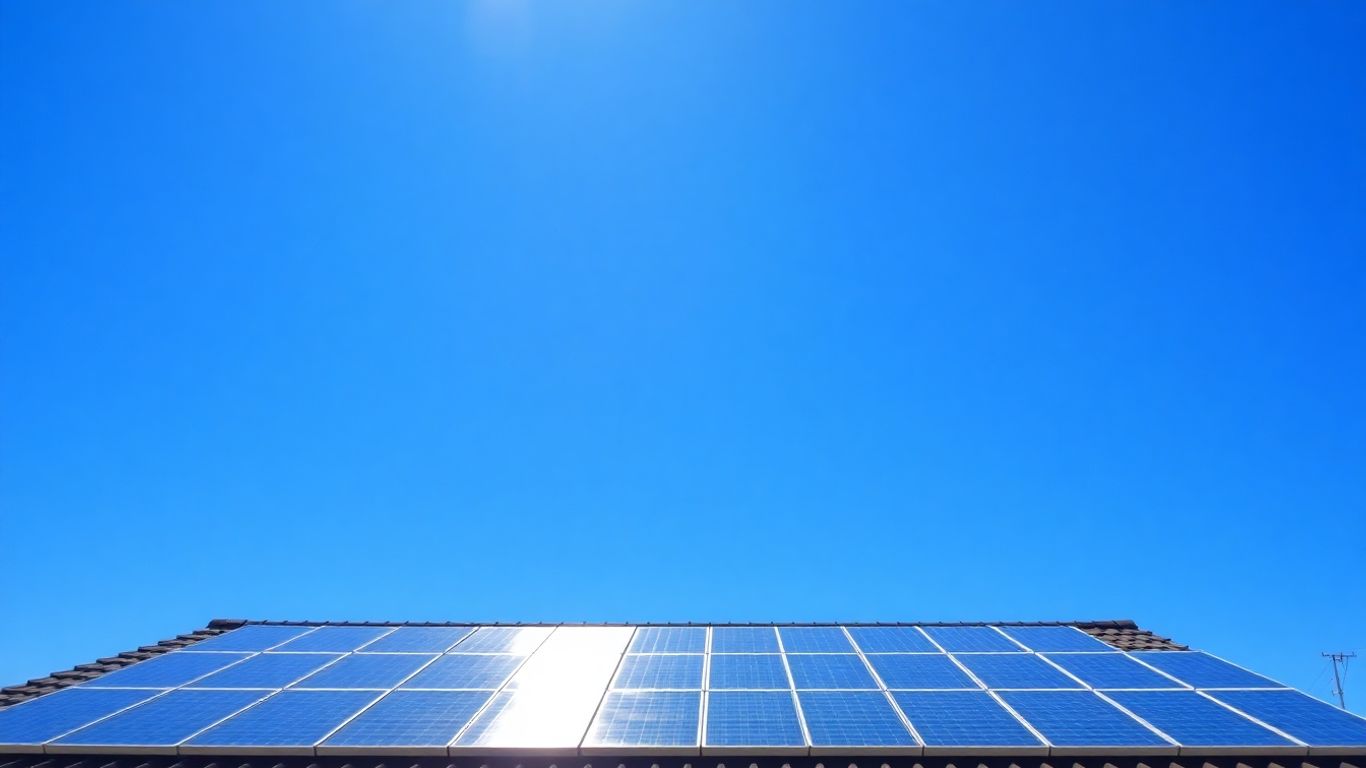
Solar panels on a residential rooftop.

So, you’ve got your 5kW system in mind, but just slapping panels on the roof isn’t the whole story. Where you put them and how they’re angled makes a big difference in how much juice you actually get. It’s not just about having enough panels; it’s about making sure they’re working their best.

Ideal Roof Orientation And Slope

Think of your roof like a solar collector. The best direction for it to face depends on where you live. In the Northern Hemisphere, south-facing roofs are usually the sweet spot because they get the most direct sunlight throughout the day. North-facing roofs? Not so much. East and west-facing roofs can work, but they’ll capture less overall energy compared to a good south-facing setup.

As for the slope, or tilt angle, it’s a bit of a balancing act. You want the panels to be angled so the sun’s rays hit them as directly as possible for as long as possible. A general rule of thumb is to match the tilt angle to your latitude. For example, if you’re at 30 degrees latitude, a 30-degree tilt might be ideal. However, many homeowners opt for a flatter installation, especially if they have a south-facing roof, to make maintenance easier and to avoid issues with PV oversizing if the system is designed to handle it.

Impact Of Sunlight Availability

This is a big one. Even with the perfect orientation and slope, if your panels are constantly shaded by trees, buildings, or other obstructions, their output will suffer. You need to look at your property throughout the day and across different seasons to see where the shadows fall. Sometimes, trimming a few branches can make a noticeable difference. If significant shading is unavoidable, you might need to consider more panels than your initial calculation suggests, or perhaps look into microinverters or power optimizers that can help mitigate the impact of shading on a per-panel basis.

Accounting For Weather Variability

We don’t always get sunny days, right? Clouds, rain, snow – they all cut down on how much electricity your panels can generate. Plus, solar panels naturally degrade a little over time. To make sure your 5kW system consistently meets your needs, it’s smart to plan for these dips in performance. This often means installing a few extra panels beyond the bare minimum calculation. It’s like having a little buffer. This oversizing helps ensure you still get a decent amount of power even on less-than-ideal days and can help compensate for the gradual loss of efficiency over the years.

It’s always a good idea to add a little extra capacity to your solar setup. Think of it as future-proofing. This buffer helps account for those cloudy spells, the inevitable aging of the panels, and any unexpected drops in performance, making sure your system keeps up with your energy demands more reliably over its lifespan.

Understanding Solar System Components

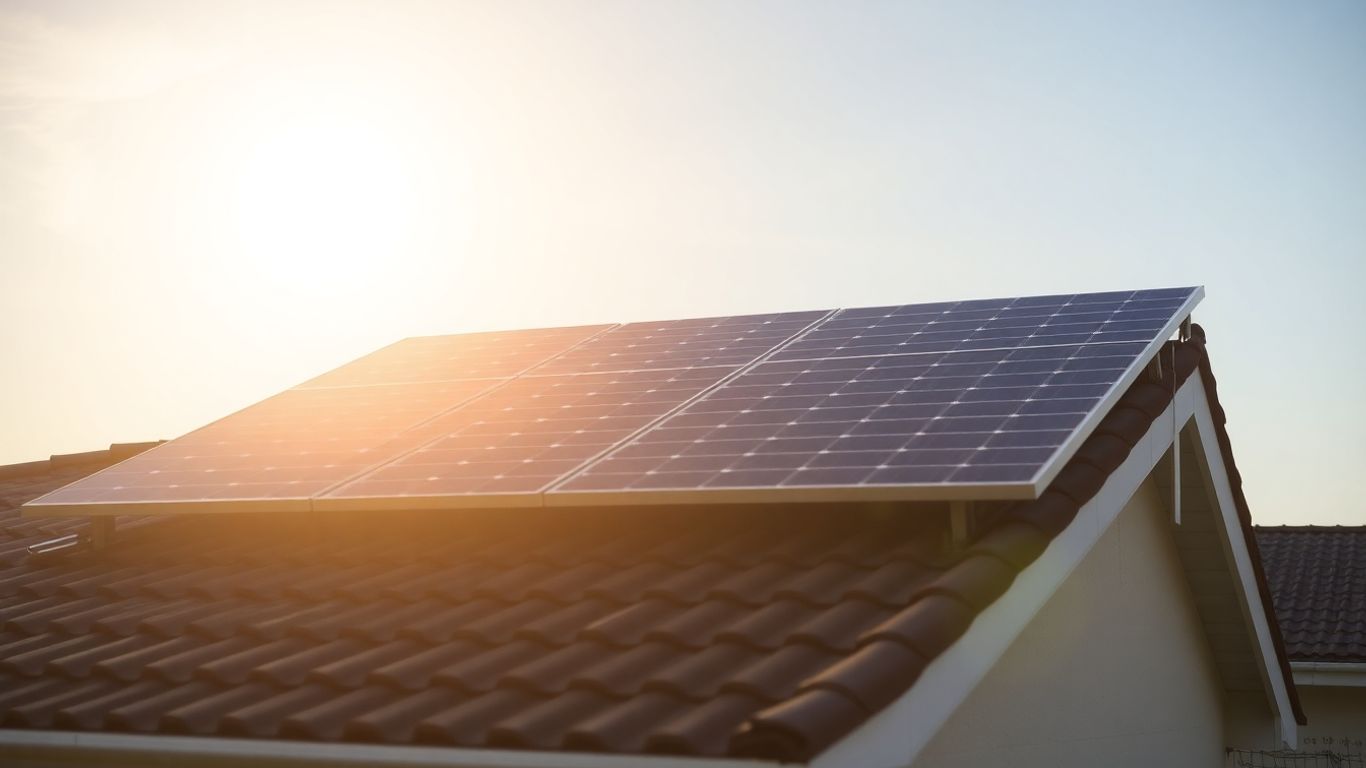
Solar panels on a residential rooftop under the sun.

So, you’re thinking about going solar and wondering what all the bits and pieces are that make up a system. It’s not just the panels, you know. There are a few other key players that help turn sunshine into usable electricity for your home. Let’s break them down.

The Function Of Charge Controllers

Think of a charge controller as the traffic cop for the electricity coming from your solar panels. Its main job is to regulate the voltage and current going into your battery bank. Without a charge controller, you could overcharge your batteries, which is bad news for their lifespan and can even be a safety hazard. It prevents the batteries from getting too much power, especially when they’re already full, and also stops them from discharging back through the panels at night. There are a couple of main types:

Battery Management Systems For Longevity

  • PWM (Pulse Width Modulation): These are simpler and generally less expensive. They work by essentially connecting the panels directly to the battery when the battery needs charging, and disconnecting them when it’s full. Good for smaller systems.

  • MPPT (Maximum Power Point Tracking): These are more advanced and efficient. They actively find the optimal voltage and current combination from the panels to get the most power possible, even in less-than-ideal conditions like partial shade or cold weather. They can also convert higher voltage from the panels to a lower voltage needed by the battery, which can be a big advantage.

If your solar setup includes batteries (which is common for off-grid systems or for backup power), a Battery Management System (BMS) is super important. It’s like the brain of the battery pack. The BMS monitors things like the voltage of individual cells, the overall temperature, and the charge\/discharge rates. It helps to balance the cells so they all stay at a similar charge level, which is key for maximizing the battery’s capacity and preventing premature wear. It also protects the battery from dangerous conditions like over-voltage, under-voltage, and extreme temperatures. Basically, it keeps your expensive batteries safe and working their best for as long as possible.

Inverters And Their Role

Now, the electricity your solar panels produce is direct current (DC). But most of the appliances in your home run on alternating current (AC). That’s where the inverter comes in. It’s the component that converts the DC electricity from your panels (or batteries) into the AC electricity you can use to power your lights, TV, fridge, and everything else.

The type of inverter you choose can impact your system’s overall efficiency and how it operates. For a 5kW system, you’ll typically be looking at either a string inverter, which connects multiple panels together in a ‘string’, or microinverters, which are installed on each individual panel. Each has its pros and cons depending on your specific setup and budget.

There are also hybrid inverters, which can manage both solar input and battery storage, making them a popular choice for systems that include battery backup. Getting the right inverter is pretty vital for making sure your solar energy can actually be used in your home. You can find more information on solar energy systems and their components online.

Roof Space Considerations For A 5kW System

So, you’re thinking about getting a 5kW solar system. That’s a pretty common size for homes, and it’s a good place to start. But before you get too excited about saving money on your electricity bill, we need to talk about space. Specifically, how much room do you actually need on your roof?

Estimating Square Footage Needs

This is where things can get a little tricky, but it’s important. The number of panels you need for a 5kW system depends a lot on the wattage of each individual panel. Higher wattage panels mean you’ll need fewer of them, which can save you space. For example, if you’re using 400-watt panels, you’d need about 13 of them to hit that 5kW mark (5000 watts \/ 400 watts per panel = 12.5, rounded up). If you go with lower wattage panels, say 300 watts, you’ll need more, around 17 panels (5000 watts \/ 300 watts per panel = 16.67, rounded up).

Each panel has its own dimensions, and you have to factor that in. A general rule of thumb is that a 5kW system might take up anywhere from 200 to 350 square feet, depending on the panel type and efficiency. Monocrystalline panels, being more efficient, usually take up less space than polycrystalline ones for the same power output.

Allowing For Safety And Maintenance Clearances

Now, you can’t just cram panels onto every single inch of your roof. Building codes and best practices usually require you to leave about 25% of your roof area clear. This isn’t just some arbitrary rule; it’s for safety during installation and maintenance, and it helps with airflow around the panels, which can keep them running a bit cooler and more efficiently. Think of it like giving your system some breathing room.

This clearance is also important for accessing different parts of your roof if repairs are ever needed, or even just for cleaning. Plus, you need to consider the space between the panels themselves. They can’t be touching; they need a little gap for expansion and to prevent shading each other too much.

Maximizing Space With Efficient Panels

If your roof space is a bit limited, you’ll definitely want to lean towards higher-efficiency panels, like monocrystalline ones. They pack more power into a smaller area. This means you can get closer to your 5kW goal without needing as many panels, freeing up more of your roof for those all-important clearances or just leaving it uncovered.

Here’s a quick look at how panel type can affect space needs for a 5kW system, assuming average panel dimensions:

Remember, these are just estimates. The actual space needed can vary based on the specific panel model and manufacturer. It’s always best to get a professional assessment of your roof and discuss the best panel options for your situation.

<\/colgroup>

Panel Type

Approx. Wattage per Panel

Estimated Panels Needed

Approximate Roof Space (sq ft)

Monocrystalline

400W

13

220 – 280

Polycrystalline

300W

17

290 – 360

Wrapping It Up

So, when it comes down to it, figuring out how many solar panels you need for a 5kW system isn’t a one-size-fits-all answer. It really boils down to the specific panels you pick – their wattage matters a lot. Plus, where you put them on your roof plays a part too. Generally, you’re looking at somewhere between 10 and 20 panels, but it’s always a good idea to chat with a pro. They can help you crunch the numbers based on your roof, your energy use, and the best panel options out there. Getting solar is a big step, but knowing these basics helps make the whole process feel a lot less overwhelming.

Frequently Asked Questions

How many solar panels are usually needed for a 5kW system?

For a 5kW solar setup, you’ll typically need somewhere between 10 to 20 solar panels. The exact number really comes down to how much power each individual panel can produce, measured in watts.

What's the difference between monocrystalline and polycrystalline panels?

Monocrystalline panels are made from a single silicon crystal, making them more efficient and better if you have limited space. Polycrystalline panels are made from multiple silicon crystals, are a bit less efficient, but usually cost less. You’d need more polycrystalline panels to get the same amount of power as monocrystalline ones.

How does panel wattage affect the number of panels I need?

Higher wattage panels mean you need fewer of them to reach your 5kW goal. For example, if you use 500-watt panels, you’d only need 10. But if you use 250-watt panels, you’d need 20.

Does the direction and angle of my roof matter?

Yes, it matters a lot! The best spot for solar panels is usually a roof that faces south and has a tilt between 30 and 45 degrees. This helps them catch the most sunlight throughout the day.

What other parts are in a solar system besides panels?

Besides the panels, you’ll have things like a charge controller to manage power going to batteries, a battery management system to keep batteries healthy, and an inverter to change the power from the panels into electricity your home can use.

How much space do I need for a 5kW system?

You’ll need enough space to fit all the panels, plus some extra room for safety and to make sure they aren’t too crowded. More efficient panels, like monocrystalline ones, can help you fit more power into a smaller area.

Zensolar

Commercial and residential solar specialists

We help South African families and businesses break free from rising electricity costs with custom solar solutions that can cut your bills by up to 92% from day one. From consultation to installation, we make going solar simple so you can enjoy energy independence and predictable monthly savings In Gauteng, NW, Cape town and KZN

Address

51 Gustav Preller Str, Vorna Valley, Midrand.

Phone

+27 11 045 9062

Join our free news letter?